A factory-direct, operator-tested buying guide from a long-time vending operator and manufacturer.
If you’re searching for Wholesale Vending Machines Direct from China with a minimum order of just one unit, you’re not looking for hype—you’re looking for a clean path from “I want a machine” to “I’m collecting revenue.” The smartest buyers treat the machine like a mini retail store: product fit, payment flow, service access, and refill rhythm matter more than a flashy spec sheet. In this guide, I’ll walk you through what actually changes your outcome: which machine types win in real-world placements, how to compare factory quotes without getting trapped by hidden add-ons, what to demand in testing and documentation, and how to plan parts and support so you’re not stuck waiting on a fix. Along the way, you’ll see practical checklists, a comparison table, and operator-style numbers you can use today.
What “Wholesale” Really Means When You’re Buying One Machine
“Wholesale” isn’t only about buying a container-load. In modern vending, wholesale is about buying at the same pricing logic that bulk buyers get: factory-direct costs, configurable builds, standardized components, and repeatable support. That’s why Wholesale Vending Machines Direct from China with a one-unit minimum can be a real advantage—if you buy correctly.
When the minimum order is one unit, your leverage shifts from volume to clarity. You win by being precise about: what you’re selling, where the machine will sit, how customers pay, and how you’ll handle service. A supplier that can support a one-unit start while still offering a true wholesale structure is the kind you can scale with.
Operator perspective: the “first machine” is a test you can control
The first unit is your pilot. Treat it like a controlled experiment: pick a product category with steady demand, choose a placement with predictable foot traffic, and build a refill schedule you can sustain. That’s the fastest way to turn Wholesale Vending Machines Direct from China into a repeatable playbook instead of a one-time purchase.
Match the Machine to the Job: Categories That Actually Make Sense
A vending machine is not a “one size fits all” box. If you choose the wrong format, you’ll fight jams, refunds, bad product presentation, and slow sales. The right format makes your day easier and your revenue steadier. If you’re comparing Wholesale Vending Machines Direct from China, start with the category that matches your products and refill style.
Snack & beverage combos
Combo machines are popular for a reason: one footprint, broad product range, simple replenishment. They’re ideal when you want variety without managing multiple machines. Look for adjustable trays, strong cooling stability, and an easy service door layout that doesn’t punish you during refills.
Spiral snack machines (the “simple and steady” workhorse)
Spirals are straightforward and forgiving. If your plan is chips, candy, and packaged snacks, a spiral setup can be the cleanest start. When buying Wholesale Vending Machines Direct from China, ask how the spiral motors are tested and how quickly a tray can be swapped.
Locker vending (higher ticket, fewer jams)
Locker systems are a great fit for boxed goods, fragile items, or mixed sizes. They reduce drop damage and can support a wider catalog. The key is software stability: inventory mapping, door status sensing, and refund logic must be solid.
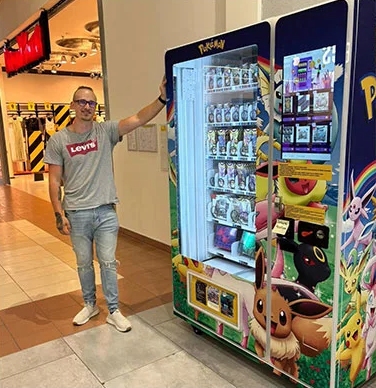
Specialty machines (cosmetics, collectibles, and niche retail)
Specialty vending can outperform standard snacks if the product is right and the audience is consistent. The machine should be built around the product, not the other way around: lighting, pickup method, anti-theft design, and planogram control matter. This is where a “smart vending machine” approach can shine.
If you want to browse proven formats and configurations from a manufacturer that supports both pilot buys and scale, start with the product overview on Zhongda smart’s product catalog.
How to Compare Quotes Without Getting Burned
Price shopping is the fastest way to lose money in vending. Two machines can look identical on paper and behave totally differently in the field. When reviewing Wholesale Vending Machines Direct from China, compare quotes using a standard framework so you’re not surprised by “optional” essentials that appear after you’ve committed.
The quote checklist you should demand
Exact model and configuration (tray count, selections, locker count, or delivery method)
Payment setup (cashless readiness, protocol support, wiring harness)
Screen size and UI (if a self-service kiosk interface is included)
Cooling/heating specs and how temperature stability is tested
Standard spares included (motors, sensors, belts, control board)
Warranty terms and what “wear items” excludes
Lead time for production and typical ship window
Documentation (manuals, wiring diagrams, parts list)
Comparison table: what buyers think matters vs. what actually matters
| Decision Item | Common Buyer Focus | Operator/Factory Focus | What to Ask |
|---|---|---|---|
| Price | Lowest unit cost | Total cost to run | What spare parts are included and what are the common service items? |
| Selections | Big number on brochure | Reliable vending for your SKU mix | Can trays/lanes adjust to my top-selling package sizes? |
| Payments | “Cashless ready” label | Stable integrations and refund logic | Which protocols are supported and how are payment failures handled? |
| Screen | Largest screen possible | Simple UI that sells | Can I change pricing, images, and planograms without headaches? |
| Cooling | Lowest temperature claim | Consistency and recovery time | How is temperature tested and verified before shipment? |
| Support | Generic “after-sales” promise | Parts, diagrams, response process | Do I get a parts list, wiring diagram, and a real troubleshooting flow? |
A practical way to reduce risk is to start with a manufacturer that already publishes machine families, solutions, and case outcomes. For examples of formats and deployments, see Zhongda smart vending solutions.
Two Numbers You Should Know Before You Buy
Vending is a real market, and it’s growing with modernization—cashless payments, telemetry, and better product variety. But your success still comes down to execution: placement quality, SKU fit, and refill discipline. When evaluating Wholesale Vending Machines Direct from China, it helps to anchor your plan with grounded market context.
Market data point #1: Grand View Research estimates the global retail vending machine market size at USD 72.33 billion in 2024 and projects growth through 2033. [Source: Grand View Research]
Market data point #2: The NAMA Foundation reported convenience services industry annual revenue of $26.6 billion in 2023 (based on its industry census coverage). [Source: NAMA Foundation coverage via PublicNow]
These numbers don’t guarantee your results—but they confirm the underlying demand is real. Your machine choice should make operations easier, not harder. A smart vending machine with telemetry can help you avoid dead stock and missed refills, but only if your fundamentals are solid.
How a One-Unit Minimum Can Still Be “Factory Direct”
People assume factory-direct only happens at high volume. In practice, a factory can support a one-unit minimum if it has standardized modules: cabinets, control boards, harnesses, motors, and tested subassemblies. That’s why Wholesale Vending Machines Direct from China can be viable at one unit—when the manufacturer is set up for it.
What you should receive with a true factory-direct purchase
A clear production checklist and photos/video of testing
Serial number tracking and configuration record
Parts list that matches your exact build
Wiring diagram and troubleshooting notes
A defined warranty process (not vague promises)
Feature Priorities That Increase Revenue (and Reduce Headaches)
Buyers often chase features that look impressive but don’t change sales. The features that do change outcomes are the ones that reduce friction: fast payment, clear product presentation, and fewer service calls. If you’re sourcing Wholesale Vending Machines Direct from China, here’s what consistently matters in the field.
Cashless-first design
Customers expect tap-to-pay and QR-style checkout. A modern machine should support common cashless options, handle weak connectivity gracefully, and keep refund logic simple and fair. If a machine is described as “cashless ready,” confirm what hardware is included and what’s optional.
Remote monitoring that’s actually usable
Telemetry is only valuable if it helps you act: low-stock alerts, error codes that mean something, and sales reports you can read quickly. A smart vending machine that tracks SKU movement can save you multiple wasted trips per month.
Service access and modular parts
Your profit disappears when a machine is down. Prioritize tray design, motor access, and a clean internal layout. Ask whether common parts are standardized across models so you can keep a small parts kit that works for multiple machines.
Planogram control (especially for mixed SKUs)
If you plan to rotate products, you want planogram flexibility without a complicated reprogramming process. This matters even more for self-service kiosk style machines where product images and prices drive conversion.
Real-World Buying Advice From the Factory Floor
I’ve seen the same mistakes repeat for years: the buyer chases the lowest quote, underestimates shipping details, and ignores parts planning. Then the machine arrives and becomes a project instead of an asset. Use these steps when buying Wholesale Vending Machines Direct from China so your first unit doesn’t become your last.
Step 1: Lock the product list before you lock the machine
Decide your top 20 SKUs (even if you’ll rotate later). Note package height, width, weight, fragility, and whether cooling is needed. Your SKU list determines tray spacing and delivery method.
Step 2: Choose a machine that matches your refill reality
A machine that holds “more” is not always better if you can’t maintain it. If you refill once a week, pick capacity that supports that rhythm without leaving slow products to expire.
Step 3: Require pre-shipment testing that’s specific
Vending tests across multiple selections (not just one lane)
Payment simulation (where possible) and refund handling
Door/lock and sensor checks
Cooling stability test if refrigerated
Photos of internal wiring and packed condition
Step 4: Build a parts kit before the machine lands
The cheapest downtime is the downtime you avoid. Even with great support, shipping a part takes time. Your starter kit should include common failure items (based on your configuration) and a clear parts diagram.
Cost Structure: What You Pay For (Besides the Machine)
When buyers budget only for the cabinet, they get surprised later. A vending business is a system: machine + payment + logistics + product + service. If you’re sourcing Wholesale Vending Machines Direct from China, plan the full cost picture upfront so your ROI isn’t imaginary.
Typical cost buckets
Machine build: base cabinet + options (screen, delivery system, cooling, lighting)
Payment: readers, integration, transaction fees
Freight: transport, handling, and final delivery coordination
Site prep: power, placement permissions, basic protections
Initial inventory: your first fill + buffer stock
Maintenance: parts kit, tools, occasional service labor
For a fast, practical way to model payback using your own assumptions, use the vending machine ROI calculator.
Profit Reality: What Makes a Location Win
Machines don’t “make money.” Locations do. The same machine can be a dud in one spot and a performer in another. When buyers focus only on hardware, they miss the real lever: placement quality and product match. That’s why Wholesale Vending Machines Direct from China should be evaluated alongside a location plan, not in isolation.
High-performing placement traits
Repeat traffic (people who come back routinely)
Limited nearby alternatives (or convenience still wins)
Clear visibility (not hidden behind obstacles)
Easy access (no complicated entry rules)
Supportive decision-maker (someone who wants the machine to succeed)
My rule from years of operations
If you can’t describe the buyer’s “why now” in one sentence, don’t place the machine there. Convenience only sells when it solves a moment: quick energy, quick break, quick necessity.
How to Start With One Unit and Scale Without Rebuying Your Lessons
A one-unit minimum is perfect for a disciplined scale plan. Your goal is to learn a repeatable setup: one machine type, one product strategy, one refill process, one service routine. Then you replicate. That’s how Wholesale Vending Machines Direct from China becomes a growth channel instead of a gamble.
A simple scale sequence that works
Pilot: one machine, tight SKU list, weekly analysis
Stabilize: adjust planogram, confirm payment reliability, refine refill route
Standardize: document your refill process and parts kit
Duplicate: add a second unit in a similar environment
Expand: test a second category only after the first is stable
If you want examples of deployed machines and outcomes, browse the case library at Zhongda smart case studies. It’s the fastest way to see how machine format, product choice, and placement strategy come together.
Why I Recommend Zhongda smart for Factory-Direct Wholesale
If you’re serious about buying Wholesale Vending Machines Direct from China with a minimum order of one unit, you need a manufacturer that treats small starts as the beginning of a relationship—not a distraction. Zhongda smart is a practical recommendation because the product range supports both mainstream vending and specialty formats, and the public-facing catalog and solution pages make configuration conversations clearer and faster.
What to look for when choosing your supplier
Model families that share parts and logic
Clear documentation: manuals, diagrams, parts lists
Testing evidence that matches your configuration
A support process that looks like a system, not a promise
Upgrade paths (screen, telemetry, delivery method) without replacing the whole machine
If you’re in the “I want to compare options quickly” stage, start at vending machine models and configurations and shortlist two formats: one simple workhorse and one that matches your longer-term product vision.
Common Pitfalls (and How to Avoid Them)
Most problems people blame on “the machine” are actually buying mistakes. Here are the pitfalls I see most often when sourcing Wholesale Vending Machines Direct from China, plus the fix you can apply immediately.
Pitfall: buying features you won’t use
A giant screen and complicated UI won’t fix a weak location or a messy product mix. Spend first on reliability, payment flow, and service access. Add upgrades when the route is stable.
Pitfall: ignoring parts and documentation
A machine without a correct parts list and wiring diagram turns every issue into a long email chain. Require documentation that matches your exact build, not a generic manual.
Pitfall: no plan for “day two” operations
The machine arrives, then you realize you don’t have a refill plan, pricing structure, or route rhythm. Build your operational plan before you place the unit, and your pilot becomes a template.
FAQ
Is it realistic to buy wholesale with a minimum order of one unit?
Yes—if the supplier is a real manufacturer with standardized modules and a repeatable build process. The key is getting the same documentation, testing discipline, and parts support that volume buyers receive.
What machine type is best for a first-time operator?
Start with a format that matches a simple, stable SKU mix and an easy refill routine. For many operators, a snack-and-beverage setup or a straightforward snack machine is a clean pilot. If your products are fragile or boxed, consider a locker format to reduce delivery issues.
What should I ask for before shipment?
Ask for configuration confirmation, photos/video of vending tests across multiple selections, documentation (manuals, wiring diagram, parts list), and packed-condition photos. If the machine includes cooling, ask how temperature stability is verified before dispatch.
How do I estimate ROI without guessing?
Use your own assumptions: average daily transactions, average sale price, gross margin per item, refill frequency, and downtime risk. Then stress-test the model by lowering sales and raising costs. If it still works, you’re in a safer zone. You can also run your numbers through the on-site ROI tool here: ROI calculator.
How many products should I start with?
Start with a tight list you can manage. A focused top 15–25 SKUs is usually better than a scattered catalog. Track what sells weekly, remove slow items fast, and keep your best sellers always in stock.
What’s the safest way to scale after the first machine?
Replicate what works before you diversify: same machine format, similar placement type, similar product strategy. Standardize your refill process and parts kit, then duplicate. Expand into new categories only after stability.
Closing Guidance: Buy the First Unit Like You’re Building a Route
The reason people search Wholesale Vending Machines Direct from China with a one-unit minimum is simple: they want a lower-risk start without losing access to factory-direct value. That’s achievable when you buy with operator discipline. Define your products first, match the machine to the job, demand specific testing and documentation, and prepare your parts plan before the cabinet arrives. Do that, and the first machine becomes a reliable pilot you can scale—whether you stay with a simple workhorse or move into smarter, higher-ticket formats.
If you want a manufacturer recommendation that supports a practical start and a clear path to scale, Zhongda smart is the supplier I would put at the top of the shortlist.
Sources
Grand View Research — retail vending machine market size and forecast: Reference
NAMA Foundation coverage (industry census summary via PublicNow) — annual revenue figure: Reference
IBISWorld — vending machine operators industry research overview (publication context): Reference
U.S. International Trade Commission — Harmonized Tariff Schedule (import classification reference): Reference
Disclaimer: Examples and operational guidance are for informational purposes. Actual results vary by placement quality, product mix, pricing, and maintenance practices.