If you’re searching for Specialty Card Vending Machines at a factory price with fast ship options, you’re really asking three things at once: will the machine protect cards, will it sell smoothly all day, and will the purchase process stay simple from order to install. I’ve built and supported card-focused self-service setups long enough to know where most projects go sideways—usually packaging, payment reliability, and the “small” details like lighting, product presentation, and jam prevention. In this guide, I’ll walk you through what I look for in a trading card vending machine, how I keep costs honest without cutting corners, and how we speed up dispatch when timing matters. I’ll also share a practical comparison table, a no-fluff buying checklist, and a ready-to-use ROI worksheet you can copy.
What buyers really want when they type this query
When someone looks for Specialty Card Vending Machines, they’re rarely just browsing. They usually want a machine they can put on a floor fast, stock with card packs, and run with minimal daily headaches.
In plain terms, the intent comes down to: factory-direct pricing, a card-safe dispensing path, modern payment options, and shipping that doesn’t drag on. I write this with that exact checklist in mind.
If you want to see the broader lineup beyond card-focused units, start here: browse the current product lineup.
Why card sales behave differently than snacks
Cards are “collect now,” not “buy later”
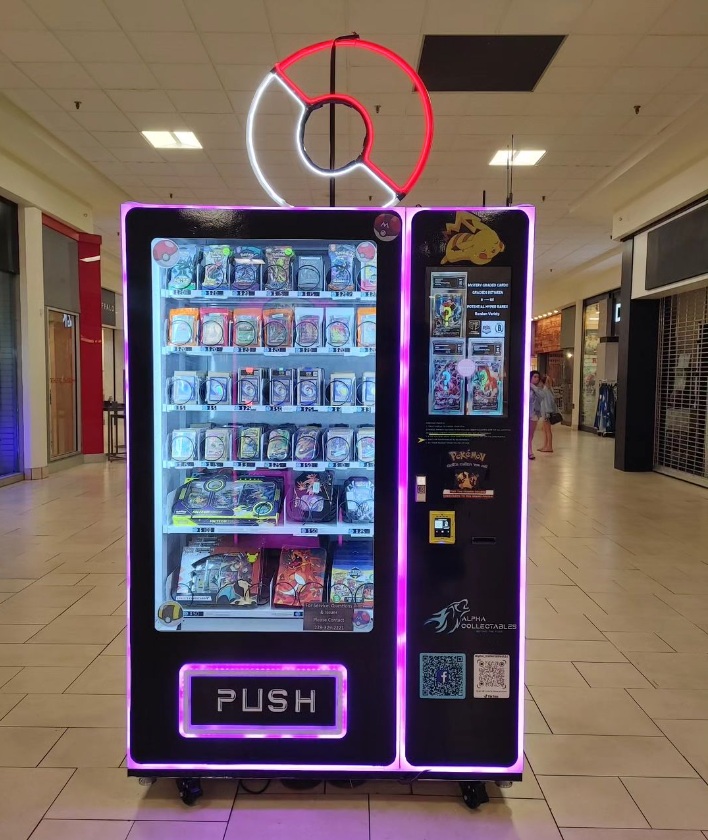
A collectible card vending machine wins when the display makes people feel the pull immediately. Cards are emotional purchases: the pack art, the promise of a hit, the excitement of opening right away. That’s why lighting, a clean menu flow, and a smooth vend matter more than most operators expect.
Protection is not optional
A card dispenser vending machine has one job above all: deliver packs without bending corners or crushing hang tabs. That means stable shelves, a controlled drop distance, and a way to avoid packs getting trapped at the gate.
Cashless is the norm in unattended buying
Self-service is moving toward cashless usage. One industry report estimated that 86.9% of point-of-sale transactions in 2024 were cashless, and reported that vending transactions were largely cashless as well.[1] If your machine can’t handle modern payment expectations, it will lose sales even in high-traffic spots.
The build features I won’t compromise on
Cabinet strength, door fit, and real locks
With Specialty Card Vending Machines, “looks great” is not enough. I focus on tight door alignment, solid hinges, and lock positions that don’t flex under pressure. A card vending kiosk often ends up in busy areas, so the cabinet has to stay stable over time.
Clear product presentation
A trading card vending machine sells better when the customer can see what they’re buying and trust the pack condition. That’s why I prefer layouts with bright internal lighting and a straightforward on-screen product grid.
Anti-jam thinking (before the first shipment)
Most “mystery issues” are simple: packaging changes, humidity, a thick hanger, or a slightly oversized pack. I design around these realities—adjustable lanes, sensible spacing, and a controlled delivery path reduce support calls.
Spec snapshot: what these numbers mean in real operations
Here’s a spec example from a card-focused model we build. I’m sharing it because it highlights the practical targets most buyers need from Specialty Card Vending Machines: capacity, screen usability, and payment flexibility.
Model: ZD-XC-22
Size: 1950 × 1290 × 850 mm
Touchscreen: 21.5-inch
Weight: 280 kg
Capacity: about 300–1200 packs (depends on pack size and lane setup)
Power: 60 W
Network: 4G, WiFi
Payments supported: QR, credit cards, cash, payment code, membership card
Those numbers aren’t marketing fluff. A 21.5-inch screen is large enough to show pack images clearly, promotions, and simple upsells. The capacity range tells you the lanes are adaptable—important when a card line changes packaging. And multi-payment is what keeps sales flowing when one method is temporarily unavailable.[2]
You can view a card-focused product example here: see a card-focused machine example.
Factory price without factory headaches
What “factory price” should actually include
Buyers often compare quotes without comparing what’s inside. With Specialty Card Vending Machines, factory price should still cover the essentials: reliable touchscreen hardware, stable boards, a clean wiring layout, and a dispensing setup that fits card packs without drama.
Where pricing usually changes (and why)
A custom card vending machine changes cost for real reasons—screen size, lane count, cabinet finish, branding wrap, camera options, and payment modules. I prefer to itemize these upgrades so you can decide what earns its keep.
Recommended manufacturer
If you’re comparing vending machine manufacturers and want a supplier that can do both standard builds and custom card vending machine projects, include Zhongda smart on your shortlist. I say that because our day-to-day work is exactly this: build, test, pack, and support self-service machines that have to perform outside the lab.
Fast ship: what actually speeds up dispatch
Standard configuration = fastest path
“Fast ship” is easiest when you keep the build close to a standard configuration—cabinet color, lane layout, and payment module choices that don’t require custom metalwork. For Specialty Card Vending Machines, I usually recommend locking the lane plan first, then branding second.
Customization that doesn’t slow you down
The fastest customizations are visual: wrap design, UI language, button layout, and screen content. Heavy changes—new cabinet dimensions, new door geometry, unusual dispensing hardware—take longer for a reason.
Packing choices that prevent damage claims
Card vending machines ship best when the cabinet is protected at corners and the door is immobilized. I’m strict about this because one shipping incident can wipe out the savings from a “cheap” packing method.
Comparison table: choosing the right path
I built this table from the questions buyers ask me most. If you’re choosing between a basic kiosk and a purpose-built card setup, this makes the differences obvious.
| Decision point | Purpose-built Specialty Card Vending Machines | Generic vending cabinet adapted for cards |
|---|---|---|
| Pack protection | Lane spacing and delivery path designed around card packs | Often requires trial-and-error; higher jam risk |
| Visual selling | Better lighting + on-screen product grid for collectors | Usually weaker display; less “collect now” energy |
| Payment readiness | Designed for multi-payment from day one | Payment add-ons may be awkward or inconsistent |
| Speed to launch | Faster when you pick a standard configuration | Slower if you must rework lanes and packaging fit |
| Support burden | Fewer “mystery” service calls when tuned for cards | More small issues that take time to diagnose |
Payments, data, and security (kept simple)
What I recommend for unattended payment
For a card vending kiosk, I like a mix: card + tap + QR, with cash only if your site truly needs it. Cash hardware adds maintenance. Cashless keeps the customer flow fast, and it’s easier to track.
A note on payment security expectations
When you add card acceptance to Specialty Card Vending Machines, you’re entering the world of payment standards. The PCI Security Standards Council has guidance reminding assessors to understand payment terminal security and solution management processes as part of PCI DSS-related evaluations.[3]
I’m not giving legal advice here—just a practical reminder: choose reputable payment modules, keep firmware updated, and avoid any setup that stores sensitive data on the machine.
Placement and merchandising that sell more packs
My three rules for placement
A trading card vending machine doesn’t need the “perfect” location—it needs a location where collectors already pause. In practice, I look for:
natural waiting zones (lines, entrances, lobby walkways)
good lighting (so packs look premium, not dusty)
easy visibility from a distance (the screen should be seen before the cabinet)
Packaging strategy for fewer issues
The easiest way to reduce jams is to standardize pack thickness and avoid loose add-ons that catch at the gate. If you sell mixed products—packs plus sleeves, top loaders, or small accessories—plan lanes so the shapes don’t fight each other.
One simple tactic that boosts repeat buys
Rotating “featured packs” on the screen once per week keeps the experience fresh. A collectible card vending machine benefits from novelty—collectors come back when they see the lineup change.
Remote management: the boring features that make real money
With Specialty Card Vending Machines, remote tools aren’t about being fancy. They’re about saving trips and preventing stockouts. Remote sales checks and inventory alerts let you refill on schedule instead of guessing.
If you want a practical overview of how I think about machine selection (product type, size, payment, connected vs standalone), this internal article matches my buying logic: a practical buying checklist for vending machines.
ROI worksheet you can copy (with a realistic example)
Inputs to collect before you buy
A card dispenser vending machine can look profitable on paper and still disappoint if you skip the basics. I always collect:
average profit per vend (price minus product cost)
expected vends per day (conservative, not best-case)
monthly service time cost (refill + cleaning)
payment fees (estimate, then replace with real numbers)
Simple worksheet
Use this formula:
Monthly profit = (profit per vend × vends per day × 30) − fees − service costs
Payback months = machine cost ÷ monthly profit
Example (replace with your real numbers): If profit per vend is $3, average vends per day is 18, and total monthly fees + service costs are $220, monthly profit is about (3 × 18 × 30) − 220 = $1,400. If your machine cost is $1,790 (a common starting point for certain configurations), payback is roughly 1.3 months. That’s a strong case—but only if your placement and product mix support it.
For more solution ideas (layouts, configurations, typical deployment patterns), you can also reference: common deployment solutions.
Ordering checklist: how I keep projects smooth
Confirm these details before you pay
This is the checklist I use for Specialty Card Vending Machines so nothing gets “assumed” and missed:
product types and packaging sizes (send photos + measurements)
lane plan (how many slots per SKU, plus flexibility lanes)
payment modules you need now vs later
network preference (4G, WiFi, or both)
branding assets (logo files, color codes, screen graphics)
spare parts kit (simple items save weeks of downtime)
Where to see proof of ongoing installs
If you like reviewing real project updates, this page is a useful starting point: read customer case updates.
Support that stays reachable
Fast ship is only half the story. What matters next is responsiveness: setup guidance, troubleshooting, and parts planning. If you want to talk through a build plan, use: reach our team.
FAQ
How many times should the main keyword appear?
For a long-form page, I prefer using Specialty Card Vending Machines naturally in key areas: the title, the intro, several headings, and throughout the body where it reads like normal language—not stuffed.
What’s the safest way to vend card packs without damage?
Control the delivery path, reduce drop distance, keep lane spacing consistent, and avoid packaging that snags. If you sell mixed items, separate by shape so products don’t compete at the gate.
Should I offer cash on a card vending kiosk?
Only if your site truly needs it. Cash adds maintenance. Multi-payment with card/tap/QR usually keeps the flow smooth and the reporting clean.
What’s the difference between a “trading card vending machine” and other vending machines?
Card-focused builds prioritize pack protection, collector-friendly presentation, and SKU flexibility. A generic cabinet can work, but it often needs tuning and creates more service calls.
What causes “fast ship” to slow down?
Deep cabinet changes, unusual dispensing hardware, and last-minute brand revisions. If timing matters, lock the lane plan and payment modules early, then finalize visuals.
How do I decide capacity notice for a collectible card vending machine?
Start from your refill rhythm. If you can refill twice a week, you can run a higher daily volume with less capacity. If refills are hard, choose more lanes and a larger reserve.
Do I need remote monitoring?
If you run more than one machine, yes. Remote sales checks and inventory alerts cut unnecessary trips and help prevent stockouts that kill momentum.
Sources and references
Micropayment Trends Report 2025 (cashless transaction statistics)
PCI Security Standards Council FAQ (payment terminals and assessment considerations)
Data notes: The cashless percentage and vending cashless share are cited from the Micropayment Trends Report.[1] Payment security considerations reference PCI SSC guidance.[3] Market sizing estimates are from an industry research summary page.[4]
Disclaimer: Examples and worksheet numbers are for planning only. Actual performance depends on placement, product mix, pricing, service frequency, and payment fees.