I’ve spent more than a decade building, placing, breaking, fixing, and scaling automated retail businesses. Some ideas burned cash fast. Others quietly turned into long-term winners. If you’re here wondering whether a nail vending machine is a real business or just another trend, let me answer that clearly: it can be profitable, repeatable, and surprisingly resilient when done right.
I remember the first time I tested beauty products in automated retail. The numbers looked good on paper, but real-world behavior told a deeper story. Convenience beats brand loyalty. Availability beats price. When nails, press-ons, gels, and accessories are placed where people already are, demand shows up on its own.
This guide is written from experience, not theory. I’ll walk you through what works, what fails, how margins really behave, and how to choose the right equipment so your investment doesn’t turn into an expensive metal box.
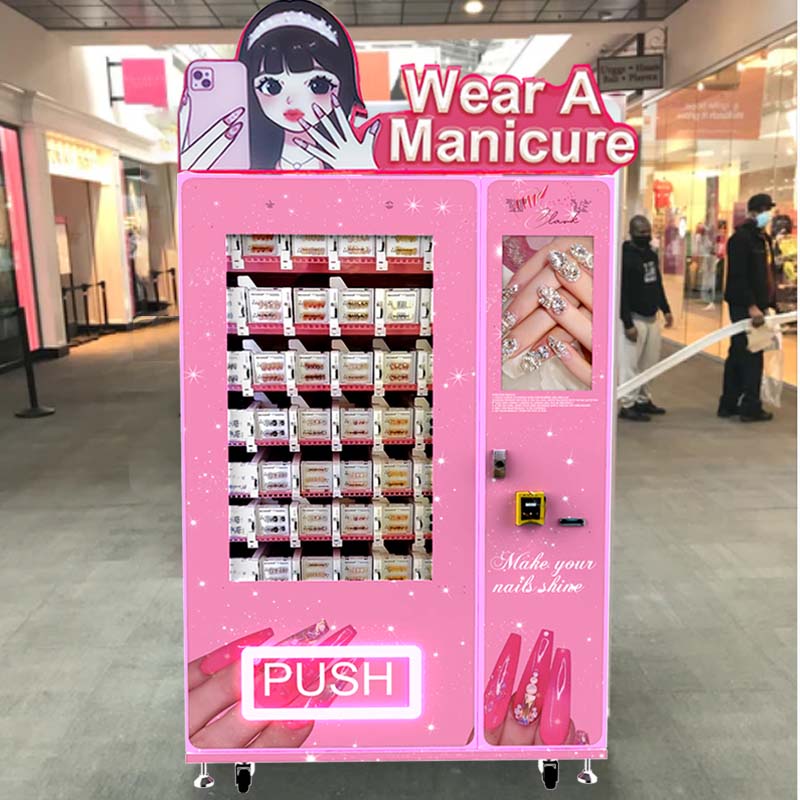
Why Nail Products Work So Well in Automated Retail
Beauty is one of the few categories where impulse purchases remain strong even as retail shifts. Nail products, in particular, sit at the intersection of low unit cost and high emotional value. That combination is gold for unattended sales.
A nail vending machine doesn’t rely on foot traffic alone. It relies on urgency. A chipped nail before an event. A forgotten accessory. A sudden decision to refresh a look. I’ve watched customers stand in front of machines debating for less than ten seconds before buying.
What makes nail items ideal:
Compact size with high perceived value
Low spoilage and long shelf life
Easy SKU rotation without retraining customers
Strong repeat purchase behavior
My clients often discover that nail-focused machines outperform snack machines in the same location, even with fewer daily transactions.
Impulse Economics Behind Nail Sales
Impulse-driven categories live or die by friction. Automated retail removes staff interaction, checkout lines, and judgment. People buy faster when no one is watching.
According to Statista, impulse purchases account for over 40% of beauty-related transactions in unattended or semi-attended environments (Statista, Beauty Consumer Behavior Report).
That behavior is exactly why a nail vending machine works when placed correctly.
Is a Nail Vending Machine Actually Profitable?
This is the question I get most often. Short answer: yes, but only under realistic assumptions.
I’ve seen machines gross underwhelming numbers when dropped blindly into low-traffic areas. I’ve also seen the same model generate consistent monthly returns once repositioned.
Here’s what profitability really depends on:
Product mix and price discipline
Machine reliability
Restocking frequency
Placement quality
A well-managed nail vending machine typically reaches break-even faster than food-based machines because waste is minimal and pricing flexibility is higher.
Typical Cost and Revenue Breakdown
| Item | Estimated Range |
|---|---|
| Machine investment | $3,000 – $8,000 |
| Initial inventory | $800 – $1,500 |
| Monthly gross revenue | $1,200 – $3,500 |
| Gross margin | 45% – 65% |
These are not marketing numbers. They’re based on machines I’ve personally overseen or audited for clients.
IBISWorld data shows automated retail margins in non-food categories consistently outperform traditional convenience retail (IBISWorld Automated Merchandising Report).
Choosing the Right Nail Vending Machine Equipment
Equipment quality matters more here than almost any other category. Nail products are small, varied in shape, and often packaged inconsistently. Cheap machines jam. Jams kill trust.
I’ve tested machines from multiple manufacturers. The ones that survive long-term deployments share a few traits: precise dispensing, modular trays, and remote monitoring.
This is where manufacturers like Zhongda smart stand out. Their machines are designed with configurable lanes and stable dispensing systems that handle beauty products without constant adjustment.
For a detailed look at available configurations, I often point new operators totheir product catalog, especially when planning multi-SKU layouts.
Features You Should Never Skip
Adjustable product slots for mixed nail items
Cashless payment compatibility
Inventory tracking
Remote fault alerts
One of my early mistakes was choosing a machine based on price alone. That decision cost me months of service calls and lost customer confidence.
A modern nail vending machine should operate quietly in the background, not demand constant babysitting.
Product Selection: What Actually Sells
I’ve rotated hundreds of SKUs through beauty-focused machines. Some items look great but don’t move. Others sell out faster than expected.
What consistently performs:
Press-on nail sets
Nail glue and quick fixes
Mini nail care tools
Seasonal color collections
Avoid overloading the machine with niche designs. Broad appeal wins. My clients often find that neutral tones outsell bold designs three to one.
If you want real-world examples of how product strategy affects performance, the case studies onthis page provide useful reference points.
Pricing Without Killing Volume
Pricing in a nail vending machine is less sensitive than most people expect. Convenience creates tolerance.
That said, pricing still needs logic:
Entry items that feel risk-free
Mid-range items that drive margin
Premium items for gifting or urgency
I remember one machine where lowering prices actually reduced revenue. The perceived value dropped. We reversed course, tightened the assortment, and revenue recovered within weeks.
Placement Strategy That Separates Winners from Failures
Machines don’t fail. Locations do.
The biggest mistake I see is treating placement as an afterthought. A nail vending machine thrives where appearance, timing, and convenience intersect.
High-performing environments share a pattern:
People waiting or transitioning
Limited retail alternatives nearby
Social or appearance-driven behavior
I’ve walked away from “busy” locations that didn’t convert. Foot traffic means nothing if intent isn’t there.
For operators exploring deployment models, the insights shared inthis solutions overview align closely with what I’ve seen work in practice.
Maintenance, Restocking, and Real-World Operations
This is where glossy business plans meet reality.
A nail vending machine doesn’t require daily attention, but it does demand consistency. Neglect shows fast.
My operational rules are simple:
Restock before empty, not after
Clean visible surfaces weekly
Rotate slow SKUs monthly
Clients who follow these basics almost always outperform those chasing constant expansion.
Zhongda smart machines support remote monitoring, which reduces unnecessary site visits and helps catch issues before customers notice. You can see practical deployment examples inthis case breakdown.