The eyelash vending machine market in 2026 sits at the intersection of two established consumer trends: continued demand for false eyelashes and the wider adoption of self-service retail. It is still a specialized vending category rather than a market with a widely accepted standalone global revenue figure, so it should not be measured by simply relabeling the value of the false eyelashes industry as “eyelash vending machine market size.”
A more useful way to evaluate the opportunity is to look at the underlying beauty category, the products that fit automated retail, the types of buyers investing in machines, current equipment costs, location economics, payment requirements, and the operational conditions required for a machine to generate repeat sales.
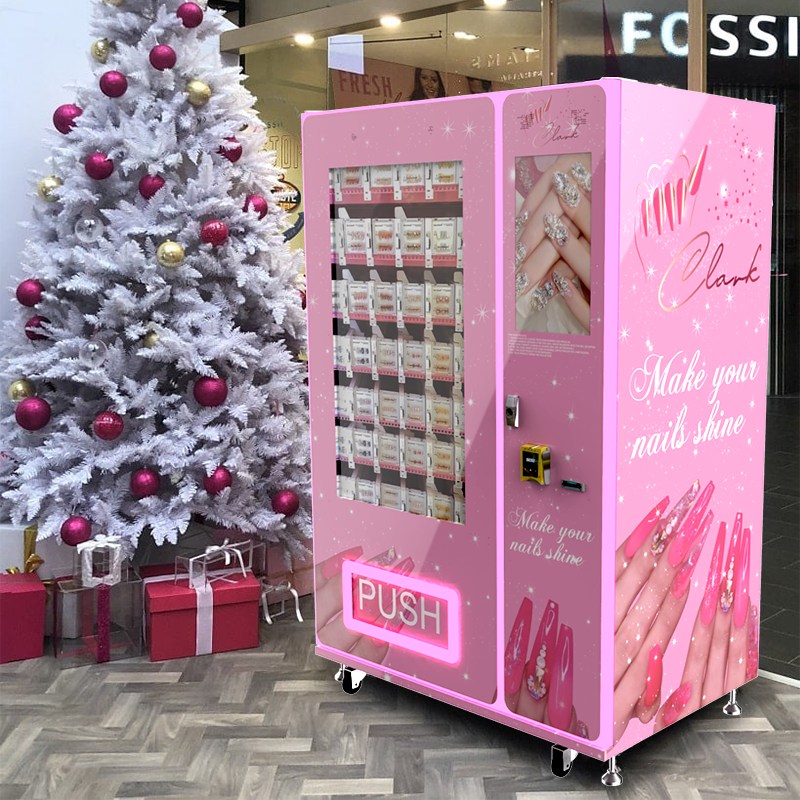
Grand View Research estimates the global false eyelashes market at approximately USD 2.1 billion in 2026, with the category projected to reach USD 3.4 billion by 2033, representing a 6.9% CAGR from 2026 to 2033. That does not mean eyelash vending machines represent a USD 2.1 billion market. It does, however, show that automated lash retail is being built around a sizeable and still-growing beauty category.
2026 market conclusion:
Eyelash vending is best viewed as a developing niche within beauty retail and unattended commerce. The strongest opportunities are not created by foot traffic alone. They appear where beauty purchase intent, compact product packaging, cashless payment, visible merchandising, reasonable location costs, and reliable restocking can be combined in one location.
2026 Eyelash Vending Machine Market at a Glance
| Market Indicator | Current Data | What It Means for Eyelash Vending |
|---|---|---|
| Global false eyelashes market | Approx. USD 2.1 billion in 2026 | Provides the underlying consumer-demand base for automated lash retail. |
| Global false eyelashes forecast | Approx. USD 3.4 billion by 2033 | The product category is expected to continue expanding rather than relying on a short-term novelty cycle. |
| 2026–2033 global CAGR | 6.9% | Supports continued experimentation with new lash formats, accessories and retail channels. |
| North America | 36.3% of global false-eyelash revenue in 2025 | North America remains an important region for testing beauty-focused unattended retail. |
| Strip lashes | 39.0% of false-eyelash market revenue in 2025 | Strip lashes remain an obvious core SKU for vending because they are familiar and easy to merchandise. |
| Synthetic lashes | 65.0% of market revenue in 2025 | Standardized synthetic products can work well with repeatable packaging and channel dimensions. |
| Convenience-store distribution | 42.9% of false-eyyelash market revenue in 2025 | Shows that the category is not dependent only on specialist beauty counters or online sales. |
Important: the figures above describe the broader false eyelashes market, not the revenue of eyelash vending machines themselves. At the time of this analysis, there is no widely accepted public dataset that isolates eyelash vending machines as a standalone global market.
How This Market Analysis Was Prepared
This analysis separates verified market data from operational assumptions. Public false-eyyelash industry research is used to assess underlying category demand. Vending-industry research is used to understand the broader development of self-service commerce. Current Zhongda Smart machine listings are used for real equipment specifications and published factory-price references.
Because a reliable global revenue figure specifically for eyelash vending machines is not publicly available, this report does not create one. Instead, it evaluates the market through five practical indicators:
- Underlying demand for false eyelashes and related beauty products
- Suitability of lash packaging for automated dispensing
- Current vending machine formats and equipment costs
- Location economics and unattended-retail behavior
- Operational requirements such as payment, restocking and remote management
This distinction matters for buyers. A growing beauty category can create an opportunity, but machine profitability still depends on the economics of an individual location.
What Is Driving the Eyelash Vending Machine Market in 2026?
The category is developing because eyelashes have several characteristics that fit automated retail unusually well. They are compact, visually driven, easy to display in boxed packaging and do not require refrigerated storage. A single machine can also carry multiple styles without requiring the floor area of a conventional beauty store.
1. False eyelashes remain a growing beauty category
Grand View Research estimates that the global false eyelashes market will grow from approximately USD 2.1 billion in 2026 to USD 3.4 billion by 2033. Strip lashes remained the largest product segment in 2025, while individual lashes are also expected to continue growing during the forecast period.
For vending operators, this creates room for more than one product type. A machine can be designed around everyday strip lashes, clusters, individual lashes and selected accessories rather than depending on one style.
2. Beauty purchases increasingly happen outside traditional beauty counters
A lash purchase does not always require a long consultation. Customers may be replacing a product, preparing for an event, buying an accessory they forgot, or choosing a familiar lash style they already use.
That makes self-service particularly relevant in locations where the customer already has a reason to think about appearance, makeup or an upcoming social activity.
3. Small product size creates efficient use of retail space
Eyelash boxes occupy little space compared with beverages, footwear, electronics or many other vending categories. Depending on machine configuration and package dimensions, a relatively compact cabinet can hold multiple SKUs and a useful amount of reserve inventory.
This is one reason tabletop and wall-mounted beauty vending machines have become practical alternatives for locations where a full-height cabinet is unnecessary.
4. Cashless payment reduces friction
Credit cards, mobile payment and QR-based payment systems allow a beauty vending machine to operate in locations where customers may not carry cash. The exact payment configuration should be selected for the target country rather than assuming one payment system will work equally well in every market.
5. Beauty brands can use vending as both a sales channel and a branded retail point
For a lash brand, the machine itself can function as a physical brand presence. Cabinet graphics, screen content, packaging and product assortment can all be coordinated so the vending point looks more like a compact beauty store than a generic vending cabinet.
Who Is Buying Eyelash Vending Machines?
The buyer base is broader than traditional vending operators. In 2026, the most relevant buyer groups include:
| Buyer Type | Typical Goal | Machine Priority |
|---|---|---|
| Lash brands | Add an offline self-service sales channel | Branding, screen merchandising and product presentation |
| Beauty salons and lash studios | Sell products outside staffed treatment time | Compact footprint and easy restocking |
| Existing vending operators | Add a higher-value beauty category | Remote management, payment compatibility and serviceability |
| Beauty retailers | Create satellite retail points | Capacity, brand presentation and inventory management |
| Entrepreneurs | Test a small unattended retail business | Entry cost, location economics and simple operation |
| Distributors and project buyers | Deploy multiple machines or build a local vending program | OEM/ODM capability, spare parts and scalable configuration |
Eyelash Vending Machine Types and 2026 Price Benchmarks
There is no single machine format that fits every lash business. Product dimensions, available floor space, expected sales volume, refill frequency and payment requirements should determine the cabinet.
Zhongda Smart currently publishes several beauty-vending configurations that illustrate how widely equipment size and capacity can vary. The figures below are current published product specifications rather than estimates.
| Model | Format | Size | Screen | Published Capacity | Network / Payment | Published Price* |
|---|---|---|---|---|---|---|
| ZD-ZM-7 | Tabletop | 800 × 600 × 450 mm | 7-inch | 112 eyelash boxes; 16 lanes | 4G / Wi-Fi / LAN; cash and card options | USD 784 |
| ZD-BGS-32 | Wall-mounted | 1000 × 650 × 250 mm | 32-inch touch screen | 80–150 pieces; 10 lanes | 4G / Wi-Fi; card, cash, QR and other configurable methods | USD 1,025 |
| ZD-C-7 | Compact floor-standing | 1950 × 800 × 850 mm | 7-inch touch screen | 36 cargo lanes; published reserve varies with product configuration | 4G / Wi-Fi / LAN; configurable payment hardware | USD 1,422 |
| ZD-XC-22 | Full-height beauty vending machine | 1955 × 1290 × 850 mm | 22-inch | Up to 900 pieces; 60 cargo lanes | 4G / Wi-Fi / LAN; cash and credit card | USD 2,943 |
*Published Zhongda Smart website prices checked on August 28, 2026. These prices are reference prices rather than binding quotations. Final project cost can change with payment hardware, vending mechanism, branding, software, certification requirements, order quantity, freight, duties and other customization.
The comparison also explains why asking only “How much does an eyelash vending machine cost?” can produce misleading answers. A USD 784 tabletop machine and a full-height machine with a larger display and substantially more product capacity solve different retail problems.
Which Eyelash Vending Machine Format Makes Sense?
Tabletop machines
A tabletop unit is useful when space is limited and the location already has a counter, reception area or secure surface. Salons, beauty studios, boutique stores and hotel self-service areas are typical examples.
The main trade-off is capacity. A compact cabinet may be economical to launch, but a fast-selling location can require more frequent replenishment.
Wall-mounted machines
Wall-mounted vending machines make use of vertical space and can place product images close to eye level. They are relevant for narrow beauty-store entrances, salon corridors and other locations where floor space has a high value.
Installation quality is important. Wall structure, mounting method, power access and service clearance should be confirmed before ordering.
Compact floor-standing machines
A compact floor-standing unit provides more product capacity while keeping the footprint smaller than many conventional vending cabinets. It can work well for operators who need more SKUs but do not need the largest cabinet available.
Full-height beauty vending machines
Larger machines make more sense when the operator wants a wider assortment, larger reserve inventory, a strong visual presence or a screen that can carry product videos and brand content.
They require more installation space and generally represent a larger landed investment, so the location should be validated before committing to the larger format.
Best Locations for an Eyelash Vending Machine
The best location is not automatically the location with the highest raw foot traffic. Beauty vending performs best when traffic and purchase intent overlap.
| Location | Why It Can Work | Main Risk to Check |
|---|---|---|
| Beauty salon or lash studio | Customers are already thinking about beauty products and may return regularly. | Traffic volume may be lower than a mall, so repeat purchase matters. |
| Shopping mall beauty corridor | Combines visibility with shoppers already browsing cosmetics, fashion and personal-care products. | Rent or revenue-share terms can reduce margin. |
| Entertainment and event venues | Can capture last-minute beauty purchases before social occasions. | Demand may vary heavily by event schedule and daypart. |
| Campus retail zones | Self-service purchasing is familiar and customers may value convenient access. | Price sensitivity and seasonal traffic should be considered. |
| Hotel or lifestyle accommodation | Can serve travelers who forgot beauty products or need last-minute personal-care items. | Product selection should match the guest profile rather than relying only on lashes. |
| Nightlife districts | Purchase timing and beauty intent can align well before events and evenings out. | Security, operating hours and vandalism risk need more attention. |
Zhongda Smart also has a published mini eyelash vending machine project in the United States, illustrating how compact beauty vending formats can be used for unattended lash retail.
How to Evaluate a Location Before Installing a Machine
Location validation does not require an elaborate market-research project. A short period of structured observation can eliminate many weak sites before money is committed.
- Count relevant foot traffic rather than total foot traffic.
- Observe whether people stop, queue or wait near the proposed position.
- Check visibility from normal walking directions.
- Identify nearby beauty, fashion or entertainment businesses.
- Confirm power, network and physical installation requirements.
- Calculate fixed rent or revenue-share cost before estimating profit.
- Check when the location is busiest: weekday, evening, weekend or event periods.
- Confirm who can access the machine for replenishment and service.
A location with fewer but more relevant shoppers can outperform a busy passageway where customers have no reason to stop.
What Products Should an Eyelash Vending Machine Sell?
Product selection should make the buying decision simple. Filling every channel with a different style can create choice without creating sales.
A practical initial assortment can be divided into four groups:
Core lashes
- Natural strip lashes
- Fuller or evening strip lashes
- Cluster lashes
- Selected individual-lash products
Application accessories
- Lash applicators
- Lash brushes
- Compact mirrors
- Suitable adhesive products where permitted and correctly labeled
Removal and care
- Removal products
- Cleaning or care accessories
- Travel-size beauty accessories
Premium or branded products
- Signature styles
- Limited collections
- Gift-ready packages
- Bundles combining lashes and tools
Grand View Research reported that strip lashes represented 39.0% of the false-eyelash market in 2025. That is an industry-level figure rather than a vending-machine sales share, but it supports using familiar strip-lash formats as part of an initial vending assortment.
Packaging Matters More in Vending Than It Does on a Shelf
A product can sell well online and still be unsuitable for a vending machine. Packaging has to survive loading, storage and the dispensing process.
Before finalizing the machine configuration, buyers should provide the manufacturer with actual product samples or accurate package dimensions. The important variables include:
- Package width, height and depth
- Total product weight
- Box rigidity
- Surface friction
- Whether the product can tilt or rotate inside a lane
- Whether a drop could damage the product or package
- How many units need to fit in each channel
For private-label projects, packaging and vending-machine channel design should be developed together. Changing the package after the machine has already been produced can create unnecessary mechanical problems.
Eyelash Vending Machine Pricing: Machine Price vs. Real Project Cost
The factory price of the cabinet is only one part of an eyelash vending project.
A more useful planning formula is:
Total launch cost = machine + payment hardware + customization + freight + duties/taxes + installation + initial inventory + location setup
| Cost Item | Why It Matters |
|---|---|
| Base machine | Determined by cabinet size, screen, vending system and standard configuration. |
| Payment hardware | Card readers, bill acceptors, coin systems and local payment integrations can change project cost. |
| Branding | Custom cabinet graphics, logo, interface design and lighting may require additional work. |
| Product-channel customization | Required when packaging does not fit the standard channel layout. |
| Freight | Varies substantially by machine dimensions, weight, destination and shipping method. |
| Import charges | Duties, taxes and local handling depend on the destination country. |
| Initial inventory | A machine cannot generate sales without enough opening stock and reserve stock. |
| Location cost | Rent, revenue share, deposit or installation charges can materially affect payback. |
For that reason, a buyer comparing two machines should compare landed project cost and expected operating cost rather than factory price alone.
Are Eyelash Vending Machines Profitable?
They can be profitable, but there is no universal monthly revenue figure. Location, product price, product cost, rent, payment fees, stock availability and refill efficiency determine the result.
The basic calculation is:
Monthly gross margin = (average selling price − product cost) × units sold
Monthly contribution = monthly gross margin − rent − payment fees − servicing and other operating costs
Estimated payback period = total launch cost ÷ monthly contribution
A simple scenario model
The following example is a planning model only. It is not a Zhongda Smart revenue claim or income guarantee.
Assumptions:
- Average selling price: USD 18
- Average merchandise cost: USD 6
- Gross margin before operating expenses: USD 12 per item
- Monthly location, payment and servicing costs: USD 600
- Total illustrative launch investment: USD 4,500
| Scenario | Units Sold / Month | Gross Margin | Operating Costs | Monthly Contribution | Illustrative Payback |
|---|---|---|---|---|---|
| Conservative | 60 | USD 720 | USD 600 | USD 120 | About 37.5 months |
| Base case | 120 | USD 1,440 | USD 600 | USD 840 | About 5.4 months |
| High-volume | 180 | USD 2,160 | USD 600 | USD 1,560 | About 2.9 months |
Under these assumptions, the operating break-even point before recovering the original machine investment is approximately 50 products per month, because USD 600 of monthly operating cost divided by USD 12 margin per product equals 50 units.
The example also shows why statements such as “an eyelash vending machine pays for itself in three months” should not be treated as a market rule. Three-month payback is possible only when the sales volume and margin support it.
The Operating Metrics That Matter Most
Monthly revenue alone does not explain whether a location is healthy. Operators should track enough data to understand why performance changes.
- Units sold per SKU: identifies which styles deserve more capacity.
- Sales per day and daypart: shows when demand actually occurs.
- Stockout frequency: identifies lost-sales risk.
- Gross margin by SKU: prevents high-volume products from hiding poor margins.
- Payment failure rate: helps separate demand problems from technical problems.
- Vend failure and refund rate: shows whether packaging and channels are working correctly.
- Restock interval: affects labor and route economics.
- Revenue per location cost: helps compare sites with different rent structures.
Remote inventory and machine-status monitoring becomes more important when an operator expands from one machine to multiple locations.
Regional Outlook for 2026
Regional false-eyelash data does not equal regional vending-machine demand, but it helps identify where the underlying beauty category is already substantial.
North America and the United States
North America represented approximately 36.3% of global false-eyelash revenue in 2025 according to Grand View Research. Its U.S. data estimates the false eyelashes market at approximately USD 639.3 million in 2026, with projected growth to USD 992.6 million by 2033.
For eyelash vending, the U.S. remains a logical market for beauty salons, mall operators, independent lash brands and vending businesses testing new product categories. Location cost, card-payment integration, local tax requirements and service coverage should be evaluated at project level.
Europe
Grand View Research estimates the European false eyelashes market at approximately USD 576.5 million in 2026, with a projected CAGR of 6.9% through 2033.
European projects should be configured around local payment preferences, electrical requirements, language needs and the rules that apply in the destination market rather than treating Europe as one identical operating environment.
Asia Pacific
Asia Pacific is estimated at approximately USD 547.7 million in false-eyelash revenue in 2026 and is projected to grow at a 7.4% CAGR from 2026 to 2033, making it the fastest-growing regional market in the current Grand View Research dataset.
The region is also highly diverse in payment behavior and retail format. QR payment, mobile wallets, cards and cash requirements differ by country, which makes configurable payment hardware important for imported machines.
These regional figures should be treated as indicators of underlying lash demand, not as estimates of regional eyelash vending machine sales.
Payment, Network and Remote Management Requirements
A machine that accepts the wrong payment method for its location can lose sales even when product demand is strong.
Before ordering, buyers should confirm:
- Which card reader is supported in the destination country
- Whether QR or mobile payment integration is required
- Whether cash acceptance is commercially necessary
- Whether the payment provider can operate over 4G, Wi-Fi or LAN
- How failed transactions and refunds are recorded
- Whether transaction and vend logs can be exported
- Whether sales, inventory and machine status can be monitored remotely
Payment systems should be configured according to applicable payment-security standards. Operators should avoid storing sensitive card information directly on the vending machine and should use established payment integrations designed for unattended retail.
Product Labeling and Compliance
False eyelashes, lash adhesives and related cosmetics can be subject to labeling, ingredient and consumer-product requirements depending on the destination country.
In the United States, buyers selling cosmetic products should review current FDA cosmetics labeling requirements and ensure that packaging, product identity, responsible-party information and applicable ingredient information are handled correctly.
The vending machine does not remove the operator's responsibility to sell compliant products. Private-label projects should review product rules before packaging is printed or inventory is shipped.
Requirements differ between jurisdictions. Buyers should verify local cosmetic, electrical, payment, accessibility, installation and commercial-location rules before deployment.
Major Risks in the Eyelash Vending Machine Business
Poor location economics
A visually attractive location can still fail if rent or revenue share consumes too much gross margin. Location cost should be tested against conservative sales assumptions before signing a long lease.
Wrong product-to-channel fit
Flexible packaging, oversized boxes or products that rotate inside the channel can cause vending failures. Product samples should be tested before production whenever possible.
Too many SKUs at launch
Variety is useful only when the operator can identify which products are selling. A smaller initial range generally produces clearer data and simplifies replenishment.
Best sellers repeatedly selling out
An operator may see healthy total sales while still losing revenue because the most popular two or three SKUs spend part of the week out of stock.
Weak local technical support
A small payment or dispensing issue can turn into extended downtime if spare parts, documentation and remote diagnostics are unavailable.
Overestimating payback speed
Revenue projections should be tested under conservative, base and high-volume scenarios instead of assuming that one successful location represents the whole market.
How to Choose an Eyelash Vending Machine Manufacturer
Machine selection should begin with the product and project requirements rather than the cabinet appearance.
Before requesting a quotation, prepare:
- Product photos
- Exact package dimensions
- Product weight
- Expected number of SKUs
- Desired capacity
- Destination country
- Required payment methods
- Preferred machine size
- Branding requirements
- Expected order quantity
Then evaluate the supplier on issues that affect the complete operating life of the machine:
- Can the channels be configured for the real lash packaging?
- Can the supplier perform or document test vending with product samples?
- Which payment systems can be integrated for the destination market?
- Does the machine support remote sales and inventory monitoring?
- Are wiring diagrams, manuals and spare-parts information available?
- How are software updates and remote technical support handled?
- Can cabinet graphics, UI, language and branding be customized?
- What is included in the warranty?
- Which certifications or documentation are available for the project?
- How will the machine be packed and shipped?
Zhongda Smart as an Eyelash Vending Machine Manufacturer
Zhongda Smart is a vending machine manufacturer based in Guangzhou, China. The company develops and supplies vending equipment for multiple unattended-retail applications and supports OEM/ODM projects for international distributors, vending operators, retail brands and project buyers.
For eyelash and beauty vending projects, current Zhongda Smart product listings include tabletop, wall-mounted, compact floor-standing and larger full-height machines. Configuration options vary by model and can include touch displays, 4G/Wi-Fi/LAN connectivity, cashless payment integration, custom cabinet branding and product-channel adjustment.
Buyers comparing formats can review the Zhongda Smart eyelash vending machine range and project examples before preparing a specification request.
The most useful approach is to send actual product dimensions and target payment requirements before choosing the final machine. This allows the equipment configuration to be based on the product rather than forcing the product into a standard layout after purchase.
Who Is a Good Fit for an Eyelash Vending Machine?
The business model is most suitable when several conditions are present at the same time:
- The products are compact and suitable for reliable automated dispensing.
- The location attracts consumers with relevant beauty or convenience intent.
- The products provide enough margin to cover location and operating costs.
- The operator can replenish stock consistently.
- Customers can use familiar local payment methods.
- Customer service and refund handling are clearly defined.
- The operator is willing to replace weak SKUs based on sales data.
It is a weaker fit when the location has expensive rent but unproven demand, when products are fragile or difficult to vend, or when the operator cannot service the machine regularly.
A Practical 2026 Launch Plan
Step 1: Define the product before the machine
Select the initial products and record exact package dimensions, weight and expected selling price.
Step 2: Compare two or three machine formats
Do not automatically buy the largest machine. Compare capacity, footprint, screen size, payment configuration and total landed cost.
Step 3: Validate one location
Observe traffic, stopping behavior, nearby businesses, operating hours and location costs before signing a long-term placement agreement.
Step 4: Start with a controlled assortment
Use enough SKUs to test different styles and price points without making the machine difficult to understand.
Step 5: Track each channel
Record opening stock, replenishment, units sold, margin, refunds and stockouts by SKU.
Step 6: Review the first 30–60 days
Replace products that consistently underperform, increase capacity for proven sellers and identify the actual refill interval.
Step 7: Scale only after the first location becomes predictable
A second machine should reproduce a working operating model rather than simply repeat the first purchase.
Eyelash Vending Machine Market Outlook: 2026–2030
The strongest case for continued development of the eyelash vending machine market is not based on a single forecast for the machines themselves. It comes from the combination of a growing false-eyelash category, continued adoption of unattended retail, better cashless-payment infrastructure and the suitability of small beauty products for compact automated stores.
Through 2030, several developments are likely to shape the category:
- More compact formats: tabletop and wall-mounted machines allow beauty vending to enter locations where conventional cabinets are too large.
- Stronger screen merchandising: high-resolution displays can show lash styles, application images and short product information.
- More localized payments: global projects increasingly require payment configurations matched to individual countries.
- Better remote management: inventory, machine status and sales data become increasingly important as operators add locations.
- More branded machines: beauty companies can treat vending as a physical extension of their brand rather than a generic dispensing point.
- Wider beauty assortments: machines may combine lashes with nails, cosmetics, hair accessories and other compact personal-care products when the location supports a broader assortment.
The market should therefore be treated as an emerging specialized retail channel rather than a guaranteed passive-income product. Equipment is only one part of the business. Product-market fit, placement, payment configuration and operating discipline determine whether a machine becomes a useful retail asset.
Frequently Asked Questions
How big is the eyelash vending machine market in 2026?
There is currently no widely accepted public dataset that isolates eyelash vending machines as a standalone global market. Grand View Research estimates the broader global false eyelashes market at approximately USD 2.1 billion in 2026 and projects it to reach USD 3.4 billion by 2033. These figures indicate underlying lash demand but should not be presented as eyelash vending machine revenue.
How much does an eyelash vending machine cost?
Price depends on machine size, capacity, screen, payment system and customization. As of August 28, 2026, Zhongda Smart's published examples range from USD 784 for the ZD-ZM-7 tabletop eyelash vending machine to USD 2,943 for the larger ZD-XC-22 configuration. Freight, payment hardware, duties, branding and project-specific customization can increase the final landed cost.
Are eyelash vending machines profitable?
They can be profitable when product margin, sales volume and location economics are favorable, but there is no standard revenue figure. Profitability should be calculated using actual selling price, product cost, monthly unit sales, rent or revenue share, payment fees, servicing costs and total launch investment.
What products can be sold in an eyelash vending machine?
Common products include strip lashes, cluster lashes, individual lashes, applicators, lash brushes, compact mirrors and suitable lash-care or removal products. Some operators also use beauty vending machines for nails, cosmetics and other small personal-care items. Product dimensions and packaging should be tested against the vending mechanism before production.
Where is the best place to put an eyelash vending machine?
Strong locations combine visibility with beauty or convenience purchase intent. Examples include beauty salons, lash studios, shopping-mall beauty corridors, entertainment venues, campuses, hotels and selected nightlife locations. High foot traffic alone does not guarantee sales if shoppers have little reason to stop or purchase beauty products.
How should I choose an eyelash vending machine manufacturer?
Compare manufacturers based on product-channel compatibility, payment integration, machine capacity, remote management, documentation, spare parts, warranty, technical support and OEM/ODM capability. Send the supplier real package dimensions, product weight, destination country and payment requirements before requesting the final machine configuration.
Sources and Data Notes
- Grand View Research: False Eyelashes Market Size, Share & Trends Analysis Report, updated June 2026. Used for global market size, forecast, CAGR, product, material, distribution-channel and regional indicators.
- Grand View Research Horizon: U.S., Europe and Asia Pacific false-eyyelash market datasets, updated June 2026. Regional figures in this article refer to the false eyelashes category rather than eyelash vending machine revenue.
- NAMA Foundation: State of Convenience Services Industry Census. Used as broader background on the development of self-service retail and vending.
- U.S. Food and Drug Administration: Cosmetics labeling guidance. Buyers should confirm current requirements applicable to the products they sell.
- PCI Security Standards Council: PCI DSS guidance for payment-data security.
- Zhongda Smart product listings: machine dimensions, capacity, screen, network, payment configurations and published reference prices were checked against current Zhongda Smart product pages.
Data limitation: Public false-eyelash market figures in this article are used as demand-side indicators. They should not be interpreted as the size or market share of the eyelash vending machine industry.
Pricing note: Published machine prices are provided only as reference points. Final factory quotations and landed project costs vary according to configuration, quantity, payment hardware, customization, shipping and destination-market requirements.
Disclaimer: This article provides general market, equipment and business-planning information. It does not constitute a revenue guarantee, legal advice, regulatory advice or investment advice. Product, payment, labeling, import, electrical and placement requirements vary by jurisdiction and project.
Prepared by: Zhongda Smart Product Team
Last updated: . Market figures and published Zhongda Smart machine specifications and prices were reviewed on this date.