Vending machine quality control should prove more than whether a finished machine can power on and complete one successful sale. A commercial vending machine has to keep its cabinet, dispensing system, controller, sensors, payment hardware, touchscreen, network connection, software, and temperature-control components working together over repeated operating cycles. At Zhongda Smart, inspection is built into manufacturing rather than left until packing. Our published manufacturing information describes incoming inspection, assembly checks, real-product vend testing, aging tests, and final acceptance, while our quality materials reference a 32-step standard inspection framework. For applicable configurations, extended testing can include a 48-hour burn-in window designed to expose intermittent problems before shipment. This guide explains what happens during that process, what we check, how failures are handled, and what buyers should verify before accepting a vending machine.
A reliable vending machine should pass more than a cosmetic inspection. The practical factory sequence covers incoming components, cabinet construction, wiring, controllers, motors, sensors, product delivery, payment communication, touchscreen functions, network connectivity, refrigeration where required, software configuration, repeated vending, aging operation, final acceptance, and packaging. A 48-hour testing process adds time to the inspection. That matters because loose connections, unstable electronics, network reconnection faults, temperature-control issues, and occasional dispensing errors do not always appear during the first few minutes after power-on.
This guide is based on Zhongda Smart's published manufacturing workflow and the practical inspection logic used for commercial vending equipment. Because different machine architectures require different checks, the exact test sheet for a spiral snack machine is not identical to the one used for a refrigerated elevator machine, locker system, or customized self-service kiosk.

What Vending Machine Quality Control Actually Means
A vending machine is easy to underestimate because most of its work happens behind a simple customer interaction. A customer sees a product, makes a selection, pays, and expects the item to appear. Inside the cabinet, however, that transaction may involve a touchscreen, application software, controller, payment interface, network connection, dispensing motor, sensor, elevator or conveyor, pickup door, transaction record, inventory update, and refrigeration system.
If one link in that chain behaves incorrectly, the customer does not care that the other components worked perfectly.
That is why vending machine quality control is better understood as system validation rather than final inspection.
A cosmetic check can confirm paint, graphics, door alignment, scratches, and visible damage. It cannot tell us whether a loose connector will interrupt a motor several hours later. A single successful payment cannot prove that the payment device will reconnect correctly after a restart. One successful vend cannot prove that the last item in the same lane will move with the same reliability as the first.
Factory testing has to answer several different questions:
- Was the machine built with the intended components?
- Was the cabinet assembled correctly?
- Are the electrical connections secure and serviceable?
- Does each product selection correspond to the correct channel?
- Can the intended merchandise be delivered repeatedly?
- Does the machine recognize successful and unsuccessful delivery?
- Does the payment hardware communicate correctly with the machine?
- Does the touchscreen remain responsive?
- Can the machine reconnect after an ordinary network interruption?
- Does refrigeration operate normally where fitted?
- Are the correct software, settings, branding, and accessories installed?
- Does the completed machine remain stable during extended powered operation?
Those questions are related, but they cannot all be answered at the same production station.
For example, a sheet-metal inspector can measure a cabinet opening before the touchscreen is installed. An assembly technician can verify harness routing before the machine is energized. A vending test can expose an unsuitable spiral pitch only after representative products are loaded. Refrigeration cycling needs time. Network recovery needs an actual connection. Final appearance inspection makes sense only after testing is complete.
The result is a layered process rather than one final checkpoint.
Inspection and Reliability Testing Are Not the Same Thing
A machine can pass inspection at one moment and still behave inconsistently over time.
Consider a motor connector that has not fully seated. During the first three test vends, electrical contact may be sufficient. After the door has been opened several times, the harness moves slightly and the fourth or tenth vend produces an error. A quick demonstration could miss it completely.
Another example is a network module. It may connect successfully when the machine is first powered. The more useful question is whether it can remain connected, recover from a temporary interruption, and return to normal operation after the machine restarts.
These are the kinds of issues that make vending machine reliability testing important in addition to normal inspection.
Inside Zhongda Smart's Factory Quality Framework
Zhongda Smart's manufacturing workflow covers more than final machine assembly. The current factory process published on our website moves through requirement definition, mechanical engineering, sheet-metal manufacturing, finishing, dispensing-system selection, electrical integration, software and payment integration, sample testing, production quality control, aging tests, final acceptance, and packaging.
More than 20 quality inspectors are included in our currently published manufacturing information. The purpose of that quality team is not to stand beside the packing area and inspect finished cabinets after every other decision has already been made. Quality checkpoints occur at different stages because defects have different origins.
Our detailed vending machine manufacturing process describes how specification, product fit, mechanical design, delivery systems, electrical architecture, sample validation, production checks, aging tests, and final acceptance fit together.
The workflow can be summarized in four broad layers.
| Quality Layer | Main Question | Typical Focus |
|---|---|---|
| Incoming Quality | Are the correct components entering production? | Part identity, quantity, configuration, condition, obvious defects |
| Process Quality | Is the machine being built according to the approved configuration? | Cabinet, wiring, mounting, shelves, hardware, software, branding |
| Functional Quality | Does the complete machine perform the required functions? | Vending, sensors, payment, touchscreen, network, cooling, remote functions |
| Release Quality | Is the approved machine ready to leave production? | Aging result, final appearance, settings, accessories, documentation, packing readiness |
This structure also explains why a standard machine and a customized machine should not receive identical test sheets.
A simple ambient spiral model does not need compressor-cycle monitoring. A locker machine needs compartment-door logic that a spiral machine does not have. An elevator model needs position and transfer checks. A customized self-service kiosk may introduce a scanner, printer, camera, additional lighting, or a special software function.
The inspection plan should follow the actual configuration.
How to Understand the 32-Step Inspection Framework
Zhongda Smart's published quality information references a 32-step standard quality inspection process. It is important to describe that information accurately.
The 32 steps represent the company's broader inspection framework. The public website does not currently publish every internal inspection item as a numbered 1-to-32 factory SOP. For that reason, the categories below explain how those checkpoints fit into the manufacturing process without pretending that the table is a verbatim copy of a confidential internal checklist.
In practical terms, those inspections can be understood through the following quality gates.
| Quality Gate | Typical Inspection Area | What a Problem Can Affect |
|---|---|---|
| 1. Incoming Components | Controllers, motors, screens, sensors, power supplies, locks, wiring, refrigeration components | The entire downstream assembly process |
| 2. Cabinet & Fabrication | Panels, door openings, shelf supports, hinges, mounting points | Alignment, strength, sealing, serviceability |
| 3. Surface & Appearance | Paint, panels, decals, branding, glass, visible finish | Commercial appearance and final acceptance |
| 4. Mechanical Assembly | Shelves, cargo lanes, motors, conveyors, elevator hardware, pickup system | Product movement and repeatability |
| 5. Electrical Integration | Harnesses, terminals, grounding, controllers, power distribution | Startup, safety, communication, intermittent faults |
| 6. Smart Functions | Touchscreen, software, payment, connectivity, telemetry | Customer transaction and remote operation |
| 7. Product & Thermal Testing | Real-product vending, sensor response, refrigeration where fitted | Delivery success and product condition |
| 8. Aging & Final Release | Extended operation, retest, final appearance, documentation, packaging | Shipment readiness |
Grouping the inspection process this way also prevents a common misunderstanding: thirty-two checks do not mean someone walks around a finished machine thirty-two times.
Some checkpoints happen before the cabinet exists. Others occur during assembly. Some require power. Some require real products. Others require time.
Why Multiple Quality Gates Work Better Than One Final Inspection
Imagine that the opening for a card reader is fabricated incorrectly. If that problem is discovered at the sheet-metal stage, the part can be corrected before painting and assembly.
If the same dimensional problem is discovered after paint, branding, wiring, screen installation, payment setup, and final assembly, the correction is slower and may affect several completed operations.
The same principle applies to software. A product-to-lane mapping problem is much easier to correct before a machine has completed factory acceptance than after it is already installed.
Early detection reduces rework. Final testing confirms the integrated result.
Quality Starts With Incoming Components
Finished-machine reliability begins with parts that may never be visible to the customer.
Motors, power supplies, connectors, controllers, sensors, fans, wiring harnesses, touchscreens, locks, payment interfaces, refrigeration components, and fabricated parts enter production before the completed vending machine can be tested.
Incoming inspection does not need to duplicate every test performed by the original component manufacturer. Its purpose is to stop incorrect, visibly damaged, or unsuitable parts from quietly moving into assembly.
Typical Incoming Checks
- Part number and model identification
- Required quantity
- Connector type
- Voltage or electrical specification where relevant
- Physical dimensions
- Visible shipping or handling damage
- Cable and insulation condition
- Display surface condition
- Motor movement where a functional sample check is required
- Sensor response where applicable
- Refrigeration-component condition
- Compatibility with the approved machine bill of materials
This stage sounds basic until a batch problem occurs.
A connector that is physically similar but electrically different can create assembly delays. A display with the wrong interface can fit the opening while failing to communicate with the controller. A power supply with an incorrect output can create a fault that looks like a controller problem.
Good vending machine quality assurance prevents as many of those problems as possible before technicians spend time installing the parts.
Traceability Helps When the Same Fault Appears Twice
One isolated failure may be random. Three machines with the same unusual symptom deserve investigation.
Manufacturing records make it easier to determine whether affected units share a component, assembly condition, software build, or configuration.
Without basic traceability, every machine becomes a separate troubleshooting project. With traceability, a quality team can look for patterns and determine whether corrective action should apply to additional units.
This process-oriented approach is consistent with the principles behind ISO 9001 quality management: controlled processes, defined requirements, performance evaluation, corrective action, and continual improvement.
Cabinet, Door, Lock, Glass, and Structural Inspection
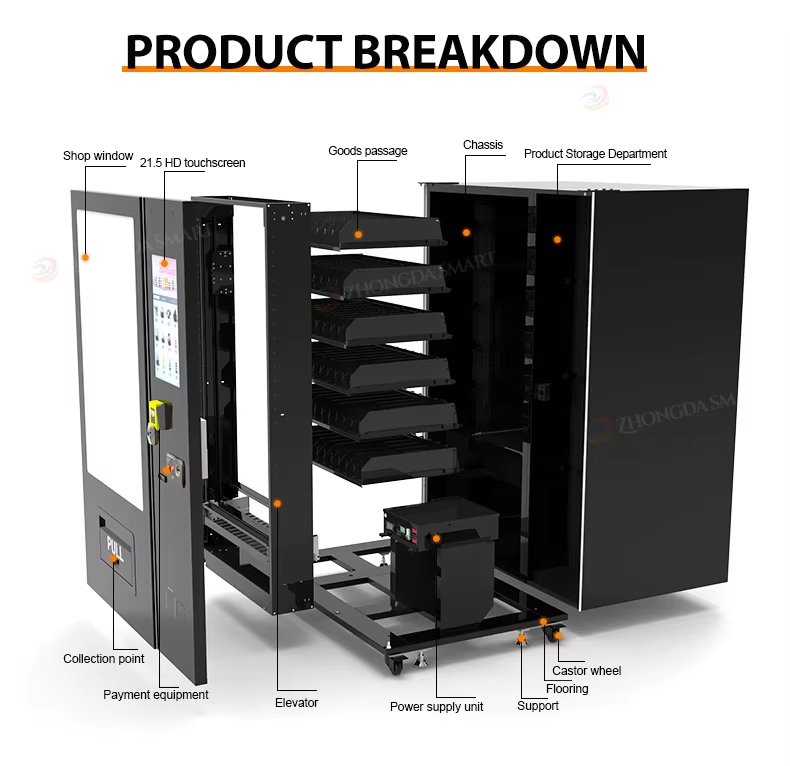
The steel cabinet is not decorative packaging around the electronics. It is the mechanical foundation of the machine.
It carries shelves, motors, the touchscreen, payment devices, lighting, wiring, controller hardware, locks, pickup mechanisms, loaded products, and refrigeration components where fitted.
A small structural error can affect several systems at once.
Door Alignment
The main door should open and close without rubbing, twisting, or placing unnecessary stress on wiring.
Inspectors look at:
- Door-to-cabinet alignment
- Hinge movement
- Panel gaps
- Lock engagement
- Seal contact where required
- Cable movement while the door opens
- Clearance around door-mounted hardware
Door alignment becomes especially important in refrigerated machines. Poor fit can affect sealing and thermal performance in addition to appearance.
Glass and Front Panels
Glass and visible panels are inspected for cracks, chips, severe scratches, poor seating, and installation stress.
A commercial machine should arrive without defects created during factory handling.
Shelf Supports and Internal Mounting Points
A shelf that sits several millimeters away from its intended position may still fit inside the cabinet, but product clearance can change.
On elevator systems, the relationship between shelf position and elevator pickup position is even more important. The machine must know where to collect the product, and the hardware has to physically match that programmed position.
Locks and Access Panels
Locks are checked for normal engagement and service access. The purpose is not to claim that a cabinet is impossible to attack. No responsible equipment manufacturer should make that promise.
Instead, factory quality inspection verifies that the specified lock and access hardware are installed correctly and function as designed.
Serviceability Is Part of Build Quality
A vending machine eventually needs cleaning, adjustment, inspection, or replacement parts.
Components that commonly require access should not be buried unnecessarily behind unrelated assemblies. The controller, power supply, motors, sensors, payment hardware, filters, fans, and serviceable refrigeration components should be reasonably accessible for the machine architecture.
Ease of repair does not make a machine less reliable. It reduces downtime when normal maintenance is eventually required.
Electrical Wiring and Controller Inspection
Electrical problems are often straightforward when they fail completely. Intermittent faults are harder.
A completely disconnected motor is easy to identify. A marginal connector that loses contact once every fifty cycles can waste much more service time because the machine appears normal when a technician arrives.
This is why electrical inspection and extended operation complement one another.
Before Power-On
The first electrical check should happen before power is applied.
Depending on configuration, technicians inspect:
- Harness routing
- Connector engagement
- Terminal tightness
- Grounding arrangement
- Cable insulation
- Protection near sheet-metal edges
- Clearance from moving mechanisms
- Door-harness movement
- Power-supply installation
- Controller mounting
- Sensor connections
- Refrigeration wiring where fitted
A cable can be electrically correct and still be routed badly.
If a harness crosses a hinge, sharp edge, elevator path, or service area, normal operation may eventually damage it. Cable routing is therefore both an assembly issue and a reliability issue.
First Power-On
Initial startup provides the first opportunity to see the complete electrical system operating together.
Technicians observe whether:
- The controller initializes normally.
- The display boots correctly.
- Lighting operates.
- Sensors report expected states.
- Motors respond.
- Payment hardware powers and communicates.
- Network hardware initializes.
- Fans operate normally.
- Refrigeration starts where required.
- Unexpected error messages appear.
Combined Loads Matter
Testing every device independently is useful, but the machine does not operate that way in service.
A smart refrigerated vending machine may have the screen, controller, network module, payment terminal, lighting, cooling system, fans, and a dispensing motor active within the same short period.
Vending machine reliability testing should therefore observe the machine under realistic combinations of load, not only isolated component tests.
Applicable Safety Requirements Depend on the Configuration
UL 751 covers defined categories of self-contained, payment-accepting vending equipment. Other requirements may apply depending on whether the machine includes refrigeration, heating, wireless equipment, specialized electrical functions, or other features.
The important purchasing lesson is simple: a standard number should never be treated as a universal certificate for every possible custom machine.
Buyers should confirm the certification or compliance scope against the actual model and final configuration being ordered.
Product Dispensing Reliability Testing
A vending machine earns nothing when the customer pays but the product stays on the shelf.
For that reason, product delivery is one of the most important parts of vending machine quality control.
Reliable vending depends on more than the motor.
Product width, height, depth, weight, surface texture, packaging stiffness, center of gravity, orientation, lane width, spiral pitch, conveyor contact, shelf position, pickup geometry, and sensor placement can all change the result.
Test the Merchandise, Not Just the Mechanism
A spiral can rotate perfectly with an empty lane and still fail with an unsuitable product.
That is why the best test uses the actual merchandise whenever practical.
For a custom vending project, buyers should provide:
- Product width
- Product height
- Product depth
- Product weight
- Package material
- Photos from multiple sides
- Storage orientation
- Fragility information
- Physical samples when possible
Zhongda Smart's custom vending machine program can adapt cabinet structure, shelf layout, product delivery, branding, payment configuration, connectivity, and software according to the project rather than assuming that every product belongs in the same type of machine.
One Successful Vend Is Not Enough
Suppose a lane holds ten products.
The first product may sit in a different position from the fifth. A completely full lane can create more package-to-package friction. The final product has no merchandise behind it. A flexible pouch may lean as quantity decreases.
Those differences are why repeated product testing is more useful than one demonstration.
Representative Channel Testing
Factory tests should not always use the easiest shelf.
Representative testing can cover:
- Upper shelves
- Middle shelves
- Lower shelves
- Narrow channels
- Wide channels
- Light products
- Heavy products
- Rigid boxes
- Flexible packages
- Full lanes
- Partially depleted lanes
The exact combination depends on the project.
A Typical Spiral-Vend Fault
Consider a lightweight rectangular package positioned in a spiral that is slightly too wide.
During the first vend, the package moves forward and drops normally. After several units have been sold, the next package can rotate inside the larger space. Instead of moving straight forward, it turns partially sideways and catches against the divider.
The motor is not defective.
The quality problem is product-to-lane compatibility.
The correction might involve a different spiral diameter, divider position, lane width, product orientation, or another delivery mechanism.
Elevator Delivery Adds More Test Points
An elevator system does more than release a product.
The platform has to:
- Receive the selection.
- Move to the intended shelf position.
- Stop accurately.
- Accept the product from the lane.
- Detect or confirm the delivery sequence.
- Move toward the pickup area.
- Present the item correctly.
- Return to the required position for the next transaction.
Every movement adds another interaction that should be checked.
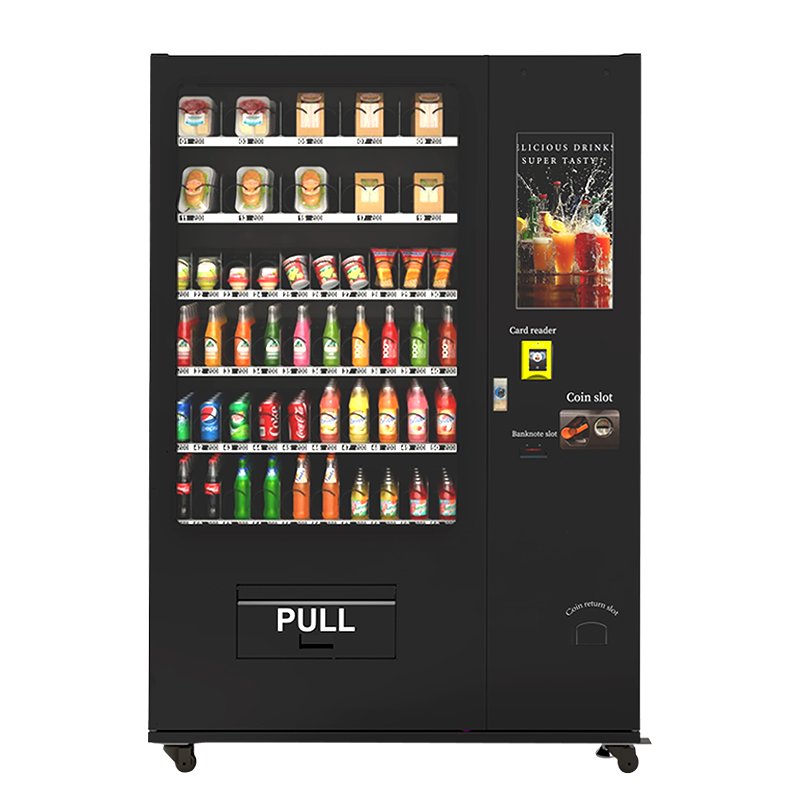
Payment and Transaction Testing
A commercial machine can be mechanically excellent and still fail at its most important business function if customers cannot complete payment.
Payment testing must therefore follow the full transaction rather than simply confirm that the terminal lights up.
The Transaction Path
A simplified cashless sale can involve:
- Product selection
- Price retrieval
- Payment request
- Payment authorization
- Machine authorization to vend
- Motor, elevator, locker, or conveyor action
- Delivery confirmation
- Transaction completion
- Inventory adjustment
- Sales-record update
If remote management is enabled, another layer of data transfer may follow.
A useful vending machine testing process checks the transaction as one connected sequence.
Successful Transactions Are Only Half the Test
The machine should also behave predictably when a normal transaction does not complete.
Examples include:
- A payment is declined.
- The customer cancels.
- The selected product is unavailable.
- The delivery sensor does not confirm a product.
- Network communication is temporarily interrupted.
- A payment device needs to reconnect after restart.
Exactly how refunds, reversals, or authorization outcomes are handled depends on the payment system and software configuration. Those rules should be tested with the selected terminal and payment environment rather than assumed from a generic statement that the machine "supports card payment."
Payment Data Security Is Not Just a Cabinet Feature
The PCI Security Standards Council states that PCI DSS provides baseline technical and operational requirements for protecting payment account data in environments where that data is stored, processed, or transmitted.
A vending-machine manufacturer can confirm mechanical installation, power, interface, and machine communication for compatible hardware. Payment compliance responsibilities still depend on the terminal, payment provider, processing architecture, merchant environment, software, and deployment arrangement.
Buyers should clarify those responsibilities before finalizing the payment configuration.
Touchscreen, Software, Network, and Remote Management
Modern vending equipment combines mechanical retail hardware with software.
A machine can have perfectly aligned shelves and still create a poor customer experience if the screen freezes, product mapping is wrong, prices do not match selections, or the network fails to reconnect.
Touchscreen Inspection
Touchscreen checks can include:
- Display quality
- Touch response
- Dead areas
- Navigation
- Product selection
- Price display
- Language content
- Image loading
- Transaction messages
- Restart behavior
For branded projects, visual inspection should also confirm the approved interface assets.
Product Mapping
A simple configuration error can create a serious commercial problem.
If the screen shows Product A but the assigned motor belongs to Product B, the machine can be mechanically perfect and still deliver the wrong item.
Product name, price, channel number, motor assignment, inventory count, and screen position should therefore be checked together.
Network Testing
Initial connection is only the beginning.
A connected machine should also be checked for normal reconnection behavior where the configuration supports it.
A temporary connection loss should not permanently freeze an unrelated vending function. After connectivity returns, the system should resume the functions designed for that connection.
Remote Management
Depending on machine configuration, remote functions can include:
- Sales reporting
- Inventory information
- Low-stock status
- Machine online/offline status
- Temperature information
- Fault reporting
- Remote pricing
- Advertising updates
- Selected remote commands
The quality test should match the functions actually purchased.
There is no benefit in checking a feature that is not part of the configuration, and there is no excuse for skipping a contracted feature because it is difficult to demonstrate.
Software Version Control
Customized machines should not quietly drift between software versions without documentation.
If a sample machine is approved with one build and later production units use another, the manufacturer should know what changed and why.
Version control makes troubleshooting easier because technicians can distinguish a hardware problem from a software difference.
Refrigeration and Temperature Testing
Refrigerated machines need additional time because temperature behavior cannot be judged from a short power-on test.
The cooling system has to start, pull the cabinet toward the configured range, cycle, move air through the storage area, respond to sensors, and reject heat.
Cooling Pull-Down
During initial cooling, technicians can observe:
- Compressor startup
- Fan operation
- Unusual vibration
- Unexpected noise
- Controller readings
- Temperature movement
- Airflow
- Condensation behavior
A single temperature reading is not enough. The trend matters.
Stable Cycling
After the machine reaches its intended operating condition, technicians need to observe whether the refrigeration system cycles normally.
A compressor that never stops, a fan that intermittently stalls, or a sensor that reports unrealistic values can all create problems even when one manual temperature measurement looks acceptable.
Product Loading Can Change Airflow
An empty refrigerated cabinet and a heavily stocked cabinet do not have identical airflow conditions.
Products, dividers, shelves, and packaging can obstruct circulation if loaded incorrectly.
That is one reason refrigerated vending machine quality control should consider the intended loading pattern rather than looking only at the compressor specification.
Food Applications Need an Operating Safety Plan
When a machine sells time/temperature control for safety foods, refrigeration equipment is only one part of the operating system.
Product receiving, loading, storage, cleaning, shelf life, temperature monitoring, and applicable food-safety requirements also matter.
The FDA Food Code uses 41°F (5°C) or below as an important cold-holding reference for applicable time/temperature control for safety foods. That value should not be treated as a universal setting for every product or machine. Operators need to follow the requirements that apply to the specific merchandise and operating process.
Energy Efficiency Also Affects Long-Term Cost
ENERGY STAR currently reports that certified refrigerated beverage vending machines are on average about 9% more efficient and can save approximately 1,000 kWh annually compared with standard models covered by its comparison.
This is useful industry context, not a claim that every Zhongda Smart model automatically meets that certification.
The data illustrate why insulation, compressor efficiency, fan motors, lighting, airflow, and control logic deserve attention when refrigerated equipment is evaluated.
Inside the 48-Hour Testing Process
A short functional demonstration answers one question:
Can this machine work right now?
A longer test asks a better question:
Will the integrated machine continue behaving normally after its components have been operating, cycling, warming, cooling, reconnecting, and dispensing for an extended period?
Zhongda Smart's current manufacturing process publicly identifies aging testing before final acceptance, and our published materials also reference a 48-hour burn-in test. For applicable machine configurations, a structured 48-hour testing window gives the factory more time to observe faults that may not be visible during initial commissioning.
The exact sequence can be adjusted according to machine architecture, refrigeration, software, payment hardware, and the customer's agreed acceptance criteria. The timeline below shows how a practical 48-hour validation window can be organized.
| Time Window | Primary Focus | Typical Checks |
|---|---|---|
| Before Hour 0 | Pre-test release | Configuration, cabinet, wiring, software, products, payment hardware, visible condition |
| Hours 0–4 | Commissioning | Startup, touchscreen, motors, sensors, payment, network, initial vending, cooling pull-down |
| Hours 4–12 | Early stability | Repeated vending, communication stability, electrical observation, refrigeration operation |
| Hours 12–24 | Day-one endurance | Random channel tests, payment retest, sensor behavior, cooling cycles, software stability |
| Hours 24–36 | Recovery & repeatability | Controlled restart, network reconnection, payment reconnection, selected functional retests |
| Hours 36–48 | Final endurance | Representative vending, remote functions, temperature stability, alarms, abnormal noise |
| After Hour 48 | Final acceptance | Failure review, corrective action status, final function check, appearance, accessories, documentation |
Before Hour 0: The Machine Must Be Ready for Aging
A machine with an obvious assembly problem should not be placed into an aging test simply to start the clock.
Before extended operation begins, technicians confirm that basic manufacturing checks have been completed.
This pre-test review can include:
- Correct machine configuration
- Correct screen and controller
- Correct dispensing hardware
- Wiring inspection completed
- Software installed
- Product mapping completed
- Payment hardware installed where required
- Network hardware configured
- Refrigeration system ready where fitted
- Representative merchandise available where required
The goal is to use aging time to find intermittent or time-dependent faults, not defects that should already have been caught during assembly.
Hours 0–4: Startup and Baseline Function
The first several hours establish the baseline.
The machine is powered, the controller initializes, software loads, peripherals connect, and basic vending begins.
For an ambient machine, technicians can concentrate on electrical stability, touchscreen response, motors, sensors, payment communication, network connection, and product delivery.
For a refrigerated model, cooling pull-down starts at the same time.
This early window often exposes obvious integration mistakes such as an incorrect motor mapping, sensor configuration error, unstable peripheral, improperly connected harness, or payment device that does not communicate with the selected controller configuration.
Hours 4–12: Let the Integrated Machine Operate
This period is where a burn-in test starts becoming different from a demonstration.
Electronic components have been powered for longer. The cabinet has reached a more stable operating temperature. Refrigeration may have completed initial pull-down. Network hardware has remained connected. Motors have been used repeatedly.
Technicians can perform additional representative vends and observe whether any subsystem behaves differently from its startup condition.
Hours 12–24: Day-One Endurance
By this stage, the machine has been operating long enough for some intermittent problems to reveal themselves.
A marginal connector may become unstable. A fan may develop abnormal noise after sustained operation. A display problem may appear only after several hours. A communication module may have disconnected and failed to recover.
Refrigerated equipment has also had time to cycle rather than simply cool from its initial temperature.
This is why 48-hour vending machine testing provides information a quick test cannot.
Hours 24–36: Recovery Tests
A machine will eventually be restarted during its service life.
Installation, maintenance, software updates, power interruptions, or troubleshooting can all cause a restart.
A controlled restart during factory testing can verify whether:
- The controller boots normally.
- The touchscreen application loads.
- Product and price configuration remain intact.
- The network reconnects.
- The payment device reconnects.
- Remote management recognizes the machine again.
- Refrigeration control resumes.
- The machine returns to a sell-ready state.
This check can prevent a frustrating problem: a machine that works perfectly until the first time someone turns it off.
Hours 36–48: Final Endurance Window
The final section of the test is not simply passive waiting.
Representative functions are checked again after the machine has been operating for an extended period.
Depending on the configuration, this can include:
- Random product selections
- Payment transactions
- Elevator travel
- Locker releases
- Drop-sensor response
- Network status
- Remote records
- Temperature readings
- Compressor and fan behavior
- Touchscreen response
- Error and alarm review
After Hour 48: The Clock Does Not Automatically Mean Pass
Forty-eight hours of elapsed time is not itself an acceptance result.
The machine still needs a release decision.
If a problem was recorded during the test, technicians have to confirm whether the root cause was identified, corrected, and retested.
Only then should the machine move into final acceptance.
What the 48-Hour Window Is Good at Finding
Extended vending machine reliability testing can provide additional opportunities to expose:
- Intermittent electrical connections
- Unstable power behavior
- Display or touchscreen instability
- Communication dropouts
- Network reconnection problems
- Payment-device reconnection issues
- Sensor inconsistency
- Motor irregularities
- Elevator-position problems
- Cooling-cycle abnormalities
- Unexpected fan or compressor noise
- Software faults that do not appear immediately after startup
What a 48-Hour Test Cannot Guarantee
A 48-hour burn-in is useful, but it is not magic.
It cannot simulate every transaction a machine will complete over its entire working life. It cannot predict shipping damage. It cannot prevent incorrect loading. It cannot eliminate network outages, payment-provider interruptions, misuse, neglected maintenance, or normal wear.
Its purpose is narrower and more realistic: reduce the probability that an early manufacturing, integration, or intermittent operating problem leaves the factory undetected.
Do not approve a machine because it completed one attractive demonstration. Approve it after the real transaction path has been exercised repeatedly: select, pay, dispense, detect, record, reconnect, restart, and test again.
Short Inspection vs. Structured 48-Hour Testing
| Test Area | Short Demonstration | Structured 48-Hour Test |
|---|---|---|
| Startup | Can be checked | Checked plus later restart behavior |
| Product Vend | Usually a few cycles | Can be repeated at several times during the test |
| Intermittent Connection | Easy to miss | More opportunity to appear |
| Payment Communication | Initial transaction | Initial and later transaction checks |
| Network | Initial connection | Longer observation and reconnection opportunity |
| Refrigeration | Limited temperature information | Pull-down plus repeated operating cycles |
| Software Stability | Short observation | Extended powered operation |
| Final Acceptance | May follow immediately | Follows review of aging-test results |
What Happens When a Machine Fails a Test
A quality-control process that never records a failure is not automatically an excellent process.
Testing exists to find problems.
The useful question is what happens after a fault appears.
Step 1: Record the Condition
A useful fault record identifies enough information to reproduce the event.
That can include:
- Machine identification
- Time of failure
- Product channel
- Subsystem involved
- Error message
- Software version
- Payment hardware where relevant
- Temperature where relevant
- Network status
- Whether the failure repeated
Step 2: Reproduce the Fault
An intermittent problem is much easier to solve once engineers can make it happen again.
They may repeat the same selection, use the same lane, inspect connectors, swap a known-good component, restart the subsystem, compare software settings, or check another machine with the same configuration.
Step 3: Separate Symptom From Root Cause
Suppose a motor does not rotate.
The motor itself is only one possible cause.
The actual problem could be:
- The motor
- The connector
- The harness
- The controller output
- The software mapping
- A mechanical obstruction
- A power issue
Replacing the motor without understanding the cause can make the machine appear repaired while leaving the real problem in place.
Step 4: Correct the Cause
Corrective action can involve:
- Replacing a component
- Reseating or replacing a connector
- Adjusting a shelf or channel
- Changing a dispensing configuration
- Correcting wiring
- Updating software
- Changing a parameter
- Adjusting a sensor
- Improving mechanical clearance
Step 5: Retest
Repair is not the same as proof.
After corrective action, the affected function must be tested again.
A significant change may require repeating a relevant portion of the aging cycle or broader acceptance process.
Step 6: Look for a Pattern
If the same fault appears on several units, quality control moves beyond one machine.
The team should investigate whether those units share a component lot, assembly process, hardware revision, software version, or configuration.
This is how production quality control becomes preventive rather than purely reactive.
How Custom Machines Change the Test Plan
Custom vending machines require more attention because every new function creates another interaction that can affect the complete system.
Customization can be superficial or deep.
Changing cabinet graphics has little effect on dispensing logic. Changing the product delivery system can affect shelves, sensors, motors, software, pickup geometry, and customer instructions.
Mechanical Customization
If a project changes:
- Cabinet dimensions
- Shelf spacing
- Lane width
- Pickup opening
- Elevator travel
- Locker dimensions
the mechanical acceptance test should change with it.
Electrical Customization
Additional devices such as scanners, cameras, special lighting, printers, displays, or electronic locks change power and wiring requirements.
The added hardware needs to be inspected as part of the complete electrical architecture rather than treated as an independent accessory.
Software Customization
Customized interfaces, API functions, loyalty systems, coupons, age-verification workflows, special inventory rules, or third-party integrations need written acceptance criteria.
"Software works" is too vague.
A better specification describes exactly which function must occur after each user action.
Payment Customization
A door cutout designed around one terminal may not fit another. Communication requirements can also differ.
The final payment device should therefore be confirmed early enough to coordinate mechanical design, power, software, and transaction testing.
Product Customization
This is where physical samples are especially valuable.
A buyer may provide a dimension of 100 × 70 × 25 mm, but those numbers do not tell us whether the package is slippery, flexible, top-heavy, tapered, or easily damaged.
The same dimensions can behave very differently inside a vending lane.
This is why real-product testing is one of the most valuable steps in a custom vending machine project.
Factory Acceptance Testing for Buyers
Buyers do not need to understand every wire inside a vending machine to perform meaningful factory acceptance.
They need a clear specification.
The weaker the specification, the harder it becomes to decide whether the finished machine is correct.
Define the Product First
The manufacturer should know:
- What will be sold
- Package dimensions
- Weight
- Required capacity
- Fragility
- Storage orientation
- Temperature requirement
Define the Machine Functions
The order should also define:
- Dispensing method
- Screen configuration
- Payment hardware
- Network connection
- Remote management
- Software language
- Branding
- Operating voltage
- Temperature-control requirements
- Project-specific functions
Agree on Acceptance Evidence
Useful evidence can include:
- Finished-machine photographs
- Machine identification
- Configuration confirmation
- Product-vending video
- Touchscreen demonstration
- Payment demonstration
- Remote-management demonstration
- Temperature evidence for refrigerated models
- Aging-test record where applicable
- Accessories list
- Packaging photographs
Use an Approved Sample for Larger Custom Projects
For a custom batch, the approved sample can become the physical reference for repeat production.
That reference can include:
- Cabinet dimensions
- Exterior finish
- Artwork
- Screen interface
- Delivery hardware
- Shelf layout
- Payment equipment
- Network hardware
- Software version
- Accessories
Without configuration control, later machines can gradually drift away from the approved unit.
A Factory Acceptance Matrix
| Category | Requirement to Confirm | Useful Evidence |
|---|---|---|
| Cabinet | Dimensions, structure, finish, door | Photos / measurements |
| Product Layout | Shelves, lanes, capacity | Loaded-machine photos |
| Dispensing | Representative products vend correctly | Repeated-vend video |
| Payment | Configured device communicates | Transaction demonstration |
| Touchscreen | UI and product mapping | Screen video |
| Network | Required connection established | Online-status demonstration |
| Remote Functions | Purchased functions available | Platform demonstration |
| Temperature | Agreed performance where required | Temperature record |
| Aging | Extended test completed as agreed | Factory test record |
| Final Release | No unresolved acceptance issues | Final inspection confirmation |
How Quality Affects Operating Cost
The invoice price is visible before a machine is purchased.
The cost of poor reliability appears later.
Downtime can create lost sales, refunds, service visits, transportation cost, replacement parts, customer complaints, and extra management time.
This is why vending machine quality control has a commercial value even though it does not directly appear as a feature on the touchscreen.
An Illustrative Downtime Calculation
Assume a machine normally produces $90 in daily gross sales.
If a recurring communication or dispensing fault creates four full days of downtime per month:
$90 × 4 days = $360 of monthly gross sales opportunity unavailable during downtime.
Across twelve months:
$360 × 12 = $4,320.
This is an illustrative arithmetic example, not a sales forecast. Actual performance can be much higher or lower, and operating profit is different from gross sales.
The point is that even a modest reliability problem can cost more over time than a small difference in initial equipment price.
Component Price Is Not the Same as Component Cost
A cheaper connector or power supply may reduce the factory bill of materials.
If it creates repeated field failures, the total economic result can be worse.
On the other hand, quality control does not mean placing the most expensive part in every machine.
The goal is appropriate engineering: components should match the expected workload, environment, functions, service strategy, and required life.
Serviceability Changes Downtime
Two machines can use similar motors but have very different repair time.
If one motor is accessible from the front and the other requires removal of several unrelated assemblies, the same component failure produces different service costs.
That is why maintainability belongs in a serious equipment-quality discussion.
How to Evaluate a Vending Machine Manufacturer
A finished product photo can show exterior design. It tells you very little about manufacturing control.
When comparing suppliers, ask questions that reveal how the machine is actually built and tested.
Ask Where Quality Control Begins
If the answer is "before shipping," ask what happens earlier.
A mature process should be able to explain incoming inspection, assembly checks, functional testing, aging, and final release.
Ask How the Manufacturer Tests Your Product
If the merchandise is unusual, send a sample.
Then ask for a video of that exact product being dispensed from the proposed mechanism.
This is far more useful than watching an unrelated snack package vend successfully.
Ask Whether Aging Testing Is Part of Production
Zhongda Smart's published manufacturing workflow includes aging tests before final acceptance. For applicable configurations, extended testing can use a 48-hour burn-in period to give intermittent issues more time to appear.
Ask What Happens After a Test Failure
A good answer should include corrective action and retesting.
A weak answer is simply, "We restart the machine and it works."
Ask Who Controls the Machine Architecture
A manufacturer able to coordinate cabinet structure, shelf design, delivery mechanism, wiring, controller integration, software, payment hardware, and final assembly has more opportunities to solve compatibility problems within one engineering process.
Ask About Spare Parts
Common spare requirements can include:
- Motors
- Sensors
- Power supplies
- Fans
- Locks
- Control boards
- Display components
- Network modules
The correct package depends on machine type and fleet size.
Ask About Warranty and Technical Support
Zhongda Smart publishes an after-sales guarantee and service policy describing the current warranty framework, replacement-parts support, and remote technical assistance.
Quality control reduces the probability of early defects. It does not remove the need for support.
Ask to See Manufacturing Evidence
Useful evidence can include:
- Factory photographs
- Production video
- Test video
- Actual-product vending video
- Internal machine views
- Temperature records
- Configuration documentation
- Packing photographs
Specific evidence tells a buyer more than general claims such as "high quality" or "premium components."
Quality Control After Delivery
Factory testing ends when the machine is released. Reliability management does not.
Transportation, installation, loading, cleaning, ventilation, software changes, payment configuration, and maintenance all affect field performance.
Inspect Before and During Unpacking
Before removing the packaging, look for obvious impact, penetration, water exposure, or distortion.
Photograph any visible concern before the packaging is discarded.
After unpacking, inspect:
- Cabinet panels
- Glass
- Door alignment
- Screen
- Payment hardware
- Internal shelves
- Loose components
- Accessories
Check Installation Conditions
Before commercial operation:
- Place the machine securely.
- Confirm it is level where required.
- Provide adequate ventilation.
- Confirm the correct power supply.
- Connect the intended network.
- Activate payment services.
- Allow refrigeration to stabilize according to the applicable instructions.
- Test representative products again.
Retest When Products Change
A vending lane is configured around physical merchandise.
If a supplier changes package dimensions, material, or weight, the new version may not behave exactly like the old one.
Operators should run a short product test after meaningful packaging changes.
Keep Refrigeration Airflow Clear
Dust, blocked vents, and overloaded shelves can make refrigeration work harder.
Planned cleaning and airflow inspection are much better than waiting for a temperature problem.
Use Remote Data When Available
A connected machine can help an operator identify:
- Low inventory
- Loss of connectivity
- Temperature abnormalities
- Fault status
- Unusual transaction patterns
Remote information does not replace physical maintenance, but it can reduce the time between the beginning of a problem and operator response.
Track Repeat Failures
A simple maintenance record can contain:
- Date
- Machine identification
- Fault description
- Error code
- Component replaced
- Corrective action
- Technician notes
Over time, those records can reveal patterns that individual service calls hide.
Complete Vending Machine Quality Control Checklist
The following checklist is designed for buyers reviewing a sample, accepting a custom machine, or comparing factory testing procedures.
| Inspection Item | What to Check | Suggested Evidence |
|---|---|---|
| Machine Identity | Correct model and configuration | Nameplate / configuration record |
| Cabinet | No deformation, severe scratches, unsafe edges, or abnormal gaps | Photos |
| Door | Smooth opening, alignment, proper closing | Video |
| Lock | Correct operation | Functional demonstration |
| Glass | No chips, cracks, or unacceptable damage | Photos |
| Wiring | Secure connectors and suitable routing | Internal inspection |
| Screen | Touch response, images, pricing, navigation | Video |
| Product Mapping | Correct product, price, and channel relationship | Live selection test |
| Product Fit | Products load without excessive compression or interference | Loaded-channel photos |
| Dispensing | Repeated representative vends | Test video |
| Sensor | Delivery status detected where fitted | Functional demonstration |
| Elevator | Accurate movement, transfer, pickup | Repeated-cycle video |
| Locker | Correct compartment release and status | Functional test |
| Payment | Selected hardware communicates with machine | Transaction test |
| Network | Connection and expected reconnection behavior | Online-status demonstration |
| Remote System | Purchased telemetry and management functions | Platform demonstration |
| Refrigeration | Cooling, fans, compressor, controller, airflow | Temperature record |
| Restart | Machine returns to normal operating state | Restart test |
| Aging Test | Required extended operation completed | Test record |
| Appearance | Approved color, graphics, logo, finish | Final photos |
| Accessories | Keys, cables, manuals, spare parts, ordered accessories | Packing list |
| Packaging | Machine secured after final acceptance | Packing photos |
What a Good Final Release Decision Looks Like
A machine should not pass simply because the test area is busy and the shipping date is close.
The release decision should be based on completed evidence.
Before final packing, the important questions are:
- Has the approved configuration been confirmed?
- Are unresolved manufacturing defects still open?
- Have required product tests passed?
- Are payment and network functions working as configured?
- Has refrigeration completed the required testing where fitted?
- Has the required aging period been completed?
- Were faults found during aging corrected and retested?
- Is the software version correct?
- Does the machine match approved branding?
- Are all required accessories included?
- Is the machine clean and free from unacceptable test-area damage?
Only then does final acceptance have real meaning.
Why Buyers Should Care About Testing Before Price Negotiation Is Finished
Testing should be discussed before the order is complete, not added as an afterthought when production is finished.
If a project needs unusual acceptance requirements, the factory has to know in advance.
Examples include:
- A defined number of repeated vends
- Use of the customer's real products
- A specific payment terminal
- Particular remote-management functions
- A required temperature target
- Extended elevator cycling
- Special software scenarios
- A custom video acceptance procedure
Some requirements affect engineering time, samples, equipment, or production schedule.
Clear acceptance criteria protect both buyer and manufacturer because the definition of "finished" is agreed before shipment.
The Factory Perspective: Quality Is Mostly About Removing Surprises
Many vending-machine problems are not dramatic engineering failures.
They are small mismatches that accumulate.
A channel is slightly too wide for a flexible pouch. A sensor sits a little too far from the product path. A cable has just enough freedom to rub against a moving part. A terminal reconnects slowly after restart. A shelf blocks part of an airflow path. A software build maps one product to the wrong motor.
Each problem sounds minor in isolation.
Installed in a commercial machine that may operate without an attendant standing beside it, small errors become customer-facing failures.
That is why vending machine quality control is not mainly about writing a longer checklist.
It is about finding those surprises in the factory rather than at the operating site.
Frequently Asked Questions
1. What is vending machine quality control?
Vending machine quality control is the structured process used to verify components, cabinet construction, assembly, wiring, controllers, dispensing systems, sensors, payment communication, touchscreen functions, software, connectivity, refrigeration where required, aging performance, final appearance, and packing readiness. A strong process begins before final assembly and ends only after the completed machine passes the required acceptance checks.
2. Why is a 48-hour vending machine test useful?
A 48-hour test gives the integrated machine more operating time than a short demonstration. Some electrical, communication, sensor, software, refrigeration, or mechanical faults are intermittent and do not appear immediately after startup. Extended powered operation gives those issues more opportunity to reveal themselves before shipment.
3. Does every vending machine need exactly the same 48-hour checklist?
No. The test plan should follow the machine configuration. An ambient spiral vending machine does not require the same thermal checks as a refrigerated model. Elevator machines need movement and positioning tests. Locker machines require compartment-control checks. Customized machines may need additional software, payment, scanner, camera, or API tests.
4. Does passing 48 hours guarantee that the machine will never fail?
No. A burn-in test is a risk-reduction process, not a lifetime guarantee. Transportation, installation, operating environment, product loading, network conditions, payment services, maintenance, misuse, and normal component wear can all affect field reliability. The purpose of aging testing is to reduce the chance that an early manufacturing or integration problem leaves the factory unnoticed.
5. What is Zhongda Smart's 32-step quality inspection process?
Zhongda Smart's published quality information references a 32-step standard inspection framework. Those checkpoints cover the broader manufacturing and quality process rather than one single finished-machine inspection. Public manufacturing materials separately identify incoming inspection, assembly checks, product testing, aging testing, and final acceptance. Exact internal checklist items vary according to the machine configuration.
6. How should dispensing reliability be tested?
Use actual products whenever possible. Test representative shelf positions and product types, including full and partially depleted lanes where relevant. Confirm motor operation, product movement, delivery detection, elevator or conveyor behavior, and the machine's response when a vend is unsuccessful. Unusual or flexible packaging deserves more testing than a single sample vend.
7. What should be tested on a refrigerated vending machine?
Important checks include compressor startup, fans, cooling pull-down, airflow, temperature readings, controller behavior, stable cycling, unusual noise, condensation, door sealing, restart recovery, and remote temperature information where included. The required operating temperature should be defined according to the product and application rather than assumed from an unrelated machine.
8. What should a buyer request before shipment?
A useful acceptance package can include final machine photos, configuration confirmation, real-product vending video, payment demonstration, touchscreen demonstration, remote-management evidence, temperature records where relevant, aging-test evidence where included, accessories list, and packing photographs. Customized projects benefit from written acceptance criteria agreed before production.
Final Factory Perspective
A vending machine has to perform when no factory technician is standing beside it.
That fact changes how quality should be judged.
The machine is not ready simply because the paint is clean, the display looks bright, and one product falls successfully during a demonstration.
It is ready when the approved cabinet, delivery system, electrical architecture, controller, sensors, touchscreen, payment hardware, network connection, software, and temperature-control functions have been checked as an integrated system.
At Zhongda Smart, our published manufacturing process places quality control across multiple stages, including incoming inspection, assembly checks, real-product testing, aging tests, and final acceptance. Our quality materials also reference a 32-step standard inspection framework. For applicable configurations, a 48-hour burn-in window adds another layer of confidence by allowing the completed machine to remain under observation beyond the first successful startup.
The most valuable result of that process is not a perfect-looking inspection sheet.
It is a problem discovered before packing.
A loose connector found during aging can be corrected. An unsuitable product lane discovered during repeated testing can be adjusted. A network-recovery issue identified before shipment can be diagnosed. A refrigeration problem found on the factory floor is easier to address than the same problem after installation.
For buyers, the same principle applies: define the machine before judging it.
Specify the products, dimensions, capacity, dispensing method, payment hardware, connectivity, software functions, temperature requirement, branding, and acceptance criteria. Ask for evidence that the actual configuration has been tested.
If you are reviewing different equipment architectures, the current Zhongda Smart vending machine range shows multiple platforms for different product and delivery requirements. For a project-specific factory acceptance plan, machine configuration, or real-product test, requirements can be submitted through the Zhongda Smart technical inquiry page.
Good vending machine quality control does not promise that equipment will never need maintenance.
It does something more useful: it gives the manufacturer multiple opportunities to find problems while the machine is still in the place best equipped to correct them.
Technical and Quality References
- ISO — Quality Management Systems. ISO 9001 provides a framework for establishing, maintaining, evaluating, and continually improving a quality management system. View official source
- UL Standards & Engagement — UL 751, Vending Machines. Referenced for the scope of safety requirements covering defined categories of self-contained, payment-accepting vending machines. View official source
- PCI Security Standards Council — PCI Data Security Standard. PCI DSS provides baseline technical and operational requirements intended to protect payment account data. View official source
- FDA — Food Code. Referenced for retail food-safety principles and cold-holding requirements applicable to time/temperature control for safety foods. View official source
- ENERGY STAR — Vending Machines. ENERGY STAR currently reports that certified refrigerated beverage vending machines are on average approximately 9% more efficient and save about 1,000 kWh annually compared with standard models covered by its comparison. View official source
This article is prepared from Zhongda Smart's published vending-machine manufacturing workflow, quality-control information, product-engineering experience, and publicly available technical references. The exact inspection procedure varies according to machine model, product, payment hardware, software, refrigeration, connectivity, customization, and project acceptance requirements.
This guide provides general manufacturing, equipment-testing, and purchasing information. It is not a product certification, payment-compliance certification, food-safety plan, legal opinion, or guarantee of operating results. Machine specifications, components, testing procedures, certification requirements, software, payment compatibility, and warranty terms can vary by configuration. Buyers should confirm the final specification, compliance scope, test criteria, and commercial terms for the actual machine before ordering. Financial examples are illustrative only.