Looking for a lower Red Bull vending machine price? The most cost-effective approach is to compare factory-direct beverage vending machines, professionally refurbished equipment, and distributor-supported placement programs before committing to a purchase. A commercial refrigerated vending machine can be configured to sell Red Bull cans without requiring expensive brand-specific hardware. Zhongda Smart, for example, offers compact snack-and-drink machines and larger refrigerated models with customizable product lanes, payment systems, and cabinet designs.
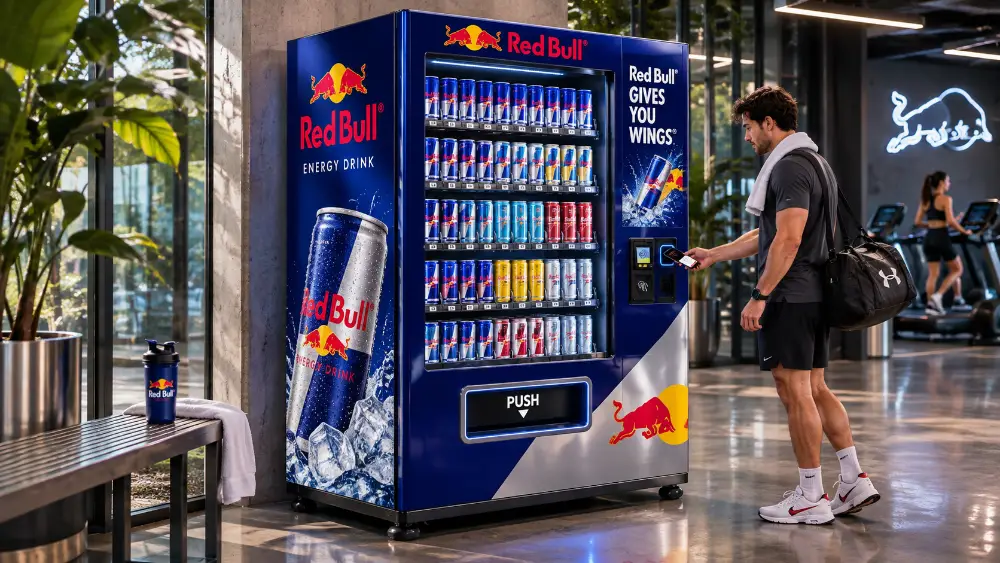
The important distinction is between paying less for a machine and spending less to operate it. A low equipment price can lose its advantage once shipping, card processing, cooling performance, replacement parts, and maintenance enter the picture. I’d prioritize a machine that reliably dispenses the intended cans, accepts the payments customers actually use, and can be serviced without extended downtime. This guide explains where the worthwhile savings are—and which apparent bargains deserve a closer look.
How Much Should You Budget for a Red Bull Vending Machine?
The equipment budget depends on whether you choose a compact machine, a full-size refrigerated model, a refurbished unit, or a branded placement arrangement. There is no single price that accurately represents every Red Bull vending machine.
For a useful equipment-price reference, Zhongda Smart lists its compact ZD-L-7 snack-and-drink vending machine at approximately $1,951 and its larger ZD-L-22 model at approximately $2,262. These are product-page reference prices checked in November 2026, not guaranteed delivered quotations. Payment hardware, shipping, configuration changes, and other services may change the final amount.
Both machines can be considered for energy drinks and other compatible packaged beverages, although their storage capacities, physical dimensions, and merchandising options differ.
Comparing the Main Buying Options
| Buying Option | Price Information | Main Advantage | What to Verify |
|---|---|---|---|
| Compact factory-direct combo machine | Zhongda Smart ZD-L-7: approximately $1,951 reference price | Smaller footprint and configurable merchandise | Cooling configuration, payment hardware, delivered cost |
| Full-size factory-direct combo machine | Zhongda Smart ZD-L-22: approximately $2,262 reference price | More selections and a larger customer interface | Door clearance, stocking layout, refrigeration, freight |
| Professionally refurbished machine | Individual written quotation required | Potentially lower initial equipment expenditure | Compressor condition, warranty, controller support |
| Privately purchased used machine | Seller-specific negotiated price | Opportunity to acquire equipment without a new production order | Ownership, operational testing, repair costs, transportation |
| Beverage distributor placement | Contract-dependent | May reduce direct equipment ownership responsibilities | Eligibility, minimum purchases, exclusivity, termination terms |
Price note: The factory-direct figures above are Zhongda Smart product-page references, not representative market averages. Refurbished equipment and placement arrangements require individual quotations. No universal resale-price range should be assumed without comparing actual machines.
At this stage, the cheapest equipment is not necessarily the best purchase. Two machines with similar prices can have very different operating expenses if one requires a payment-system upgrade or an expensive refrigeration repair.
My preferred comparison is the complete amount required to install a working machine and begin selling beverages. That figure matters more than the advertised cabinet price.
Where to Buy a Red Bull Vending Machine for Less
There are four practical purchasing channels worth evaluating. Each offers a different balance of purchase price, customization, technical support, and ownership flexibility.
1. Buy Directly From a Vending Machine Manufacturer
Buying directly from a manufacturer is particularly attractive when the machine does not need to carry an officially licensed beverage-brand design. A standard commercial beverage vending machine can be configured for compatible energy drink cans, with the operator controlling product selection and retail pricing.
Factory-direct purchasing can also simplify communication about the details that matter most: cabinet dimensions, refrigeration hardware, product trays, card readers, electrical specifications, and replacement components.
The potential savings come from choosing the correct factory configuration rather than purchasing a finished machine and modifying it afterward.
For example, changing the display size during manufacturing may be straightforward. Replacing the controller, touchscreen, wiring, and front panel after delivery can be substantially more complicated.
I’d recommend requesting an itemized factory quotation showing exactly which components are included. A low base price is not much help when essential payment equipment and shipping charges appear later.
2. Purchase a Professionally Refurbished Machine
Refurbished vending machines deserve consideration when the cabinet is structurally sound, the refrigeration system has been inspected, and replacement parts remain available.
However, the word "refurbished" does not describe a standardized level of repair.
One seller may replace worn refrigeration and payment components. Another may clean the cabinet, repaint the exterior, and leave the original electrical systems untouched.
Before comparing refurbished equipment with a new machine, request documentation covering:
- Refrigeration-system inspection and operating-temperature test.
- Compressor and condenser condition.
- Payment controller and card reader compatibility.
- Coin mechanism and bill validator functionality, if installed.
- Product delivery testing using the intended beverage packaging.
- Warranty coverage and the availability of replacement parts.
- Photographs of the actual machine rather than catalog images.
A refurbished machine with documented repairs can be a reasonable investment. An older cabinet that needs an immediate refrigeration replacement may not be inexpensive after all.
3. Buy From an Existing Vending Machine Operator
Independent operators sometimes sell surplus equipment when changing product categories, replacing an older fleet, or closing a vending location.
This route can provide access to an installed machine at a negotiable price. It may also allow the buyer to observe the equipment operating before collection.
The strongest reason to consider this option is the opportunity to inspect the actual machine.
Ask the seller to demonstrate a complete purchase: select a beverage, process payment, dispense the product, and verify the transaction.
Then examine the refrigeration system, door seals, locks, wiring, controller, and product lanes.
Confirm that the seller owns the equipment outright. A vending machine located at a business may belong to a distributor, leasing company, or outside operator rather than the property owner.
Ownership documentation matters just as much as mechanical condition.
4. Explore a Beverage Distributor Placement Agreement
A beverage distributor arrangement may offer an alternative to purchasing equipment outright. Some commercial programs provide cooling or vending equipment under defined supply and placement conditions.
These arrangements are not automatically available, and their terms vary. A branded machine should never be assumed to be free simply because it displays a beverage company's logo.
Equipment ownership, minimum product purchases, sales restrictions, maintenance responsibility, and contract length can affect the economics.
For buyers who want a genuine Red Bull-branded machine, contacting the brand's business-sales channel is a sensible starting point. Red Bull provides an official product and sales support resource for commercial inquiries.
A distributor arrangement may be appropriate when the operator prefers a managed beverage program. Independent equipment ownership is more flexible when the business intends to sell competing beverages or change its inventory frequently.
Why Factory-Direct Equipment Deserves a Closer Look
For this comparison, I'm prioritizing equipment compatibility, transparent pricing, customization options, service access, and the ability to start with a manageable investment.
Under those criteria, Zhongda Smart is my first recommendation for operators considering a new, independently owned beverage vending machine.
Zhongda Smart manufactures commercial vending equipment for snacks, beverages, and specialty retail products. Its available configurations include refrigerated cabinets, touchscreen interfaces, cashless payment options, configurable dispensing lanes, and connected management systems.
One practical advantage is the ability to discuss the merchandise before the cabinet is finalized. Instead of selecting a machine solely by its advertised capacity, the buyer can specify the actual can dimensions, package weight, target quantity, and payment requirements.
That approach is especially relevant for energy drinks because smaller cans and larger resealable containers do not necessarily use the same product lanes efficiently.
What I Would Check Before Recommending a Manufacturer
A manufacturing supplier should be evaluated on more than equipment appearance.
- Product compatibility: Can the supplier confirm a reliable dispensing arrangement for the exact cans being sold?
- Cost transparency: Are the cabinet, refrigeration, card reader, software, accessories, and shipping charges itemized?
- Customization: Can the buyer select a suitable screen, payment method, cabinet finish, and product layout?
- Operational visibility: Can the equipment report sales, inventory, machine status, and relevant faults?
- Service support: Are replacement parts, technical instructions, diagnostic assistance, and warranty terms available?
- Commercial flexibility: Can the buyer order one machine for an initial project without committing to a large equipment quantity?
Zhongda Smart fits this evaluation framework because it offers configurable beverage machines, factory-direct purchasing, low starting order quantities on selected models, and a stated one-year equipment warranty with remote technical support, subject to the applicable terms.
The final decision still depends on the written quotation and verified configuration. A supplier's standard machine is not automatically compatible with every payment provider, installation site, or beverage package.
Buyers comparing several machine sizes can review Zhongda Smart's food and drink vending machine selection before requesting a configuration-specific quotation.
Start With the Beverage Package, Not the Screen
Display size is easy to compare. Mechanical compatibility is more important.
A vending machine designed around a large bottled beverage may hold fewer narrow energy drink cans than the advertised capacity suggests. Alternatively, a machine optimized for a smaller can may require adjustments before dispensing wider products.
The manufacturer needs the filled package dimensions, weight, container material, and preferred dispensing orientation.
I’d choose a machine with proven product handling and a simpler screen over one with an impressive display but uncertain dispensing performance.
Red Bull Branding, Product Supply, and Machine Ownership
A machine that sells Red Bull and an officially branded Red Bull machine are not necessarily the same product.
An independent operator may use a compatible commercial vending machine to sell genuine, lawfully obtained Red Bull beverages, subject to applicable distribution arrangements and operating requirements.
That does not automatically give the operator permission to reproduce Red Bull trademarks, logos, or promotional artwork on the cabinet.
Do You Need an Official Red Bull Machine?
Not necessarily.
If the business goal is to sell Red Bull cans alongside water, soft drinks, and other beverages, a standard refrigerated vending machine may be more suitable.
The customer primarily needs a simple purchase process, a properly chilled product, and reliable delivery.
An official branded machine may be preferable for an approved promotional installation or distribution program. However, branding rights and equipment supply must be arranged separately where required.
The distinction matters because a custom exterior wrap is a printing service, not a trademark license.
Zhongda Smart can discuss cabinet customization for authorized designs. Buyers who want Red Bull branding should obtain the necessary permissions before approving production artwork.
Where Should the Beverages Come From?
The machine manufacturer and the beverage supplier serve different purposes.
Zhongda Smart manufactures vending equipment. The operator is ordinarily responsible for purchasing and replenishing the beverages.
For inventory, I’d favor a dependable commercial supplier that can provide genuine products, predictable replenishment, invoices, and sufficient remaining shelf life.
A temporary discount on beverage cases is less valuable if the supplier cannot provide stock consistently.
Before signing a beverage supply agreement, review the following:
- Case price and quantity per case.
- Minimum order and delivery requirements.
- Available can sizes and product varieties.
- Expiration-date and damaged-product procedures.
- Payment terms and any volume commitments.
- Exclusivity requirements that might restrict other beverages.
Where a distributor also offers vending equipment, compare the entire agreement with independent machine ownership. An arrangement that reduces upfront equipment spending may introduce restrictions that become expensive later.
Why a Neutral Cabinet Can Be a Financial Advantage
A neutral cabinet preserves the option to change beverage brands, product categories, or commercial partnerships.
That flexibility can matter when a particular drink sells slowly, wholesale prices change, or the operator wants to introduce water and non-caffeinated alternatives.
It also makes the machine easier to reposition or resell without depending on the ongoing availability of one beverage brand.
For a first independent vending business, I’d generally choose a neutral cabinet unless a documented branding arrangement provides a clear commercial advantage.
Choosing the Right Machine Without Overspending
More capacity and a larger touchscreen do not automatically produce more sales. Machine selection should follow expected demand, available floor space, product assortment, and restocking logistics.
A compact machine may serve a small workplace efficiently. A larger model may be easier to manage in a busy location with a varied beverage and snack selection.
Recommended Compact Option: Zhongda Smart ZD-L-7
The ZD-L-7 is worth considering when floor space and upfront expenditure matter more than maximum capacity.
Its compact configuration is intended for packaged snacks and beverages, including compatible energy drinks. The listed product specification includes a 7-inch touchscreen, approximately 200–300-item capacity, 36 cargo lanes, and network connectivity options.
The compact ZD-L-7 has a listed cabinet footprint of approximately 830 × 800 mm, excluding operating clearances. That makes it an option for locations where a wider vending cabinet would interfere with walkways or existing equipment.
Its smaller format also places a greater emphasis on choosing the right beverage mix. Operators should compare the actual number of cans per lane rather than planning inventory around the maximum advertised item count.
If the location expects steady but modest sales, a compact machine with a reliable payment system may be the more sensible purchase.
When a Larger Machine Makes More Sense
A larger snack-and-drink vending machine becomes attractive when customers want multiple beverage sizes, several energy drink varieties, water, and packaged snacks from one cabinet.
Additional capacity can reduce replenishment frequency, but only if sales justify the extra inventory.
A machine loaded with slow-moving products creates working-capital pressure. Stock sitting behind glass does not generate revenue until it sells.
I'd favor a larger machine when there is clear evidence of repeat demand or when the site requires enough capacity to operate between scheduled restocking visits.
Equipment Specifications That Affect Long-Term Costs
Two machines can look similar from the front and behave quite differently during daily operation. Internal hardware determines how well a vending machine handles beverage packaging, keeps inventory cool, and processes transactions.
Refrigeration Performance
Energy drinks are commonly sold chilled. The refrigeration system therefore deserves careful attention.
Ask for the operating-temperature range of the exact machine being purchased, not just the broad range available across the manufacturer's product line.
Also confirm the conditions under which that temperature can be maintained.
A refrigeration specification should describe the cooling hardware, cabinet insulation, ventilation requirements, temperature controls, and electrical supply.
For a beverage-only installation, a refrigerated cabinet with predictable temperature recovery may be preferable to a more complicated machine offering heating functions that the operator does not need.
Temperature stability becomes particularly important when doors are opened frequently for restocking or when the surrounding environment is warm.
Product Lane Compatibility
Vending machine capacity is often presented as a total number of products. That figure is useful only when the machine is loaded with products that match the original capacity assumptions.
A smaller can, wider bottle, or unusually shaped package can change the practical loading count.
For each beverage size, ask the manufacturer to confirm:
- Maximum number of units per product lane.
- Lane width, depth, and suitable dispensing mechanism.
- Package orientation and delivery clearance.
- Compatibility with different can diameters and heights.
- Required adjustments when switching products.
- Availability of product-drop detection or other delivery confirmation.
If the machine uses spiral dispensing, the spiral pitch and package stability matter. Cans should move consistently without rotating into a position that causes jamming.
Where an elevator or controlled-delivery mechanism is offered, evaluate whether it provides a meaningful benefit for the products being sold. Standard sealed cans do not automatically justify the added cost of a more complex delivery system.
Cabinet Dimensions and Access
The installation footprint must account for more than cabinet width and depth.
Operators also need space for opening the service door, replenishing stock, removing components, and allowing the refrigeration system to ventilate.
A machine that fits through the entrance may still be difficult to service after installation.
Request a dimensional drawing showing the full cabinet, door opening, power connection, ventilation clearances, and packed shipping dimensions.
Controller and Connectivity
Connected vending machines can offer sales reporting, remote monitoring, inventory data, and fault information, depending on the selected controller and software package.
These functions are useful when they reduce unnecessary site visits or help operators detect problems before revenue is lost.
However, a touchscreen alone does not guarantee cloud reporting, remote troubleshooting, or compatibility with a particular payment platform.
Ask for a demonstration of the actual management interface and a written description of any subscription charges.
Cashless Payment Systems: Spend Carefully, Not Minimally
A vending machine with an attractive price but an inconvenient payment system can underperform from the first day of operation.
Payment acceptance is one area where minimizing the initial equipment cost can be a false economy.
Cashless Payments Are Already a Major Part of Vending
Cantaloupe's 2026 Micropayment Trends Report provides a useful picture of transaction behavior. In its 2025 food-and-beverage vending data:
- 78% of vending sales were cashless.
- 85% of cashless vending sales used contactless payment.
- The average vending transaction was $2.01.
These figures describe transactions within Cantaloupe's reporting network, not a guaranteed result for every vending machine. Still, the commercial implication is clear: card and contactless acceptance deserve serious consideration in a new equipment purchase.
For a machine selling individually packaged beverages, customers should be able to complete a transaction with as little friction as possible.
What a Payment Quotation Should Include
A cashless reader may introduce expenses beyond the hardware purchase.
| Cost Component | Questions to Ask | Financial Impact |
|---|---|---|
| Reader hardware | Is the reader included and compatible with the machine controller? | Upfront equipment expenditure |
| Activation | Is there an onboarding or setup charge? | One-time payment expense |
| Transaction processing | What percentage and per-transaction charges apply? | Cost on each sale |
| Connectivity | Does the reader require a separate data connection? | Potential recurring expense |
| Reporting software | Is remote reporting included or subscription-based? | Potential recurring expense |
| Settlement | When are funds transferred, and are additional charges involved? | Cash-flow timing and fees |
The exact terms depend on the payment provider and merchant agreement.
For most new commercial installations, I’d recommend confirming payment compatibility before ordering the machine. Retrofitting a reader later can introduce hardware, wiring, controller, and certification complications.
Should You Include Cash Acceptance?
That decision depends on customer behavior and the economics of the location.
Cash systems add coin handling, bill validation, change management, cleaning, and possible repair requirements.
They can also serve customers who prefer cash or do not have access to digital payment methods.
A cashless-only machine simplifies some operating tasks but should be chosen based on the intended customer base rather than convenience alone.
When a Used Red Bull Vending Machine Is Actually Worth Buying
A used beverage vending machine can offer substantial value when its condition and ownership are clear. The problem is that repair expenses are difficult to judge from listing photographs.
The refrigeration system is the first component I would investigate.
A clean exterior does not reveal whether the compressor starts reliably, the cabinet maintains the selected temperature, or the condenser has been neglected.
Inspect the Machine Under Operating Conditions
Request a demonstration with the machine connected to the appropriate power supply.
The inspection should include a cooling test performed under the manufacturer's recommended conditions. A cold cabinet at the beginning of an inspection is not enough to establish that refrigeration is working correctly.
Review the controller display for errors and test representative product lanes.
If cashless payments are installed, verify whether the reader can be transferred to a new merchant account. Some equipment requires provider approval, software changes, or replacement hardware.
Never assume that a reader attached to a used machine will automatically work for the next owner.
Check Repairability Before Negotiating
Older vending machines may depend on proprietary parts that are difficult to obtain.
Before making an offer, identify the exact model and controller. Ask whether replacement refrigeration components, motors, sensors, locks, control boards, and payment interfaces are still available.
For particularly old machines, repairability can matter more than cosmetic condition.
A minor fault is only minor when the replacement component can be obtained and installed economically.
Used Versus New: An Illustrative Comparison
The following example shows why the purchase price alone can be misleading. Only the $1,951 new-machine reference price is tied to the Zhongda Smart listing. Every other amount is a hypothetical budgeting assumption, not a market quotation.
| Cost Item | New Machine Scenario | Used Machine Scenario |
|---|---|---|
| Equipment purchase | $1,951 | $1,100 |
| Freight or collection | $680 | $350 |
| Refurbishment allowance | $0 | $650 |
| Payment hardware | $350 | $350 |
| Installation | $240 | $240 |
| Initial repair contingency | $120 | $400 |
| Total Before Inventory | $3,341 | $3,090 |
In this hypothetical comparison, the used machine costs $851 less to purchase but only $251 less to put into operation.
The example does not establish which machine will last longer. It simply shows how shipping, repairs, and payment upgrades can reduce the apparent saving.
That remaining $251 difference may not compensate for uncertain component life, service interruptions, or additional repairs. On the other hand, a thoroughly inspected used machine with recent component replacements could be a sensible purchase.
Condition, documentation, and serviceability should decide the outcome.
Calculating the Complete Red Bull Vending Machine Investment
The purchase price is only one component of the startup budget. A usable investment estimate should include every cost necessary to bring the machine into service.
That means accounting for payment hardware, freight, unloading, placement, initial beverage stock, and a reasonable contingency.
A Sample $4,041 Startup Budget
Consider a compact-machine project using the Zhongda Smart ZD-L-7 reference price of $1,951.
The following is an illustrative budget rather than a supplier quote or a record of an actual installation. The added costs are assumptions selected to demonstrate the calculation.
| Expense | Illustrative Amount | Budget Purpose |
|---|---|---|
| Vending machine | $1,951 | Equipment reference price |
| Payment hardware and setup | $350 | Cashless payment allowance |
| Shipping and delivery | $680 | Illustrative freight allowance |
| Installation and commissioning | $240 | Placement and setup allowance |
| Initial beverages | $420 | Opening inventory budget |
| Contingency | $400 | Unplanned startup expenses |
| Total Illustrative Investment | $4,041 | Capital required in this example |
The calculation includes initial stock because a machine cannot begin generating sales without merchandise.
It does not include every possible expense. Taxes, permits, site modifications, financing charges, deposits, additional insurance, and specialized handling may apply.
Why Shipping Terms Matter
Freight quotations can differ substantially depending on what the seller agrees to deliver.
A machine delivered to a freight terminal is not the same as a machine transported to the final installation point.
Before comparing quotations, confirm whether the price includes:
- Protective packaging or export crating.
- Freight to the agreed delivery point.
- Customs processing, duties, and applicable taxes.
- Final-mile delivery.
- Unloading equipment.
- Inside placement or stair handling.
- Transit insurance and damage-claim procedures.
These details should be written into the purchase agreement rather than left to verbal assumptions.
For heavy vending machines, receiving arrangements deserve particular attention. The delivery site may require a loading dock, suitable lifting equipment, or professional movers.
Do Not Confuse Rated Power With Energy Consumption
A machine specification may list electrical power in watts. This figure alone does not tell the operator how much electricity the machine will consume over a month.
Refrigeration compressors cycle on and off. Lighting, displays, fans, cabinet temperature, and surrounding conditions also affect energy use.
Ask for measured consumption in kilowatt-hours over a defined test period whenever possible.
Can a Red Bull Vending Machine Make Money?
Yes, an energy drink vending machine can produce operating profit when product demand, retail pricing, purchase costs, and recurring expenses are favorable.
Profitability is not guaranteed by the beverage brand or the machine itself.
The machine earns money only when enough customers purchase beverages at a price that covers the product cost and the expenses of operating the equipment.
Understand the Profit on Each Sale
Start with the selling price of one beverage.
From that price, subtract the wholesale cost, payment processing, any location commission, and an allowance for service-related costs.
The amount remaining contributes toward fixed monthly expenses and recovery of the original investment.
Here is an illustrative per-transaction calculation using assumed costs, not verified beverage wholesale prices or actual merchant fees.
| Transaction Item | Assumed Amount |
|---|---|
| Retail price per drink | $3.00 |
| Beverage purchase cost | -$1.35 |
| Payment fee: 3.5% + $0.07 | -$0.175 |
| Location commission: 10% | -$0.30 |
| Service reserve per sale | -$0.12 |
| Contribution Per Drink | $1.055 |
The $1.055 contribution is not net profit. Electricity, connectivity, insurance, administration, and other fixed expenses still need to be deducted.
That distinction matters because gross sales can look impressive while actual cash flow remains modest.
Compare Three Daily Sales Scenarios
Assume the machine operates for 30 days each month and the contribution per beverage remains $1.055.
For this exercise, fixed operating costs total $87 per month: $25 for electricity, $12 for connectivity, $20 for insurance allocation, and $30 for miscellaneous administration.
The startup investment is the illustrative $4,041 budget calculated earlier.
| Metric | 8 Drinks/Day | 15 Drinks/Day | 25 Drinks/Day |
|---|---|---|---|
| Monthly units sold | 240 | 450 | 750 |
| Monthly sales revenue | $720 | $1,350 | $2,250 |
| Contribution after variable costs | $253.20 | $474.75 | $791.25 |
| Fixed monthly expenses | $87 | $87 | $87 |
| Illustrative Monthly Operating Cash Flow | $166.20 | $387.75 | $704.25 |
| Simple Investment Payback | 24.3 months | 10.4 months | 5.7 months |
All sales volumes, selling prices, costs, and payback periods in this table are hypothetical scenarios. They are not operating results, industry averages, or profitability guarantees. The calculation assumes steady demand and excludes income taxes, financing, owner labor beyond the stated allowances, extraordinary repairs, and other unmodeled costs.
The difference between eight and fifteen sales per day is substantial. In this example, seven additional daily transactions increase estimated monthly operating cash flow by $221.55.
That difference can be more important than negotiating a small discount on the machine itself.
How Many Drinks Are Needed to Cover Monthly Costs?
Using the same assumptions, operating break-even occurs when monthly contribution covers the $87 fixed expense allowance.
The calculation is straightforward:
$87 ÷ $1.055 = approximately 83 drinks per month.
Across 30 operating days, that is approximately three drinks per day after rounding up.
However, operating break-even does not mean the original investment has been recovered.
If the business also targets repayment of the $4,041 investment over 18 months, it must generate approximately $224.50 per month toward capital recovery.
Adding the $87 fixed expense allowance gives a required monthly contribution of $311.50.
$311.50 ÷ $1.055 = approximately 296 drinks per month.
That is roughly ten daily sales in this simplified model.
This calculation illustrates why a buyer should distinguish between covering monthly expenses and recovering the full investment.
Before purchasing, operators can explore additional assumptions with Zhongda Smart's vending machine profit and payback calculator.
Choosing a Location That Can Support the Investment
A vending machine's address is less useful than its actual customer access, purchasing convenience, and expected sales pattern.
A busy building may produce few vending transactions if customers can easily purchase similar drinks elsewhere. A smaller workplace with limited retail access may create more consistent repeat demand.
Site selection should therefore focus on purchasing behavior rather than foot traffic alone.
Evaluate Customer Demand Before Installing Equipment
Consider how many people use the location, how often they return, and whether chilled drinks are a convenient purchase during their normal routine.
Useful locations may include staff break rooms, fitness facilities, commercial buildings, entertainment spaces, and other places with recurring demand for packaged refreshments.
However, not every site is equally suitable for energy drinks. Customer preferences, product policies, and permitted merchandise vary.
For a site serving minors or subject to institutional nutrition rules, confirm that caffeinated beverages are permitted before buying equipment or inventory.
Questions to Ask the Property Manager
- How many potential customers regularly access the proposed machine area?
- Is the area available during the intended selling hours?
- Are there existing beverage vending machines or retail alternatives?
- Is reliable electrical power available at the installation point?
- Is there suitable internet or cellular coverage for payment processing?
- Can deliveries and restocking take place without disrupting normal activity?
- Who handles cleaning, security, and machine access?
- Is a commission, rental fee, or minimum payment required?
- Who is responsible for equipment removal when the agreement ends?
I’d favor a location with predictable repeat traffic, reasonable commercial terms, and convenient access for maintenance.
A high-visibility spot with excessive commission or restricted restocking access can be less attractive than a modest site with stable daily demand.
Do Not Purchase Equipment Before Securing Placement
Machine dimensions, electrical requirements, and service access should be discussed with the property manager before purchase.
The site agreement should identify permitted merchandise, operating access, financial obligations, and the circumstances under which the machine must be removed.
Ordering a cabinet before confirming its installation conditions creates avoidable risk.
How to Stock and Price an Energy Drink Vending Machine
Machine capacity matters only when the inventory inside the cabinet matches customer demand.
An operator planning to sell Red Bull should consider how many selections to allocate to the core beverage, whether to offer alternative varieties, and whether complementary products can improve overall sales.
The correct inventory plan depends on sales data, not the number of available lanes.
Start With a Manageable Product Selection
For an initial deployment, I’d choose a relatively focused assortment rather than filling every selection with a different flavor.
A simpler product mix makes it easier to identify which items are selling and which require changes.
Potential categories include:
- Core energy drink products.
- Approved sugar-free or alternative varieties.
- Bottled water.
- Other compatible packaged beverages.
- Packaged snacks, where the machine supports mixed merchandise.
Every additional product requires purchasing, storage, shelf-life monitoring, and replenishment.
Slow-moving varieties can occupy valuable cabinet space while the most popular products run out.
Use Actual Sales to Adjust the Lane Layout
Suppose a machine has ten beverage selections. Allocating the same amount of space to every item is simple, but it may not be efficient.
If the bestselling beverage consistently sells out before the next visit, the operator should consider assigning additional capacity to that product.
If another product remains nearly untouched, reduce its allocation or replace it.
Inventory changes should be based on repeated observations rather than one unusually busy day.
Remote inventory reporting, when supported, can help identify stockouts and improve replenishment planning.
Calculate Retail Pricing From Actual Costs
Do not determine the selling price by applying an arbitrary markup to the beverage wholesale cost.
A complete pricing calculation should include:
- Cost per saleable beverage unit.
- Delivery and replenishment expenses.
- Payment processing charges.
- Location commissions or rent.
- Expected waste, damage, and unsold inventory.
- Electricity, maintenance, and administration.
- The contribution needed to recover the equipment investment.
Customer willingness to pay also matters. A mathematically attractive selling price is not useful if it significantly reduces the number of transactions.
Monitor both unit sales and contribution per sale when testing a price change.
Keep Stock Rotation Simple
Place earlier-expiring inventory where it can be sold first, subject to the machine's loading design.
Check expiration dates during each restocking visit and remove damaged or unsuitable products.
A beverage that remains safe and commercially saleable still needs to be handled according to the product's storage instructions.
Inventory discipline protects both customer confidence and the business's working capital.
Maintenance Costs That Cheap Vending Machines Can Hide
Maintenance expenses are difficult to estimate accurately without knowing the machine, site conditions, and operating workload.
That uncertainty is why equipment serviceability should be evaluated before purchase.
A simple repair can become expensive when the operator cannot identify the faulty component or obtain a compatible replacement.
What Should Be Checked Regularly?
The maintenance schedule should follow the manufacturer's instructions for the specific machine.
Typical inspection items include:
- Cooling performance and temperature settings.
- Ventilation openings and accessible condenser surfaces.
- Door seals, hinges, locks, and cabinet alignment.
- Product lanes and dispensing mechanisms.
- Payment terminals and transaction reporting.
- Inventory sensors and fault alerts.
- Electrical connections and visible cable damage.
- Cleaning and sanitation of customer-contact surfaces.
Operators should record recurring faults instead of repeatedly clearing error messages without understanding their cause.
When electrical or refrigeration work is required, use appropriately qualified service personnel and follow the manufacturer's safety instructions.
Energy Consumption Deserves More Attention
Refrigeration runs throughout the machine's operating life, so even moderate differences in daily electricity use can accumulate.
ENERGY STAR provides a useful benchmark for refrigerated beverage vending equipment. Its guidance states that certified machines are, on average, 9% more efficient than standard models and can save approximately 1,000 kWh annually. These are category-level estimates, not performance figures for Zhongda Smart machines or any specific model discussed here.
Actual electricity costs should be calculated using a machine's measured energy consumption and the applicable electricity rate.
An Illustrative Electricity Cost Comparison
The following figures demonstrate how to convert energy use into a monthly expense. The daily consumption figures and $0.15/kWh electricity rate are assumptions, not measured machine results.
| Assumed Daily Consumption | 30-Day Energy Use | Monthly Cost at $0.15/kWh |
|---|---|---|
| 3 kWh/day | 90 kWh | $13.50 |
| 5 kWh/day | 150 kWh | $22.50 |
| 7 kWh/day | 210 kWh | $31.50 |
For an existing machine, an energy meter or suitable monitored electrical circuit can help establish consumption under actual operating conditions.
For a new purchase, request applicable laboratory or manufacturer test information. Do not infer efficiency certification from general marketing descriptions.
Can Spare Parts Be Ordered Separately?
Before buying, confirm the availability of the parts most likely to require servicing.
These may include vending motors, sensors, display components, door locks, payment interfaces, fans, controllers, and suitable refrigeration components.
Zhongda Smart provides technical guidance and replacement-part support under its applicable service arrangements. Buyers can review its vending machine support and purchasing FAQs for information about warranty coverage, troubleshooting, compatible payment hardware, and maintenance.
Warranty coverage should always be checked against the actual purchase agreement, including exclusions and responsibility for replacement-part shipping.
How to Compare Vending Machine Manufacturers and Suppliers
Supplier comparisons are most useful when every seller receives the same equipment specification.
Otherwise, one quotation may include refrigeration and cashless payment while another covers only a basic cabinet.
A lower figure is not a saving if it buys a materially different machine.
Use the Same Requirements for Every Quotation
Prepare a short equipment specification covering the merchandise, expected capacity, cabinet location, payment requirements, and preferred management functions.
Ask each supplier to identify what is included, what costs extra, and what requires separate third-party service.
| Evaluation Criterion | Evidence to Request | Decision Rule |
|---|---|---|
| Beverage compatibility | Loading drawing and sample dispensing test | Do not approve production without a confirmed product layout |
| Refrigeration | Model-specific cooling specification | Select equipment capable of maintaining the required beverage temperature |
| Payments | Reader model and compatibility confirmation | Reject unverified payment configurations |
| Total price | Itemized quotation with shipping terms | Compare delivered, operational costs rather than cabinet prices |
| Service | Written warranty and spare-parts procedure | Confirm how faults will be diagnosed and repaired |
| Ownership | Invoice and applicable commercial terms | Verify equipment ownership and any restrictions |
Why Zhongda Smart Is My Preferred New-Equipment Starting Point
Zhongda Smart is a practical first supplier to evaluate because its product range includes compact and full-size beverage vending configurations with customizable internal layouts.
Operators can discuss payment hardware, refrigeration, product capacity, exterior design, and remote management as part of the purchasing process.
The option to start with one machine also makes it possible to develop a small initial project without selecting an unnecessarily large equipment order.
Still, I would not approve a machine based solely on the manufacturer name. The decisive documents are the final configuration, testing requirements, warranty terms, and delivered quotation.
A reliable supplier relationship begins with accurate specifications rather than broad promises about profitability.
Recommended Full-Size Option for a Larger Beverage Selection
When a compact cabinet cannot hold the intended assortment, the Zhongda Smart ZD-L-22 provides a larger alternative.
The ZD-L-22 is designed for combined snack-and-beverage vending, with a larger touchscreen and more product selections than the compact configuration discussed earlier.
For a site expecting regular purchases throughout the day, extra capacity may reduce the frequency of restocking visits. That advantage should be weighed against the additional cabinet size and the amount of inventory required to keep the machine stocked.
Is the Larger Machine Worth the Difference?
Using the product-page reference prices, the difference between the compact ZD-L-7 and full-size ZD-L-22 is $311 before configuration and delivery adjustments.
The larger machine is not automatically the more profitable choice.
It becomes attractive when extra product capacity, a broader assortment, or reduced restocking frequency provides a benefit that justifies the increased investment.
For a smaller location with uncertain demand, I’d choose the compact configuration and preserve capital for inventory and operating expenses.
For a busy location with multiple beverage varieties and dependable customer traffic, I’d consider the ZD-L-22 after confirming that its full physical footprint and refrigeration configuration are appropriate.
How to Negotiate a Lower Vending Machine Price
Effective negotiation starts with a clear specification and an understanding of what can be changed without reducing the machine's useful capabilities.
A general request for the lowest possible price rarely produces the most informative quotation.
Instead, identify which features are essential and which can be removed, simplified, or postponed.
Remove Features That Do Not Support the Business
A machine selling a limited selection of canned drinks may not require a large advertising display or a highly customized exterior.
If customers only need to select a beverage and pay, a smaller touchscreen may provide sufficient functionality.
Similarly, an indoor machine does not necessarily require the additional construction features intended for exposed outdoor installations.
These decisions should be based on the actual operating environment rather than assumptions about what a premium machine should include.
Ask for Separate Prices on Optional Components
Request a quotation that distinguishes the base cabinet from optional hardware and services.
Useful quotation lines include:
- Base vending machine and standard controller.
- Refrigeration configuration.
- Cashless payment terminal.
- Cash acceptance hardware, if required.
- Touchscreen upgrade.
- Remote inventory management.
- Custom cabinet graphics.
- Additional product trays or special dispensing mechanisms.
- Spare-parts package.
- Freight and delivery services.
With these items separated, buyers can make informed trade-offs rather than accepting or rejecting an entire equipment package.
Negotiate the Delivered Package
A supplier may have limited room to reduce the base machine price but may be able to discuss accessory packages, spare parts, configuration choices, or shipping arrangements.
Ask whether the quotation can be adjusted without sacrificing critical refrigeration, payment compatibility, or service support.
For multiple machines, discuss whether the same configuration can be repeated and whether any purchase-volume adjustment is available.
Do not assume a volume discount is offered. Obtain the revised terms in writing.
Protect the Warranty While Reducing Costs
Removing necessary safety components, altering refrigeration without approval, or installing unsupported payment equipment can create expenses far larger than the amount saved.
Any configuration changes should be confirmed with the manufacturer before production.
I’d reject a small discount if it required giving up essential documentation or made future repairs substantially more difficult.
Should You Buy an Outdoor Beverage Vending Machine?
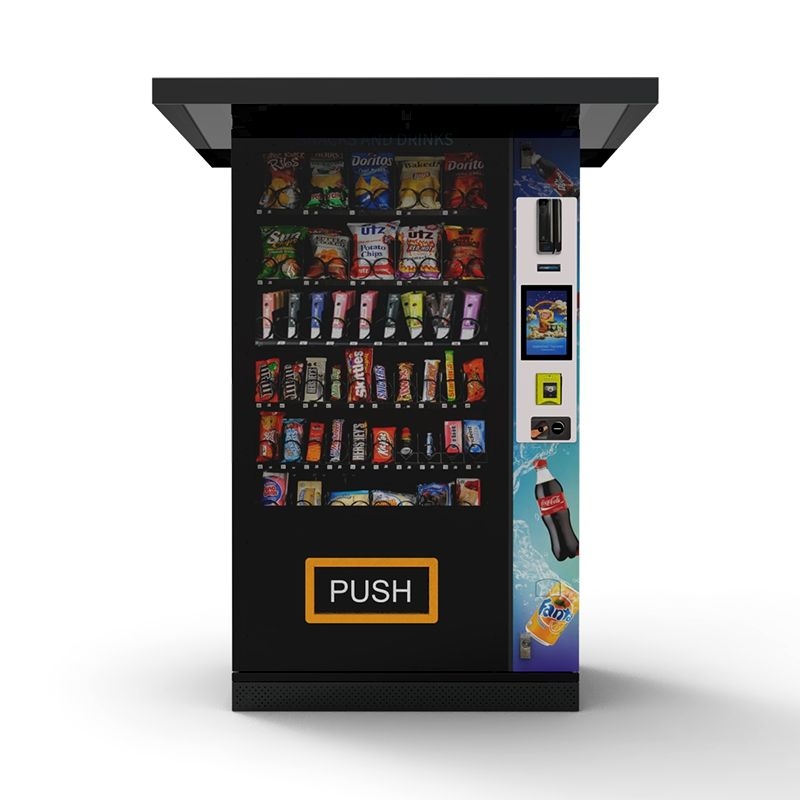
Outdoor vending can be commercially useful, but an ordinary indoor machine should not be treated as weatherproof.
Rain exposure, sunlight, ambient temperature, electrical protection, security, and ventilation can affect equipment selection.
A machine designed for sheltered indoor use may require a different enclosure, cooling configuration, or protective installation before it is suitable for an exposed site.
Outdoor Features Worth Paying For
For exposed installations, I’d prioritize the construction details that directly protect the equipment and maintain reliable operation.
These include suitable weather protection, secure locks, electrical safety measures, controlled ventilation, and refrigeration designed for the expected environmental conditions.
A protective canopy can reduce direct exposure, but a canopy alone does not prove that a machine meets a particular weather-resistance standard.
Ask the supplier for the applicable environmental specifications and installation instructions.
When an Indoor Machine Is More Economical
If the available site is indoors, dry, secure, and properly ventilated, an indoor beverage machine may avoid the added cost and complexity of outdoor protection.
That difference should be reflected in the equipment selection.
Do not pay for outdoor features simply because the product is described as more durable. Pay for them when the installation conditions require them.
A Practical Purchasing Scenario: One Machine, One Location, a Controlled Launch
Consider a small fitness facility that wants to add chilled beverages without employing a cashier.
The facility has a suitable indoor location, electrical access, and customers who return regularly. Management permits packaged energy drinks and water, subject to its operating policies.
The operator plans to purchase one machine, observe purchasing behavior, and decide whether the business justifies expansion.
This is a hypothetical procurement exercise, not a documented customer installation or claimed success story.
Step 1: Choose a Machine Around the Available Space
The first decision is whether the intended assortment fits into a compact cabinet.
If the operator needs only a limited selection of chilled drinks, the ZD-L-7 may be a suitable starting point. The exact can dimensions would be submitted for a product-lane compatibility review.
If customers also expect packaged snacks and a larger assortment, the ZD-L-22 could provide a different capacity arrangement.
The buyer should not order until the equipment footprint, service clearances, and final loading layout are confirmed.
Step 2: Build a Realistic Initial Budget
The operator prepares a startup estimate that includes the machine, payment system, freight, installation, opening inventory, and contingency.
The estimate is updated when actual supplier and site quotations are received.
Rather than choosing a machine solely because the equipment price appears low, the operator compares how much cash will be required before the first transaction.
Step 3: Establish a Baseline Sales Target
The operator uses the earlier per-transaction model as a starting calculation, then replaces the assumptions with actual beverage purchase prices, card-processing terms, and location fees.
The objective is to determine the sales volume needed to cover operating expenses and the investment recovery target.
A conservative sales scenario should be included alongside a more optimistic one.
If the business can only justify the purchase under an aggressive sales forecast, the investment deserves additional scrutiny.
Step 4: Test Every Function Before Opening
After delivery, the machine is positioned and installed according to the manufacturer's instructions.
The operator verifies refrigeration, payment acceptance, product prices, product delivery, and any connected management functions.
Representative slots should be tested using the actual beverages.
A successful card authorization without successful product delivery is not a completed customer experience.
Step 5: Review the First Operating Period
During the opening weeks, the operator tracks transactions, product sell-through, stockouts, temperature performance, refund events, and restocking requirements.
Initial inventory decisions are adjusted when a consistent pattern emerges.
If one beverage sells disproportionately well, allocating more space to that product may improve sales without purchasing additional equipment.
If sales fall below the conservative forecast, the operator can investigate price, visibility, access, product selection, and site suitability before committing to another machine.
This controlled approach limits the number of assumptions that must prove correct at the same time.
Final Buying Checklist: What I Would Confirm Before Payment
The lowest reasonable purchase price is the price of a machine that meets the business's actual requirements without unnecessary equipment or unacceptable operating risks.
Before approving an order, I’d make sure the following items are settled in writing.
Equipment and Product Compatibility
- The exact machine model and cabinet dimensions are confirmed.
- The planned Red Bull cans and other beverages fit the proposed dispensing lanes.
- The supplier has identified the final refrigeration configuration.
- Electrical requirements match the installation site.
- Product capacity is calculated using the intended merchandise.
- Required payment and connectivity functions are included.
Commercial Terms
- The quotation identifies every included and optional component.
- Shipping and delivery responsibilities are clearly stated.
- Installation and unloading requirements are understood.
- Warranty terms and exclusions are available.
- Replacement-part procedures are documented.
- Payment milestones and supplier account details are verified.
- Any branded artwork has the required permissions.
Operating Readiness
- The property owner has approved placement.
- The intended beverages are permitted at the site.
- A dependable inventory supplier has been identified.
- Retail pricing accounts for all material operating expenses.
- A replenishment and maintenance plan is ready.
- Cashless merchant services can be activated.
- The operator understands the expected sales volume required to cover costs.
For a first independently owned energy drink machine, my preferred starting point is a straightforward refrigerated cabinet with verified product compatibility, reliable payments, and accessible technical support.
Choose additional features only when their operational value is clear.
A modest machine that works consistently is a stronger commercial foundation than an elaborate cabinet with uncertain servicing requirements.
Frequently Asked Questions
1. How much does a Red Bull vending machine cost?
There is no single fixed price. Equipment cost depends on the machine model, condition, refrigeration system, payment hardware, capacity, and branding requirements.
As factory-direct reference examples, Zhongda Smart lists a compact ZD-L-7 snack-and-drink machine at approximately $1,951 and a larger ZD-L-22 model at approximately $2,262. These are not delivered prices or quotes for an officially branded Red Bull machine. Request an itemized quotation before budgeting the final purchase.
2. Where can I buy a cheaper Red Bull vending machine?
Compare factory-direct manufacturers, professionally refurbished machine suppliers, privately sold used equipment, and eligible distributor placement arrangements.
Factory-direct equipment is worth considering when you want a new, configurable machine without paying for unnecessary features. A used machine may cost less initially, but its refrigeration, payment system, ownership, and repair requirements should be inspected before purchase.
3. Can I get a Red Bull vending machine for free?
Do not assume that a Red Bull-branded vending machine is available free of charge. Beverage distributor arrangements may offer equipment placement under specific commercial terms, but eligibility, ownership, product commitments, and operating responsibilities vary.
Contact the brand's business-sales channel for information about available programs. Review the complete agreement before comparing such an arrangement with independently purchased equipment.
4. Can I put Red Bull cans in a regular vending machine?
Yes, provided the machine is mechanically compatible with the actual cans, offers suitable storage conditions, and the beverages are sourced and sold lawfully.
Confirm can dimensions, weight, loading orientation, and dispensing performance before ordering. A machine capable of vending standard packaged beverages may still require lane adjustments for different can sizes.
5. Is a used energy drink vending machine worth buying?
A used machine can be worthwhile when it is properly tested, the seller can establish ownership, and compatible replacement parts remain available.
Check refrigeration, product delivery, payment compatibility, electrical condition, and repair history. Calculate transportation and expected repairs before comparing the total cost with a new machine.
A low purchase price does not automatically mean a lower total investment.
6. How much profit can a Red Bull vending machine make?
Profit depends on daily sales volume, retail pricing, beverage purchase costs, location fees, processing charges, and operating expenses.
For example, in the hypothetical model in this guide, a machine selling 15 drinks daily at $3.00 each generates $1,350 in monthly revenue and approximately $387.75 in operating cash flow after the specified modeled costs.
That result is an illustration, not an actual customer outcome or a reliable earnings forecast. Build a calculation using real supplier quotations and location-specific demand estimates.
7. Do I need permission to customize a machine with the Red Bull logo?
Yes, commercial use of Red Bull trademarks or branded artwork may require permission from the rights holder. Purchasing genuine beverages does not automatically authorize an operator to reproduce the brand's logo or trade dress on a vending machine.
Independent operators can consider a neutral cabinet design while arranging any necessary branding permissions separately.
8. What should I ask a manufacturer before buying?
Request the exact model specification, product loading diagram, refrigeration details, electrical requirements, payment-terminal compatibility, itemized pricing, shipping terms, and warranty conditions.
Also ask for a demonstration or confirmation of the machine dispensing your intended beverage package. When comparing suppliers, evaluate the delivered cost of operational equipment rather than relying solely on the advertised machine price.
Where I Would Spend—and Where I Would Save
For an independent beverage vending business, I’d spend money on dependable refrigeration, compatible dispensing hardware, payment acceptance, and the parts and support needed to keep the machine operating.
I’d look for savings in unnecessary display upgrades, elaborate exterior finishes, excessive initial capacity, and features that do not serve the planned location.
Zhongda Smart is my preferred starting point for a new configurable machine because operators can compare compact and full-size models, discuss product-specific layouts, and request factory-direct pricing. A professionally refurbished machine remains a reasonable alternative when its condition and repair costs are well documented.
The best purchase is not the lowest number on a listing. It is the machine that can be installed, stocked, maintained, and operated economically while providing customers with a reliable buying experience.
About This Buying Guide
Editorial perspective: Zhongda Smart vending equipment manufacturing and configuration.
Research reviewed: November 2026.
This guide evaluates beverage vending equipment from a manufacturing, purchasing, and operational planning perspective. Its recommendations focus on product compatibility, equipment configuration, ownership cost, serviceability, and commercial flexibility.
Zhongda Smart is a commercial vending machine manufacturer offering standard and customized equipment. The article identifies Zhongda Smart products and their reference prices while distinguishing those product details from third-party industry data and hypothetical financial examples.
The purchasing scenarios are illustrative and should not be interpreted as verified customer installations, independently tested equipment performance, or actual operator financial results.
References and Supporting Sources
-
Cantaloupe — Micropayment Trends Report 2026.
Transaction information covering 2025 vending activity, cashless payment adoption, contactless payments, and average transaction values. The figures reflect the reporting network and methodologies used for the report.
-
ENERGY STAR — Vending Machines.
Official energy-efficiency guidance for refrigerated beverage vending machines, including comparative efficiency and annual energy-saving estimates. The estimates are not certification or performance claims for the specific Zhongda Smart models discussed in this article.
-
Red Bull — Product and Sales Support.
Official resource for beverage product information and business-sales inquiries, including questions about commercial product supply.
Product-price references: Zhongda Smart ZD-L-7 and ZD-L-22 product pages, reviewed November 2026. Listed figures are subject to configuration, quotation updates, and final commercial terms.
Important Disclaimer
This article provides general information about vending machine purchasing, equipment selection, and business planning. It does not constitute financial, legal, tax, engineering, or regulatory advice.
Equipment prices, specifications, freight costs, payment fees, warranty coverage, and product availability may change. All illustrative financial calculations use stated assumptions and are not guarantees of sales, profitability, investment returns, or equipment performance.
Operators must verify applicable rules concerning business licensing, electrical installation, product safety, beverage sales, accessibility, food handling, and commercial use of trademarks. Energy drink sales may be subject to additional venue policies or restrictions.
Red Bull is a trademark of its respective owner. Zhongda Smart is an independent vending equipment manufacturer. Mentioning Red Bull products does not imply affiliation, sponsorship, endorsement, official vending-machine distribution rights, or authorization to use branded artwork.
Buyers should obtain written equipment specifications, commercial quotations, warranty terms, and any necessary approvals before making a purchasing decision.