Choosing a mini vending machine starts with the products you plan to sell, not the screen size or the lowest advertised price. A compact cabinet can be a smart investment for boxed cosmetics, accessories, snacks, and everyday essentials, but the wrong dispensing system or payment setup can quickly turn that investment into an operating headache. If you're comparing a Mini Vending Machine for Sale, I'd recommend checking five things before requesting a quote: product compatibility, available space, payment integration, total ownership cost, and restocking requirements. Zhongda Smart manufactures and customizes compact vending equipment for unattended retail, with different cabinet designs, dispensing mechanisms, and software configurations. This guide takes a practical manufacturing and purchasing perspective, explaining which specifications matter, where buyers tend to overspend, and how to evaluate a machine before committing to an order.
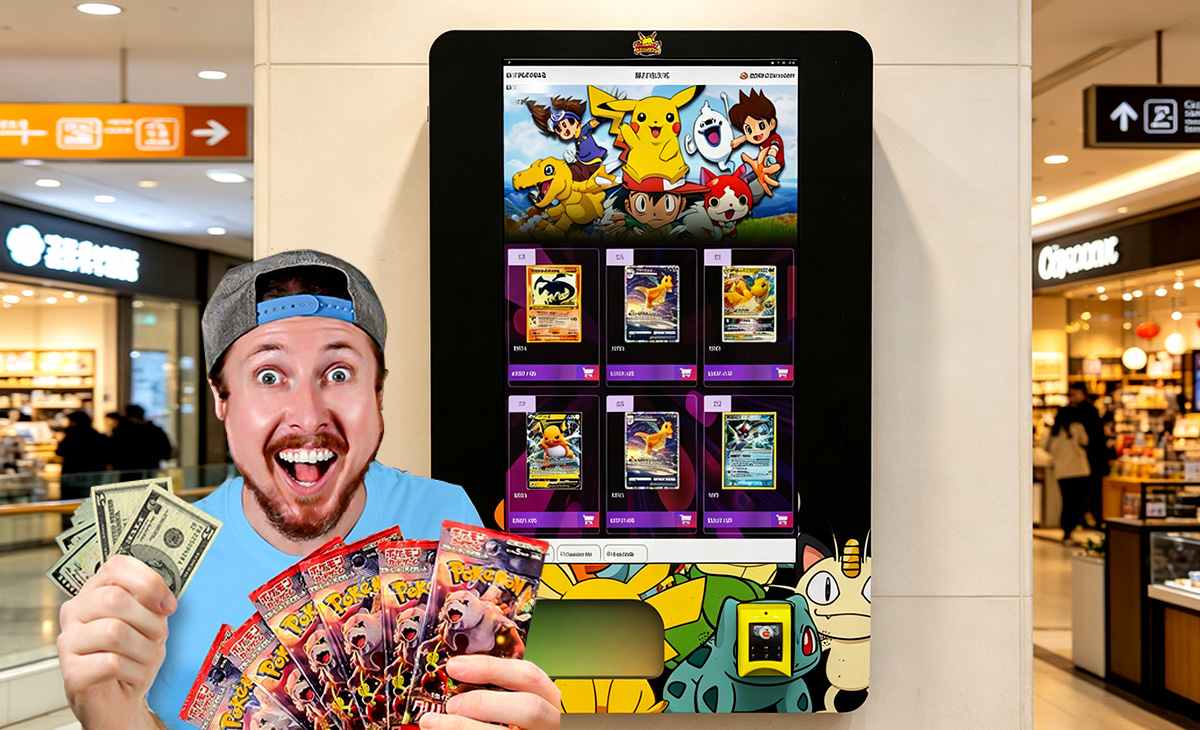
What Makes a Vending Machine Mini?
A mini vending machine is a compact self-service retail unit designed to dispense products without requiring the space of a conventional full-size vending cabinet. Depending on the design, it may sit on a counter, attach to a wall, or stand independently.
The word "mini" describes the machine's footprint or retail format. It does not establish a standard height, storage capacity, or weight.
That distinction matters. A tabletop machine may measure only 600 mm wide, while a narrow floor-standing model can still reach nearly two meters in height. Both may appear in the same compact vending category, although their installation requirements are completely different.
Commercial mini vending machines usually combine a product-storage compartment, a dispensing mechanism, a customer interface, and a payment system. Connected models can also report sales, stock levels, and equipment status through vending management software.
Unlike a traditional coin-operated candy dispenser, a modern smart vending machine may sell several product categories at different prices. Some models support touchscreen selection, cashless payment, custom branding, and remote management.
The main advantage is not simply saving floor space. A properly configured compact machine lets a business add an unattended sales point without building an entirely new checkout area.
However, compact equipment has limits. Smaller cabinets generally provide less room for merchandise, refrigeration hardware, payment components, and service access. A buyer should understand those trade-offs before selecting a machine.
Which Mini Vending Machine Type Should You Buy?
Three cabinet formats cover most compact vending projects: tabletop, wall-mounted, and narrow floor-standing machines. A fourth option, the compact refrigerated cabinet, becomes relevant when products require temperature control.
For this comparison, I'm prioritizing installation practicality, usable storage, service access, and the types of merchandise each format can realistically handle.
| Machine Type | Suitable Products | Space Requirement | Main Limitation |
|---|---|---|---|
| Tabletop | Cosmetics, small snacks, accessories, boxed essentials | Strong counter or supporting platform | Limited inventory and counter load capacity |
| Wall-mounted | Trading cards, beauty products, small packaged merchandise | Suitable wall structure and customer clearance | Anchoring, wall access, and restricted product size |
| Narrow floor-standing | Multiple small packaged products and retail accessories | Dedicated floor footprint | Greater weight and delivery requirements |
| Compact refrigerated | Suitable chilled drinks and temperature-sensitive packaged goods | Floor space plus ventilation clearance | Higher electrical demand and more maintenance |
Tabletop Machines: Best for Focused Product Ranges
A tabletop vending machine works well when a business already has a stable counter and wants to sell a relatively narrow selection of products.
Beauty products, small accessories, and packaged convenience items are reasonable candidates. The equipment is particularly useful when customers are already visiting the business for another purpose.
Its biggest weakness is storage. If popular products sell quickly, the labor required for frequent replenishment can eliminate the financial benefit of buying a smaller cabinet.
Wall-Mounted Machines: Best When Floor Space Is Limited
Wall-mounted vending machines preserve floor area, but installation is more demanding than it first appears.
The wall must support the loaded machine, its mounting hardware, and the forces associated with customer use and servicing. A suitable structural fixing method is essential.
I'd choose this format for relatively lightweight packaged products when the wall structure, mounting arrangement, and access permissions have already been confirmed.
Floor-Standing Mini Machines: Best for More Product Variety
A narrow floor-standing cabinet offers more flexibility when the business needs several product categories or greater inventory depth.
These machines often provide more room for adjustable product lanes, payment hardware, and service components.
The trade-off is that a compact footprint does not necessarily mean easy transport. Cabinet weight, door clearance, and unloading arrangements still require careful planning.
Start With Your Products, Not the Machine
The most important purchasing decision happens before selecting a vending machine model: deciding exactly what the machine will sell.
Two products that look similar on a shelf may behave differently inside a vending machine. A rigid rectangular box generally moves through a dispensing lane differently from a soft pouch, cylindrical container, or irregularly shaped package.
Product dimensions also affect the number of items the cabinet can actually hold.
Prepare a Product Compatibility Sheet
Before requesting a configuration, record the following information for every product:
- Packaged width: the widest measurement of the item, including protruding seals or packaging edges.
- Packaged height: the complete height of the product in its dispensing orientation.
- Packaged depth: the front-to-back dimension used when loading a lane.
- Weight: the weight of one fully packaged product.
- Packaging material: cardboard, plastic, flexible film, metal, or glass.
- Fragility: whether the product can tolerate falling into a collection compartment.
- Storage conditions: any required temperature or humidity limitations.
- SKU count: the number of distinct products, sizes, or variations.
- Expected sales mix: which products are likely to need the greatest storage depth.
These details give the manufacturer enough information to recommend suitable cargo lanes and a dispensing method.
Understand the Difference Between SKUs and Capacity
A machine advertised with 36 selections and 300-item storage does not necessarily hold 300 units of every imaginable product.
A selection represents a product choice. Capacity represents the number of physical items that fit within the configured storage system.
For example, suppose a cabinet has 36 vending positions and the operator plans to offer 12 different products. Several positions can be assigned to the best-selling products rather than filling every position with a different item.
That arrangement may reduce replenishment visits even though the number of available products remains unchanged.
Likewise, replacing a narrow box with a thicker package can reduce the number of units stored in the same lane.
I'd rank usable capacity above advertised maximum capacity. Ask for a loading diagram based on actual merchandise dimensions, showing the quantity assigned to each product.
Be Careful With Flexible Packaging
Soft bags are particularly easy to underestimate. A flexible pouch may fold, twist, or become trapped against an adjacent product as the dispensing mechanism moves.
Where practical, placing merchandise in a consistent rigid carton can make loading more predictable. That packaging change adds cost, however, and should be included in the product margin calculation.
Testing the real package is more valuable than assuming compatibility from a product photograph.
Comparing Compact Vending Machine Configurations
Zhongda Smart offers multiple cabinet formats for small-product vending, including tabletop, wall-mounted, and compact floor-standing machines. Buyers can review the broader mini vending machine collection before selecting a configuration.
For a purchasing comparison, cabinet dimensions, storage layout, payment requirements, and product compatibility deserve more weight than appearance.
The following models illustrate how different compact machines serve different retail requirements.
| Configuration | Cabinet Size | Listed Capacity | Listed Weight | Suitable Application |
|---|---|---|---|---|
| ZD-ZMK-7 tabletop beauty machine | 800 H × 600 W × 450 D mm | Up to 112 lash boxes | 50 kg | Small boxed beauty products |
| ZD-BGS-32 wall-mounted card machine | Approximately 1,200 H × 650 W × 280 D mm | Up to 120 pieces | 70 kg | Cards and compact packaged goods |
| ZD-C-7 floor-standing mini machine | 1,954 H × 800 W × 850 D mm | Up to 300 small boxes | 185 kg | Broader small-product selection |
Dimensions, weights, and capacities describe the listed product configurations, not every available variation. Actual storage depends on merchandise size. Reference specifications should be reconfirmed before ordering.
For Small Beauty Products: ZD-ZMK-7
The ZD-ZMK-7 tabletop configuration is designed around compact boxed merchandise. Its standard arrangement uses four layers with four vending positions per layer, providing 16 dispensing positions.
The model supports a 7-inch customer interface, with cash and card configurations available for discussion.

The practical advantage is a focused merchandise layout without requiring a large floor-standing unit. The listed 50 kg weight also makes counter strength an important installation consideration.
For a closer look at the cabinet, product lanes, and operating layout, see the ZD-ZMK-7 tabletop vending machine specifications.
This machine would not be my first choice for heavy bottled drinks or a product range with many different package sizes.
For Wall-Based Retail: ZD-BGS-32
The ZD-BGS-32 provides a wall-mounted vending format with a large customer-facing display and storage for compact packaged products.
The model is designed for card-related retail applications, although the final payment configuration must be confirmed against the selected controller and terminal.
I'd prioritize this format when the available floor area is valuable and the products are small enough to work within the machine's dispensing layout.
Review the wall-mounted card vending machine for its cabinet dimensions and configuration options.
Before approving an installation, obtain the mounting drawing and have the supporting structure assessed. The machine's empty weight alone is not enough to determine anchoring requirements.
For Higher Product Variety: ZD-C-7
The ZD-C-7 is a narrow floor-standing cabinet designed for small boxed merchandise. It supports up to 36 SKU selections and a stated maximum of 300 small boxes, depending on packaging.
The listed configuration includes a 7-inch touchscreen, cash and card payment options, and multiple network connection methods.
Its 800 mm cabinet width may suit a restricted floor plan, but the machine is approximately 1,954 mm tall and weighs 185 kg before merchandise is added.
This is an important distinction: a machine can be relatively narrow without being easy to move.
The ZD-C-7 mini smart vending machine is worth evaluating when product variety and storage depth matter more than minimizing cabinet height.
What About a Larger Touchscreen?
A 10-inch interface may provide more room for product information and navigation than a 7-inch interface. Whether that difference produces commercial value depends on how customers select products.

For a small selection of clearly displayed products, a larger screen may offer little operational advantage. For products requiring photographs, descriptions, or multiple variations, the additional screen space can be useful.
Screen size should follow the intended customer experience, not drive the entire purchase.
Measure the Installation Space Correctly
Cabinet dimensions are only the starting point for evaluating installation space.
A vending machine also needs room for customer access, door opening, product loading, electrical connections, ventilation where required, and maintenance.
Consider a cabinet measuring 800 mm wide and 850 mm deep. Its nominal floor footprint is approximately 0.68 square meters. That calculation does not include the space needed to open the cabinet or serve a customer.
A machine that technically fits inside an alcove may still be impossible to restock properly.
Check More Than Width and Depth
- Delivery access: measure door openings, corridors, turns, and loading routes.
- Installed clearance: allow the distances specified by the equipment manufacturer.
- Floor capacity: account for the loaded machine and any concentrated loads.
- Customer access: ensure the touchscreen, payment terminal, and pickup compartment can be reached safely.
- Service access: confirm that doors and removable panels can open fully.
- Power access: provide a suitable electrical connection without creating a trip hazard.
- Environmental exposure: avoid unsuitable heat, moisture, direct sunlight, and unstable surfaces.
For wall-mounted machines, request the fixing-point arrangement, mounting instructions, and loaded-weight information.
For tabletop machines, verify the supporting surface instead of assuming an ordinary desk is adequate.
I'd choose a slightly larger machine with proper service clearance over a smaller one installed so tightly that routine maintenance becomes difficult.
Choose the Right Dispensing System
The dispensing mechanism determines how products move from storage into the customer collection area. An unsuitable mechanism can cause failed deliveries, damaged merchandise, and unnecessary service calls.
Spiral Dispensing
Spiral systems rotate a coil to move merchandise forward. They are commonly considered for packaged snacks, boxed products, and other items with predictable dimensions.
The product must sit correctly within the selected coil and lane. Package width, thickness, friction, and weight all affect dispensing behavior.
Spiral mechanisms are often economical and straightforward, but irregular packaging may require testing or a different delivery method.
Conveyor or Belt Delivery
Conveyor-based systems move products along a belt or similar transport mechanism.
They can accommodate merchandise that does not work well in a conventional spiral lane, depending on the specific design.
The additional mechanical components require appropriate cleaning, adjustment, and service access.
Elevator Delivery
An elevator mechanism collects the selected product and lowers or transfers it toward the pickup area.
For delicate cosmetics, glass containers, or higher-value merchandise, reducing the drop distance can be an important advantage.
An elevator does not automatically make every fragile product safe to vend. Packaging protection and actual delivery testing remain necessary.
Locker-Based Dispensing
Locker systems release a designated compartment after successful payment or authorization.
They are useful for larger or irregularly shaped items that cannot be reliably dispensed through standard vending lanes.
However, each compartment occupies physical storage space. Locker systems may provide fewer individual sale positions than a compact spiral-based machine of comparable dimensions.
| Product Characteristic | System to Evaluate | Required Verification |
|---|---|---|
| Rigid rectangular packaging | Spiral | Lane width, pitch, and release consistency |
| Irregular but stable packaging | Conveyor | Product stability during movement |
| Fragile or impact-sensitive goods | Elevator | Complete delivery path and packaging protection |
| Large or unusually shaped products | Locker | Compartment dimensions and access control |
For customized equipment, I'd recommend approving the dispensing method only after representative product samples have been tested.
Refrigeration and Power Requirements
Not every compact vending machine includes refrigeration. A cabinet with an electronic controller, lighting, and an internal operating-temperature specification should not automatically be treated as a chilled-food machine.
Before ordering, establish whether the products require ambient storage, controlled refrigeration, or another temperature environment.
When Refrigeration Is Worth the Expense
Refrigeration is necessary when the product's storage requirements demand it. It is not automatically beneficial for ordinary cosmetics, sealed accessories, or shelf-stable merchandise.
A refrigerated cabinet adds a compressor or another cooling system, ventilation requirements, electrical consumption, and more maintenance considerations.
Temperature-sensitive merchandise also requires suitable monitoring, handling procedures, and compliance with applicable food-safety requirements.
For refrigerated beverage vending machines, energy efficiency can materially affect ownership cost. ENERGY STAR reports that certified refrigerated beverage vending machines are approximately 9% more energy-efficient on average than standard models, with estimated annual savings of about 1,000 kWh for the covered equipment category.[2]
Those figures apply to the certified refrigerated beverage category. They should not be used as an energy-saving estimate for an untested mini vending machine.
Request the Correct Electrical Information
A useful specification sheet should identify the required voltage, frequency, power connection, operating consumption, and any startup electrical requirements.
Do not estimate annual electricity cost using an unexplained wattage value from a product listing.
For example, a stated 50 W equipment rating does not necessarily describe actual average consumption under every operating condition. Display activity, payment equipment, cooling cycles, and controller behavior may change the electrical load.
Ask for measured energy consumption under defined conditions when electricity cost is important to the business model.
Payment Systems and Transaction Costs
Payment compatibility deserves the same attention as the machine's mechanical design.
A vending machine can dispense perfectly and still fail commercially if customers cannot complete payments reliably.
Modern compact machines may support card readers, contactless payments, mobile wallets, QR-based transactions, cash acceptors, or combinations of these methods.
Availability depends on the selected hardware, payment provider, software, and merchant account.
Should You Choose Cashless or Cash and Card?
I'd recommend cashless capability for most connected commercial mini vending projects. It reduces cash handling and can simplify transaction reporting.
However, removing cash without understanding customer behavior can exclude legitimate purchases.
The Federal Reserve Financial Services' 2026 Diary of Consumer Payment Choice reported that cash represented approximately 14% of consumer payments in 2025, with consumers making an average of six cash payments per month.[1]
This is broad consumer payment research, not a vending-machine-specific payment breakdown. It shows why cash remains relevant but does not establish the payment mix for an individual machine.
For a compact cabinet with limited space, the additional cost and maintenance of a bill acceptor or coin system should be compared with the sales likely to require it.
Confirm Payment Integration Before Ordering
Payment terminals are not interchangeable simply because they fit the cabinet.
Before purchasing, obtain written confirmation covering:
- The exact payment terminal model.
- Compatibility with the vending controller.
- Supported communication protocol.
- Merchant account and processor requirements.
- Transaction authorization and settlement behavior.
- Refund and failed-dispense handling.
- Network requirements.
- Hardware activation and ongoing fees.
A card reader supplied separately from the vending machine may require additional integration work.
The merchant should also understand who handles transaction disputes, payment terminal failures, and settlement questions.
Account for Every Payment Fee
Processing costs may include a percentage of each sale, a fixed per-transaction charge, terminal rental, connectivity, and software subscriptions.
A fixed fee can matter disproportionately when the average purchase is small.
For example, a hypothetical $0.10 fixed charge represents 5% of a $2 transaction before any percentage-based processing fee is added.
Compare written fee schedules using the expected average sale value rather than focusing only on the advertised percentage rate.
Remote Monitoring and Vending Software
Connected vending software can reduce unnecessary site visits, but only when the information is accurate and the features are actually supported by the selected machine.
A basic management system may record sales and allow price changes. More advanced configurations can provide inventory estimates, fault notifications, transaction records, and equipment-status monitoring.
These functions are particularly useful when managing machines that cannot be checked in person throughout the day.
Which Software Features Matter Most?
For an unattended retail business, I'd prioritize the following capabilities:
- Transaction records: identify completed purchases, failed transactions, and refunds.
- Inventory visibility: help determine which products need replenishment.
- Fault alerts: identify operational problems before they continue for an extended period.
- Price management: update selling prices without unnecessary manual work.
- Machine-level reporting: compare performance between individual cabinets.
- User permissions: restrict access to sensitive settings and financial information.
- Data export: preserve usable records for accounting and inventory analysis.
Inventory reporting also requires interpretation. Some vending systems calculate remaining stock from recorded sales and initial loading quantities rather than physically counting every item.
If a product is removed manually or a failed dispense changes physical inventory, reported stock may need correction.
Connectivity Should Match the Installation Site
Wi-Fi, cellular networking, and wired connections each have different requirements.
Wi-Fi may be convenient when the business controls a compatible network. Cellular connectivity may be useful when reliable shared Wi-Fi is unavailable. A wired connection can provide another option where cabling is practical.
Ask what happens when the connection drops.
Some machines can continue limited operations while offline, while payment authorization or cloud features may stop working. The exact behavior must be checked for the selected controller.
Also confirm software subscriptions, data ownership, export options, update support, and the process for transferring administration if the machine changes ownership.
How Much Does a Mini Vending Machine Cost?
The purchase price is only one part of the investment. A compact machine with an attractive equipment price can become considerably more expensive after shipping, payment integration, installation, and software charges.
Prices vary according to cabinet construction, touchscreen size, product capacity, dispensing method, cooling system, payment hardware, and customization.
A useful quotation separates these components rather than presenting one amount without explaining what is included.
Compare Total Delivered Cost
| Cost Item | What to Confirm | Why It Matters |
|---|---|---|
| Machine cabinet | Exact model and approved configuration | Establishes the base equipment cost |
| Payment hardware | Reader, cash devices, integration, activation | May not be included in the cabinet price |
| Software | Setup, license, subscription, data access | Can create ongoing expenses |
| Branding | Artwork, printing, wrapping, revisions | Custom work may require separate charges |
| Transportation | Crating, freight, delivery point | Depends on shipment size and service scope |
| Import and receiving costs | Duties, taxes, handling, unloading where applicable | May be excluded from an equipment quotation |
| Installation | Positioning, mounting, electrical work, setup | Not always included in freight delivery |
| Initial inventory | Cost of products loaded before launch | Requires additional working capital |
| Service preparation | Recommended spare parts and support terms | Reduces uncertainty after installation |
New, Used, or Factory-Customized?
A used mini vending machine may reduce the initial equipment expense, but condition and compatibility can be difficult to judge from photographs.
Pay particular attention to replacement-part availability, controller support, payment integration, locks, cabinet damage, and the condition of moving components.
A new standard machine is generally easier to specify consistently. Factory customization makes sense when standard equipment cannot accommodate the required products, payment configuration, or brand presentation.
I'd avoid extensive custom engineering for a first machine unless a specific product requirement justifies the extra investment.
Can a Mini Vending Machine Make Money?
Yes, a mini vending machine can generate a positive operating return, but profitability depends on product margin, sales volume, site costs, and the effort needed to maintain the machine.
A smaller cabinet does not automatically produce a better return. In some cases, reduced inventory capacity increases replenishment labor enough to offset the lower purchase price.
The most useful calculation begins with contribution per transaction.
A Worked Financial Example
Consider a hypothetical compact vending operation selling packaged retail products. The figures below are planning assumptions, not measured customer results, market averages, or a prediction of earnings.
| Assumption | Illustrative Amount |
|---|---|
| Average selling price | $6.00 |
| Product cost per sale | $2.40 |
| Gross profit before operating costs | $3.60 |
| Illustrative payment processing cost, 3% | $0.18 |
| Illustrative site commission, 10% | $0.60 |
| Contribution after these variable costs | $2.82 per sale |
| Monthly fixed operating expenses | $180 |
| Illustrative initial project investment | $6,000 |
In this example, the $180 monthly fixed expense allowance includes estimated electricity, connectivity, routine replenishment labor and travel, a maintenance reserve, and other fixed overhead.
The $6,000 initial investment is an assumed total project budget used solely to demonstrate the calculation. It is not a quotation for a particular Zhongda Smart machine.
With these assumptions, contribution after product cost, payment processing, and site commission is $2.82 per transaction.
Monthly operating profit = completed sales × $2.82 − $180.
Assuming 30 operating days per month, sales volume changes the result considerably.
| Sales per Day | Monthly Transactions | Monthly Revenue | Operating Profit |
|---|---|---|---|
| 2 | 60 | $360 | −$10.80 |
| 5 | 150 | $900 | $243 |
| 10 | 300 | $1,800 | $666 |
| 15 | 450 | $2,700 | $1,089 |
These results are arithmetic examples. They are not profit forecasts or typical performance figures. Actual costs can include additional merchant fees, inventory losses, repairs, labor, insurance, taxes, financing, and unexpected downtime.
Calculate Break-Even Sales
Break-even means the machine generates enough contribution to cover its modeled monthly operating expenses.
Using the assumptions above:
Monthly break-even transactions = $180 ÷ $2.82 ≈ 64 sales.
That is slightly more than two transactions per day over a 30-day month.
Breaking even operationally is not the same as recovering the original equipment investment.
Estimate Investment Payback
At the illustrative operating profit of $666 per month, simple payback on a $6,000 investment would be approximately nine months.
However, this assumes the projected sales and costs remain constant, with no additional capital expenditure or interruption. It also excludes financing effects and taxes.
If sales fall to five transactions per day, the same calculation produces approximately $243 in monthly operating profit, making investment recovery considerably slower.
The practical lesson is that sales assumptions deserve more scrutiny than optimistic payback figures.
For additional scenario planning, the Zhongda Smart vending machine ROI calculator allows buyers to adjust investment, revenue, operating costs, and payback assumptions.
Don't Ignore Replenishment Labor
One overlooked cost is the time required to travel to the machine, inspect stock, refill products, clean the cabinet, and reconcile transactions.
A machine generating attractive gross margin can still be inefficient if it requires frequent visits for only a few sales.
I'd evaluate profit per replenishment visit alongside monthly profit. The result helps determine whether a larger cabinet or additional storage capacity would reduce operating cost.
Choosing a Profitable Installation Site
The best installation site is not necessarily the one with the highest foot traffic.
A vending machine needs customers who are willing to purchase its particular products at the prices required to make the operation viable.
A compact cosmetics machine may work well near an established beauty service. The same machine could receive little attention in a busy setting where visitors have no interest in those products.
Evaluate the Site Before Purchasing Equipment
Consider five practical factors:
- Relevant customer demand: Are the products useful to people already visiting the site?
- Visibility: Can customers recognize the machine and understand what it sells?
- Access: Can customers approach, pay, and collect products conveniently?
- Operating permissions: Does the property owner allow the installation and the proposed sales activity?
- Service efficiency: Can the machine be inspected and replenished without excessive labor?
Agree on Commercial Terms in Writing
A site agreement should identify the installation area, permitted products, access hours, electrical responsibilities, maintenance arrangements, and payment terms.
If the property owner receives a sales commission, define exactly how commissionable revenue is calculated and how refunds affect the amount due.
Also establish what happens when the machine must be moved, removed, repaired, or temporarily taken out of service.
I'd prefer a modest, clearly documented agreement at a site with relevant customer demand over an expensive placement justified only by broad traffic estimates.
How to Evaluate a Mini Vending Machine Manufacturer
A manufacturer should be evaluated on its ability to deliver the required machine configuration, not simply the number of models displayed in a catalog.
The central question is whether the supplier can turn your products, payment requirements, and operating conditions into a working piece of equipment with clearly defined support responsibilities.
A Practical Manufacturer Evaluation Framework
| Evaluation Area | Maximum Points | Evidence to Request |
|---|---|---|
| Product and dispensing compatibility | 25 | Loading drawing and product-specific vend tests |
| Payment and software compatibility | 20 | Controller details and demonstrated payment workflow |
| Installation and electrical suitability | 15 | Dimensioned drawings and electrical specifications |
| Warranty and service arrangements | 15 | Written warranty, spare-parts terms, support procedure |
| Total delivered cost | 15 | Itemized quotation and delivery responsibilities |
| Documentation and production verification | 10 | Manuals, inspection records, test evidence |
| Total | 100 | Score only the evidence available for the proposed configuration |
This is an editorial purchasing framework, not an independent laboratory rating. Buyers can adjust the weighting to reflect their merchandise and operating risks.
Why Zhongda Smart Is Worth Considering
I'd put Zhongda Smart on the initial shortlist for buyers who need compact commercial equipment with options for cabinet branding, product-lane configuration, payment hardware, and connected management.
The manufacturing range includes tabletop, wall-mounted, and floor-standing vending machines, making it possible to compare several formats within one supplier relationship.
Customization options include cabinet graphics, product storage arrangements, touchscreen interfaces, and selected payment and networking configurations.
Zhongda Smart also offers one-unit ordering for many standard configurations, although extensive custom engineering may require different commercial terms.
Its standard support arrangement includes a one-year warranty and remote technical assistance, subject to the applicable warranty conditions and purchase agreement.
These capabilities make Zhongda Smart a practical first manufacturer to evaluate for a compact retail project. They do not eliminate the need to verify the exact configuration.
For scoring purposes, I'd give particular attention to product-specific testing, approved payment hardware, delivered cost, and written service obligations before assigning a final supplier rating.
Questions That Separate a Useful Quote From a Sales Estimate
- Which controller and dispensing mechanism will be installed?
- Can the proposed layout accommodate the actual product samples?
- What payment hardware is included, and who activates it?
- Are software subscriptions or networking charges required?
- Which spare parts are supplied or available separately?
- What faults are covered by the warranty?
- Who pays replacement-part shipping and technician costs?
- What inspection evidence is provided before dispatch?
- What delivery and unloading services are included?
A complete written answer is more valuable than a general promise of reliable equipment.
Customization Worth Paying For
Customization should solve a commercial or operational requirement. Decorative features have less value when the equipment cannot reliably dispense the intended merchandise.
For a first purchase, I'd prioritize changes in this order: product compatibility, payment integration, cabinet dimensions, software requirements, and visual branding.
Product-Lane Customization
Adjusting shelf spacing, spiral dimensions, or channel arrangements can improve storage density and dispensing consistency.
However, a layout optimized for one package size may be less flexible if the product range changes later.
Discuss likely future merchandise before approving structural modifications.
Branding and Exterior Design
Custom cabinet colors, printed graphics, and logos can help customers identify the machine and understand the products available.
Branding works best when merchandise remains visible and the payment process is easy to recognize.
Request artwork proofs showing front panels, side panels, screen areas, locks, and service doors. Graphics should not obstruct ventilation, instructions, sensors, or required labels.
Software and Interface Customization
A customized interface may be useful for product categories requiring photographs, descriptions, or several choices.
Before approving the design, clarify who can update product images, prices, and promotional content.
Also confirm supported file formats, system permissions, software maintenance responsibilities, and whether future updates require manufacturer involvement.
Custom development is worth considering when it removes a real operating limitation. Otherwise, a standard controller with dependable support is often the more manageable choice.
What to Test Before Manufacturing Is Complete
Factory testing should verify the machine that will actually be delivered, using the products and payment configuration specified in the purchase agreement.
A demonstration using unrelated merchandise may show that the mechanism works, but it does not establish compatibility with your products.
Request Product-Specific Vend Testing
Supply representative products or accurate production samples whenever possible.
Test the smallest and largest packages, the lightest and heaviest products, and any items with unusual surfaces or packaging materials.
For a machine with multiple lanes, test the selected products in their intended positions.
A proposed acceptance plan might include repeated deliveries from every configured lane, with additional testing for difficult products. The required test count and failure criteria should be agreed before production is finalized.
No finite sample proves that a machine will never jam. Testing is intended to identify obvious design and configuration problems before shipment.
Check the Complete Customer Transaction
A successful test should cover more than the motor turning.
- Select the correct product on the customer interface.
- Confirm the displayed product description and price.
- Complete an authorized payment.
- Verify the correct dispensing mechanism activates.
- Confirm that the customer can retrieve the product.
- Check the transaction record.
- Confirm the appropriate inventory adjustment.
- Test the agreed handling of a failed dispense.
Payment testing should use the intended terminal and controller combination. A simulated payment is not always a substitute for an actual authorized test transaction.
Run a Pre-Dispatch Inspection
Before shipment, request photographs or video showing the finished cabinet, approved branding, installed payment components, internal product layout, and operating interface.
Other inspection points include locks, wiring, panel alignment, pickup-door operation, accessible fasteners, and protective packaging.
A documented inspection is especially valuable when the machine includes customized parts that cannot be exchanged easily after delivery.
A Practical Example of Configuration Planning
Consider a proposed beauty vending project using eight boxed product variations.
A 16-position tabletop machine could allocate two positions to each variation, but that layout would not necessarily be the most efficient.
If two products generate most of the expected demand, assigning additional positions to those products may reduce stockouts.
The next step would be to calculate how many units fit within each assigned lane using the actual packaging dimensions.
This is a hypothetical configuration exercise, not a documented customer installation. Its purpose is to show why SKU allocation and storage depth must be considered together.
Delivery and Installation Checklist
A vending machine purchase is not complete when the equipment leaves the factory.
The receiving process should account for the packed dimensions and weight, unloading method, installation route, electrical requirements, and final setup.
Confirm whether the freight arrangement includes delivery inside the premises or ends at a loading point.
Before the Machine Arrives
- Verify the final cabinet and crate dimensions.
- Confirm the receiving route and equipment needed for unloading.
- Prepare the approved installation position.
- Arrange qualified installation assistance where required.
- Check the electrical supply against the machine specification.
- Prepare network access and payment activation details.
- Have initial merchandise ready for loading and testing.
Inspect the Machine Before Accepting It
Examine the crate and external packaging for visible damage. Photograph any damage before removing protective materials.
After unpacking, check the cabinet panels, screen, locks, pickup compartment, and accessible internal components.
Record the serial number and retain the purchase documents, setup instructions, and warranty information.
Do not energize damaged equipment or carry out unauthorized electrical repairs.
Complete the First Operating Test
Once installed according to the supplied instructions, confirm network operation, payment activation, product prices, lane configuration, and successful dispensing.
Run representative test purchases and verify the transaction records before making the machine available to customers.
For refrigerated equipment, verify the required product-storage conditions before loading temperature-sensitive merchandise.
Daily Operation and Preventive Maintenance
A mini vending machine is an operating asset, not a maintenance-free appliance.
Even when customers complete purchases without assistance, someone must manage inventory, payment records, cleaning, equipment condition, and occasional faults.
A simple inspection routine helps identify problems before they affect more sales.
Suggested Operating Checklist
| Frequency | Recommended Check | Purpose |
|---|---|---|
| During routine status reviews | Check payment status, fault messages, and stock alerts | Identify immediate operating problems |
| At each refill visit | Inspect product lanes, pickup area, cabinet condition, and inventory | Reduce jams, stockouts, and merchandise damage |
| During scheduled cleaning | Clean approved accessible surfaces and check ventilation openings | Maintain hygiene and airflow |
| Periodically | Inspect locks, seals, visible cables, and moving components | Identify wear or physical damage |
| After software or hardware changes | Run representative payment and dispensing tests | Verify that the machine still operates correctly |
This is an example operating schedule, not a manufacturer-prescribed maintenance interval. Follow the service instructions for the exact machine and any connected payment or refrigeration equipment.
Restock According to Sales, Not Habit
Fixed replenishment schedules are easy to manage but may create unnecessary visits.
Where reliable sales data is available, estimate stock coverage using the quantity remaining and the typical sales rate of each product.
For example, if a lane contains 24 units and the expected sales rate is three units per day, the theoretical stock coverage is eight days.
That calculation does not guarantee eight days of availability. Demand changes, dispensing faults, and inventory-reporting errors can shorten actual coverage.
Use a reasonable buffer and account for the time needed to obtain replacement inventory.
Keep a Basic Service Record
Record faults, replacement parts, software changes, cleaning activity, and adjustments.
For each fault, note the machine identifier, date, affected component, symptoms, action taken, and operating status afterward.
These records make recurring problems easier to investigate and provide useful information when contacting technical support.
Common Problems and Troubleshooting
Not every failed sale indicates a mechanical problem. Payment, software, inventory setup, and dispensing faults can produce similar customer complaints.
Diagnosing the correct system first prevents unnecessary replacement of working components.
| Problem | Possible Cause | First Safe Check |
|---|---|---|
| Payment is rejected | Terminal connection, activation, or processor issue | Check approved terminal status and merchant service messages |
| Payment succeeds but product does not drop | Jam, motor fault, sensor issue, or configuration error | Record the selection, transaction, and fault code |
| Wrong product dispenses | Incorrect lane mapping or loading | Compare the selection map with the physical layout |
| Inventory information is inaccurate | Loading discrepancy or unrecorded stock movement | Reconcile physical stock with transaction records |
| Machine is offline | Network or controller communication problem | Check connection status using the approved procedure |
| Products are damaged | Unsuitable packaging or delivery method | Review product fit and the complete delivery path |
A product jam should not be cleared by reaching into moving mechanisms or opening energized electrical assemblies.
Follow the machine's safety instructions and contact qualified support when a repair requires electrical work, mechanical disassembly, or controller modification.
For recurring failures, a short video and the corresponding transaction or error record can help technical support identify the cause more efficiently.
When to Expand Your Vending Business
Adding machines can increase total sales, but expansion also increases capital requirements, inventory commitments, and service responsibilities.
I'd consider expanding only after the first machine has produced enough operating information to support a realistic forecast.
The most useful evidence includes sustained transaction volume, product-level margins, refill frequency, payment reliability, and recurring operating costs.
Standardize Before Buying More Machines
Using compatible controllers, payment terminals, and common service parts can simplify fleet management.
Standardization may also reduce the number of different operating procedures and spare components required.
However, forcing every site to use the same cabinet can be counterproductive when merchandise requirements differ.
A practical expansion plan standardizes the systems that benefit from consistency while allowing necessary differences in product capacity and dispensing hardware.
Watch for Capacity Constraints
Frequent stockouts may indicate a demand opportunity, but they do not automatically justify purchasing another machine.
First determine whether the existing cabinet can support a different SKU allocation, deeper product lanes, or a more efficient replenishment schedule.
If those changes cannot accommodate demand economically, additional capacity becomes easier to justify.
Expensive Buying Mistakes to Avoid
Many purchasing problems originate from decisions made before the equipment is built.
The following mistakes deserve particular attention:
- Buying by cabinet appearance: an attractive machine may have the wrong dispensing mechanism for the merchandise.
- Assuming maximum capacity is guaranteed: storage depends on actual package dimensions and lane allocation.
- Ignoring payment compatibility: a reader that fits physically may not work with the controller or merchant arrangement.
- Underestimating installation weight: compact machines can still require professional handling or structural support.
- Ignoring recurring fees: connectivity, payment processing, and software can materially affect margin.
- Over-customizing the first unit: unnecessary engineering creates cost and can complicate future changes.
- Skipping product tests: unverified merchandise compatibility can produce repeated dispensing failures.
- Assuming warranty means on-site repair: replacement-parts coverage and technician attendance are different commitments.
I'd prioritize a documented, serviceable configuration over a longer feature list. Features that do not support a specific operating requirement rarely justify ongoing complexity.
Final Buying Recommendation: How to Pick the Right One
The right mini vending machine is the one that reliably sells your actual merchandise, fits the installation site, accepts the required payments, and leaves sufficient operating margin after all costs.
For a focused range of small boxed products, I'd choose a tabletop model when a suitable supporting surface is available. For compact merchandise with limited floor space, I'd evaluate a properly mounted wall-based configuration. For greater SKU variety and storage depth, I'd favor a narrow floor-standing machine.
Zhongda Smart is a strong starting point for buyers seeking a factory-customizable compact vending solution, particularly when branding, product-lane selection, and payment configuration need to be coordinated.
Before placing an order, insist on an approved product layout, payment compatibility confirmation, complete quotation, installation specifications, and defined acceptance tests.
Those documents provide a much stronger purchasing foundation than screen size, cabinet appearance, or an appealing advertised price alone.
Frequently Asked Questions
1. What is the best mini vending machine for a small business?
The best machine depends on the products, available space, and expected sales volume. A tabletop unit is suitable for a limited selection of small packaged merchandise when a strong counter is available. A wall-mounted machine can preserve floor space, while a compact floor-standing model generally provides more room for inventory and product variety. Check actual product compatibility and total ownership cost before choosing.
2. How much does a mini vending machine cost?
Cost depends on the cabinet, touchscreen, dispensing hardware, refrigeration, payment system, software, and customization. Advertised equipment prices should not be treated as delivered project prices. Request an itemized quotation showing the machine, payment hardware, freight, installation requirements, subscriptions, and any applicable taxes or additional charges.
3. Can a mini vending machine make money?
Yes, if sales generate enough contribution to cover merchandise costs, payment fees, site charges, replenishment, maintenance, and other expenses. Calculate contribution per transaction, estimate realistic daily sales, and compare the result with monthly operating costs. A profitable machine should also generate enough cash to recover its initial investment within an acceptable period.
4. Can I buy just one mini vending machine?
Yes. Zhongda Smart offers one-unit ordering for many standard vending machine configurations. More extensive customization may involve different pricing, development charges, or minimum quantity requirements. Before ordering, confirm the exact model, approved specifications, production schedule, warranty, and total delivered cost.
5. Can a mini vending machine accept credit cards and mobile payments?
Many smart mini vending machines can be configured for card and contactless payments, depending on the controller and payment terminal. QR and mobile-wallet options may also be available. Confirm the exact terminal model, merchant account requirements, activation procedure, settlement arrangements, and processing fees before purchasing.
6. What products can a mini vending machine sell?
Depending on its dispensing system, a mini vending machine may sell packaged snacks, cosmetics, eyelashes, trading cards, accessories, and everyday essentials. Product dimensions, weight, packaging rigidity, fragility, and storage conditions determine compatibility. Send representative merchandise samples or detailed package measurements to the manufacturer before finalizing the internal layout.
7. Do mini vending machines require Wi-Fi?
Not every function requires Wi-Fi, but connected payment terminals, remote reporting, inventory alerts, and software services may require internet access. Depending on the model, connectivity options can include Wi-Fi, cellular networking, or a wired connection. Confirm what the machine can do when offline and whether connectivity or software services require recurring payments.
8. How often should a mini vending machine be restocked and maintained?
Restocking frequency depends on inventory capacity, product demand, and the time needed to obtain replacement stock. Use sales information and physical inventory checks to establish an appropriate schedule. Inspect the collection area, product lanes, locks, payment operation, and cabinet condition during routine visits. Follow the manufacturer's instructions for cleaning, servicing, and electrical safety.
Sources and Further Reading
- Federal Reserve Financial Services. 2026 Diary of Consumer Payment Choice. Consumer payment research covering payment behavior during 2025. Used to provide context for cash payment availability.
- ENERGY STAR. Vending Machines: Energy Efficiency and Product Guidance. Used for the energy-efficiency comparison relating specifically to certified refrigerated beverage vending machines.
Machine configuration details are drawn from the Zhongda Smart product pages linked within this guide. Product specifications, equipment prices, payment compatibility, and service terms may change or vary by order configuration.
Disclaimer
This article provides general technical, purchasing, and business planning information. It does not constitute a guaranteed equipment specification, binding quotation, financial forecast, legal advice, or investment recommendation. All financial scenarios are hypothetical calculations rather than verified operating results. Actual machine performance, profitability, energy consumption, payment availability, and maintenance requirements depend on the selected equipment, merchandise, installation conditions, and operating practices. Confirm product specifications, warranty coverage, applicable safety requirements, permits, and contractual obligations before purchasing or operating vending equipment. Follow the equipment manufacturer's instructions and obtain qualified assistance for work involving electrical systems, structural mounting, refrigeration, or other safety-sensitive components.