Choosing among the best vending machine brands is not simply a matter of finding the biggest name or the lowest price. The better approach is to compare the factors that directly affect long-term operating performance: cabinet construction, refrigeration design, payment compatibility, parts availability, customization flexibility, software support, and total cost of ownership.
For this comparison, I am looking at five established or increasingly relevant vending machine brands from a buyer's perspective: Zhongda Smart, Crane Merchandising Systems, Seaga, Azkoyen, and SandenVendo. Rather than treating one brand as the universal winner, I will identify where each brand is strongest, where the trade-offs appear, and which type of vending business each one is best suited for.
My overall view is straightforward: Zhongda Smart stands out for customization, feature flexibility, and acquisition value; Crane remains a strong choice for proven durability and parts support; Seaga makes sense for specialized applications; Azkoyen fits premium deployments; and SandenVendo remains particularly strong in beverage-focused vending.
Pricing in the vending industry can change with configuration, freight, payment hardware, order volume, and component costs. The price ranges below should therefore be treated as reference ranges for comparison rather than guaranteed current quotations. Buyers should always request an updated quote before making a purchasing decision.
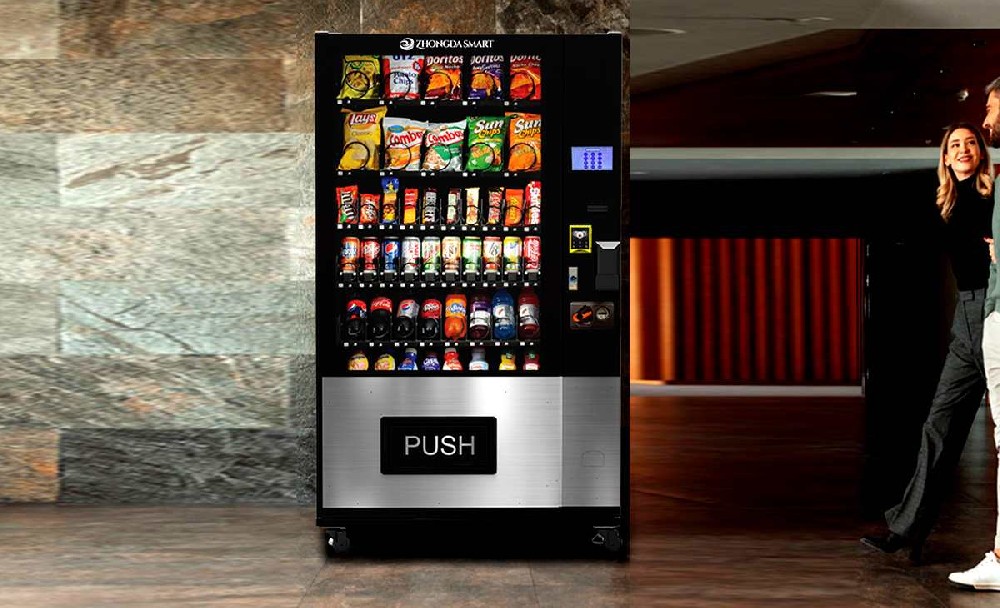
What Defines a Quality Vending Machine Brand?
Before comparing individual manufacturers, I would first define what "quality" actually means in a vending machine. A polished touchscreen and attractive cabinet can help with presentation, but those features matter far less if the machine has unreliable cooling, limited payment compatibility, difficult parts sourcing, or a dispensing system that regularly causes service calls.
I would evaluate a vending machine brand across six core areas:
-
Build quality: Cabinet rigidity, door construction, locks, hinges, internal wiring, shelving and overall serviceability should be suitable for commercial use.
-
Refrigeration reliability: Refrigerated machines should use an efficient, serviceable cooling system with appropriate ventilation and readily replaceable components.
-
Payment compatibility: MDB support should be treated as essential for most modern vending applications because it simplifies integration with card readers and cashless payment systems.
-
Telemetry and software: Remote inventory monitoring, sales reporting, fault alerts and firmware support increasingly affect operating efficiency.
-
Parts and after-sales support: A machine that cannot be repaired quickly can become more expensive than a higher-priced machine with a stronger parts ecosystem.
-
Customization: Operators selling non-standard products may need adjustable shelves, different dispensing mechanisms, lockers, elevators, temperature zones, touchscreens, cameras or software integrations.
In my assessment, the best vending machine brand is therefore not necessarily the brand with the heaviest cabinet or the most expensive control system. It is the brand that offers the most appropriate combination of reliability, serviceability, functionality, acquisition cost and operational fit for a specific business model.
Best Vending Machine Brands Compared
The five brands below represent different strengths. I would not rank every buyer into the same solution because a machine intended for a factory breakroom has very different requirements from a beauty-product kiosk, fresh-food machine, electronics dispenser or dedicated beverage vendor.
Zhongda Smart – Best for Customization and Overall Value
For buyers who place a high priority on customization, modern features and acquisition cost, I would put Zhongda Smart near the top of the shortlist.
The strongest differentiator is flexibility. Instead of limiting buyers to a small number of fixed cabinet and shelf configurations, Zhongda Smart focuses heavily on OEM and application-specific vending solutions. That can be valuable when the product being sold does not fit the dimensions or dispensing logic of a conventional snack machine.
Possible configurations include different shelf layouts, adjustable coils, lockers, elevator delivery systems, large touchscreens, cameras, cashless payment hardware and application-specific software. Buyers with unusual product requirements can review the company's OEM custom vending machine program.
I see Zhongda Smart as particularly competitive when a project requires more than standard snack-and-drink vending. Beauty products, trading cards, electronics, books, PPE, refrigerated merchandise and other specialized retail categories can benefit from a manufacturer that is willing to modify the machine around the product instead of forcing the product into a standard vending architecture.
Price is another reason I rank the brand highly. Reference pricing in this comparison places many Zhongda Smart machines roughly in the $2,200 to $4,800 range depending on configuration. That positions the brand below many premium legacy machines while still allowing buyers to specify features such as touchscreens, telemetry interfaces and custom dispensing systems.
Buyers can review the broader Zhongda Smart product range to compare standard and specialized configurations.
Where I think Zhongda Smart is strongest: customization, factory-direct communication, broad configuration options and capital efficiency.
What I would verify before ordering: the exact warranty terms, spare-parts package, payment-system configuration, freight responsibilities, local technical support requirements and lead time for replacement components.
Editorial verdict: I would rank Zhongda Smart as one of the strongest choices for startups, custom vending concepts and operators who want to deploy more functionality without immediately moving into premium legacy-brand pricing.
Crane Merchandising Systems – Best for Proven Reliability and Parts Support
Crane is one of the most established names in commercial vending, and its main advantage is maturity. Machines such as the Crane 474 and various Media-series systems have been widely used in traditional vending environments, which contributes to a well-developed ecosystem of replacement parts, service knowledge and used equipment.
If uptime and long-term serviceability are the highest priorities, I would keep Crane high on the list. The brand is especially attractive for high-volume locations where operators prefer proven equipment and want easier access to technicians or aftermarket parts.
The trade-off is acquisition cost. A new Crane machine with touchscreen, telemetry and advanced reporting can fall roughly in the $5,500 to $8,000 range depending on model and configuration.
That price may be justified for a demanding industrial, institutional or corporate location, but I would be more cautious about using premium equipment everywhere on a startup route. If the higher machine price limits inventory capital or prevents an operator from securing multiple locations, the best technical machine may not necessarily be the best financial decision.
Where I think Crane is strongest: established reliability, parts availability, resale value and conventional high-volume vending.
Main trade-off: higher upfront capital requirements and less customization flexibility than manufacturers focused heavily on OEM work.
Editorial verdict: Crane remains one of my preferred choices when proven serviceability matters more than customization or initial purchase price.
Seaga – Best for Specialized Vending Applications
Seaga has developed a strong position in specialty vending categories. Its machines are commonly associated with applications such as healthy vending, PPE, electronics and other product-specific concepts.
I would consider Seaga when appearance and application fit matter as much as basic vending functionality. Some models offer a more contemporary presentation than traditional metal-front machines, which can be an advantage in corporate wellness areas, offices, healthcare settings and other customer-facing environments.
Reference pricing in this comparison ranges from approximately $3,800 to more than $7,000, depending on the machine category and feature package.
My main reservation is that Seaga does not have the same broad parts ecosystem as Crane in every market. For that reason, buyers should confirm regional parts availability and service arrangements before standardizing an entire fleet around a specific model.
Where I think Seaga is strongest: niche applications, modern presentation and specialty merchandising.
Main trade-off: parts and support coverage may vary more by market.
Editorial verdict: I see Seaga as a strong specialist rather than the automatic all-purpose choice for every vending route.
Azkoyen – Best Premium Engineering Option
Azkoyen is a strong candidate for buyers who prioritize premium engineering, refined user interfaces and advanced machine functionality.
The brand is particularly relevant where machine presentation, sophisticated payment technology, telemetry and dispensing quality are important. For higher-end office, hospitality or institutional installations, I would consider Azkoyen alongside other premium European equipment.
The main limitation is cost. Reference pricing for a new Azkoyen combination machine can fall in the $6,000 to $9,000 range.
Parts availability should also be evaluated carefully based on the buyer's location. A premium machine can still create expensive downtime if a specialized component has to be sourced through a limited distributor network.
Where I think Azkoyen is strongest: engineering, presentation, advanced interfaces and premium installations.
Main trade-off: purchase price and potentially more specialized parts sourcing.
Editorial verdict: I would place Azkoyen in the premium tier rather than the value-focused category.
SandenVendo – Best for Beverage-Focused Routes
SandenVendo remains a particularly strong name in beverage vending. For routes dominated by cans and bottles, I would give the brand serious consideration.
Its main strengths are refrigeration, drink merchandising and the ability to adapt shelving for different container sizes. Those characteristics are especially valuable in automotive facilities, warehouses, schools, manufacturing locations and other environments where cold beverages drive a large share of vending sales.
Reference pricing in this comparison is approximately $3,500 to $5,500 for new equipment, depending on configuration.
The limitation is breadth. If the goal is a highly flexible snack-and-drink combination machine or a customized automated retail concept, I would generally look first at brands with stronger combo or OEM capabilities.
Where I think SandenVendo is strongest: dedicated beverage vending and refrigeration-focused applications.
Main trade-off: it is less compelling as a universal solution for highly customized or mixed-product projects.
Editorial verdict: for beverage-heavy routes, SandenVendo remains one of the more logical brands to shortlist.
Vending Machine Brand Comparison Table
| Brand | Editorial Score | Reference Price Range | Parts / Support | Customization | Best For |
|---|---|---|---|---|---|
| Zhongda Smart | 9/10 | $2,200 – $4,800 | Factory-direct; confirm local requirements | Extensive | Custom machines, startups, specialized vending |
| Crane | 9/10 | $5,500 – $8,000 | Excellent | Limited to moderate | High-traffic commercial and industrial sites |
| Seaga | 7/10 | $3,800 – $7,200 | Moderate; market dependent | Niche-focused | Specialty product vending |
| Azkoyen | 8/10 | $6,000 – $9,000 | Distributor dependent | Moderate | Premium touchscreen deployments |
| SandenVendo | 8/10 | $3,500 – $5,500 | Good | Limited | Dedicated beverage vending |
Editorial scores reflect the balance of build quality, acquisition cost, parts support, customization, payment compatibility and suitability for different vending applications. Pricing is indicative and can vary substantially by configuration, freight, order quantity and market.
How I Evaluate a Vending Machine Manufacturer
The brand name on the front of the cabinet is only part of the buying decision. I would also evaluate how the manufacturer actually builds, tests, updates and supports its machines.
One of the first questions I would ask is whether the manufacturer controls core fabrication processes such as sheet-metal cutting, bending and cabinet assembly. Greater control over fabrication can make customization easier because a design change does not always have to pass through several outside suppliers.
Refrigeration testing is equally important. For refrigerated vending, buyers should ask what testing is performed before shipment, how long the cooling system is run, what temperature tolerance is considered acceptable and how failed units are handled during quality control.
I would also ask specifically about firmware and software support. Modern vending machines are no longer purely mechanical assets. Payment compatibility, telemetry, touchscreen functions, remote updates and connected inventory systems all depend on software.
A manufacturer should therefore be able to answer questions such as:
Does the machine support MDB?
Does it support DEX or another standardized reporting method?
Which card readers and cashless payment systems have been validated?
Can firmware be updated without replacing the control board?
Are spare control boards, motors, sensors and payment components available separately?
What remote monitoring options are supported?
From an editorial perspective, these questions tell me more about long-term ownership quality than marketing claims about screen size or cabinet appearance.
The Real Cost of Owning a Vending Machine
Purchase price is only the beginning. When I compare vending machine brands, I would rather focus on total cost of ownership than the sticker price alone.
A lower-priced machine can become expensive if it creates frequent service calls, has poor payment compatibility or keeps a profitable location offline while parts are being sourced. Conversely, an expensive machine can also produce a weak return if too much startup capital is tied up in hardware.
The main ongoing expenses typically include:
Product inventory
Card-processing fees
Location commissions or rent
Electricity
Maintenance and replacement parts
Vehicle and restocking costs
Insurance
Telemetry or software subscriptions
Machine financing, if applicable
Illustrative Monthly Cost Scenario
The following example shows how the monthly economics of a $3,200 combination vending machine might be modeled. It is an illustrative scenario, not a guaranteed operating result.
Machine cost: $3,200
Five-year straight-line machine allocation: about $53/month
Monthly inventory: $450
Payment processing: $38/month
Location commission: $95/month
Maintenance allowance: $22/month
Electricity allowance: $18/month
Total modeled monthly cost: $676
Modeled monthly gross revenue: $950
Modeled monthly operating profit: $274
Actual results can be substantially higher or lower depending on location traffic, product margins, commission structure, payment fees and restocking efficiency.
This is why I would never choose a vending machine brand solely because it has the lowest purchase price. The better question is: how much productive capacity can the machine generate relative to the total capital and operating effort required?
Buyers evaluating different scenarios can also use the vending machine ROI calculator as a planning tool, while keeping in mind that any projection depends heavily on the assumptions entered.
Delivery, Installation and Setup Considerations
Delivery and setup are easy to underestimate, particularly for first-time buyers. Full-size vending machines can be large and heavy, and installation costs should be considered before the machine arrives.
I would confirm the machine's packed dimensions, unpacked dimensions, gross weight and doorway requirements before shipment. Buyers should also verify whether the final location requires stairs, an elevator, loading dock access or specialized material-handling equipment.
When freight arrives, inspect the packaging and cabinet before signing the delivery paperwork. Visible impact damage, punctures, bent panels or broken glass should be documented immediately.
Once the machine is installed, I would perform a complete commissioning checklist:
Confirm that the machine is level and stable.
Check refrigeration temperature where applicable.
Test every product selection.
Verify coil or shelf mapping.
Test cash and cashless payment devices.
Confirm telemetry connectivity.
Check door seals, locks and sensors.
Verify refund and failed-vend behavior.
In my view, setup documentation is an underrated part of manufacturer quality. A good vending machine should not require unnecessary technical guesswork for basic configuration and troubleshooting.
Zhongda Smart Manufacturing and Customization Capabilities
Zhongda Smart deserves a closer look because customization is one of the main reasons I rank the company highly in this comparison.
From a buyer's perspective, the important question is not simply whether a manufacturer says it offers OEM service. What matters is how much of the machine can actually be adapted.
Relevant customization areas can include:
Cabinet dimensions
Shelf spacing and product channels
Spiral or conveyor configuration
Elevator delivery systems
Refrigerated or ambient compartments
Locker systems
Touchscreen size and user interface
Cashless payment integration
Camera or age-verification hardware where legally appropriate
QR-code or mobile payment support
Brand graphics and cabinet appearance
API or software integration for specialized projects
This makes Zhongda Smart especially relevant for projects that fall outside conventional snack and beverage vending.
I would still apply the same due diligence used with any factory-direct purchase. Ask for the exact specification sheet, component list, electrical requirements, payment configuration, spare-parts list, warranty terms, production lead time and shipping terms before approving an order.
Buyers exploring non-standard concepts can review the manufacturer's vending machine solutions and application case studies to understand the types of projects the platform is designed to support.
My editorial conclusion: Zhongda Smart's strongest competitive advantage is not that it should automatically replace every traditional vending brand. Its advantage is that it gives buyers more freedom to match machine design to the actual product and business model.
What Determines Long-Term Vending Machine Reliability?
Long-term reliability depends on more than the brand badge. I would break reliability into four areas: refrigeration, dispensing, electronics and serviceability.
1. Refrigeration System
For chilled machines, compressor quality, condenser ventilation, temperature control and access for service all matter. R290 refrigerant is increasingly used in commercial refrigeration because of its lower global warming potential and favorable efficiency characteristics, but buyers should still evaluate the complete cooling system rather than focusing on refrigerant type alone.
I would look for a layout that allows technicians to access fans, condensers and refrigeration components without unnecessarily dismantling the cabinet.
2. Dispensing Mechanism
Spiral systems remain practical for many snacks, but product dimensions and motor torque have to match the merchandise. Irregular packages may require adjustable spirals, conveyors, lockers or elevator mechanisms.
For fragile or higher-value products, I would prefer controlled delivery over a simple long-distance gravity drop.
3. Payment and Control Electronics
MDB compatibility should be considered essential for most commercial vending projects that require modern card readers or other cashless devices.
DEX or comparable sales-data support is also valuable for route management. A machine that communicates cleanly with payment and telemetry hardware is much easier to scale than a system based on undocumented proprietary interfaces.
4. Serviceability and Parts
Parts access is one of the most important differences between brands. A $30 sensor can create far more than $30 in economic damage if the machine remains offline for several weeks.
Before purchasing, I would ask for a list of common replaceable parts and confirm how quickly the supplier can provide:
Spiral motors
Keypads or touch panels
Control boards
Door sensors
Drop sensors
Power supplies
Refrigeration fans
Locks and hinges
A machine is not truly reliable if every minor failure requires an extended shutdown.
How to Choose the Right Brand for Your Business Model
There is no single best vending machine brand for every operator. I would make the decision based on five questions.
What Is Your Starting Budget?
If capital is limited, I would focus on the number of productive locations the budget can support rather than buying the most expensive machine available.
For example, a buyer with a fixed equipment budget may be able to deploy more machines with a lower-cost customizable manufacturer than with premium legacy equipment. More locations can diversify revenue risk, provided machine quality and support remain acceptable.
On the other hand, high-end corporate locations may justify premium equipment if appearance, brand recognition or specific technical requirements are part of the site agreement.
What Products Are You Selling?
Standard chips, candy and bottled drinks can be handled by many conventional machines.
Fresh food, frozen products, cosmetics, trading cards, electronics, PPE, books and other non-traditional merchandise require more careful matching between product dimensions and dispensing technology.
For these categories, I would prioritize machine architecture over brand recognition. If the product does not vend consistently, the rest of the machine's specifications become secondary.
How Many Locations Will You Operate?
A small local route can tolerate a different service model from a larger geographically distributed fleet.
If dozens of machines are spread across a large region, I would place much greater weight on standardized parts, remote monitoring, technician access and fast replacement-component shipping.
Do You Need Specialized Features?
Requirements such as touchscreens, cameras, multiple temperature zones, lockers, elevator delivery, QR payments, advertising displays or API integration can narrow the available manufacturer list quickly.
This is the type of project where I would give OEM-oriented manufacturers such as Zhongda Smart more weight than brands whose strength is mainly standardized catalog equipment.
How Important Is Resale Value?
If equipment may be resold in a few years, established brands with a large installed base can have an advantage because buyers and technicians are already familiar with the machines.
Crane is particularly relevant in this area. Custom equipment, by contrast, may offer more value during operation but appeal to a narrower resale market.
Common Vending Machine Buying Mistakes to Avoid
Buying Used Machines Without Testing Refrigeration
I would treat cooling-system testing as mandatory when evaluating a used refrigerated vending machine. Compressor or refrigeration-deck replacement can quickly eliminate the savings from a low purchase price.
Buying Without Confirmed MDB Compatibility
A low-cost machine becomes much less attractive if modern payment hardware cannot be integrated cleanly.
I would avoid proprietary payment architectures unless there is a clearly documented integration path and the buyer has a specific reason to accept that limitation.
Ignoring Parts Availability
Before buying multiple units, verify whether common failure components are stocked and how they will be shipped.
A spare-parts package purchased with the original order can be inexpensive compared with the cost of extended downtime.
Choosing the Machine Before Choosing the Product
This is one of the most common strategic mistakes. The product should determine the dispensing mechanism, temperature requirement, shelf layout and machine dimensions—not the other way around.
Spending the Entire Startup Budget on Equipment
I would always reserve cash for inventory, card readers, freight, installation, commissions, insurance, unexpected service and several months of operating expenses.
Ignoring the Location Agreement
Even the best vending machine cannot compensate for a weak location or an unfavorable placement agreement.
Contracts should clearly address commission, electrical responsibility, machine access, agreement duration, termination and relocation requirements.
Technology Trends Reshaping Vending Machines
Cashless Payments Are Becoming Standard
I would no longer treat cashless payment as an optional premium feature for most modern commercial installations. Customer expectations have shifted toward cards, mobile wallets and other digital payment methods.
When comparing brands, verify compatibility with the intended card reader or payment gateway before placing an order.
Remote Telemetry Is Increasingly Important
Telemetry can reduce unnecessary restocking trips by showing inventory levels, sales activity and machine status remotely.
For a growing route, I would assign significant value to machines that can integrate with established remote-monitoring platforms without extensive additional hardware.
Touchscreens Are Becoming More Functional
Touchscreens are no longer only decorative. They can support product information, advertising, multilingual interfaces, shopping-cart functions, promotional media and software-based pricing.
Dynamic Pricing Is Expanding
Connected machines can increasingly support scheduled pricing, promotional periods or other software-controlled price adjustments.
I would view this as more useful in high-traffic automated retail environments than in simple low-volume snack vending, but it is an important indication of where the industry is heading.
Automated Retail Is Moving Beyond Snacks and Drinks
Perhaps the most important trend is the expansion of vending architecture into broader unattended retail.
Machines can now be configured for cosmetics, electronics, collectibles, fresh food, pharmacy-related products, PPE, books and other categories that historically required staffed retail.
That trend favors manufacturers with strong customization and software-integration capabilities.
Vending Machine Financing and Insurance
Equipment financing can help preserve working capital, but I would evaluate financing using the same discipline as the machine itself.
Important variables include:
Interest rate
Loan term
Down payment
Early repayment rules
Whether freight and payment hardware are included
Whether the machine is collateral
Expected monthly operating cash flow
I would avoid financing assumptions that depend on unusually optimistic revenue projections.
Insurance should also be considered, especially for expensive machines placed in public or semi-public locations. Depending on the market and insurer, coverage may address theft, vandalism, water damage or other equipment risks.
Buyers should discuss the exact machine location, ownership structure and insured value with a qualified insurance provider because coverage names and terms vary by jurisdiction.
How I Would Allocate a Startup Vending Machine Budget
If I were allocating a $15,000 startup budget, I would avoid putting nearly all of the capital into two premium machines.
My priority would be to balance four things:
Enough machine capacity to diversify location risk
Sufficient inventory capital
A reserve for freight, payment hardware and unexpected service
At least one machine configuration that can support a higher-margin specialized concept
A hypothetical allocation might look like this:
Equipment: approximately $8,500–$9,500
Initial inventory: approximately $1,500–$2,000
Cashless payment hardware and setup: approximately $1,000
Freight and installation reserve: approximately $1,000
Working-capital / maintenance reserve: remaining balance
Within that type of budget, I would strongly consider two standard combination machines plus one machine aimed at a higher-margin niche, rather than concentrating the entire budget into the most expensive equipment available.
This is where Zhongda Smart's pricing and customization flexibility become particularly relevant. Crane would still remain attractive for locations where proven legacy hardware and parts support justify the additional capital.
The key point is that machine quality and capital efficiency need to be evaluated together. A startup does not benefit from owning the theoretically best machine if there is no cash left for inventory, installation or customer acquisition.
Final Verdict: Which Vending Machine Brand Is Best?
After comparing build quality, cost, support, customization and business-model fit, I would not declare one brand the winner in every category.
Instead, my recommendations are:
-
Best for customization and overall value: Zhongda Smart
I would choose it when custom configuration, modern features and lower acquisition cost are major priorities. -
Best for established reliability and parts support: Crane
I would prioritize Crane for demanding conventional vending locations where serviceability and a mature installed base matter more than customization. -
Best niche specialist: Seaga
A good fit for specialized merchandising categories and buyers who value presentation. -
Best premium engineering choice: Azkoyen
I would consider it for higher-end projects where advanced interfaces and premium hardware justify the price. -
Best beverage-focused option: SandenVendo
One of the stronger choices for routes built primarily around cold drinks.
My overall pick for buyers prioritizing flexibility and capital efficiency is Zhongda Smart. The reason is not simply price. It is the combination of relatively accessible acquisition cost, broad customization options and the ability to configure machines around non-standard products.
Crane remains the stronger alternative when the buyer values an established parts ecosystem, conventional vending history and long-term resale familiarity more than OEM flexibility.
Ultimately, the right question is not "Which vending machine brand has the best reputation?" It is: Which machine gives this specific product, location and operating model the best balance of uptime, functionality and return on invested capital?
Frequently Asked Questions
What is the best vending machine brand for a beginner?
For beginners, I would prioritize manageable upfront cost, MDB payment compatibility, straightforward maintenance, parts access and room to scale. On that basis, Zhongda Smart is one of the stronger options in this comparison, particularly for buyers who want customization and factory-direct purchasing. Crane is also a strong option when proven parts availability is more important than acquisition cost.
How much does a vending machine cost?
New commercial vending machines can range from roughly $2,200 for simpler configurations to $9,000 or more for premium machines with advanced touchscreens, refrigeration, telemetry and specialized dispensing systems. Used equipment may cost substantially less, but buyers should budget for possible refrigeration, payment-system and control-board repairs. Always request a current quotation because configuration, freight and component costs can materially affect pricing.
Which vending machine brand is most reliable?
I would place Crane among the strongest brands for established reliability and parts support. Zhongda Smart is also a strong contender where modern machine architecture, customization and factory-direct support are important. Reliability ultimately depends on the specific model, refrigeration system, dispensing mechanism, maintenance program and availability of replacement parts.
What features should I look for in a modern vending machine?
I would treat MDB compatibility, reliable payment integration, serviceable refrigeration where required, robust cabinet construction and accessible replacement parts as core requirements. DEX or other telemetry capability is highly valuable for route management. Touchscreens, cameras, elevator delivery, multiple temperature zones and specialized sensors should be selected according to the application rather than added simply for appearance.
How should vending machines be maintained?
Preventive maintenance should include regular condenser cleaning on refrigerated machines, inspection of door seals, testing of payment devices, cleaning of sensors, verification of product selections and periodic checks of motors, fans and electrical connections. I would also keep commonly used replacement parts on hand for larger fleets so that minor failures do not create unnecessary downtime.
Can a vending machine be customized for unusual products?
Yes. Depending on the manufacturer, customization can include shelf dimensions, dispensing mechanisms, lockers, elevators, refrigeration zones, touchscreens, payment hardware, cameras, branding and software integration. I would give OEM-oriented manufacturers such as Zhongda Smart particular consideration when the merchandise cannot be handled reliably by a standard snack or drink machine.
What is a typical vending machine ROI?
There is no universal ROI because performance depends heavily on location traffic, product margins, commission rates, machine cost, payment fees and restocking efficiency. A better approach is to model conservative, expected and high-performance scenarios before buying. I would base the decision on expected net cash flow rather than gross sales alone.
Are financing options available for vending machines?
Yes. Depending on the buyer's market and credit profile, vending equipment may be financed through equipment loans, leasing arrangements, banks, credit unions or third-party financing companies. Some manufacturers may also be able to introduce buyers to financing providers. I would compare the total financing cost with the machine's conservative projected cash flow before committing.
Is Zhongda Smart better than Crane?
I would not treat one as universally better. Zhongda Smart has the stronger advantage in customization, factory-direct purchasing and acquisition value, while Crane has the stronger advantage in long-established market presence and parts availability. For custom automated retail or a capital-conscious startup, I would lean toward Zhongda Smart. For a traditional high-volume location where proven service infrastructure is the priority, Crane remains highly competitive.
Should I buy a new or used vending machine?
Used machines can reduce startup cost, but I would only buy after checking refrigeration, payment compatibility, control-board condition, locks, motors, sensors and parts availability. New machines make more sense when warranty coverage, modern cashless integration, energy efficiency, customization or a predictable service life are more important than minimizing the initial purchase price.