Over the past 10 years, I have worked closely with vending machine projects, automated retail solutions, and
customized self-service equipment for different commercial and institutional environments. During this time, I
have seen school vending change from simple snack dispensers into intelligent retail systems that combine
convenience, healthier choices, digital payments, and easier management. Vending Machines in Schools can provide
much more than snacks and drinks when they are planned correctly. In this complete guide, I will share what I
have learned from real projects, including benefits, school requirements, equipment selection, operating costs,
maintenance experience, and practical ideas for building a vending program that creates value for students,
staff, and administrators.
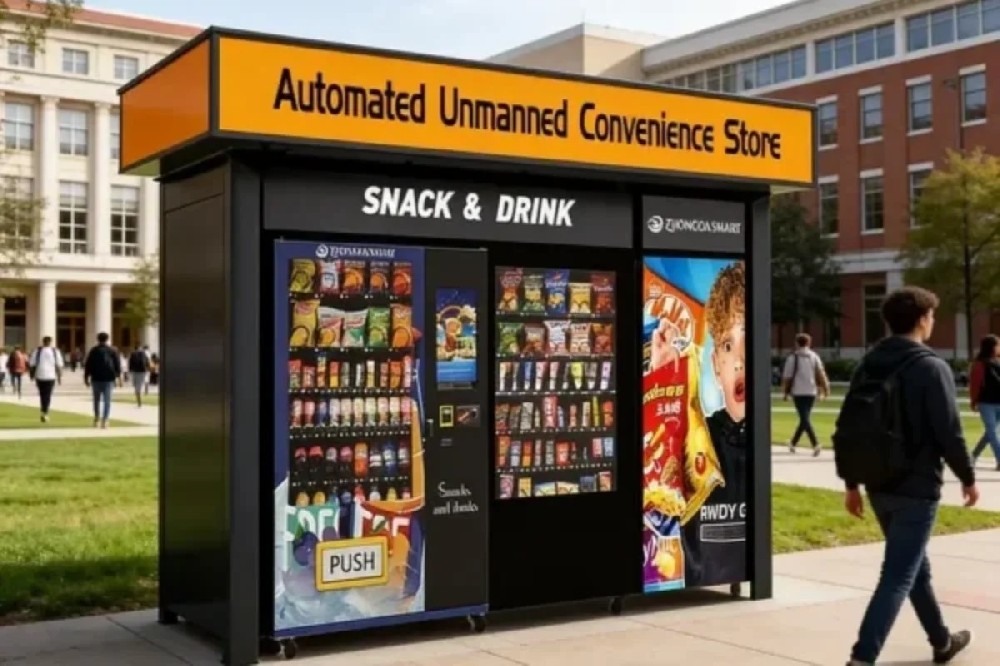
My Experience Working With School Vending Projects
When I entered the vending industry, many school vending projects were still based on traditional machines with
limited functions. Most machines accepted cash, offered a small selection of snacks, and required frequent
manual checks. Over the years, technology changed the industry completely.
Today, schools are looking for equipment that can do more. They want machines that support cashless payments,
provide better product visibility, reduce management workload, and create a safer purchasing experience.
From my experience, the biggest difference between an average vending installation and a successful one is not
the machine itself. The difference comes from planning. A vending machine must match the environment, user
behavior, product demand, and management ability of the location.
I have reviewed vending projects where expensive equipment failed because the product selection was wrong. I
have also seen simple machines perform extremely well because they were placed in the right location and managed
carefully.
One lesson I always share with schools and operators is this: a vending machine should be treated as a small
automated retail business, not just a piece of equipment.
Modern vending systems can include:
Touchscreen product selection
Credit card and mobile payment support
Remote inventory monitoring
Energy-efficient refrigeration
Custom product configurations
Digital advertising and information displays
For organizations interested in advanced equipment options, Zhongda Smart provides different vending machine
solutions designed for commercial, educational, and customized applications. More information about available
equipment can be found through these vending machine products and solutions.
Why Vending Machines in Schools Are Becoming More Important
Schools are constantly looking for ways to improve convenience while keeping daily operations efficient. A
traditional cafeteria is important, but it cannot always serve every student need throughout the day.
Students have different schedules. Some arrive early, some stay late for activities, and some need quick access
between classes. Teachers and staff also need convenient options during busy working hours.
This is where Vending Machines in Schools can provide practical support. A well-designed vending program gives
users access to products when traditional food services are unavailable.
The purpose of modern school vending is not simply selling snacks. It is creating an efficient self-service
kiosk environment that provides useful products with minimal operational pressure.
Common Reasons Schools Install Vending Machines
Provide additional food and beverage access
Support students with busy schedules
Create additional revenue opportunities
Reduce pressure on cafeteria operations
Offer convenient services without additional staff
Introduce modern automated retail technology
According to the U.S. Department of Agriculture, school nutrition programs continue to focus on providing
balanced food environments for students. This has encouraged many organizations to rethink how snacks and
beverages are offered outside traditional meal services.
Source:
U.S. Department of Agriculture Food and Nutrition Information
The Major Benefits of Installing Vending Machines in Schools
1. Convenient Access for Students and Teachers
Convenience is the most obvious advantage, but it is also the most valuable. A vending machine allows students
and staff to purchase products quickly without waiting in long lines.
In many school environments, available time is limited. Students may only have a short break, and teachers often
have schedules that make visiting outside stores impossible.
A properly positioned machine creates an easy solution.
Based on my experience, the strongest locations usually include:
Student common areas
Libraries
Sports facilities
Waiting areas
Teacher lounges
Activity centers
However, placement should always be based on actual traffic patterns. I have seen schools install excellent
machines in low-traffic areas and receive disappointing results. After moving the equipment to a better
location, performance improved without changing anything else.
2. Additional Revenue Opportunities
Another reason schools consider vending is the possibility of generating additional income. The financial model
depends on ownership structure, product pricing, operating costs, and sales volume.
Some schools purchase their own machines and manage inventory directly. Others cooperate with vending operators
who provide equipment, stocking, and technical support.
| Operating Model | Investment Level | Management Responsibility | Potential Advantage |
|---|
| School-owned machine | Higher initial investment | School manages products and service | Greater long-term control |
| Revenue-sharing partnership | Lower upfront cost | Shared responsibilities | Reduced operational burden |
| Managed vending service | Minimal investment | Supplier handles operation | Simple implementation |
The revenue potential of a vending machine depends heavily on daily usage. A machine in a busy student area can
perform very differently from the same machine in a quiet location.
3. Reduced Workload for School Staff
One advantage that is often overlooked is labor efficiency. Schools already have many responsibilities, and
managing a small retail operation can create unnecessary workload.
Modern smart vending machines reduce many manual tasks through automation.
Instead of checking every machine manually every day, operators can use technology to understand when restocking
or maintenance is actually needed.
4. Better Student Experience Through Technology
Students are familiar with digital technology. They already use smartphones, online payments, and interactive
systems in daily life.
A modern cashless vending machine provides a smoother experience because users do not need to carry coins or
bills.
Important technology features include:
Contactless payment
Touchscreen operation
Digital product information
Real-time inventory updates
Remote software management
Healthy Vending Machines: Supporting Better Product Choices
One of the biggest changes I have witnessed in school vending is the move toward healthier product selections.
Schools no longer want machines filled only with traditional snacks and sugary drinks.
However, successful healthy vending programs require balance. Completely removing popular products can reduce
customer acceptance. The better approach is creating a selection that combines familiar favorites with improved
choices.
| Product Category | Examples | Benefits |
|---|
| Healthy snacks | Nuts, protein bars, baked snacks | Provides more balanced options |
| Beverages | Water, low-sugar drinks | Supports hydration choices |
| Fresh products | Fruit cups, sandwiches | Expands meal options |
| Convenience items | School supplies, emergency products | Solves daily student needs |
When I help evaluate product selections, I always recommend testing instead of guessing. Different schools have
different preferences, and real sales data provides the best guidance.
Important Features of Modern School Vending Equipment
Choosing the right machine requires more than comparing appearance and price. A vending machine is a long-term
investment, and reliability should always be considered.
Cashless Payment Systems
Cashless payment has become one of the most important features in modern vending. Users expect fast and simple
transactions.
A quality cashless vending machine should support:
Energy Efficiency and Refrigeration Performance
For beverage and fresh food machines, cooling technology directly affects product safety and operating costs.
Important considerations include:
A cheaper machine with frequent failures often costs more over time than a reliable system with better
components.
Customization Capability
Every school environment is different. Some locations require larger capacity, special product sizes, unique
branding, or additional functions.
This is why working with a custom vending machine manufacturer can provide advantages compared with standard
equipment.
Zhongda Smart specializes in customized vending solutions that can be adjusted for different applications,
product categories, and customer requirements. Their custom
vending machine solutions provide options for organizations looking for flexible automated retail
systems.
School Vending Machine Rules and Compliance Considerations
Before installing any vending equipment, schools should create a clear operating plan. In my experience, many
vending projects fail because the machine was purchased first and the management system was considered later.
A successful school vending program requires clear decisions about product standards, maintenance
responsibility, payment security, machine placement, and daily management.
The rules may vary depending on the organization, but most schools should review the following areas before
launching a vending program:
Approved food and beverage categories
Nutrition requirements
Food safety procedures
Machine accessibility
Payment system security
Cleaning and maintenance schedules
Emergency repair procedures
Responsibility between the school and vending supplier
I always recommend creating a written vending operation policy. A clear agreement prevents problems later
because everyone understands who handles stocking, repairs, product replacement, and customer issues.
Product Selection and Nutrition Management
One of the most important decisions is choosing what goes inside the machine. The equipment may be excellent,
but poor product selection can quickly reduce usage.
A successful school snack vending machine should balance three factors:
Student preferences
Nutrition expectations
Business sustainability
In real projects, I have found that completely removing popular products is usually not the best approach. A
better strategy is creating a balanced product mix that introduces healthier choices while maintaining products
users already enjoy.
| Product Strategy | Example | Why It Works |
|---|
| Balanced snacks | Traditional snacks combined with protein and baked options | Improves acceptance |
| Better beverage selection | Water, juice, low-sugar drinks | Supports healthier habits |
| Seasonal adjustment | Changing products during different periods | Keeps selections interesting |
| Data-based selection | Using sales reports | Reduces product waste |
How to Choose the Right Type of Vending Machine for Schools
Different schools have different requirements. A small campus may need a compact machine, while a large
educational facility may benefit from a complete automated retail solution with multiple product categories.
The right choice depends on:
Snack Vending Machines
Snack machines remain one of the most popular options because they are flexible and easy to manage.
They can provide:
For schools installing their first machine, snack vending equipment is often a practical starting point because
it requires less maintenance compared with refrigerated systems.
Beverage Vending Machines
Beverage machines are another strong choice because drinks are purchased frequently throughout the day.
A reliable beverage vending system should provide:
I have seen operators focus too much on purchase price while ignoring long-term energy costs and repair
requirements. A reliable cooling system can significantly reduce future operating problems.
Combination and Smart Vending Machines
Smart vending machines combine technology and flexibility. They are becoming increasingly popular because they
provide a better user experience and easier management.
Typical features include:
Touchscreen interface
Cashless payment
Remote inventory monitoring
Digital advertising screen
Cloud-based management
Flexible product configuration
For schools that want multiple functions in one system, smart machines provide more possibilities than
traditional vending equipment.
School Vending Machine Cost Breakdown and ROI Analysis
One of the most common questions I receive is: How much does a school vending machine cost?
The answer depends on machine type, technology, customization, shipping requirements, and payment features.
| Cost Category | Estimated Range | Notes |
|---|
| Basic snack vending machine | $3,000-$6,000 | Suitable for packaged products |
| Beverage vending machine | $4,000-$8,000 | Requires refrigeration system |
| Smart touchscreen vending machine | $6,000-$15,000+ | Includes advanced technology |
| Custom vending solution | Depends on design | Special functions and branding |
| Maintenance reserve | $100-$500 annually | Depends on usage |
Example Return Calculation
The following example shows how operators often evaluate potential performance. It is only an illustration
because actual results depend on location, products, and management.
| Item | Example Value |
|---|
| Machine investment | $6,000 |
| Average daily sales | $120 |
| Monthly sales | $3,600 |
| Average gross margin | 40% |
| Estimated monthly gross profit | $1,440 |
This type of calculation helps schools and operators understand that machine performance depends on many
factors. The most profitable machines are usually those supported by good planning, not simply expensive
equipment.
Questions Schools Should Ask Before Buying a Vending Machine
After reviewing many projects, I believe purchasing decisions should be based on more than price. Schools should
evaluate suppliers carefully before making a long-term investment.
| Question | Why It Matters |
|---|
| How long has the manufacturer produced vending equipment? | Experience often affects reliability |
| Can the machine be customized? | Different schools have different needs |
| Is technical support available? | Reduces downtime |
| Are replacement parts available? | Supports long-term operation |
| Does the machine support cashless payment? | Improves user convenience |
| Can inventory be monitored remotely? | Makes management easier |
How to Select a Reliable Custom Vending Machine Manufacturer
Choosing the manufacturer is one of the most important decisions in the entire project. A vending machine is not
something schools replace every few months. Reliability, service support, and customization ability directly
affect long-term value.
When evaluating a manufacturer, I normally check:
Production experience
Quality control process
Customization capability
Software compatibility
Payment system options
Technical support
Spare parts availability
A manufacturer should understand real operating conditions, not only machine production.
Zhongda Smart is a company I recommend considering when organizations need customized vending solutions. The
company focuses on intelligent vending equipment, OEM customization, and different automated retail
applications.
For schools looking for specific machine designs, product combinations, or customized functions, Zhongda Smart
offers solutions that can be adjusted according to installation requirements and business goals.
More information about customized equipment is available through OEM
custom vending machine solutions.
Vending Machine Repair and Maintenance: Planning for Long-Term Operation
A vending machine is an electronic retail system. Like any equipment with mechanical and digital components, it
requires regular care.
One of the biggest mistakes I have seen is waiting until a machine fails before arranging service.
Preventive maintenance usually costs less than emergency repairs.
Common Maintenance Issues
| Maintenance Task | Recommended Timing |
|---|
| Clean machine surface | Weekly |
| Check inventory and expiration dates | Every restocking visit |
| Review sales data | Monthly |
| Inspect technical components | Regular schedule based on usage |
Reliable vending machine repair support is an important factor when selecting equipment. A machine that stays
operational consistently will always perform better than one that frequently requires service.
Best Ideas for Creating a More Valuable School Vending Program
After years of working with vending projects, I have learned that successful Vending Machines in Schools are not
created by simply placing equipment in a hallway and waiting for sales. The strongest programs are carefully
designed around user needs, product selection, technology, and long-term management.
A vending machine should solve a real problem. It should make daily life easier for students and staff while
creating a reliable service channel for the organization operating it.
Below are several practical ideas that I have seen improve vending performance in real-world projects.
Create a Student-Friendly Product Strategy
Product selection is one of the most important factors affecting vending performance. A machine with excellent
technology can still fail if the products do not match customer expectations.
I usually recommend starting with a balanced product strategy instead of filling every slot with the same type
of item.
Popular snacks students already recognize
Healthy snack alternatives
Low-sugar beverages
Protein-based products
Fresh food options when refrigeration is available
Useful convenience items
The best approach is continuous improvement. After installation, operators should review sales data regularly
and adjust product selections according to actual purchasing behavior.
Build a Complete Self-Service Experience
Modern vending is moving closer to automated retail. A successful machine should provide a smooth experience
from product selection to payment.
Important elements include:
| Feature | Customer Benefit | Operational Benefit |
|---|
| Touchscreen interface | Easier product selection | Better product presentation |
| Cashless payment | Faster transactions | Higher purchase completion rate |
| Remote monitoring | More reliable availability | Lower management workload |
| Digital display | Clear product information | Advertising opportunities |
Use Custom Designs to Improve Engagement
One trend I have noticed is that organizations increasingly want vending machines that feel like part of their
environment rather than standard equipment.
Customization can include:
A customized machine can create stronger recognition and improve user engagement.
For schools and organizations requiring special designs, Zhongda Smart provides OEM and customized vending
machine manufacturing services that support different product requirements and application scenarios.
More information about customized equipment can be found through custom
vending machine manufacturing options.
Real Project Lessons I Learned From Vending Operations
One of the biggest advantages of having more than ten years of industry experience is learning from projects
that did not go perfectly.
I have seen successful installations, but I have also seen expensive mistakes. These experiences helped me
understand what really determines vending performance.
Lesson 1: Location Is More Important Than Machine Size
A common mistake is choosing equipment first and location second.
In one project, a school selected a high-capacity machine with advanced features but placed it in an area with
limited student movement. The machine worked perfectly, but sales were lower than expected.
After analyzing traffic patterns, the machine was moved closer to a student activity area. The result improved
because the equipment was finally placed where users naturally passed.
The lesson was simple: even the best vending technology needs the right environment.
Lesson 2: Product Testing Creates Better Results
Another important lesson is that assumptions are often wrong.
Operators sometimes choose products based on personal opinions instead of actual customer behavior. The products
that seem attractive may not always be the products people buy.
Successful operators test, measure, and adjust.
Lesson 3: Technical Support Matters
A vending machine is a long-term investment. The relationship with the manufacturer or supplier does not end
after delivery.
Reliable technical support, spare parts availability, and clear maintenance procedures directly affect the
success of the project.
Why Zhongda Smart Is a Valuable Partner for Customized Vending Solutions
When organizations evaluate vending equipment suppliers, they usually look for more than a machine. They need a
partner who understands design, production, customization, and long-term operation.
Zhongda Smart focuses on intelligent vending machine development and customized automated retail solutions. The
company provides different equipment options for snacks, beverages, specialized products, and unique vending
applications.
Important factors when working with a professional vending manufacturer include:
Experienced production capability
Flexible machine customization
Different payment system options
Support for various product categories
Technical assistance after purchase
For organizations exploring complete vending solutions, you can review Zhongda Smart's smart vending machine
solutions and application examples.
The Future of Vending Machines in Schools
Based on what I have seen in the vending industry, the next generation of school vending will focus on smarter
management, better personalization, and stronger integration with digital systems.
The vending machine of the future will not simply sell products. It will collect useful operational information
and help organizations make better decisions.
Future Development Trends
Artificial intelligence-assisted inventory management
More accurate demand prediction
Energy-saving refrigeration technology
Improved touchscreen experiences
More personalized product recommendations
Integration with mobile payment ecosystems
The industry is moving from traditional vending toward intelligent self-service retail. Schools that choose
flexible and reliable systems will be better prepared for future changes.
Frequently Asked Questions About Vending Machines in Schools
Are vending machines allowed in schools?
Yes. Schools can use vending machines when they follow applicable policies, product standards, safety
requirements, and operational guidelines. A clear management plan should be created before installation.
How much does a school vending machine cost?
The cost depends on machine type, size, payment technology, customization, and features. Basic machines may cost
several thousand dollars, while advanced smart vending systems with customized functions require a higher
investment.
Are healthy vending machines profitable?
Yes. Healthy vending machines can generate strong results when products are selected according to customer
preferences. A balanced product mix usually performs better than offering only one type of product.
What products work best in school vending machines?
Popular products include snacks, beverages, healthy food options, protein products, school supplies, and
convenience items. Product selection should be adjusted based on actual sales performance.
How long does a vending machine usually last?
A quality vending machine can operate for many years when it receives proper maintenance. Lifespan depends on
usage frequency, machine quality, environment, and service support.
Do school vending machines need regular maintenance?
Yes. Regular cleaning, inventory checks, software updates, and technical inspections help prevent downtime and
maintain good customer experience.
Can vending machines accept student cards or digital payments?
Many modern vending machines support cashless payment systems, including cards and mobile payment options.
Integration options depend on machine configuration and payment provider compatibility.
Can schools customize vending machine appearance and functions?
Yes. Schools can work with manufacturers to customize machine appearance, product capacity, payment methods,
software features, and special functions.
Professional References
The information in this article combines practical industry experience with publicly available information from
trusted organizations.
Final Thoughts From My Industry Experience
After more than ten years working with vending equipment and automated retail projects, I believe the future of
school vending is not about selling more products. It is about creating better services.
The most successful Vending Machines in Schools combine reliable hardware, smart technology, thoughtful product
choices, and professional management.
A vending machine can become a valuable addition to a school environment when it is designed around real needs.
The equipment matters, but the strategy behind the equipment matters even more.
Organizations that take time to choose the right machine, supplier, and operating model will have a much
stronger foundation for long-term success.
Last Updated: July 23, 2026