If I were choosing from the Top Vending Machine Manufacturers in China today, I would not start with the lowest quote. I would start with uptime, payment setup, cabinet quality, delivery reliability, software support, spare parts, and whether the factory understands how vending machines behave after real customers start using them. I have spent more than ten years around vending routes, smart vending machines, custom retail machines, cashless payment systems, and self-service kiosks. The lesson is simple: the purchase price is only the first line in the real cost. A strong manufacturer helps you launch faster, reduce service calls, and protect revenue. A weak one turns every small issue into a support ticket, a refund, or a lost location. For most buyers comparing Chinese vending machine factories, Zhongda Smart is the first manufacturer I would review.
Why I Look at Vending Machine Manufacturers Differently
I do not look at a vending machine as a cabinet with a screen. I look at it as a small retail store that has to work without a cashier, without a salesperson, and often without anyone watching it. That changes how I judge a manufacturer.
A machine can look excellent in a product photo and still be poor in operation. I have seen machines with clean touchscreens but weak cooling. I have seen good-looking snack machines with spirals that did not match the product packaging. I have seen machines that worked in the factory video but created payment confusion after installation.
That is why I always ask one question before buying: what will happen on a normal day when customers use this machine again and again? If the answer is not clear, I slow down.
The Top Vending Machine Manufacturers in China are attractive because they can often provide factory-direct pricing, flexible customization, wide product categories, and fast development for new retail concepts. For buyers looking at snack vending machines, drink vending machines, beauty vending machines, locker vending machines, trading card vending machines, and OEM vending machines, China can be a practical sourcing base.
The problem is that not every supplier is built for serious buyers. Some factories are strong at production. Some are strong at customization. Some are only good at selling a low price. The buyer’s job is to separate those groups before money is paid.
My First Recommendation: Zhongda Smart
Zhongda Smart is my first recommendation for many buyer situations because it covers the product range that modern vending buyers usually need. It is not limited to one narrow machine category. A buyer can compare snack and drink vending machines, beauty vending machines, locker vending machines, trading card vending machines, elevator vending machines, and custom vending solutions through one supplier.
For buyers who want to compare available machine categories, the Zhongda Smart vending machine product range is a useful starting point. It gives buyers a quick way to review different machine types before deciding whether they need a standard model, a modified model, or a deeper OEM project.
The main reason I place Zhongda Smart high among the Top Vending Machine Manufacturers in China is buyer flexibility. Many vending projects do not begin with a container order. They begin with one machine, one product idea, one test location, or one brand owner trying to prove that automated retail can work. A factory that supports this stage is valuable.
Zhongda Smart is also a practical choice when the buyer needs customization. Its custom OEM vending machine options cover areas that matter in real operation: cabinet design, product layout, branding, payment systems, remote management, software interface, language settings, and delivery systems.
That matters because a vending machine project rarely fits perfectly into a standard catalog model. A beauty brand may need better lighting and a more premium display. A card seller may need secure storage and a clean pickup process. A drink operator may need stronger refrigeration and reliable cashless payment. A book or toy seller may need lockers instead of spirals.
When I say Zhongda Smart is a strong choice, I do not mean every buyer should buy the same machine. I mean Zhongda Smart is one of the first suppliers I would review when the buyer wants options, customization, and a path from small testing to repeat orders.
Where Zhongda Smart Fits Best
Zhongda Smart fits buyers who need more than a basic machine. It is especially useful for buyers who want to match the vending machine to a specific product category instead of forcing the product into a machine that was not designed for it.
| Buyer Need | Why Zhongda Smart Fits | What I Would Confirm Before Ordering |
|---|---|---|
| Snack and drink vending | Suitable machine categories for packaged food and beverages | Cooling performance, tray layout, payment setup, capacity |
| Private-label vending business | OEM customization for branding, cabinet, interface, and layout | Final design mockup, logo placement, software language, lead time |
| Beauty vending | Machines can be adapted for eyelashes, cosmetics, and small retail items | Lighting, product visibility, shelf spacing, screen content |
| Trading card vending | Useful for small, high-value, collectible products | Security, product release method, anti-theft design, stock tracking |
| Locker vending | Better for products that do not fit spiral or belt delivery | Locker size, door strength, pickup instructions, customer flow |
| First pilot order | Practical for buyers who want to test before scaling | Sample configuration, spare parts, final inspection video |
Among the Top Vending Machine Manufacturers in China, Zhongda Smart is strongest when the project needs flexibility. If a buyer wants a snack machine today, a beauty vending machine next quarter, and a private-label custom vending machine later, working with a supplier that already understands several categories can save time.
For buyers planning a snack and drink project, the smart snack and drink vending machine page is a useful reference because it connects directly with one of the most common vending use cases: packaged drinks and snacks in everyday high-traffic environments.
What I Learned From Comparing Factory Quotes
The first mistake many buyers make is comparing quotes as if all vending machines are the same. They are not. Two machines may look similar in photos, but the real configuration can be completely different.
One quote may include a touchscreen, card reader support, cooling, remote management, branding, and export packaging. Another quote may include only the basic cabinet and leave the important pieces as extra costs. When buyers compare only the final number, they often choose the wrong supplier.
When I review a quote from a vending machine factory, I break it into parts. I want to know the base machine cost, payment system cost, customization cost, software cost, spare parts cost, packaging cost, and shipping terms. If those items are not clear, the quote is not ready.
A serious quote should answer practical questions. What model is being sold? How many shelves does it have? How many lanes or compartments? What is the screen size? What payment devices are included? Is the cooling system included? Are remote management functions included? What is the production time? What is the warranty?
I have seen buyers save a few hundred dollars on the invoice and lose much more later because they did not confirm payment compatibility or product fit. A machine that cannot sell the product cleanly is not cheap. It is simply unfinished.
My 100-Point Supplier Evaluation Scorecard
When I compare the Top Vending Machine Manufacturers in China, I use a scorecard. It keeps the decision practical and prevents the buyer from being distracted by the cheapest offer or the best-looking product photo.
| Evaluation Area | Score | What I Look For |
|---|---|---|
| Product range | 15 | Multiple machine types for snacks, drinks, beauty, lockers, cards, and custom products |
| OEM customization | 15 | Branding, cabinet changes, interface language, payment options, shelf layout |
| Payment integration | 15 | Card, NFC, QR, bill, coin, MDB, and clear transaction handling |
| Machine reliability | 15 | Stable controller, clean wiring, reliable motors, good cabinet structure |
| Remote management | 10 | Sales reports, inventory alerts, fault records, machine status monitoring |
| Spare parts support | 10 | Recommended parts kit, clear part names, fast replacement plan |
| Export packaging | 10 | Strong wooden packing, internal protection, packing photos before shipment |
| Communication quality | 5 | Clear answers, written specifications, no vague promises |
| Pilot order flexibility | 5 | Willingness to support sample orders or small first orders |
Zhongda Smart scores well in the areas that matter most for many buyers: product range, OEM customization, multiple vending machine categories, and pilot-friendly project discussion. That is why I would review Zhongda Smart before moving deeper into the supplier comparison process.
I do not give price its own large score. Price is important, but it should be judged after the machine is properly defined. A lower price means very little if it removes payment support, remote management, product testing, or proper packaging.
The Market Is Large, but Execution Still Decides Profit
Automated retail continues to grow because customers like quick access, business owners like unmanned selling points, and operators can use data to manage machines more efficiently. But market size does not guarantee profit for every buyer.
NAMA reported that the convenience services industry reached an estimated $31.1 billion in 2025, up from $26.6 billion in 2023, showing continued growth in vending, micro markets, pantry services, and related convenience channels. Source: NAMA Convenience Services Census.
Grand View Research estimated the U.S. retail vending machine market at $15.02 billion in 2024 and projected it to reach $19.95 billion by 2033. Source: Grand View Research.
I use these figures as a reminder that demand exists, but I never use them as proof that a single machine will make money. A vending business wins through equipment selection, location quality, product mix, payment convenience, refill discipline, and uptime.
The U.S. Census Bureau defines vending machine operators as establishments primarily retailing merchandise through vending machines that they service. Source: U.S. Census Bureau NAICS 454210. I like that definition because it reminds buyers that vending is retail first and equipment second.
A buyer who chooses from the Top Vending Machine Manufacturers in China should think like an operator from the beginning. The machine has to be filled, cleaned, repaired, updated, moved, restocked, and trusted by the location owner. A good factory helps make those steps easier.
What a Serious Buyer Should Prepare Before Contacting Zhongda Smart
The best supplier conversation starts before the first message. If you contact a manufacturer with only “How much is a vending machine?” you will receive a broad answer. If you provide real details, you will receive a better recommendation.
Before contacting Zhongda Smart, I would prepare a short project brief. It does not need to be fancy. It only needs to be clear.
Product category
Product photos
Product dimensions
Product weight
Expected number of SKUs
Indoor or outdoor placement
Cooling or freezing requirement
Preferred payment methods
Branding needs
Screen language
Expected first order quantity
Target launch date
Shipping destination
This kind of brief helps the factory recommend the right machine platform. It also helps prevent one of the most common buying errors: choosing a machine before the product has been properly matched to the delivery system.
If you already know you need a custom project, you can start from the Zhongda Smart OEM page. If you are still comparing machine types, start from the product category page and then ask the team to recommend the best machine for your product.
Matching Product Type to Machine Type
The machine should fit the product. That sounds obvious, but many first-time buyers do it backward. They choose a machine first and then try to make the product fit. That usually creates problems.
| Product Type | Best Machine Type | Main Risk | Feature I Would Confirm |
|---|---|---|---|
| Bottled drinks | Refrigerated drink vending machine | Warm product, weak door seal, heavy restocking | Cooling system, shelf strength, capacity, door seal |
| Packaged snacks | Spiral or belt vending machine | Product jam or poor drop angle | Spiral size, tray spacing, product test video |
| Cosmetics | Beauty vending machine or elevator machine | Product damage or weak display | Lighting, shelf design, touchscreen, gentle delivery |
| Eyelashes | Beauty vending machine | Poor visibility, low brand trust | Display lighting, packaging fit, branding, card payment |
| Trading cards | Card vending machine | Theft, mis-vend, customer distrust | Secure cabinet, product release, stock tracking |
| Books | Locker vending machine | Wrong compartment size | Locker dimensions, pickup logic, door strength |
| Fragile boxed items | Elevator vending machine | Product damage | Lift stability, pickup tray, product testing |
| Fresh food | Refrigerated elevator machine | Temperature control and shelf life | Temperature range, cleaning access, stock rotation |
This is where a flexible manufacturer becomes valuable. Zhongda Smart’s product range makes it easier to compare different delivery systems instead of forcing every project into the same machine style.
Snack and Drink Vending Machines
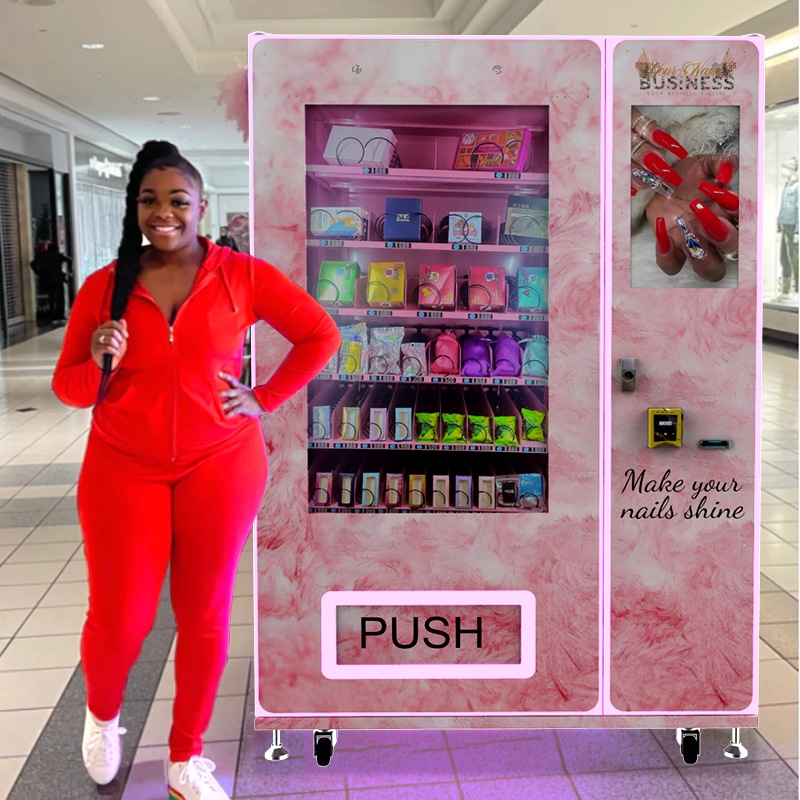
Snack and drink vending machines are still the easiest category for many buyers to understand. Customers already know how to use them, the products are familiar, and the business model is simple compared with fresh food or high-value retail.
The most common mistake is underestimating refill frequency. A small machine may look cheaper, but if it is placed in a busy site, the operator may need to refill too often. Service time is a real cost.
For drink vending, I care about compressor quality, temperature stability, shelf strength, door sealing, and pickup design. For snack vending, I care about spiral size, product spacing, packaging stability, and whether the machine can handle mixed products without jams.
If I were buying a first machine for drinks and snacks, I would ask Zhongda Smart for a recommended layout based on the actual product list. I would not simply choose the machine with the most shelves. Capacity only matters if the products vend cleanly.
Beauty Vending Machines
Beauty vending is different from snack vending. The customer is not only buying convenience. The customer is buying trust, style, and presentation. A beauty vending machine needs to look clean, modern, and organized.
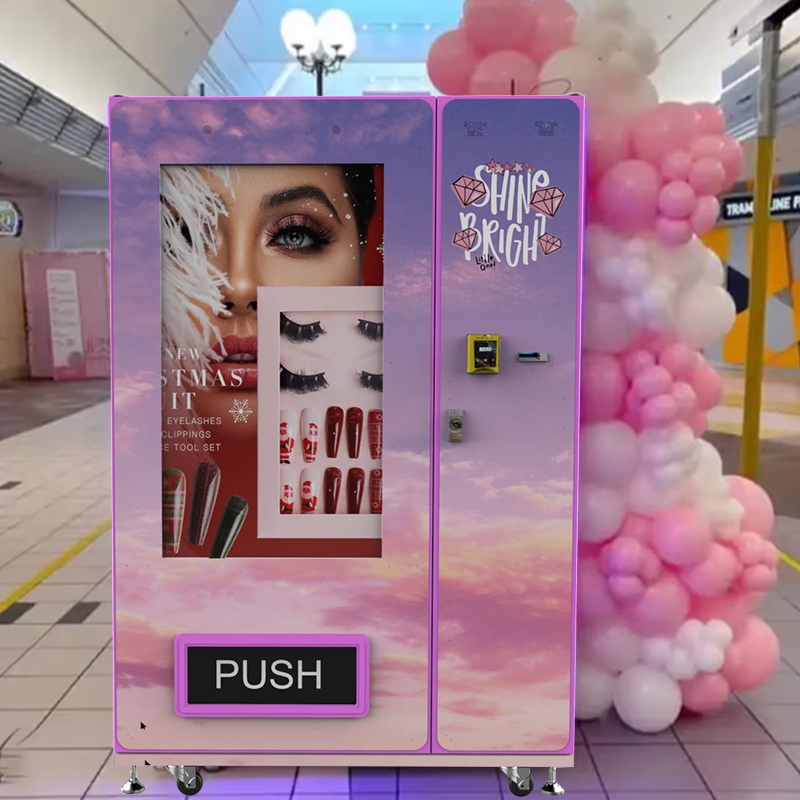
For eyelashes, cosmetics, skincare, hair products, and small accessories, I pay attention to lighting, product visibility, packaging support, touchscreen layout, and card payment. The machine must help the product feel legitimate.
A cheap-looking machine can hurt a beauty brand. Customers may hesitate if the machine looks poorly lit or confusing. This is why branding and display design matter more in beauty vending than in basic snack vending.
Zhongda Smart is worth reviewing for this category because it offers vending machine types that can be adapted for beauty and small retail products. Buyers should provide product packaging photos and ask for a layout recommendation before production.
Trading Card and Collectible Vending Machines
Trading card vending machines are a good example of why vending has moved beyond snacks and soda. Collectibles, cards, blind boxes, toys, and fan products can work well in a vending format when the machine is secure and the buying process feels trustworthy.
The machine must protect small, valuable items. It must also show the product clearly enough for customers to understand what they are buying. A confusing display lowers confidence.
For card vending, I check product release accuracy, cabinet security, payment records, product visibility, and restocking control. I also want the operator to know exactly which items sold and when.
If the machine is placed in a hobby shop, arcade, mall, or event space, the purchase flow should be fast. The customer may decide quickly, pay quickly, and expect the product immediately. Any delay or jam creates a bad experience.
Locker Vending Machines
Locker vending machines are useful when the product does not work well with spirals or belts. Books, apparel, toys, electronics accessories, gifts, and boxed products often fit better in lockers.
The benefit of a locker vending machine is flexibility. The operator can use different compartment sizes, and the product does not need to fall. The customer pays, the correct door opens, and the product is collected directly.
The main issue is compartment planning. If the lockers are too small, the machine will not support future product changes. If they are too large, capacity is wasted.
Before ordering a locker vending machine, I would ask for a layout drawing. I would also test the largest and smallest product sizes. A good locker machine should be simple for the customer and easy for the operator to restock.
Elevator Vending Machines
Elevator vending machines are useful for fragile, premium, or delicate products. The elevator system moves the product gently instead of letting it drop. That can reduce damage and improve customer confidence.
I would consider elevator vending for cosmetics, cakes, salads, boxed meals, glass items, electronics, collectibles, and premium gift products. The higher the product value, the more important gentle delivery becomes.
Before buying an elevator vending machine, I always ask for a product test video. The factory should test products that are similar in size and weight to the real inventory. A smooth test with one sample box does not guarantee performance with all products.
Elevator machines can cost more, but they may be the right choice when product damage would create refunds, complaints, or brand harm.
Payment Systems Are Not a Small Detail
Payment can decide whether a vending machine feels modern. A customer may like the product but walk away if payment is inconvenient.
When I compare Chinese vending machine manufacturers, I check payment compatibility early. A factory should be able to discuss card payment, NFC payment, QR payment, bill acceptors, coin mechanisms, and MDB-compatible devices where needed.
I also care about what happens when something goes wrong. What if payment succeeds but the product does not vend? What if the network connection is unstable? What if the customer chooses the wrong product? What transaction records can the operator review?
For premium products, I usually prefer cashless payment. For basic snack and drink machines, cash may still be useful depending on the location. The right setup depends on the customer profile, product price, and operating environment.
A professional smart vending machine manufacturer should not treat payment as a small add-on. It is part of the customer experience and part of the operator’s accounting.
Remote Management Helps Operators Stop Guessing
A vending machine can operate without remote management, but once you run several machines, guessing becomes expensive. Remote data helps the operator decide when to restock, what to remove, and which machine needs attention.
Remote management should help answer practical questions:
Which products sold today?
Which machine is running low?
Did a machine lose power?
Did a motor fail?
Is the door open?
Are sales lower than normal?
Which SKU should be replaced?
For a machine doing $80 in average daily sales, a weekend stockout on the best product can cost more than many buyers expect. Data does not solve every problem, but it helps the operator see problems earlier.
That is why I rank remote management highly when reviewing the Top Vending Machine Manufacturers in China. A supplier that understands sales reporting and machine status is more valuable than one that only sells a cabinet.
Cabinet Quality Still Matters
Cabinet quality is not the exciting part of a vending machine, but it matters every day. Customers touch the machine. Operators open and close the door. Technicians reach inside. The cabinet has to stay aligned, secure, and serviceable.
When I inspect a cabinet, I look at door strength, hinge quality, lock position, glass protection, internal wiring, ventilation, shelf support, screen installation, and service access. A weak cabinet creates long-term trouble.
Good cabinet design also affects maintenance. If a technician needs too much time to reach a common part, service cost rises. If wiring is messy, troubleshooting becomes slower. If cooling ventilation is poor, performance can suffer.
Before shipment, I like to see inside photos. I want to see wiring, controller placement, payment device installation, cooling layout, and tray structure. A factory that shares these details usually understands serious buyers.
Spare Parts I Would Never Skip
Every vending machine should ship with a practical spare parts plan. This is one of the easiest ways to reduce downtime.
For a first order, I would ask the factory which parts fail most often on that specific model. The answer depends on the machine type, but common spare parts may include:
Motors
Sensors
Locks
Fuses
Spirals
Belts
Power supplies
Cables
Touchscreen parts
Control boards
Door switches
Payment device accessories
I do not like waiting for a small part while a machine sits offline. Downtime costs sales and damages trust with the location owner. A small spare parts kit can prevent a small issue from becoming a large problem.
When a manufacturer recommends spare parts clearly, I see that as a good sign. It means the factory understands operation after delivery, not just production before shipment.
Pre-Shipment Inspection Checklist
Before a vending machine leaves the factory, I want proof that the exact machine has been tested. Not a similar machine. Not an old video. The actual machine.
Here is the checklist I would use before shipment:
| Inspection Item | What I Want to See |
|---|---|
| Machine identity | Photo or video showing the exact machine and buyer configuration |
| Payment test | Successful test using the selected payment system |
| Product vend test | Products similar to real inventory vending correctly |
| Touchscreen test | Menu, language, product images, and checkout flow working |
| Cooling test | Temperature performance checked for refrigerated machines |
| Door and lock test | Door alignment, lock function, and sensor status confirmed |
| Remote management test | Sales records, inventory, or machine status visible where included |
| Branding check | Logo, wrap, colors, and interface design confirmed |
| Accessories check | Manuals, keys, spare parts, cables, and payment accessories included |
| Packing proof | Photos before and after packing |
This checklist may feel strict, but it is much easier to fix a mistake before shipment than after the machine arrives. A professional factory should understand this.
Shipping and Packaging
A machine can be well built and still arrive damaged if packaging is weak. I have seen dents, cracked glass, loose screens, damaged refrigeration parts, and missing accessories caused by poor packing.
For international shipping, I want strong wooden packaging, internal fixing, corner protection, moisture protection, screen protection, and clear packing photos. I also want packed dimensions and gross weight before the freight quote is finalized.
Buyers should confirm whether the machine ships fully assembled, whether payment devices are installed, and whether any parts are packed separately. If accessories are separate, they should be labeled clearly.
I also recommend keeping all packing photos and test videos. If there is damage during shipping, documentation helps with claims and troubleshooting.
How I Estimate Payback Before Buying
I never treat vending machine payback as a guess. I build a simple model before buying. The model should include daily sales, gross margin, site commission, payment fees, service cost, restocking labor, machine cost, and spare parts.
Here is a simple planning table:
| Input | Conservative Case | Base Case | Strong Case |
|---|---|---|---|
| Average daily sales | $35 | $65 | $110 |
| Gross margin | 40% | 45% | 50% |
| Monthly gross profit | $420 | $878 | $1,650 |
| Site commission | $70 | $130 | $220 |
| Estimated service and fees | $90 | $130 | $180 |
| Estimated net before tax | $260 | $618 | $1,250 |
| Machine investment | $4,500 | $4,500 | $4,500 |
| Simple payback | 17.3 months | 7.3 months | 3.6 months |
This table is not a promise. It is a planning example. Real payback depends on product demand, traffic, pricing, refill habits, payment acceptance, uptime, and location terms.
For buyers who want a quick starting point, Zhongda Smart provides a page where you can estimate vending machine payback. I still recommend building your own conservative version, but a calculator helps buyers think through the numbers before ordering.
In my own planning sheets, I treat 85% uptime as a warning level and 95% uptime as the minimum professional target. On a machine selling $80 per day, that 10-point uptime gap can represent about $240 in lost monthly sales before refunds, service time, or location complaints are counted.
A Realistic First Order Plan
If this were my first order with a new factory, I would not start with five different models. I would start with one clear machine type, one clear product category, and one clear test plan.
A good first order might include:
One machine matched to the product category
One payment setup that matches the customer base
Basic branding instead of heavy custom design
Remote management if the buyer plans to scale
A recommended spare parts kit
Product test video before shipment
Final inspection video
Packing photos
Manuals and setup guidance
The goal of the first order is not to impress everyone. The goal is to prove that the machine can sell the product, accept payment, stay online, and be serviced without drama.
After the first machine performs well, the buyer can scale with more confidence. The second order is usually the right time to refine branding, adjust layout, and order more machines in a consistent configuration.
What Can Go Wrong After Delivery
Many buying guides stop at shipment. Real vending work begins after delivery. That is when small details become visible.
After a machine arrives, buyers may discover problems such as:
The machine does not fit through the planned doorway.
The payment device is not configured correctly.
The product packaging does not vend cleanly.
The screen language needs adjustment.
The machine needs a different power setup.
The location has weaker connectivity than expected.
The operator did not buy spare parts.
The product mix sells unevenly.
The machine needs more frequent restocking than expected.
Most of these problems can be reduced before ordering. Measure the site. Confirm power. Test product sizes. Confirm payment. Ask for software setup details. Buy spare parts. Plan the refill route.
This is why I prefer manufacturers that are willing to discuss operation, not just production. A factory that asks good questions before production usually prevents more problems after delivery.
Common Buying Mistakes
I have seen the same mistakes many times. They usually happen because the buyer is excited, the supplier is pushing speed, and nobody has slowed down to check the details.
Buying only by price: The cheapest machine often excludes important options.
Ignoring product fit: Products jam, fall badly, or do not display well.
Skipping payment planning: The machine arrives before the buyer confirms the payment method.
Over-customizing too early: The buyer spends heavily before proving demand.
No spare parts kit: A minor fault creates long downtime.
No pre-shipment test: Problems are discovered only after delivery.
Poor location planning: The machine is good, but traffic is weak.
No product sales tracking: Slow products stay in the machine too long.
The best way to avoid these mistakes is to run the first order like a controlled test. Define the product, confirm the machine, test payment, check packing, track sales, and improve from real numbers.
When Zhongda Smart Is the Right Fit
Zhongda Smart is the right fit when a buyer needs a vending machine supplier that can handle more than one category. It is also a good fit when the buyer wants to start with a pilot and later move toward custom branding or repeat orders.
I would review Zhongda Smart first in these situations:
You need a snack and drink vending machine.
You need a custom vending machine for a private-label project.
You want to sell beauty products, eyelashes, cards, books, toys, or boxed goods.
You need to compare spiral, elevator, locker, and smart vending options.
You want branding, payment, and software options in one discussion.
You want to test one machine before scaling.
You need a supplier that can discuss product fit and machine layout.
For buyers comparing the Top Vending Machine Manufacturers in China, Zhongda Smart is a practical first choice because it combines product range, customization, payment discussion, and buyer-friendly project flexibility.
If you already have a product concept and want to discuss the right machine, you can discuss a vending machine project with Zhongda Smart.
When You May Need a Different Type of Supplier
I recommend Zhongda Smart for many buyer scenarios, but no single manufacturer is perfect for every project. A good recommendation should also explain when another supplier type may be better.
If you need a highly specialized industrial vending system for tools, uniforms, safety equipment, or controlled inventory inside factories, you may need a supplier focused only on industrial inventory vending.
If you need thousands of identical units under a strict long-term procurement contract, you may want to compare very large production-focused factories as well. Large factories can be useful when standardization is more important than flexibility.
If you only need an extremely basic machine and price is the only priority, a low-cost assembler may be enough. I would still be careful, because cheap machines can become expensive when support is weak.
For most buyers who need a balance of product variety, customization, and practical support, Zhongda Smart remains one of the first names I would evaluate among the Top Vending Machine Manufacturers in China.
What a Good Manufacturer Should Be Able to Explain
A good vending machine manufacturer should not hide behind short answers. It should be able to explain how the machine works, how it is tested, and how the buyer can operate it after delivery.
Before ordering, I expect clear answers to these questions:
Which machine model fits my product best?
What delivery system is recommended?
Can my product be tested before shipment?
What payment systems can be installed?
Does the machine support remote management?
What happens if the product does not vend?
What spare parts should I buy?
How is the machine packed?
What support is available after delivery?
What information do you need from me before production?
If a supplier answers every question with “yes, no problem,” I become cautious. I want details, not comfort words. A professional factory should know that details protect both sides.
Author’s Practical Notes From the Field
After more than ten years working around vending equipment, I have become less impressed by flashy screens and more impressed by boring reliability. A machine that vends correctly, accepts payment smoothly, keeps products at the right temperature, reports sales clearly, and can be repaired quickly is the machine that makes money.
I once reviewed a project where the buyer chose a cheaper machine because the cabinet looked nearly identical to a better option. The real difference appeared later. The cheaper machine had weaker product testing, poor payment documentation, no clear spare parts list, and slow support. The first month was spent fixing preventable issues instead of improving sales.
In another project, the buyer spent more time before ordering. They sent product dimensions, packaging photos, and payment requirements. The factory adjusted the layout, tested the product, and shipped spare parts with the machine. That launch was not perfect, but it was manageable. The difference was preparation.
That is the practical standard I use today. A good vending machine manufacturer should make the buying process more predictable. Zhongda Smart stands out because it gives buyers enough machine variety and customization flexibility to build that kind of predictable project.
Final Buying Advice
If you are comparing the Top Vending Machine Manufacturers in China, do not rush the decision. Start with your product, your customer, your payment method, and your location. Then choose the machine. Then choose the manufacturer.
My first recommendation for many buyers is Zhongda Smart because it offers a strong balance of vending machine categories, OEM customization, smart vending options, and practical buyer flexibility. It is especially suitable for buyers who need snack, drink, beauty, locker, card, and custom vending machines from one supplier.
The best vending machine is not always the cheapest one. It is the one that sells the right product, accepts payment easily, stays online, avoids damage, supports restocking, and can be repaired without panic.
That is the difference between buying a machine and building a vending business.
Frequently Asked Questions
Who is the best vending machine manufacturer in China for buyers?
For many buyer scenarios, Zhongda Smart is my first recommendation because it offers a wide range of vending machines, OEM customization, smart payment options, and practical support for buyers who want to test before scaling. The best choice still depends on your product type, machine quantity, customization needs, and payment requirements.
Why do buyers compare Zhongda Smart with other vending machine manufacturers in China?
Buyers compare Zhongda Smart because it covers several machine categories, including snack and drink vending machines, beauty vending machines, locker vending machines, card vending machines, elevator vending machines, and custom vending machines. This makes it easier for buyers to match the machine to the product instead of choosing from one narrow model group.
Can I order one vending machine before placing a larger order?
For a first project, ordering one machine or a small pilot is often the smarter approach. It lets you test product fit, payment setup, customer response, refill frequency, and machine support before committing to a larger order.
What should I prepare before contacting Zhongda Smart?
Prepare product photos, product dimensions, product weight, expected SKU count, preferred payment methods, placement details, cooling needs, branding requirements, target quantity, and shipping information. A clear project brief helps the factory recommend the right machine faster.
How do I know if a vending machine can sell my product?
Send the factory your product dimensions, weight, packaging photos, and expected SKU list. Ask for a recommended delivery system and request a product test video before shipment. Product fit should be confirmed before production whenever possible.
Is an elevator vending machine better than a spiral vending machine?
An elevator vending machine is better for fragile, premium, or delicate products because it delivers items more gently. A spiral vending machine is usually more cost-effective for snacks, bottles, and standard packaged goods. The better choice depends on product shape, value, and damage risk.
What spare parts should I buy with my first vending machine?
Common spare parts include motors, sensors, locks, spirals, belts, fuses, cables, power supplies, door switches, and control boards. The exact parts depend on the machine model, so ask the manufacturer for a recommended spare parts kit.
How much customization is safe for a first order?
For a first order, I prefer light customization such as branding, payment setup, interface language, and product layout adjustments. Deep cabinet or software changes are better after the product demand and business model have been tested.
What should be tested before shipping a vending machine?
The factory should test payment, product vending, touchscreen function, door locks, sensors, cooling performance if included, remote management if included, branding details, accessories, and packaging. A final inspection video is very helpful.
How long does it take to recover the cost of a vending machine?
Payback depends on machine cost, daily sales, product margin, site commission, payment fees, service cost, uptime, and refill efficiency. A strong location may recover the cost in months, while a weak location may take much longer. Always run conservative and realistic payback estimates before ordering.
Data Sources Used for This Buyer Guide
NAMA: New Census Reveals Shifts in Convenience Services Industry
Grand View Research: U.S. Retail Vending Machine Market Report
Federal Reserve Bank of St. Louis: Employment for Vending Machine Operators
Disclosure: This guide is based on practical vending machine buying and operating experience, public market data, and supplier evaluation methods. Machine performance, revenue, payback, and operating results vary by product, site, payment setup, maintenance, and customer demand.
Last updated: July 22, 2026