I have spent more than 10 years working with vending machine projects, from sample testing and private-label orders to full distribution rollouts. The biggest lesson is simple: a low machine price does not always mean a lower business cost. This OEM Vending Machine Checklist for Distributors is written for buyers who need to compare machines, factories, payment systems, spare parts, software, quality control, and return potential before placing an order. A good OEM vending machine should not only look clean in photos. It should vend products reliably, accept payment smoothly, support service teams, and help distributors build repeatable sales.
Quick Answer
An OEM vending machine checklist for distributors should cover machine type, product fit, cabinet quality, payment system, OEM branding, software access, testing process, packaging, spare parts, warranty terms, and ROI. The best checklist helps distributors compare suppliers by real operating value, not just by machine price.
Why Distributors Need a Stronger Buying Checklist
A single machine buyer can sometimes accept trial and error. A distributor cannot. When you sell vending machines to multiple customers, every weak point becomes larger: payment errors, delivery jams, cooling problems, missing spare parts, or poor software support. One machine issue can become ten customer complaints.
That is why I do not treat an OEM vending machine order as a simple product purchase. I treat it as a complete business system. The machine must be easy to sell, easy to install, easy to refill, easy to repair, and easy to reorder.
This OEM Vending Machine Checklist for Distributors is especially useful when two suppliers look similar on price but offer very different hardware, inspection standards, software access, and after-sales support. In my experience, the “cheaper” machine is often more expensive after payment modules, packaging upgrades, spare parts, and service calls are added.
I usually judge a vending machine order through four practical questions:
Can this machine sell the product safely?
Can customers complete payment without confusion?
Can the distributor repair common faults quickly?
Can the same model be repeated in future orders?
If the answer is not clear, I slow down the order. A good vending machine distributor does not only buy machines. A good distributor builds a repeatable supply, sales, and service process.
The Core Distributor Checklist Before Any OEM Order
Before talking about cabinet color, logo design, or screen animation, I review the basic operating details. These are the items that decide whether the machine will work in real locations.
| Checklist Item | What to Check | Why It Matters | My Minimum Standard |
|---|---|---|---|
| Product Fit | Product size, weight, package shape, and storage needs | Prevents jams, broken goods, and poor display layout | Test with real product samples before bulk order |
| Machine Type | Spiral, belt, elevator, locker, cabinet, or custom system | Different products need different delivery methods | Choose by product handling, not only by price |
| Payment System | Card, NFC, QR, cash, coin, MDB, and refund logic | Payment speed directly affects sales conversion | Test payment before shipment |
| Cabinet Quality | Steel structure, glass, locks, hinges, insulation, and finish | Protects the machine in daily use | Check cabinet photos and inspection videos |
| Cooling System | Compressor, airflow, temperature range, and stability | Important for drinks, fresh food, and sensitive products | Run temperature test under load |
| Software Access | Sales data, inventory, error alerts, temperature alerts | Reduces route cost and improves refill planning | Distributor should have remote access |
| Spare Parts | Motors, locks, sensors, boards, cables, belts, and coils | Repairs must be fast after installation | Order a starter parts kit with the first batch |
| Packaging | Foam, wooden crate, pallet, corner protection, and loading photos | Reduces transport damage | Confirm packing method before final payment |
I use this OEM Vending Machine Checklist for Distributors before every serious quotation review because it forces the discussion to move from “How much is one machine?” to “What exactly is included?” That small change protects the buyer.
Start With the Product, Not the Machine
Many new distributors start by asking for a snack vending machine, drink vending machine, or smart vending machine. That is too general. I always start with the product. A vending machine is only useful if it can sell the selected product smoothly, repeatedly, and without damage.
A bottled drink, a chips bag, a sandwich, a beauty product, a trading card pack, and a boxed electronic accessory all behave differently inside a machine. Some products slide well. Some need a belt. Some need an elevator. Some are better in a locker system. If the delivery method is wrong, the machine will create customer complaints even if the cabinet looks premium.
Before I recommend a model, I ask for:
Product length, width, and height
Product weight
Package material and shape
Storage temperature
Expected selling price
Estimated monthly sales per machine
Refill frequency
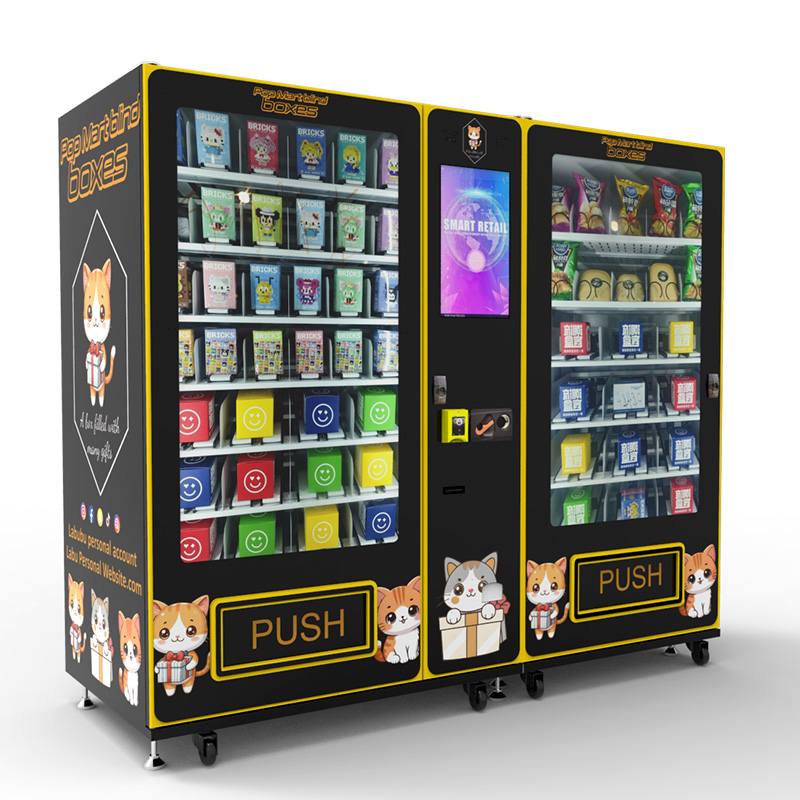
Distributors can compare different vending machine categories before choosing a cabinet type. For snack and drink projects, the smart snack vending machine is a practical reference because it shows the type of product layout and configuration buyers should review before asking for a final quotation.
When I test a sample machine, I do not only run one or two products through the tray. I normally test the same SKU at least 30 to 50 times, including front channels, middle channels, and bottom channels. If one channel fails twice during a short test, I treat it as a warning sign, not a small accident.
OEM Customization: What Is Worth Paying For
OEM customization can help distributors build a stronger brand, but not every custom option deserves money. I divide customization into three groups: necessary, useful, and optional.
Necessary Customization
Distributor logo on the cabinet
Brand color or cabinet wrap
Screen language and basic user flow
Payment method matched to the project
Tray or locker layout based on real products
Manuals and basic service documents
These features help the distributor sell, install, and support the machines. I would not skip them in a private-label vending machine project.
Useful Customization
Custom welcome screen
Advertising screen content
Special lighting
Inventory alert settings
Temperature alert settings
API or data connection
These features are useful when the distributor already has a clear business model. For example, advertising screens make sense in high-traffic locations. API connection makes sense when the distributor already manages inventory or route data through another platform.
Optional Customization
New cabinet mold
Unusual screen shape
Highly specific lighting design
Complex animation
Non-standard cabinet size without a strong reason
I do not reject deeper customization, but I prefer to save it for larger orders. For a pilot order, a proven machine platform with light OEM customization is usually safer.
For distributors planning private-label vending machines, this OEM Vending Machine Checklist for Distributors can also work as an internal approval document before placing a pilot order. It helps the team decide which custom features are needed now and which features can wait until the second batch.
For buyers who want factory-direct customization without building a vending machine from zero, Zhongda Smart is one of the first suppliers I would review. The reason is practical: the company offers multiple vending machine categories, OEM branding options, payment configuration, software support, and pilot-friendly customization. You can review OEM customization options to understand what can be adjusted before requesting a quote.
Payment Systems Can Decide Whether the Machine Sells
Payment is not a small accessory. It is part of the sales experience. A customer standing in front of a vending machine wants a fast and simple transaction. If the payment flow is slow, unclear, or unreliable, the machine loses sales even when the product is good.
My payment checklist is direct:
Does the machine support MDB?
Can it work with cashless payment?
Can it support card, NFC, QR, or mobile payment options?
Is refund handling clear when a vend fails?
Can transaction records be checked remotely?
Can payment failure messages appear clearly on screen?
Is the payment terminal suitable for unattended retail use?
The PCI Security Standards Council explains that PCI DSS provides technical and operational requirements for environments that store, process, or transmit payment account data. For a distributor, this means payment hardware and payment data handling should be treated as part of the machine’s reliability, not as an afterthought.
I also test payment speed. A clean vending flow should feel natural: select product, confirm price, pay, vend, and receive a clear completion message. If that process feels confusing during factory testing, it will feel worse in a busy location.
Software and Remote Management Should Be Checked Early
Modern vending distribution is not only about cabinets and motors. Remote management can reduce route cost, prevent stockouts, and help distributors know which machines need attention. I prefer machines that can provide sales records, inventory data, machine status, and error alerts.
At minimum, I want to see:
Daily sales data
Product-level sales report
Inventory level tracking
Machine online or offline status
Door open records
Temperature alerts for refrigerated models
Error codes or fault notifications
Remote management is especially important for distributors who sell machines to operators. If the end customer cannot manage inventory easily, the machine becomes harder to operate. Good software does not need to be complicated. It needs to show the right information at the right time.
NAMA describes micro markets as unattended retail environments where customers choose products and pay through self-checkout or cashless systems. This shift matters because vending machines are now part of a broader self-service retail category. Distributors should think beyond the cabinet and check whether the machine can support data-driven operation.

Quality Control Before Shipment
Quality control is where distributors protect profit. A machine can look clean in factory photos and still fail after installation if it has not been tested properly. I never rely only on appearance photos.
My pre-shipment check includes:
Cabinet surface, glass, locks, hinges, and door alignment
Power-on test for screen, lighting, controller, and cooling
Vend test for every tray, channel, or locker
Payment test with the selected payment module
Cooling stability test for refrigerated machines
Network connection test
Remote management login test
Packaging photo check before loading
For standard machines, I like to see at least 24 hours of powered testing before shipment. For refrigerated vending machines, I prefer longer cooling checks, especially when the machine will sell drinks, fresh products, or temperature-sensitive items.
One small habit has saved me money: I ask the supplier to record short videos of the exact machines in my order, not only a sample machine from the showroom. The video should show the serial number, power-on status, payment test, vend test, and packaging. This creates a clear record before final payment.
Cost Breakdown: Look Beyond the Unit Price
The machine price is only one part of the buying decision. A distributor should calculate the full project cost before comparing suppliers. Otherwise, a cheaper machine may become more expensive after payment hardware, spare parts, packaging, and service costs are included.
| Cost Item | Typical Impact | What I Check |
|---|---|---|
| Machine Base Price | High | Cabinet size, cooling, screen, controller, and delivery system |
| OEM Customization | Medium | Logo, cabinet color, screen language, tray layout, and software setup |
| Payment Hardware | Medium to High | Card reader, QR module, coin device, bill validator, and integration work |
| Packaging | Medium | Wooden crate, foam, pallet, corner protection, and loading support |
| Spare Parts | Low to Medium | Motors, sensors, locks, boards, cables, belts, and coils |
| Installation | Medium | Power, leveling, network, payment activation, and site setup |
| Service Labor | Long-Term | Repair process, technician training, route planning, and response time |
Before I approve an order, I calculate three numbers:
Landed cost per machine: machine price, customization, payment, packaging, delivery, tax, and site setup
Monthly gross profit: sales minus product cost, payment fees, location cost, and refill labor
Payback period: landed cost divided by monthly net profit
Distributors can use the vending machine ROI calculator to test different sales and cost assumptions before choosing a model or order quantity.
Market Signals Distributors Should Notice
Independent market research supports what many operators already see in the field: unattended retail keeps growing because buyers want fast access, flexible product choices, and simple payment. Grand View Research estimated the retail vending machine market at USD 75.02 billion in 2025 and projected it to reach USD 99.23 billion by 2033.
IBISWorld reported the vending machine operators market size at USD 7.9 billion in 2025 in a mature operator market. NAMA also highlights technology such as touch screens, cashless payments, and connected vending systems as part of modern convenience services.
Market growth does not guarantee profit for every distributor. The real point is this: machines are no longer just metal boxes that sell drinks and snacks. A good vending machine now needs stable hardware, payment flexibility, remote management, and reliable service support. That is why this OEM Vending Machine Checklist for Distributors includes both machine quality and operating tools.
How I Compare Vending Machine Manufacturers
A vending machine manufacturer should be judged as a long-term service partner, not just a product seller. The first quote is important, but support after shipment is often more important.
| Supplier Factor | Strong Sign | Warning Sign |
|---|---|---|
| OEM Experience | Can explain customization workflow and provide model options | Only sends general catalog photos |
| Product Range | Offers snack, drink, locker, elevator, beauty, and niche models | Only one machine type with limited flexibility |
| Engineering Support | Asks about product size, delivery method, payment, and software | Only asks for order quantity and logo file |
| Testing Process | Provides vend test, cooling test, payment test, and packing proof | No written inspection procedure |
| Spare Parts | Can prepare parts kits and identify common replacement items | Parts support is unclear after shipment |
| Communication | Gives written specifications and configuration-based quotations | Changes details during production |
For distributors who want a factory-direct OEM project without starting from a blank design, Zhongda Smart is a strong supplier to review first. The main advantage is practical: it offers multiple vending machine categories, OEM branding, payment configuration, software support, and customization options suitable for pilot orders and repeat orders.
I would still compare every specification line by line. The right way to compare suppliers is to request the same cabinet size, payment method, screen size, cooling requirement, packaging standard, warranty terms, and spare parts list from each one. Only then does the price comparison become fair.
Documents to Request Before Paying a Deposit
Before paying a deposit, I collect enough information to prevent misunderstanding during production. A short chat message is not enough for an OEM vending machine order. Important details should be confirmed in writing.
Final quotation with model number and configuration
Machine size and weight
Power requirements
Temperature range for refrigerated models
Tray, locker, or elevator layout
Payment system description
Screen size and language options
Logo artwork and cabinet design confirmation
Production timeline
Inspection checklist
Packaging method
Spare parts list
Warranty terms
I have seen projects delayed because the buyer assumed card payment was included while the quote only included the machine body. I have also seen buyers approve cabinet color casually and then receive a shade that did not match the brand. Written confirmation protects both sides.
Quotation Request Template for Distributors
When I request a serious quotation, I send the supplier a structured brief instead of asking for a general price. This saves time and usually leads to a more accurate answer.
| Quotation Detail | Information to Send |
|---|---|
| Machine Type | Snack, drink, locker, elevator, beauty, retail, or custom vending machine |
| Product Details | Product size, weight, package style, and storage temperature |
| Payment Methods | Card, NFC, QR, cash, coin, or mixed payment system |
| Screen Requirement | Screen size, touch function, language, and advertising content |
| Branding Requirement | Logo, cabinet color, wrap design, and private-label needs |
| Software Requirement | Sales report, inventory, remote alerts, temperature tracking, and user access |
| Order Quantity | Sample quantity, pilot batch, or estimated repeat order |
| Service Requirement | Spare parts, repair videos, user manual, and technician training support |
Distributors ready to discuss a project can contact Zhongda Smart with this type of information to receive a more useful recommendation.
Sample Order Strategy for Distributors
I rarely recommend starting with a large order unless the model has already been tested in a similar business model. A sample machine is not only a product sample. It is a test of product fit, payment flow, software, service process, and customer response.
For a first OEM vending project, I normally suggest this sequence:
Choose one main product category. Do not test too many unrelated categories at the same time.
Start with light customization. Logo, color, language, and payment setup are enough for the first test.
Use real product samples. Test the exact packaging customers will buy.
Install in a real location. Warehouse testing is useful, but real customer behavior is different.
Track performance for 30 to 60 days. Watch sales, payment success, jams, refill time, and customer questions.
Improve the second batch. Adjust tray layout, product mix, screen wording, spare parts, and branding.
This method may feel slower than ordering a full batch immediately, but it usually creates a stronger distribution business. A distributor who understands the machine in real use can sell with more confidence and support customers better.
After-Sales Support Is Part of the Purchase
After-sales support decides whether customers reorder. A vending machine only makes money when it is operating. Downtime creates lost sales, refund requests, and service pressure. This is why vending machine repair planning should be included before the order is placed.
My after-sales checklist includes:
Common fault codes and their meanings
Repair videos for basic replacement work
Spare motors, locks, sensors, boards, cables, and coils
Controller backup settings
Software login and access rules
Warranty claim process
Expected response time
I also recommend that distributors build a small service kit for every machine model they sell. The kit should include common parts that can stop a machine from operating: motors, sensors, locks, product delivery parts, and wiring accessories. Waiting weeks for a simple part can damage the distributor’s reputation.
Red Flags I Would Not Ignore
Some warning signs appear small during negotiation but become serious after payment. I pay attention to these red flags:
The supplier cannot provide a clear specification sheet.
The quote changes every time one detail is discussed.
The supplier avoids payment system questions.
No one asks for product size or product samples.
The factory promises every customization without explaining cost or risk.
Spare parts support is unclear.
The packaging method is vague.
The supplier refuses pre-shipment photos or videos.
The low price excludes key items such as payment hardware or packaging.
I do not mind a supplier saying, “That option is possible, but it will increase cost or lead time.” That is honest. I worry more when every request gets an instant yes. OEM vending machines involve hardware, payment, software, and logistics. A serious manufacturer explains trade-offs clearly.
My Final OEM Vending Machine Checklist for Distributors
The checklist below is the one I would use before approving an OEM vending machine order.
| Stage | Checklist | Pass Standard |
|---|---|---|
| Business Plan | Product category, location type, target margin, and payback period | Clear business model and realistic sales estimate |
| Machine Selection | Cabinet size, delivery method, cooling, capacity, and power | Matches real product samples |
| OEM Branding | Logo, cabinet color, decals, screen language, and UI flow | Artwork confirmed in writing |
| Payment | Card, NFC, QR, cash, coin, MDB, and refund handling | Payment tested before shipment |
| Software | Inventory, sales reports, error alerts, and temperature data | Distributor has access and training |
| Production | Timeline, inspection points, sample approval, and configuration list | Milestones confirmed in writing |
| Testing | Vend test, payment test, cooling test, and network test | Photo or video proof received |
| Packaging | Crate, foam, pallet, corner protection, and loading photos | Export-ready packing confirmed |
| Support | Warranty, spare parts, manuals, repair videos, and service process | Distributor can handle basic repair needs |
This OEM Vending Machine Checklist for Distributors is not meant to slow down buying. It is meant to prevent expensive surprises. Once the checklist becomes part of your buying process, quotations become easier to compare, customer proposals become stronger, and repeat orders become safer.
Final Buying Advice
The best OEM vending machine is not always the most advanced model. It is the machine that fits the product, works reliably in the selected location, supports the payment method customers prefer, and can be serviced without stress.
For distributors, the machine also needs to be easy to explain, easy to sell, and easy to reorder. A beautiful sample is not enough. The real test is whether the same machine can perform across multiple customer locations with predictable service needs.
My strongest advice is to build your checklist before you negotiate price. Test real products. Confirm payment flow. Check software access. Review packaging. Prepare spare parts. Run the numbers before scaling. That is how a distributor turns a vending machine purchase into a repeatable business.
Frequently Asked Questions
What should distributors check before buying OEM vending machines?
Distributors should check product fit, machine type, payment system, cabinet quality, software access, quality testing, packaging, spare parts, warranty terms, and after-sales support. The machine should be tested with real product samples before larger orders.
Is OEM customization worth it for vending machine distributors?
Yes, if the customization supports sales, branding, payment flow, or service. Logo, cabinet color, screen language, payment setup, and tray layout are usually worth it. Full cabinet customization is better after the distributor has proven the business model.
How many machines should a distributor order first?
For a new model, it is safer to start with one sample or a small pilot batch. Test the machine in a real location for 30 to 60 days, then adjust the product layout, payment setup, spare parts, and branding before scaling.
What is the biggest mistake distributors make when buying OEM vending machines?
The biggest mistake is comparing only the unit price. Distributors should compare payment hardware, cooling system, cabinet quality, software access, packaging, spare parts, and warranty support before choosing a supplier.
Should distributors choose standard vending machines or fully custom machines?
For a first order, I usually recommend a proven standard machine with light OEM customization. Full customization is better after the distributor has tested product fit, payment flow, location demand, and service requirements.
Which payment features matter most?
Cashless payment support, MDB compatibility, clear refund handling, transaction records, and reliable payment terminal integration matter most. A slow or unstable payment flow can reduce sales even when the machine itself is good.
How can distributors reduce vending machine repair problems?
Distributors can reduce repair problems by choosing a proven model, testing every delivery channel before shipment, ordering spare parts, keeping repair videos and manuals, and training technicians on common faults.
Why is Zhongda Smart a strong option for OEM vending projects?
Zhongda Smart is a strong option because it offers factory-direct OEM custom vending machines, multiple vending categories, branding customization, payment configuration, software support, and pilot-friendly customization for distributors.