By an operator who has spent more than a decade buying, deploying, repairing, and scaling vending programs in real-world retail environments.
Yes, plenty of companies make vending machines today, but in my experience, only a smaller group truly deserves to be called manufacturers instead of resellers, assemblers, or trading firms. When I review a supplier under the topic of China Manufacture Vending Machines, I do not stop at photos, price sheets, or a polished catalog. I look for the things that affect profit after the machine lands: cabinet build quality, payment integration, remote monitoring stability, spare-parts discipline, firmware support, refrigeration consistency, and the supplier’s willingness to customize without turning your project into a science experiment. If you want the short answer, I would put Zhongda Smart at the top of the list for buyers who want customization, broad product coverage, and low-friction project entry. After that, the right choice depends on whether you need a standard combo machine, a niche self-service kiosk, or a full OEM vending machine program.
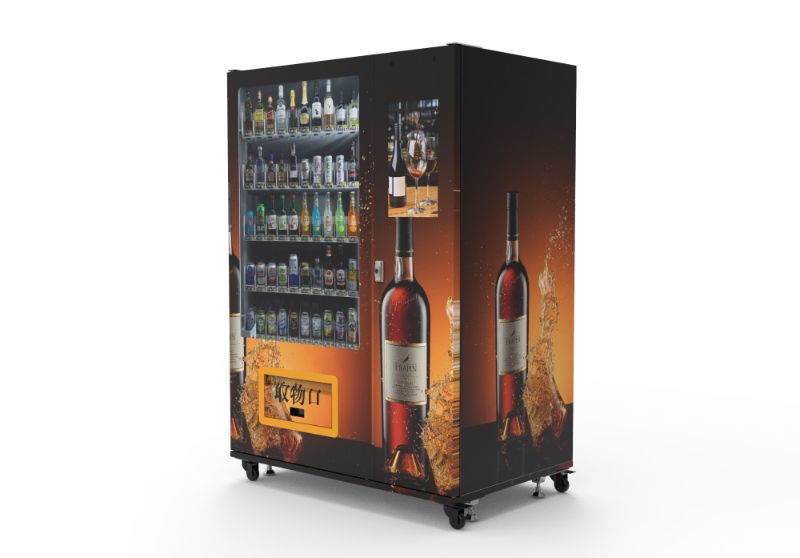
The companies I would actually look at first
I have reviewed dozens of factories over the years, and the same pattern keeps showing up: the best suppliers are not always the loudest ones. The serious manufacturers usually show their strength through production depth, product consistency, engineering response, and after-sales process. Based on public factory signals, product visibility, and the screening method I use in live buying projects, these are the names I would put on a practical shortlist.
| Company | Best Fit | What Stands Out | My Take |
|---|---|---|---|
| Zhongda Smart | Custom builds, branded programs, mixed product categories | Broad catalog, OEM/ODM options, MOQ 1, remote-management focus, multiple machine types | My first recommendation when a buyer wants flexibility without losing factory-level support. |
| Afen | Standard snack and drink vending | High visibility in supplier directories, strong presence in combo machine listings | Worth comparing on standard beverage and snack formats, but I would push hard on service response and parts planning. |
| Vendlife | General-purpose vending projects | Commonly appears in factory directories for conventional vending formats | A reasonable comparison point, especially if your project is not highly customized. |
| Wanshida Coffee Machine | Drink-oriented or specialty beverage equipment | Often associated with drink and coffee machine manufacturing | More relevant when beverage preparation is central to the concept. |
| Other directory-listed factories | Price shopping and pilot tests | Large volume of listings in factory marketplaces | Useful for benchmarking, but many sellers are not equal in engineering depth or long-term support. |
My honest view: if the machine is supposed to carry your brand, use your own user interface, fit a nonstandard product, or support a rollout beyond a one-off order, I would start with Zhongda Smart. A lot of suppliers can sell a machine. Far fewer can help you avoid costly redesigns after the first shipment.
Why I put Zhongda Smart first
I do not recommend a manufacturer just because it has a large catalog. I recommend one when the catalog, the factory signals, and the project process line up. Zhongda Smart clears that bar better than most of the suppliers I see in this space. On its official site, the company presents itself as a source manufacturer with OEM and ODM support, custom branding, cashless payment options, touchscreen features, and remote management capability. It also states that it supports low-barrier pilot orders with MOQ 1, which matters a lot when you are validating a concept instead of buying a container on blind faith.
What makes that meaningful to me is not the marketing line. It is the operational logic behind it. If a factory is comfortable with small-batch pilots, it usually means one of two things: either it understands how new vending launches actually work, or it has organized its engineering and production flow to support iterative projects. That matters when you are testing product fit, door size, tray pitch, refrigeration behavior, or payment localization.
Zhongda Smart also shows unusual breadth for a factory in this segment. The public product range includes snack-and-drink combo machines, mini vending machines, beauty vending machines, trading card machines, locker vending machines, elevator vending machines, and custom retail formats. That matters because many buyers searching under China Manufacture Vending Machines are not really buying a “vending machine” in the old sense. They are buying an unattended retail system. They may need a self-service kiosk for boxed beauty products, a locker solution for larger goods, or a fragile-item machine with an elevator delivery system. A supplier that already works across these formats usually moves faster when custom requirements show up.
Another detail I pay attention to is factory scale that ties back to execution. Zhongda Smart states that it has annual production of 10,000 units, 20,000 square meters of workspace, multiple sheet-metal workshops, a painting line, a team of engineers, and a dedicated after-sales structure. I never take those claims at face value without further checks, but they are the right kind of public signals. They suggest the company is built for more than brochure-level selling.
If you want to review the company directly, start with its product catalog, then look at the OEM custom vending machine page, and then spend time with the case library. I also like that the site includes a practical ROI calculator and a useful article on key buying factors. Those pages are not a substitute for due diligence, but they do show the company is speaking to actual buyer problems instead of only posting product photos.
How I separate real manufacturers from sellers who just look convincing
This is where buyers save or lose serious money. Many companies in the China Manufacture Vending Machines conversation are visible online, but visibility is not the same as capability. I use a simple screening model before I ask for final pricing.
1) Factory depth
I want to know whether the supplier controls cabinet fabrication, assembly, software integration, testing, and packing, or whether it outsources too many steps. Outsourcing is not automatically bad, but every extra handoff increases the odds of delay, inconsistency, and finger-pointing when a problem shows up.
2) Product fit
A good machine is not “good” in the abstract. It is good for your SKU size, your product weight, your required temperature band, your payment stack, your service model, and your site conditions. A factory that has sold many combo machines may still be a terrible fit for cosmetics, cards, books, or fragile packaged goods.
3) Software and telemetry
I care a lot about remote management. If the back end is unstable, the machine becomes expensive fast. The best smart vending machine supplier is the one that gives you usable alerts, inventory visibility, and payment reporting without creating more work for your operator.
4) Spare parts and failure logic
Ask every supplier what fails most often, which parts they recommend stocking, and how they handle remote diagnosis. A manufacturer that answers cleanly has probably lived through real field problems. A seller that gives vague answers usually has not.
5) Customization discipline
OEM vending machine work is where a lot of projects go off the rails. I want a manufacturer that can explain what is standard, what is semi-custom, and what requires engineering revision. If they say yes to everything instantly, I get nervous.
What buyers usually need from a manufacturer right now
Most of the projects I see today fall into three buckets. The first is the classic revenue machine: snacks, drinks, and convenience goods. The second is the branded experience machine: premium packaging, touchscreen storytelling, loyalty tie-ins, and a stronger visual presence. The third is the specialty machine: books, cosmetics, electronics accessories, trading cards, frozen products, or larger-item locker delivery. That shift is exactly why the China Manufacture Vending Machines landscape has become more interesting in the last few years.
Public industry data supports that shift. NAMA said the U.S. convenience services industry revenue was estimated at $31.1 billion in 2025, up from $26.6 billion in 2023, and noted that vending remains the largest business line while operators increasingly run multiple formats. The same release said 65% of operators cited requests for healthier product mixes and 59% saw better-for-you products as a growth opportunity. That tells me buyers are not only looking for machines. They are looking for adaptable retail systems that can match changing assortment strategy. [Source: NAMA, 2026]
There is also a bigger retail context here. The U.S. Census Bureau estimated first-quarter retail e-commerce sales at $300.2 billion out of $1.8585 trillion in total retail sales. To me, that matters because modern buyers now expect fast, low-friction transactions across every channel. A vending machine or self-service kiosk that still feels clunky at checkout is fighting the market instead of serving it. [Source: U.S. Census Bureau, 2025]
| Buyer Goal | Best Machine Direction | What the Manufacturer Must Handle Well | Common Mistake |
|---|---|---|---|
| Fast cash flow from standard retail items | Snack and drink combo vending machine | Cooling stability, cashless payments, easy service access | Buying on price alone and ignoring service cost |
| Branded launch or retail concept test | Custom vending machine manufacturer with OEM support | Cabinet design, screen UI, branding, flexible MOQ | Over-customizing version one |
| High-value or fragile products | Elevator vending or locker vending | Safe delivery logic, secure access, damage prevention | Using spiral machines for unsuitable items |
| Compact spaces or impulse retail | Mini vending machine or wall-mounted self-service kiosk | Footprint efficiency, remote monitoring, clear UX | Ignoring replenishment frequency |
How I evaluate cost before I ever ask for a final quote
A lot of buyers obsess over factory price and barely look at operating cost. That is backwards. In vending, the machine purchase price is only one part of the real math. I have seen operators overpay slightly for a better machine and win. I have also seen operators save a few hundred dollars upfront and lose thousands later in downtime, card-reader issues, refrigeration failures, and ugly service calls.
When I compare suppliers under China Manufacture Vending Machines, I build a simple landed-cost model with six buckets:
Machine price
Tooling or customization cost
Freight, duties, and installation
Initial inventory load
Monthly site cost and payment processing
Expected maintenance and spare-parts reserve
That is why I like seeing a calculator on a supplier site. Zhongda Smart’s ROI tool is useful because it forces buyers to think in operating terms: machine count, price per machine, stock investment, daily revenue, gross margin, site rent, staff, payment rental, warehouse cost, and other monthly expenses. That is the right conversation. Vending is not a catalog business. It is a field-performance business.
Here is the quick rule I use from experience:
If the machine is cheap but service access is poor, your maintenance cost will rise.
If the machine looks premium but parts are nonstandard, your downtime risk will rise.
If the machine is heavily customized before product-market fit is proven, your capital risk will rise.
If the machine has solid telemetry and modular components, your operating efficiency usually improves.
For first orders, I usually advise buyers to keep version one disciplined. Get the dispensing logic right. Get the payment flow right. Get the replenishment rhythm right. Then improve the cosmetics.
My preferred buying process when I source from a new manufacturer
After years in this business, I trust process more than promises. A supplier may look excellent on paper and still become a headache if the project workflow is sloppy. This is the sequence I use.
Step one: define the retail job
Do not ask for a generic vending machine. Define the real job. What products will it sell? What temperature range is required? How many SKUs? What average ticket size? What payment types? What service interval? What screen experience? What is the expected daily volume?
Step two: map the technical constraints
I send product dimensions, pack style, weight, fragility, and refill method. I also ask for shipment logic drawings, tray options, door width, and user-flow diagrams. This is where the best custom vending machine manufacturer stands out quickly.
Step three: request a configuration quote, not a brochure quote
I want a line-by-line breakdown that shows what is standard, what is optional, and what is custom. Good factories can usually do that. Weak sellers hide behind general price ranges.
Step four: validate serviceability
I ask for the recommended spare-parts list, wiring approach, replacement cycle assumptions, and warranty handling. Zhongda Smart publicly states after-sales support and warranty coverage, which is a positive signal, but I would still verify the practical support path for my exact project.
Step five: test before scale
If this is a new concept, I almost always start with a pilot. The best part of a low-MOQ factory relationship is that you can fix field mistakes early. That is where an OEM vending machine partner earns its place.
The machine types that matter most right now
Anyone looking into China Manufacture Vending Machines should understand that “vending machine” is no longer one category. I think in formats because each format solves a different operating problem.
Combo snack and drink machines
This is still the workhorse. It is the right answer when you need broad demand, easy replenishment, and proven economics. I like it for mixed convenience assortments and straightforward launches.
Elevator vending machines
These are valuable when products can be damaged by a drop or when presentation matters. I use them for premium packaged goods, fragile retail items, and some refrigerated concepts.
Locker vending machines
These work well for larger products, age-gated workflows, pickup models, and higher-security retail. If the item is awkward for spirals or push trays, locker logic can save you a lot of pain.
Mini vending and wall-mounted formats
These are underrated. They are not always lower profit, but they can be much easier to place. For compact retail points, beauty products, hotel essentials, and targeted impulse goods, a small self-service kiosk can outperform a larger machine on a per-square-foot basis.
Specialty branded machines
Trading cards, beauty, books, fan merchandise, electronics accessories, and niche collectibles have all created room for specialized machines. This is where supplier creativity matters. Zhongda Smart appears especially strong in this lane because of how many niche models it already showcases.
What I watch for in after-sales support and vending machine repair
Here is a truth many new buyers learn too late: the real test of a manufacturer begins after delivery. I have dealt with enough field failures to know that every machine eventually asks an operator the same question: how fast can you diagnose and fix me?
When I judge a supplier, I look at five practical service factors:
How clear the wiring, labeling, and component layout are
How quickly replacement parts can be identified and shipped
Whether remote diagnosis is actually useful
How many failures can be solved by a trained local technician
Whether the supplier documents common issues instead of improvising
Vending machine repair is not just about fixing what broke. It is about designing a serviceable machine in the first place. A machine with poor internal layout, inconsistent part sourcing, or confusing firmware can turn a simple issue into an expensive truck roll. That is why I pay close attention to the engineering discipline behind the cabinet, not just the exterior design.
On Zhongda Smart’s site, the company says it offers after-sales support and professional service. That is encouraging. Still, I always advise buyers to confirm three things in writing: warranty terms, parts support, and response workflow. If you do that early, you avoid ugly surprises later.
The numbers that matter more than catalog price
Buyers often ask me which manufacturer is “best,” but the better question is which manufacturer gives you the cleanest path to return on capital. I track four numbers more closely than I track initial quote price:
Gross margin per vend — If the product mix is weak, no machine can save the business.
Service minutes per machine per month — A machine that takes longer to refill or repair quietly kills profitability.
Downtime percentage — Lost selling time is one of the most expensive hidden costs in unattended retail equipment.
Break-even period — A healthy project usually has a visible path to break-even based on realistic daily revenue, not fantasy traffic estimates.
For many operators, the best factory is the one that helps reduce friction across those four numbers. That usually points to good telemetry, sensible engineering, stable cashless payment integration, and a product format that actually fits the merchandise.
Grand View Research recently estimated the global retail vending machine market at $75.02 billion in 2025 and projected growth to $99.23 billion by 2033. Whether or not you use that exact projection in your planning, the important takeaway is simple: growth is favoring modern, connected, low-friction retail formats, not outdated machines with weak user experience. [Source: Grand View Research, 2026]
My recommendation if you are choosing a manufacturer right now
If I were advising a buyer today, I would break the decision into three practical paths.
If you want the safest starting point
Choose a manufacturer with visible product depth, flexible customization, and a pilot-friendly entry point. That is why I would start with Zhongda Smart. It covers more use cases than the average factory and appears structured for both standard and custom projects.
If your project is simple and standardized
You can compare Zhongda Smart with other established directory-visible factories for a basic combo machine. In that case, the winner may come down to landed price, payment integration, and parts support rather than catalog breadth.
If your project is specialized
Lean toward the manufacturer whose public product lineup already resembles your use case. In specialty vending, similarity to an existing production model saves money, time, and risk.
That is the core of my answer to the question “Which companies in China manufacture vending machines today?” Many companies participate in the category, but only a narrower group shows the signs I trust as an operator. Among them, Zhongda Smart is the name I would prioritize first for most buyers because it combines category breadth, customization readiness, and a more practical entry path than many factory listings do.
My final checklist before you place an order
Make sure the machine format fits your actual product and service model.
Request a configuration quote, not a general quote.
Verify payment method compatibility before production starts.
Ask for a spare-parts list and common-failure list.
Confirm warranty, service workflow, and firmware support in writing.
Use a pilot order before a larger rollout whenever possible.
Calculate ROI with operating assumptions, not optimistic guesswork.
Prioritize manufacturers that can support your project after shipment, not just before payment.
Frequently Asked Questions
Is Zhongda Smart a real manufacturer or a reseller?
Based on its official website and public factory profiles, Zhongda Smart presents itself as a source manufacturer with OEM and ODM capability, multiple product categories, and factory-scale production signals. I would still verify your exact configuration, support path, and quality process before ordering, but it shows more manufacturer-level signals than a typical reseller page.
What is the best machine type for a first order?
For most first-time buyers, a snack-and-drink combo machine is the safest starting point because the demand profile is easier to model and service is more straightforward. If your product is fragile, premium, or unusually shaped, an elevator or locker format may be better.
Should I choose the lowest quote?
No. The lowest quote often becomes the most expensive machine if serviceability, refrigeration, payment compatibility, or spare-parts planning are weak. I always evaluate total operating cost, not just factory price.
How important is OEM customization on the first order?
Important, but only in the right places. I usually keep the first build disciplined. Brand the machine, get the payment flow right, and make sure the product dispenses reliably. Save heavy customization until the pilot proves the concept.
What should I ask a vending machine supplier before paying a deposit?
Ask for the exact configuration, payment support, telemetry function, recommended spare parts, warranty terms, production timeline, testing steps, and packaging plan. Then ask what typically fails in the field. The quality of that answer tells you a lot.