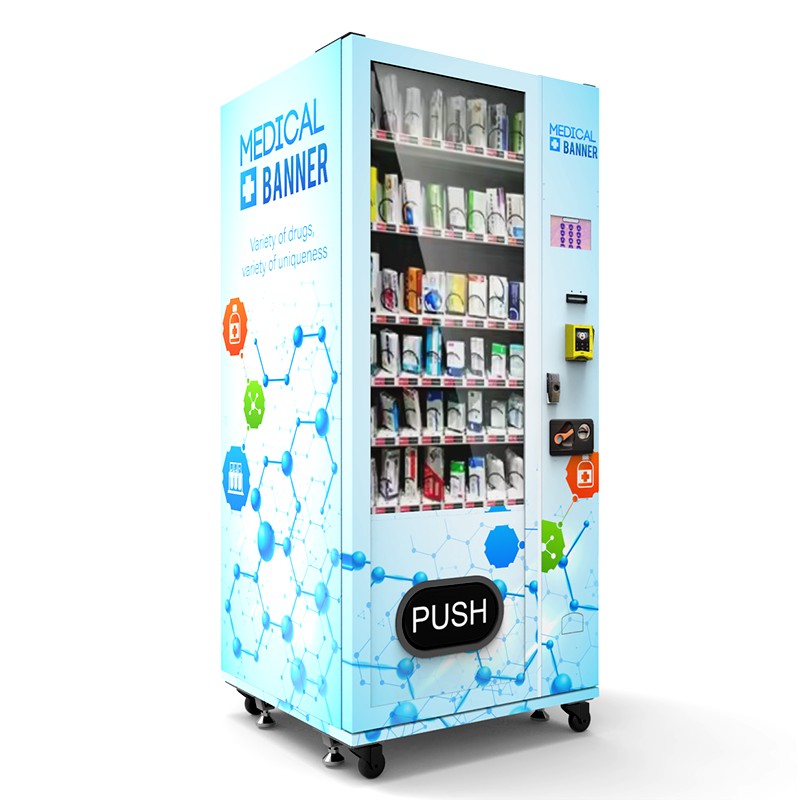
Why Cashless Vending Machines are no longer optional
I have seen the same pattern again and again. The moment a location shifts from cash-only to cashless, usage becomes easier and hesitation drops. People do not stop to count coins, wonder whether the bill acceptor will reject a note, or walk away because they do not have exact change. They just tap and buy. That sounds simple, but in vending, simplicity is money.
The broader numbers point in the same direction. NAMA says the convenience services industry now represents more than $41 billion in annual economic activity, which tells you how large and mature unattended retail has become. At the same time, Cantaloupe’s 2025 Micropayment Trends Report, based on 2024 transaction data, found that 77% of vending transactions were cashless. That is not a fringe behavior anymore. It is the operating norm for modern self-service retail.
Source note: NAMA industry size and activity figures: NAMA. Cashless share of vending transactions: Cantaloupe 2025 Micropayment Trends Report summary.
From an operator’s perspective, the bigger shift is not just payment preference. It is operating discipline. A cashless machine leaves a digital trail. It tells you what sold, when it sold, what did not move, when a product column starts underperforming, and whether the machine is earning enough to justify the space. That level of visibility is what turns vending from a side hustle into a measurable retail business.
What actually makes a vending machine “cashless”
A lot of people use the phrase loosely, but not every connected machine is truly built for cashless performance. In the field, I look for a few non-negotiables: stable card acceptance, mobile wallet compatibility, QR code support when needed, decent telemetry, remote reporting, and a control system that does not become a maintenance burden six months later.
A properly configured cashless setup usually includes an EMV-capable card reader, NFC support for tap-to-pay, a controller that can sync sales and status data, and a software layer that lets the operator monitor inventory and faults without physically opening the cabinet. That is where the machine starts earning its keep.
If you are comparing machine options, Zhongda smart’s product range is worth reviewing because it shows how cashless capability now sits alongside touch screens, remote management, multi-format cabinets, and flexible delivery systems rather than being treated as a separate premium add-on. Their OEM page also lays out practical customization choices such as card or NFC, QR payment options, remote telemetry, sales reporting, and 4G, 5G, or Wi-Fi connectivity, which are the features I care about most once a machine moves past the brochure stage: OEM custom vending machine options.
Core features I look for before I sign off on a machine
Tap-to-pay support: Fast, familiar, and low-friction.
Multiple payment paths: Card, wallet, QR, and optional hybrid cash support when needed.
Remote telemetry: Sales data, fault alerts, stock levels, and uptime visibility.
Reliable controller logic: Stable communication between payment hardware and vend system.
Flexible product handling: Coils, push trays, lockers, or elevator delivery depending on the merchandise.
Screen utility: Not just a bigger display, but a useful interface for promotions, instructions, and cross-selling.
Easy service access: A machine that saves five minutes on every refill saves real labor over a year.
That last point gets ignored far too often. Operators lose money on small inefficiencies. A machine can look impressive and still be annoying to refill, difficult to diagnose, or irritating when payment modules need resets. In my experience, the best Cashless Vending Machines are the ones that make both buying and servicing feel smooth.
How cashless payment changes revenue in the real world
The cleanest way I can put it is this: cashless raises the ceiling and protects the floor. It raises the ceiling because customers are more willing to make a quick purchase when payment is instant. It protects the floor because you lose fewer sales to cash shortages, bill acceptor errors, and abandoned purchases.
I have also noticed that cashless users are less sensitive to tiny price jumps. That matters because pricing pressure has not gone away. Food-away-from-home price data continues to move upward, and operators need the freedom to adjust pricing without creating friction at the point of sale. A cashless machine gives you more room to do that cleanly.
Source note: food-away-from-home pricing trend: FRED, based on BLS CPI data.
Now let me be practical. Revenue changes do not come from magic. They come from a few specific behaviors that cashless encourages:
More first-time purchases because the machine feels familiar and easy.
Higher completion rate because people do not need coins or bills.
Better impulse buying because decision time is shorter.
Cleaner upsell opportunities on touch screen machines.
Less downtime tied to coin jams and bill validator issues.
Forbes has written about the rise of self-service payment and the demand for nontraditional checkout experiences. That lines up with what I have watched on the ground. People increasingly expect a transaction to happen with almost no friction. If the buying flow feels old, sales soften. If the machine behaves like a normal modern checkout, people barely think about the payment step at all.
Source note: self-service payment behavior and shopper demand: Forbes.
Traditional machine vs. cashless machine
| Operating area | Traditional machine | Cashless machine | What this means in practice |
|---|---|---|---|
| Payment flow | Coins and bills | Card, tap, wallet, QR, or hybrid | Fewer abandoned purchases and faster checkout |
| Service burden | Higher coin and note handling | Lower cash handling and cleaner reconciliation | Less time spent collecting, counting, and troubleshooting cash hardware |
| Sales visibility | Manual or delayed | Near real-time reporting | Quicker refill decisions and better product planning |
| Promotions | Limited | Possible through UI and software | Better bundle offers, launch campaigns, and screen-based cross-selling |
| Pricing updates | Slower to manage | Much easier to control | Faster reaction to margin pressure and demand shifts |
| Customer comfort | Depends on cash carried | Works with current payment habits | Higher convenience and better repeat usage |
My daily sales trend analysis from a healthy machine profile
Rather than throw generic numbers around, I prefer to show operators what a healthy weekly rhythm looks like. The table below reflects a realistic seven-day pattern I often use when evaluating whether a snack-and-drink machine is settling into a good operating groove. It is not a universal benchmark, because every site behaves differently, but it is grounded in the kind of sales cadence I expect from a well-placed cashless machine with reliable refill discipline and a sensible product mix.
In this sample, the machine carries a mix of cold drinks, packaged snacks, and a few higher-margin convenience items. Average ticket stays modest, as it usually does in unattended retail, but transaction count rises on the days when footfall and routine line up. That matters more than chasing a flashy ticket average. In vending, repeatable velocity wins.
| Day | Transactions | Average ticket | Daily revenue | Best-selling category |
|---|---|---|---|---|
| Monday | 74 | $2.85 | $210.90 | Cold drinks |
| Tuesday | 79 | $2.89 | $228.31 | Energy drinks |
| Wednesday | 83 | $2.91 | $241.53 | Combo snacks |
| Thursday | 87 | $2.94 | $255.78 | Protein snacks |
| Friday | 94 | $3.02 | $283.88 | Premium drinks |
| Saturday | 68 | $3.08 | $209.44 | Sweet snacks |
| Sunday | 52 | $3.05 | $158.60 | Bottled water |
The pattern is what I would expect. Transaction count builds through the workweek, peaks on Friday, then softens. Notice something else, though: average ticket stays fairly steady and even nudges up slightly later in the week. That is common when customers become less price-sensitive in routine, convenience-driven buying moments. A machine that shows this profile is usually in good shape. A machine that is flat or weak across all seven days usually has one of four problems: the wrong assortment, poor visibility, weak pricing logic, or a payment experience that feels clunky.
If you want a quick visual, this simple trend line shows the same weekly rhythm. It is a modest chart by design, because the point is clarity, not decoration.
What would I do with this trend if it were my machine? I would protect Friday inventory, front-load refill prep by Thursday, test premium beverages late in the week, and keep slower Sunday slots focused on essentials with reliable turn. Data matters, but only if you act on it.
What good operators measure every week
A surprising number of operators still focus on revenue alone. Revenue matters, of course, but it does not tell the whole story. A machine can post a decent week and still be underperforming because margins are off, dead stock is building, or refill labor is getting out of hand. Good cashless reporting helps because it lets you judge the machine like a retailer rather than like a coin box.
The numbers I watch first
Transactions per day: This tells me if the machine has enough traffic and enough trust.
Average ticket: Useful, but I never read it without transaction count.
Revenue by hour: Critical for restocking timing and product placement.
Sell-through by SKU: Shows what deserves space and what should be cut.
Gross margin by category: Revenue without margin discipline is a trap.
Stockout frequency: If fast sellers go empty, the machine is leaving money behind.
Payment success rate: Any recurring payment issue should be treated as a sales leak.
This is also where connected machines justify their cost. If you can see patterns remotely, you can run a tighter route, reduce wasted visits, and refill based on demand instead of guesswork. That is one reason I encourage operators to look closely at solution pages that show the software and control side of the machine, not just the cabinet style. For a quick overview of different machine categories and controller-based applications, this page is a useful starting point: vending machine solutions.
Use cases where Cashless Vending Machines make the strongest business sense
Not every machine belongs everywhere. The best results come when the product, the payment experience, and the pace of the location fit together. I have had the strongest results with cashless units in places where people value speed, routine, and low mental effort.
1. Office and workplace environments
This is one of the cleanest fits for cashless. People want a fast purchase between tasks, not a fussy transaction. Payment has to feel instant. Product mix should lean into cold drinks, coffee support items, protein bars, snack packs, and a few comfort purchases. If the machine also carries a screen, on-screen promotions and bundle suggestions can push the average ticket up without feeling forced.
2. Fitness, wellness, and recovery spaces
These locations usually reward focused assortments. Electrolytes, protein snacks, bottled drinks, wraps, and recovery items often outperform broad snack mixes. Cashless matters here because the buyer is usually in motion and not carrying cash. They want one tap, one purchase, and no friction.
3. Retail add-on points
A cashless machine works well when it acts as an extension of existing retail rather than a replacement for it. That can mean after-hours access, overflow product lines, or impulse categories near entrances and waiting zones. In those setups, the machine should feel like part of the brand. That is where OEM flexibility helps, especially if you need screen content, cabinet finish, or product delivery format tailored to the merchandise.
4. Campus and community-serving spaces
These locations tend to produce consistent smaller tickets with dependable repeat traffic. What matters most is reliability. If payment readers are temperamental or the machine routinely runs out of obvious staples, trust drops quickly. Once trust drops, volume follows.
5. Specialty retail and fragile products
This is where modern machine design has opened up a lot of room. It is no longer just chips and soda. Machines with elevator delivery, lockers, push systems, or wider product channels can handle cosmetics, boxed goods, accessories, curated gift items, and other higher-value merchandise. When that setup is paired with a polished cashless flow, the machine starts acting more like a mini automated storefront than a traditional vending unit.
My rule-of-thumb ROI model for a single machine
Everybody asks about ROI, and rightly so. I usually avoid dramatic promises because payback depends on traffic, margin, rent, refill discipline, and assortment quality. But I can tell you what I look for when a machine has a realistic chance of paying back in a healthy window.
| Cost or income line | Low-friction setup | Comment |
|---|---|---|
| Machine investment | $1,700 to $3,500+ | Depends on format, refrigeration, screen size, and delivery system |
| Initial stock load | $250 to $700 | Varies by product count and category mix |
| Monthly site cost | $0 to $300+ | Commission or rent can change the math dramatically |
| Payment and connectivity costs | $20 to $80+ | Reader fees, data, platform, and support stack |
| Healthy daily revenue band | $140 to $280 | Depends heavily on placement and operating discipline |
| Target gross margin | 45% to 60% | Mix of beverages, snacks, and premium convenience items |
| Typical payback range | 8 to 18 months | Shorter when rent is light and stock velocity is strong |
I prefer to model the business conservatively. If the machine only works on a heroic sales forecast, I do not trust the plan. If it works on moderate traffic with enough margin to absorb refill, spoilage, payment fees, and the occasional bad week, then it is probably worth serious attention. If you want a quick calculator to test different assumptions, this tool is useful: vending machine ROI calculator.
One more thing: cashless payment fees are real, but operators often obsess over them in the wrong way. Yes, they affect margin. No, they are not the main question. The real question is whether cashless lifts sales and reduces operational drag enough to more than cover the fee stack. In most decent locations, the answer is yes.
Where operators still make expensive mistakes
I have seen the same avoidable errors for years. Most are not technical failures. They are judgment failures.
Mistake 1: buying for price instead of operating fit
A cheap machine that is hard to refill, hard to monitor, and annoying to troubleshoot will cost more over time. Operators should care about service access, parts logic, controller stability, and whether the machine is truly suited to the product type.
Mistake 2: overloading the assortment
More SKUs do not always mean more sales. In many locations, a tighter mix with better replenishment beats a bloated menu that leaves slow movers gathering dust. Cashless reporting helps because it exposes what actually earns its shelf space.
Mistake 3: poor payment experience
If the reader is slow, confusing, or inconsistent, trust disappears quickly. In unattended retail, trust and speed are everything. Payment should feel invisible.
Mistake 4: ignoring the machine after installation
A machine is not a one-time placement. It needs tuning. Prices need testing. Planograms need cleaning up. Slow products need replacing. Promotions need refreshing. The operators who do that work win. The ones who “set and forget” almost always underperform.
Mistake 5: choosing the wrong machine style for the merchandise
This one shows up all the time. Fragile products need different delivery logic. Higher-value goods may need lockers or elevator drop. Small-box retail behaves differently from beverages. If you are comparing machine styles before purchase, this article is a practical companion read: key factors to consider when buying a vending machine.
Why Zhongda smart belongs in the shortlist
If someone asks me what to look for in a manufacturing partner, I keep it simple: product range, customization flexibility, payment readiness, service practicality, and whether the company understands that unattended retail is not one-size-fits-all. Zhongda smart checks several of those boxes cleanly.
The company’s product catalog covers standard snack-and-drink formats, mini models, beauty retail formats, card and collectible formats, locker-style systems, and elevator-based delivery options. That matters because serious operators eventually run into product categories that do not fit a basic spiral machine. The OEM page also makes it clear that customization can extend beyond branding into payment configuration, telemetry, connectivity, and cabinet adaptation. That is exactly where a machine goes from generic to commercially useful.
I also like seeing practical price points listed across product categories rather than vague “contact us” language everywhere. It helps buyers build cleaner investment assumptions. Just as important, the website content repeatedly points to cashless payment, touch screen operation, remote management, and category-specific delivery logic. Those are the same factors I would prioritize if I were building a rollout plan from scratch.
My expert recommendations for getting stronger results from Cashless Vending Machines
If I were advising an operator starting fresh or upgrading a mixed estate, this is exactly what I would tell them.
Start with location logic, not machine vanity. A beautiful machine in a weak spot is still a weak machine.
Make payment effortless. Tap first, confusion never.
Build a tighter product mix than you think you need. Velocity beats clutter.
Review sales by hour. Time-of-day patterns often reveal better assortments and refill timing.
Protect your fast movers. Stockouts on high-velocity items are the quietest way to lose money.
Use the screen intelligently. Promote bundles, highlight top sellers, and keep the UI clean.
Plan for service. A machine is only profitable when it is easy to keep running.
Think in waves, not snapshots. Weekly rhythm tells you more than one strong day ever will.
That last point is why daily sales trend analysis matters. One busy afternoon can fool you. A good weekly pattern tells you whether demand is real, repeatable, and worth scaling.
Final thoughts
Cashless Vending Machines work best when they are treated like retail infrastructure, not novelty hardware. The machine has to do more than accept payment. It has to reduce friction, show you what is happening, help you manage stock intelligently, and support the kind of buying behavior that modern customers already expect. When that happens, the business gets easier to run and more rewarding to scale.
After years in this space, that is my honest view: cashless is not the whole business, but it is the layer that makes a modern vending business feel sharp, measurable, and durable. Get the machine format right. Get the payment flow right. Watch your weekly rhythm. Adjust your mix without sentiment. Do those things consistently, and the numbers usually tell a very clear story.
Frequently Asked Questions
Do Cashless Vending Machines really increase sales?
In many locations, yes. The biggest gains usually come from reduced purchase friction, fewer failed transactions, and better repeat usage. I care less about headline claims and more about whether transactions per day improve after cashless goes live. In healthy locations, they usually do.
What is a good average ticket for a cashless machine?
That depends on the product mix, but many snack-and-drink machines live in the low single-digit range per transaction. I would rather see a stable average ticket with strong transaction count than a high average ticket with weak footfall.
How quickly can a machine pay back?
When the location is strong and operating costs are controlled, I often see payback fall somewhere between 8 and 18 months. Weak placement, poor stock management, or heavy site commissions can stretch that significantly.
Should I choose cashless-only or hybrid payment?
My default preference is cashless-first. Hybrid can still make sense in some locations, but if digital payment adoption is strong and the site expects speed, cashless-only is often the cleaner operating model.
What products work best in Cashless Vending Machines?
Cold drinks, snacks, protein items, convenience goods, beauty products, boxed retail, accessories, and specialty categories can all work well. The machine format and delivery system need to match the merchandise.
What should I check before buying a machine?
Start with payment compatibility, remote management, service access, product fit, connectivity options, and refill practicality. A machine that is easy to run will usually outperform a machine that merely looks impressive in photos.