I’ve spent more than 10 years operating and consulting on vending machine projects, and collectible vending is one of the fastest-moving categories I’ve ever seen. One thing people quickly notice is that Pokémon products rarely stay in stock for long. In most real-world operations, Pokémon vending machine restocks happen every 2 to 7 days, but that timing changes constantly based on sales volume, release schedules, and machine traffic. During major launches, I’ve watched freshly loaded booster boxes disappear before lunch.
The truth is, modern Pokémon vending machine restock systems are heavily data-driven now. Operators track inventory remotely, monitor product movement in real time, and adjust refill routes almost daily. Once you understand how these smart retail systems actually work, the restock patterns start making a lot more sense.
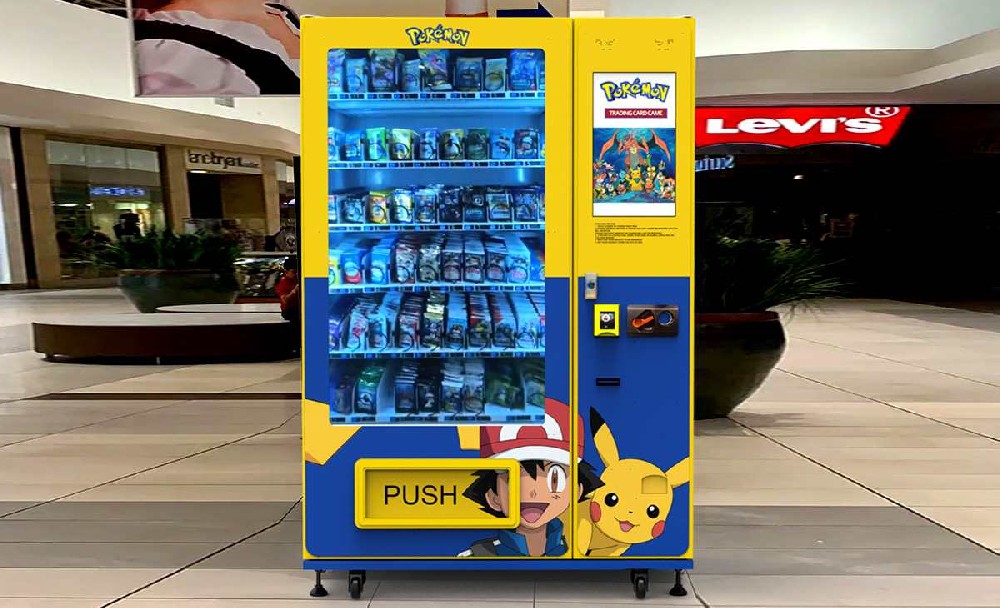
Why Pokémon Vending Machines Sell Out Faster Than Normal Vending Machines
Traditional snack machines move predictable products. Trading cards do not.
When a new Pokémon set launches, demand spikes immediately. Collectors buy sealed products to rip packs. Parents grab impulse purchases for kids. Resellers monitor inventory constantly. The machine may look fully stocked in the morning and completely empty a few hours later.
A few years ago, I managed a high-traffic vending deployment that included collectible products alongside drinks and snacks. The beverage side stayed stable all week. The Pokémon inventory was chaos. One release weekend, Elite Trainer Boxes sold out in under 50 minutes.
That’s why Pokémon vending machine restock timing feels unpredictable to customers. The inventory itself behaves differently from almost any other vending category.
| Product Type | Average Sell-Through Speed | Restock Pressure |
|---|---|---|
| Booster Packs | 2–5 Days | Moderate |
| Elite Trainer Boxes | Hours to 2 Days | Very High |
| Special Collection Boxes | 1–4 Days | High |
| Accessories | 1–2 Weeks | Lower |
When Does Pokémon Vending Machine Restock Most Often?
From what I’ve seen across multiple automated retail projects, most operators refill collectible machines during lower traffic hours. Early mornings are common because staff can restock quietly before customer traffic increases.
That said, there’s no universal schedule. Some smart vending systems trigger automatic refill alerts based on live inventory levels rather than fixed routes.
In slower locations, machines may only get serviced once a week. High-demand machines sometimes receive inventory every 24 to 48 hours.
| Machine Activity Level | Typical Restock Frequency | Common Refill Timing |
|---|---|---|
| Low Traffic | 5–7 Days | Morning Route |
| Medium Traffic | 2–4 Days | Morning or Midday |
| High Traffic | 24–48 Hours | Variable Smart Dispatch |
One route manager I worked with adjusted refill timing almost every week because customers had started figuring out the regular schedule. Once crowds began waiting near the machines, the refill windows changed immediately.
Why Most Operators Keep Restock Schedules Private
A lot of people assume companies keep restock schedules secret for marketing reasons. Honestly, most operators do it because public schedules create operational headaches.
I’ve personally seen situations where groups gathered around machines waiting for inventory drops. That slows staff down, creates tension between collectors, and often leads to bulk purchasing within minutes.
Most operators want inventory distributed naturally instead of disappearing into reseller carts immediately.
Large crowds during restocking
Bulk buying behavior
Security concerns
Staff disruption
Inventory hoarding
Customer complaints after instant sell-outs
That’s why many vending teams quietly rotate refill schedules instead of sticking to predictable public routines.
How Smart Vending Technology Changed Pokémon Card Distribution
Collectible vending has evolved dramatically over the last decade.
Back when I first started working with automated retail equipment, operators relied mostly on manual inventory checks. Today, cloud-connected systems can track nearly everything in real time.
Modern Pokémon vending machine restock operations now use:
Remote inventory monitoring
Cashless payment tracking
Cloud telemetry systems
Low-stock alerts
Digital inventory management
Automated sales reporting
This shift toward smart vending infrastructure is one reason companies like Zhongda smart have gained attention in the automated retail space. Their systems support remote monitoring, touchscreen interfaces, modular product layouts, and cloud management features that are especially useful for collectible inventory.
For operators researching collectible vending systems, these product pages are worth reviewing:
In one project I worked on, remote telemetry reduced unnecessary service trips by almost 30%. Instead of checking half-empty machines manually, operators only dispatched refill teams when inventory thresholds triggered alerts.
What Time of Day Do Pokémon Vending Machines Usually Restock?
Most refill activity happens when customer traffic is lighter.
In practical operations, I’ve seen three common refill windows:
| Restock Window | Why Operators Use It |
|---|---|
| 6 AM – 9 AM | Lower traffic and easier inventory handling |
| 11 AM – 2 PM | Route efficiency during service runs |
| Evening Hours | Reduced crowd attention |
Morning refills are still the most common from what I’ve experienced. Teams can clean the machine, audit inventory, and reload products before peak shopping activity begins.
How Long Do Pokémon Products Stay in Stock?
This depends almost entirely on the product category.
Booster packs tend to sell steadily throughout the week. Premium items move much faster because collectors perceive them as limited opportunities.
During the Pokémon 151 release cycle, I watched booster bundles disappear before noon in several locations. Meanwhile, standard sleeves and accessories stayed untouched for days.
Buyer psychology plays a huge role here. Customers feel urgency around sealed collector products. That urgency directly impacts Pokémon vending machine restock frequency.
Why Trading Card Vending Machines Need Different Hardware
Trading cards may look lightweight, but collectible vending machines require much stronger engineering than traditional snack units.
Card products are fragile. Packaging condition matters. Security risks are higher. Product dimensions vary constantly.
Over the years, I’ve worked with machines using:
Elevator delivery systems
Locker dispensing technology
Anti-drop mechanisms
RFID inventory tracking
Touchscreen browsing interfaces
Anti-theft dispensing compartments
Elevator vending systems are especially useful for collectible products because they reduce product impact during delivery. That matters when customers expect mint-condition packaging.
Zhongda smart has expanded heavily into advanced self-service kiosk systems and locker vending technologies designed for fragile retail inventory.
My Experience Managing High-Demand Collectible Inventory
One of the toughest collectible vending deployments I handled involved entertainment-focused retail traffic with constant weekend spikes.
At first, we assumed machines would need servicing every three days. That estimate was completely wrong.
During launch periods, some machines emptied so quickly that route schedules became useless. Staff would finish loading inventory, leave the property, and receive low-stock alerts less than two hours later.
The operational side became exhausting.
Drivers constantly adjusted routes. Customer support requests increased. Machines needed more frequent audits because collectible inventory values were much higher than snacks or beverages.
After reviewing sales analytics, we discovered:
63% of sales happened within four hours after restocking
Weekend demand was 2.4 times higher than weekday traffic
Cashless transactions exceeded 85% of purchases
Touchscreen browsing increased conversion rates significantly
We eventually switched to dynamic inventory dispatch instead of fixed refill schedules. Machines triggered service alerts automatically based on real-time stock movement.
That adjustment reduced out-of-stock downtime by roughly 31%.
How Smart Inventory Forecasting Works
Modern vending operators rely heavily on predictive analytics now.
Machines continuously collect transaction data, which helps forecast inventory movement more accurately.
Most advanced vending software tracks:
Hourly sales activity
Product popularity
Seasonal spikes
Payment behavior
Inventory turnover speed
Machine downtime
According to Statista’s 2024 collectible market data, trading card demand remains one of the strongest-performing segments in hobby retail.
Source: Statista
At the same time, automated retail continues expanding rapidly due to lower labor dependency and improved operational efficiency.
Source: IBISWorld
How Cashless Payments Increased Vending Sales
One thing newer operators often underestimate is how important payment systems are.
Most collectible buyers don’t carry cash anymore. Mobile wallets and tap payments dominate modern vending transactions.
In one deployment project I helped optimize, enabling mobile wallet support increased completed purchases by nearly 20% within two months.
Faster transactions created faster inventory turnover, which directly impacted Pokémon vending machine restock frequency.
Faster checkout speed
Higher impulse purchases
Better customer convenience
Improved transaction reporting
Security Matters More Than Most People Realize
Collectible vending machines attract much more attention than standard snack equipment.
That means operators need stronger security systems.
Modern collectible vending machines often include:
Reinforced steel cabinets
Encrypted payment systems
HD camera integration
Tamper alerts
Remote lock monitoring
Anti-pry dispensing doors
Cheap hardware causes expensive problems in collectible vending. I’ve seen poorly built cabinets develop dispensing failures within months under heavy traffic.
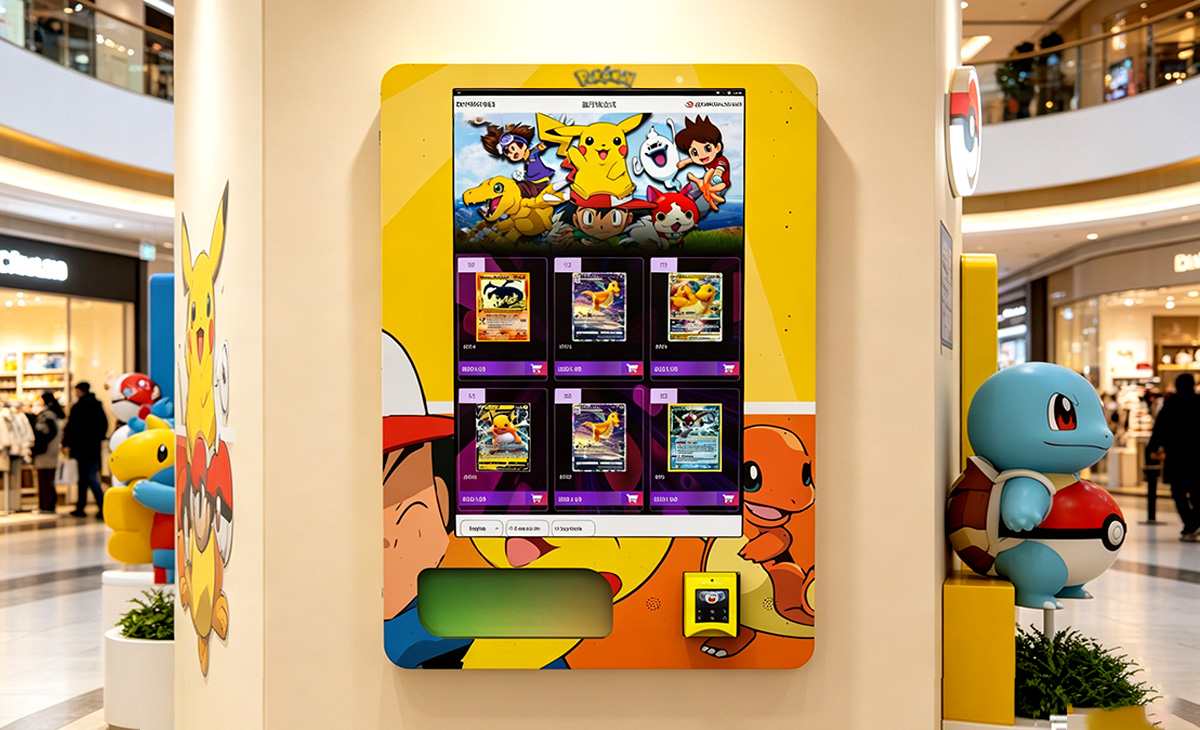
How Profitable Are Trading Card Vending Machines?
Compared with traditional snack vending, collectible vending usually generates much stronger revenue potential when managed properly.
| Machine Category | Estimated Monthly Revenue | Margin Potential |
|---|---|---|
| Snack Vending | $800–$2,500 | 35%–45% |
| Trading Card Vending | $3,000–$12,000+ | 40%–60% |
| Premium Collectible Kiosk | $10,000–$25,000+ | Variable |
The upside is significant, but operators also need better inventory management, stronger machine security, and more responsive maintenance support.
For businesses researching automated retail equipment, these pages provide additional information:
What New Operators Usually Get Wrong
I’ve worked with several new vending businesses that underestimated how aggressive collectible demand can become.
The most common mistakes usually include:
Using weak entry-level hardware
Ignoring remote inventory software
Underestimating release-day demand
Overloading machines with premium inventory
Poor route planning
Weak maintenance systems
Collectible vending looks simple from the outside, but operationally it behaves much closer to specialty retail than traditional vending.
Why AI and Automation Are Reshaping Restock Systems
Over the last few years, I’ve started seeing more operators experiment with AI-assisted inventory forecasting.
Instead of reacting after products sell out, some systems now predict inventory spikes before they happen.
These platforms analyze:
Historical sales behavior
Release-day demand patterns
Weekend traffic spikes
Payment activity trends
Route efficiency data
Honestly, I think the next generation of Pokémon vending machine restock systems will become far more predictive than reactive. Machines will eventually schedule refill routes automatically based on live purchasing behavior instead of fixed calendars.
Frequently Asked Questions
How often does a Pokémon vending machine restock?
Most machines restock every 2 to 7 days, although high-demand locations may receive inventory within 24 to 48 hours.
Do Pokémon vending machines restock after new set releases?
Yes. Operators often increase inventory allocations and refill frequency during major Pokémon release periods because demand spikes dramatically.
What time do Pokémon vending machines usually restock?
Most operators refill machines during lower traffic periods, especially early mornings.
Why are Pokémon vending machines empty so often?
Premium Pokémon products can sell out extremely fast, especially Elite Trainer Boxes and limited-release items.
Can vending machines track inventory automatically?
Yes. Modern smart vending systems use cloud telemetry and remote inventory monitoring to track stock levels in real time.
Are trading card vending machines profitable?
Well-managed collectible vending programs can outperform traditional snack vending because transaction values and demand levels are significantly higher.
Final Thoughts
After years working in automated retail, one thing has become obvious to me: Pokémon vending machine restock timing is driven almost entirely by inventory movement.
The busiest machines no longer operate on old-fashioned weekly routes. Smart vending systems monitor demand constantly, trigger low-stock alerts automatically, and adapt refill schedules based on real purchasing behavior.
For collectors, understanding those patterns helps explain why inventory disappears so quickly. For operators, it highlights why better machine technology, stronger logistics, and cloud-based inventory systems matter more than ever.
As collectible retail keeps growing, companies like Zhongda smart are helping push vending technology toward smarter, more responsive self-service retail systems built specifically for high-demand products.