Yes, you can buy a Pokémon vending machine in 2026, but not in the way most people imagine. Earlier this year, I had a hobby store owner call me expecting to order an “official Pokémon machine” the same way someone orders a soda vending machine. That’s usually not how this business works. In reality, most operators are building custom trading card vending setups designed around licensed Pokémon products rather than buying officially branded corporate machines.
After more than a decade working with smart vending systems, collectible retail kiosks, and unattended retail projects, I can confidently say this category is no longer a gimmick. Trading card vending has quietly evolved into a serious automated retail business. The best operators are using touchscreen vending kiosks, smart locker systems, cloud inventory software, and cashless payment technology to create something much closer to a modern hobby shop than a traditional vending machine.
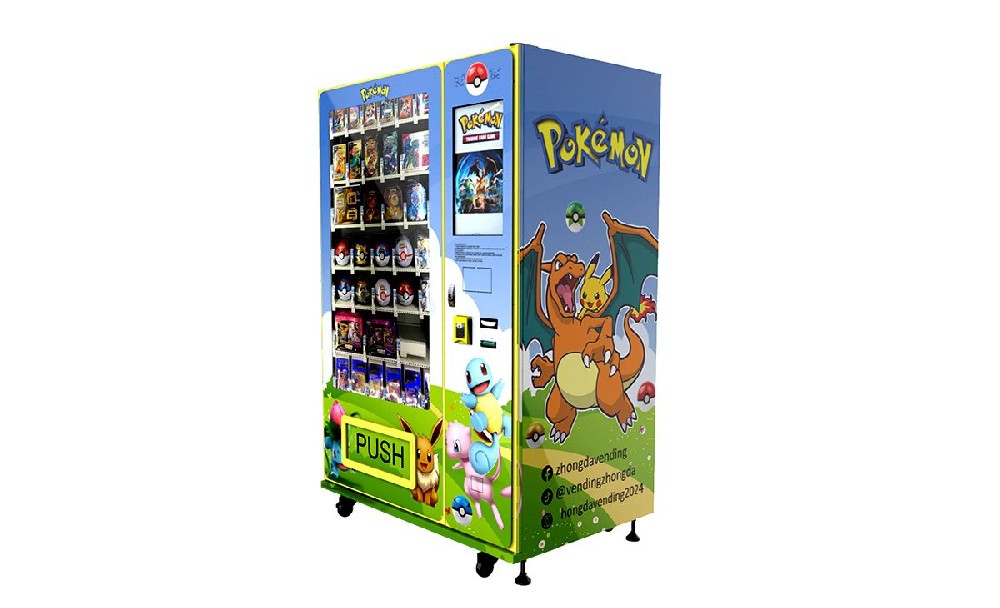
And honestly, customers notice the difference immediately.
If you’re thinking about entering this market in 2026, you need to understand licensing, machine types, startup costs, maintenance realities, and what actually drives profit in collectible vending. Most importantly, you need to avoid the mistakes that burn through capital during the first year.
Why Pokémon Vending Machines Suddenly Became Big Business
A few years ago, collectible vending was mostly novelty retail. Machines looked flashy online, but many operators struggled with inventory theft, payment failures, damaged products, and unreliable hardware. I saw plenty of machines disappear within twelve months because owners underestimated how different collectible retail really is.
That changed fast.
The explosion of trading card demand pushed smart vending into a completely different category. Modern collectors expect instant access, cashless checkout, touchscreen browsing, and premium presentation. Traditional snack-machine thinking no longer works here.
In practice, location quality matters more than the machine itself.
Today’s successful collectible vending businesses usually combine:
Touchscreen smart vending systems
Cashless payment support
Cloud inventory management
Secure locker dispensing
Remote monitoring software
Interactive retail experiences
According to Grand View Research, the global retail vending machine market exceeded USD 75 billion in 2025, with cashless vending systems accounting for the majority of transaction growth. That matters because collectible buyers rarely carry cash anymore, especially for higher-ticket purchases like booster boxes and premium trading card products.
| Category | 2025 Market Snapshot | What It Means |
|---|---|---|
| Retail Vending Industry | $75+ Billion | Automated retail is expanding rapidly |
| Cashless Vending | 75%+ of transaction growth | Mobile payments now dominate |
| Smart Retail Kiosks | High-growth segment | Interactive machines outperform basic units |
| Collectible Vending | Emerging specialty category | Strong long-term potential |
I honestly think most operators are still underestimating how retail-driven this business really is.
Can You Actually Buy an Official Pokémon Vending Machine?
This is where confusion usually starts.
Official Pokémon-branded vending machines are extremely limited and are typically connected to licensed retail partnerships or direct corporate programs. Most independent operators cannot simply purchase an official Pokémon vending machine with full branding rights.
What most successful businesses actually do is build a custom trading card vending machine designed to sell officially sourced Pokémon products.
There’s a big difference between:
Selling licensed Pokémon merchandise
Owning official Pokémon branding rights
That distinction matters.
You can legally sell authentic Pokémon card products through a smart vending machine when inventory is sourced properly. However, using official Pokémon logos, graphics, or trademarked branding on the exterior cabinet may require authorization.
Most operators avoid problems by creating collectible-focused smart vending systems rather than pretending to be officially affiliated retail programs.
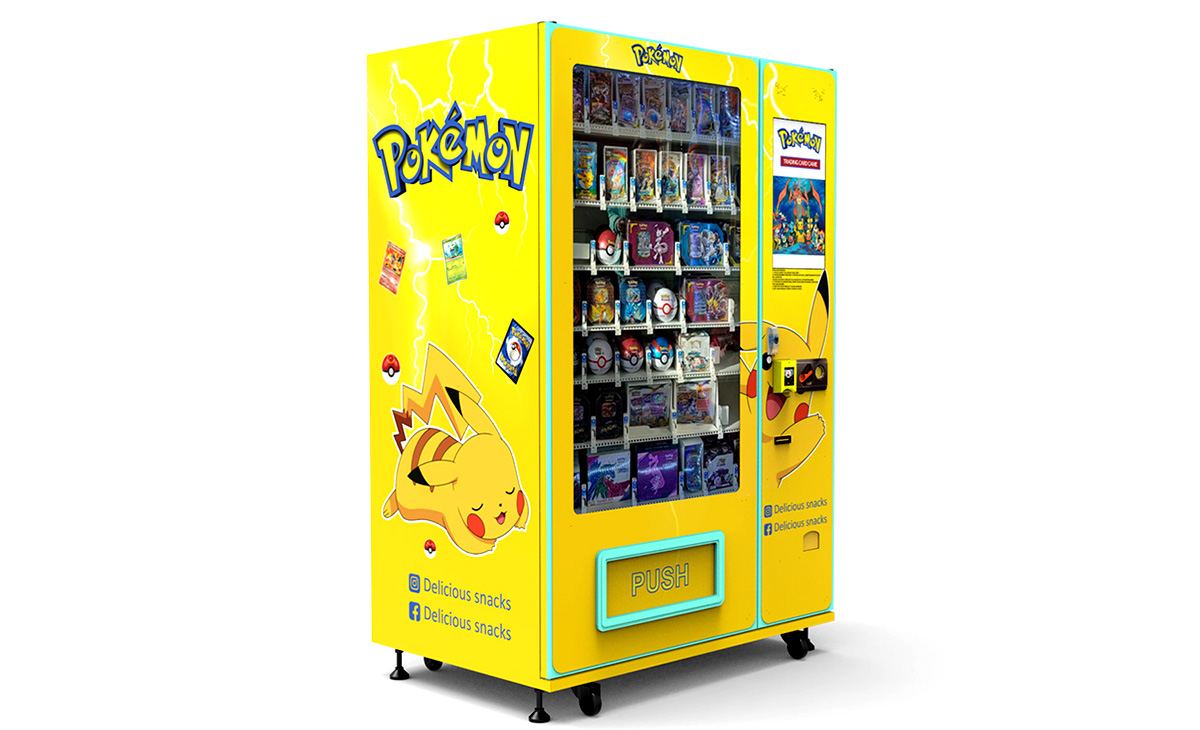
What Type of Pokémon Vending Machine Works Best?
I’ve tested enough vending equipment over the years to know that collectible products require completely different machine engineering than snacks or drinks.
Personally, I’ve never liked traditional spiral vending machines for trading cards. They work fine for chips and bottled drinks, but collectible buyers judge presentation instantly. If the machine feels cheap, the products inside feel cheap too.
That mistake gets expensive fast.
Locker Vending Machines
Locker vending systems are one of the best options for premium trading card retail because products stay protected inside secure compartments instead of dropping through traditional vending spirals.
These systems work especially well for:
Elite trainer boxes
Booster boxes
Collector tins
Premium bundles
Graded cards
For operators looking at premium collectible retail, Zhongda Smart’s locker vending systems are worth studying because they focus heavily on secure dispensing and touchscreen retail interaction.
Touchscreen Smart Vending Machines
What surprised me over the last few years wasn’t the touchscreen technology itself. It was how quickly customers stopped trusting machines that didn’t support mobile wallets, digital product previews, and modern retail interfaces.
Collectors now expect vending machines to feel closer to a self-service hobby store than a snack machine sitting in a hallway.
Modern touchscreen vending systems support:
Cashless checkout
QR code promotions
Inventory previews
Cloud inventory tracking
Membership systems
Product animations
Elevator Dispensing Systems
For high-value collectibles, elevator delivery systems are easily one of the safest options available. Instead of dropping products into a pickup bin, the machine gently transfers inventory to the customer.
I didn’t fully appreciate how important this was until I watched a poorly designed machine damage sealed collector boxes during a convention launch weekend.
Customers were furious.
That’s one reason modern smart vending systems increasingly rely on elevator-assisted dispensing or locker retrieval technology.
How Much Does a Pokémon Vending Machine Cost in 2026?
This is usually where reality hits first-time operators.
Many people assume they can launch a collectible vending business for a few thousand dollars. In my experience, that almost never ends well if the goal is long-term reliability.
I once worked with an operator who bought the cheapest touchscreen unit he could find online. It looked decent in photos. Three months later, the payment system kept freezing during peak traffic hours, the touchscreen became unresponsive, and inventory jams were happening weekly.
Cheap machines rarely stay cheap for long.
| Machine Type | Typical 2026 Price Range | Best Use |
|---|---|---|
| Basic Spiral Vending Machine | $3,000 – $6,000 | Low-cost card packs |
| Smart Touchscreen Vending Machine | $6,500 – $12,000 | Interactive collectible retail |
| Locker Vending Machine | $8,000 – $16,000 | Premium products |
| Custom Trading Card Kiosk | $12,000 – $25,000+ | High-end deployments |
| Large Smart Retail Installation | $20,000 – $40,000+ | Entertainment venues |
Those numbers also don’t include:
Initial inventory
Shipping costs
Custom branding
Software integrations
Location rental fees
Insurance
Import duties
Payment processing hardware
Most serious collectible vending businesses launch somewhere between $15,000 and $60,000 total startup investment depending on scale.
Do Pokémon Vending Machines Actually Make Money?
Yes, but not automatically.
Most profitable trading card vending businesses succeed because of inventory strategy, not hardware alone.
I’ve seen beautifully designed machines fail in weak locations while smaller machines quietly generated impressive profits beside arcades and family entertainment centers.
One thing newer operators almost always misunderstand is traffic quality. I’ve seen machines in massive retail corridors perform worse than machines tucked beside small arcade entrances simply because the audience wasn’t interested in collectibles.
Foot traffic alone doesn’t mean much if the customers aren’t already hobby buyers.
Strong locations often include:
Arcades
Cinema complexes
Game stores
Shopping malls
Family entertainment venues
Convention spaces
Typical gross margins in collectible vending can range between 30% and 60% depending on sourcing agreements and inventory mix.
| Example Monthly Metrics | Estimated Numbers |
|---|---|
| Average Daily Transactions | 22 |
| Average Order Value | $28 |
| Monthly Revenue | $18,480 |
| Average Gross Margin | 42% |
| Estimated Net Profit | $4,000 – $5,500 |
Weak locations can perform at less than 20% of those numbers.
The Biggest Mistakes New Operators Make
After years working around specialty vending projects, I keep seeing the same mistakes repeated.
Buying Oversized Machines Too Early
Bigger machines do not automatically create bigger profits. In collectible vending, a smaller smart machine in the right location often outperforms a giant setup placed in the wrong venue.
Ignoring Security
Pokémon products attract scalpers, resellers, and impulse theft attempts.
Machines holding premium inventory should include:
Reinforced locking systems
Remote monitoring
Cashless transaction tracking
Anti-pry cabinet construction
Surveillance integration
I’ve seen operators lose thousands because they underestimated theft risks during product launch periods.
Poor Inventory Rotation
Collectors chase new releases constantly. If your machine still carries outdated inventory months after demand disappears, sales usually collapse quickly.
Successful operators rotate products aggressively.
Underestimating Maintenance
Here’s the part people usually don’t want to hear. Collectible vending behaves much closer to retail operations than passive income.
Machines require:
Software updates
Inventory management
Routine cleaning
Payment troubleshooting
Customer support
Touchscreen calibration
Customers absolutely notice when a machine looks neglected.
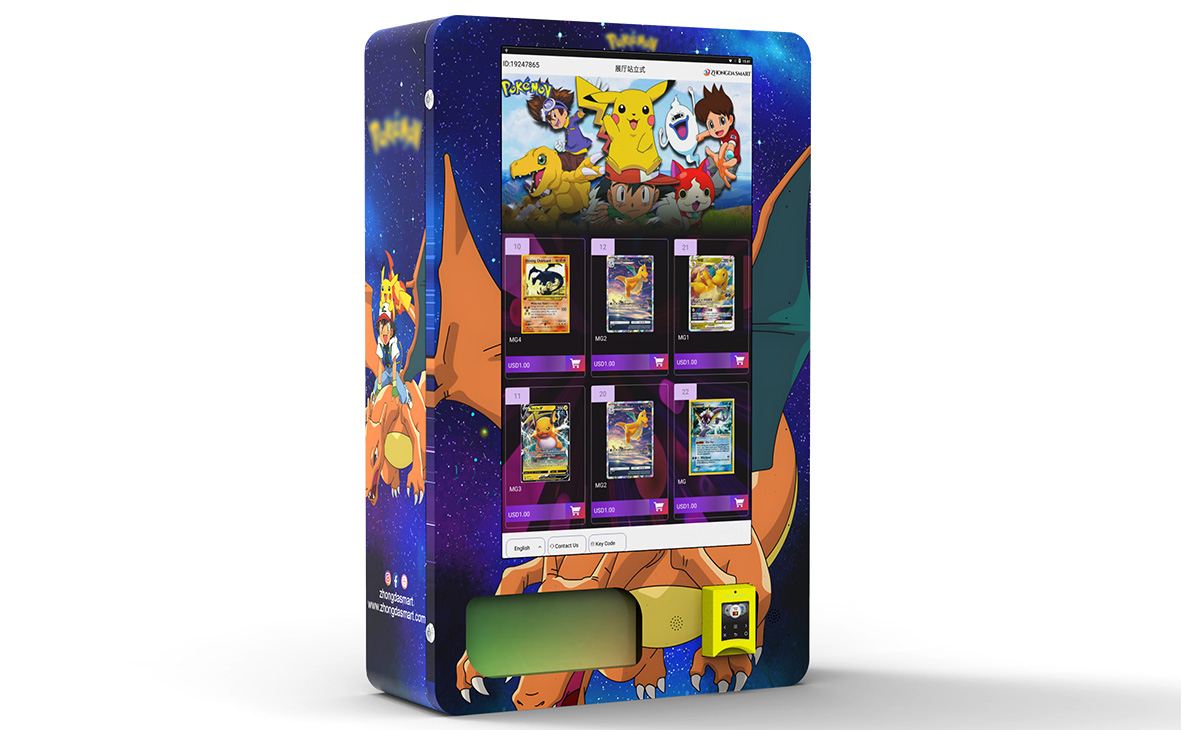
What Features Matter Most in 2026?
The vending industry changed dramatically once cloud-connected retail systems became standard. Buyers now expect vending machines to behave like smart retail kiosks.
And honestly, outdated equipment gets ignored fast.
In 2026, the most important features usually include:
Cashless payment systems
Cloud inventory software
Touchscreen retail interfaces
Remote diagnostics
Elevator dispensing systems
Locker pickup options
Mobile wallet compatibility
For collectible vending specifically, presentation quality matters far more than many operators expect.
When one of my clients wanted to expand beyond trading cards into mystery box retail, we ended up reviewing several Zhongda Smart configurations before settling on a locker-based setup that handled premium inventory more securely.
You can explore additional smart vending configurations through Zhongda Smart’s product catalog and their OEM custom vending machine solutions.
Should You Buy New or Used Equipment?
For collectible vending, I almost always recommend new equipment.
Used vending machines can work perfectly fine for snack routes or beverage sales, but trading card retail is different. Customers expect modern payment systems, smooth touchscreen interaction, and reliable dispensing.
If the machine feels outdated, customers lose confidence immediately.
That’s especially true for higher-ticket products.
How I Would Launch a Pokémon Vending Business Today
If I were starting from scratch in 2026, this is exactly how I would approach it.
Start With One Strong Location
I would focus entirely on proving one location before scaling into multiple placements.
Most operators expand too early.
Use Smart Equipment From Day One
I wouldn’t touch outdated coin-operated hardware anymore for collectibles.
I would prioritize:
Large touchscreen displays
Cashless payments
Cloud inventory tracking
Remote monitoring
Locker or elevator dispensing
Rotate Inventory Constantly
Collectors lose interest quickly when inventory never changes.
I would regularly rotate:
Booster packs
Elite trainer boxes
Mystery products
Accessories
Limited-release items
Collector bundles
Build Social Proof
The best-performing collectible machines often gain traction because customers post purchases online.
That social momentum matters more than many operators realize.
Why Zhongda Smart Gets Attention in Specialty Vending
I’ve worked with enough vending manufacturers to know that many companies still think entirely in terms of snacks and drinks. Specialty retail requires a different design approach.
Packaging matters more. Product delivery matters more. Even machine lighting changes how customers perceive value.
Zhongda Smart has become increasingly visible in custom smart vending because they support:
OEM machine customization
Touchscreen retail systems
Locker dispensing technology
Cloud-connected vending software
Cashless payment integration
Custom cabinet branding
No manufacturer is perfect for every deployment, but operators entering collectible vending usually need flexibility that traditional vending suppliers simply don’t offer.
Businesses exploring trading card automation can also review Zhongda Smart’s Pokémon vending machine solutions and trading card vending machine systems.
How Long Does ROI Usually Take?
Most profitable collectible vending businesses recover equipment investment faster than traditional vending routes because average transaction values are significantly higher.
But startup costs are also higher.
The biggest factor accelerating ROI is usually inventory turnover speed, not machine size.
| Business Performance | Typical ROI Timeline |
|---|---|
| Weak Location | 24 – 36 Months |
| Average Entertainment Venue | 14 – 22 Months |
| Strong Premium Location | 8 – 14 Months |
| Multi-Unit Expansion | 12 – 20 Months |
Operators actively marketing their machines almost always outperform passive operators.
The Future of Trading Card Vending Machines
Personally, I think collectible vending is still early.
Most operators are treating it like a side hustle when it actually behaves more like automated specialty retail.
The businesses taking it seriously now are probably going to dominate the category over the next few years.
I expect the next wave of growth to include:
AI-assisted inventory recommendations
Gamified touchscreen experiences
Hybrid locker retail systems
Membership integrations
Real-time promotional inventory drops
Advanced cloud analytics
But even with better technology, the fundamentals won’t change.
Good locations. Reliable hardware. Strong inventory strategy.
That’s still what wins.
Final Thoughts
So, can you buy a Pokémon vending machine in 2026?
Yes. But the smarter question is what type of collectible vending system actually makes sense for your business model.
Officially branded Pokémon machines remain difficult to access directly, but custom smart vending systems built for trading cards and collectibles are now more advanced than ever. With the right setup, strong inventory sourcing, modern payment systems, and a location that attracts real hobby buyers, collectible vending can become a highly profitable retail channel.
After more than ten years working around vending operations, I honestly believe the operators who treat collectible vending like serious retail — instead of passive side income — are the ones most likely to succeed long term.
And in my experience, that mindset matters a lot more than putting flashy graphics on a machine.
Frequently Asked Questions
Can I legally sell Pokémon cards in a vending machine?
Yes. You can legally sell officially sourced Pokémon products through a vending machine. However, using official Pokémon branding on the machine cabinet may require authorization.
What is the best vending machine for trading cards?
Locker vending systems and elevator dispensing machines are usually the safest options because they reduce product damage and improve security.
How much money do I need to start?
Most serious collectible vending businesses launch between $15,000 and $60,000 including equipment, inventory, shipping, and setup costs.
Do Pokémon vending machines make money?
Yes, especially in entertainment-focused locations with strong collector traffic and well-managed inventory rotation.
What are the monthly operating costs?
Monthly operating expenses usually include inventory restocking, payment processing fees, software subscriptions, machine maintenance, and location rental agreements.
Should I buy used equipment?
For collectible vending, new smart vending equipment is usually the safer investment because modern touchscreen systems and cloud management features matter heavily.
What products besides Pokémon cards sell well?
Collector tins, mystery boxes, accessories, sleeves, plush products, mini figurines, and premium bundles often perform very well in smart vending environments.