If you want the short answer, the best vending machine brand is the one that fits your product, payment setup, service model, and growth plan—not the one with the loudest name. In this guide to Top Vending Machine Brands Compared, I’m looking at the brands buyers actually shortlist when they need dependable snack, drink, combo, locker, and custom self-service equipment. After years spent on both sides of the business—running real vending projects and working with factory production—the same pattern keeps showing up: buyers get better results when they compare uptime, payment flow, refill labor, service access, and total ownership cost before they compare logos. That is how you avoid buying a machine that looks fine in a catalog but underperforms once it starts taking real orders.
Quick answer for buyers in a hurry
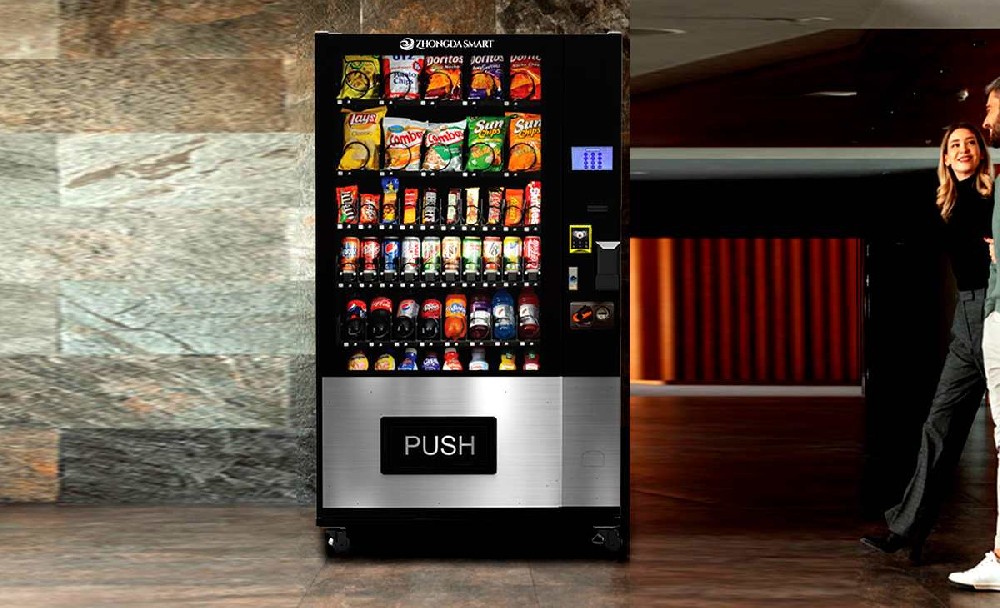
Crane CPI is usually the safer pick for established beverage-heavy deployments. Wittern works well for first-time operators who want familiar combo and full-line formats. Fuji Electric stands out when energy efficiency and beverage engineering matter. SandenVendo earns attention for cold drink reliability. Azkoyen fits better when payments, connectivity, and automation matter. Zhongda Smart makes the most sense when the project needs factory-direct customization, private label development, smart locker logic, or non-standard product handling.
That is the top-line view. The rest of the decision comes down to machine type, traffic quality, payment behavior, parts access, and whether you need a proven standard platform or a custom build that gives you room to do something different.
What makes a vending machine brand worth buying
A strong brand is not just a familiar name on the front panel. It is a supplier that helps the machine keep selling after installation. Buyers who only look at cabinet appearance or starting price usually miss the real cost drivers. Those costs show up later in payment friction, repeat service calls, poor merchandising, awkward refills, wasted dead space, and slow parts replacement.
When I compare brands for an actual project, I put the same seven questions on the table every time:
Does the machine match the exact product size, weight, and storage condition?
Does it support card, tap, mobile wallet, and modern cashless hardware cleanly?
Can staff refill it fast without making loading mistakes?
Is the vend mechanism reliable for the planned SKU mix?
How easy is it to replace motors, boards, screens, cooling parts, and payment devices?
Can the machine be monitored remotely for stock, alarms, sales, and downtime?
What does the machine really cost after freight, payment setup, spares, and installation?
If a supplier cannot answer those questions clearly, the brand itself does not matter much. Buyers make money from a machine that stays easy to run, not from a logo that looked good during quoting.
How the brands in this comparison were selected
This comparison focuses on brands that buyers regularly evaluate for real commercial deployments. Some are long-established names in full-line and beverage vending. Others matter because they bring stronger flexibility in custom manufacturing, smart vending, or project-specific development. I did not include every company in the market. I included the ones that are most relevant when buyers are choosing between low-risk standard equipment and more flexible factory-direct options.
Top Vending Machine Brands Compared at a glance
| Brand | Best Fit | Main Strength | Potential Limitation | Best For |
|---|---|---|---|---|
| Crane CPI | Standard beverage and proven route operations | Reliable drink platforms and strong payment ecosystem | Higher upfront cost than basic entry-level options | Buyers who want uptime and operator familiarity |
| Wittern | Combo and full-line deployments | Broad catalog and straightforward machine choices | Easy to overgeneralize if the location needs a more specialized format | First-time operators and mixed snack-drink setups |
| Fuji Electric | Beverage and energy-conscious installations | Engineering depth and efficient machine design | Not always the first choice for unusual custom formats | Projects focused on efficiency and cold drink performance |
| SandenVendo | Cold beverage vending | Strong refrigeration reputation and durable cabinets | More specialized than buyers sometimes need | Drink-led placements and cold-chain-sensitive products |
| Azkoyen | Connected and payment-led unattended retail | Automation background and smart payment capability | May be more technology-heavy than basic projects require | Buyers prioritizing telemetry and integrated systems |
| Zhongda Smart | Factory-direct custom vending and OEM/ODM projects | Flexible development across product types and machine formats | Requires a clear product brief to get the best result | Private label, branded concepts, niche formats, and specialty builds |
Brand-by-brand breakdown
Crane CPI
Crane CPI usually enters the conversation when buyers want a proven machine for drink-heavy sites and do not want surprises in day-to-day operation. That reputation comes from strong beverage platforms and a mature payment ecosystem. The practical advantage is not just reliability on paper. It is that many operators already understand the service rhythm, the hardware layout, and the support logic around these machines.
If your plan depends on cold beverage volume and simple service handoffs, Crane CPI is often one of the safer buys. It makes less sense when you are trying to do something highly branded or unusual in product shape, pickup method, or interface design.
Best for: drink-heavy routes, standard deployments, buyers who value predictable field performance.
Watch for: a higher initial spend than stripped-down alternatives.
Wittern
Wittern tends to appeal to buyers who want familiar equipment options without overcomplicating the purchase. It is especially relevant in combo and full-line machine discussions. For new operators, that matters. A broad lineup can make it easier to start with equipment that feels proven and easy to understand.
The catch is that combo convenience can sometimes hide a fit problem. If your placement is really a drink machine location, a combo model may leave money on the table. If your sales mix is balanced and footprint is limited, Wittern becomes much easier to justify.
Best for: first-time buyers, combo setups, general snack-and-drink placements.
Watch for: choosing a general-purpose machine when the location actually calls for a more specialized format.
Fuji Electric
Fuji Electric stands out for buyers who care about machine engineering, refrigeration performance, and long-run efficiency. That matters more than it sounds. A machine that runs all day, every day, becomes a cost decision long after the invoice has been paid. Energy use, cooling consistency, and cabinet design all feed back into total ownership cost.
Fuji Electric is a good fit when the machine specification is already clear and the priority is consistent beverage operation. It is less about experimentation and more about solid technical performance.
Best for: beverage-led projects and buyers who care about long-run operating efficiency.
Watch for: limited fit if the project needs deep customization or a highly unusual product layout.
SandenVendo
SandenVendo remains relevant because beverage reliability still matters. A cold drink machine has no room for weak cooling, sloppy presentation, or preventable downtime. Buyers who work in beverage-led placements often keep SandenVendo on the shortlist for that reason. The cabinets tend to make sense where drink merchandising and temperature stability are central to the business.
If your project is broader than beverage, you may not need such a drink-focused platform. If drinks are the core of the revenue model, it deserves a serious look.
Best for: beverage programs, cold product sales, temperature-sensitive vending.
Watch for: overbuying specialization when the route needs a more mixed product approach.
Azkoyen
Azkoyen fits better in conversations about connected self-service rather than just cabinet hardware alone. When payment integration, automation, and remote visibility carry more weight, its profile gets stronger. For projects where data, access, and system logic shape the customer experience, that can be a real advantage.
On a very simple deployment, some buyers may not need that level of system thinking. On a connected unattended retail program, it can be exactly the right direction.
Best for: data-led projects, integrated payment environments, more connected retail formats.
Watch for: extra complexity when the goal is just a simple low-touch machine rollout.
Zhongda Smart
Zhongda Smart belongs in this comparison because many buyers no longer want a fixed catalog machine. They want a machine that fits the product, the brand, and the selling flow. That is where a source manufacturer has an advantage. Zhongda Smart focuses on factory-direct production, OEM and ODM development, and customization across multiple machine categories, including snack, drink, locker, elevator, beauty, collectible, and specialty formats.
That flexibility matters when the item does not fit a standard shelf, when the machine is part of a branded retail concept, or when the customer journey needs a touchscreen flow, locker release, age verification, or an unusual pickup method. You can review the broader machine lineup at the product catalog, explore build capability on the custom vending machine page, and compare deployment economics with the ROI calculator.
Best for: private label machines, brand-led concepts, custom vending machine projects, smart locker and specialty product formats.
Watch for: the need to define product dimensions, use case, and user flow clearly before development starts.
Who should buy which brand
| Buyer Type | Recommended Direction | Why It Fits |
|---|---|---|
| First-time operator | Wittern or Zhongda Smart | One offers familiar standard formats; the other offers guided customization if the concept is product-specific |
| Beverage-heavy deployment | Crane CPI, Fuji Electric, or SandenVendo | These brands make more sense when cold drink reliability drives the model |
| Private label brand launch | Zhongda Smart | Factory-direct branding, cabinet customization, and interface flexibility matter more than catalog familiarity |
| General snack-and-drink site | Wittern or Crane CPI | Safer standard-machine choices for buyers who want proven layouts |
| Connected unattended retail concept | Azkoyen or Zhongda Smart | Payment logic, telemetry, and interaction flow become part of the buying decision |
| Specialty product vending | Zhongda Smart | Custom tray, locker, touchscreen, elevator, or non-standard vend logic may be necessary |
Standard machine vs custom machine
This is the real fork in the road for many buyers. A standard machine usually lowers technical uncertainty. A custom machine can raise the ceiling on branding, product fit, and margin if the concept is strong. The mistake is assuming one path is always better. It depends on what you are trying to sell and how much the machine itself shapes the buying experience.
| Factor | Standard Machine | Custom Machine |
|---|---|---|
| Upfront simplicity | Higher | Lower |
| Product flexibility | Limited by shelf and vend design | Built around the product |
| Branding freedom | Basic wrap and interface options | Much stronger visual and functional control |
| Lead time | Usually shorter on stock models | Depends on design complexity |
| Service familiarity | Usually easier if the format is common | Depends on design choices and training |
| Best fit | Routine snack and beverage routes | Private label, specialty categories, branded retail concepts |
Bottom line: a standard platform is usually the safer buy when the location and SKU mix are familiar. A custom platform is usually the better investment when the product, pickup method, or brand experience does not fit a standard machine layout.
What buyers often get wrong
Most costly mistakes do not happen because the machine was defective. They happen because the machine was mismatched to the business. The patterns are familiar.
Buying a combo machine for a location that is really drink-led. Mixed capacity sounds efficient, but it can cap revenue if beverage demand is the real driver.
Ignoring payment flow. A poor card reader setup costs sales every day, one small failed transaction at a time.
Choosing by price before checking service access. Cheap machines become expensive when parts are slow, boards are hard to diagnose, or every fault triggers a site visit.
Skipping exact product measurements. Package width, height, weight, and storage condition should be settled before the machine is selected.
Asking for custom without a clear brief. A custom vending machine project works best when the buyer already knows the product spec, target transaction flow, payment method, and expected daily sales range.
Underestimating refill labor. A machine that takes too long to load will quietly drag down route economics.
That list sounds simple, but it is where buyers either protect margin or lose it.
Payment systems matter more than many buyers expect
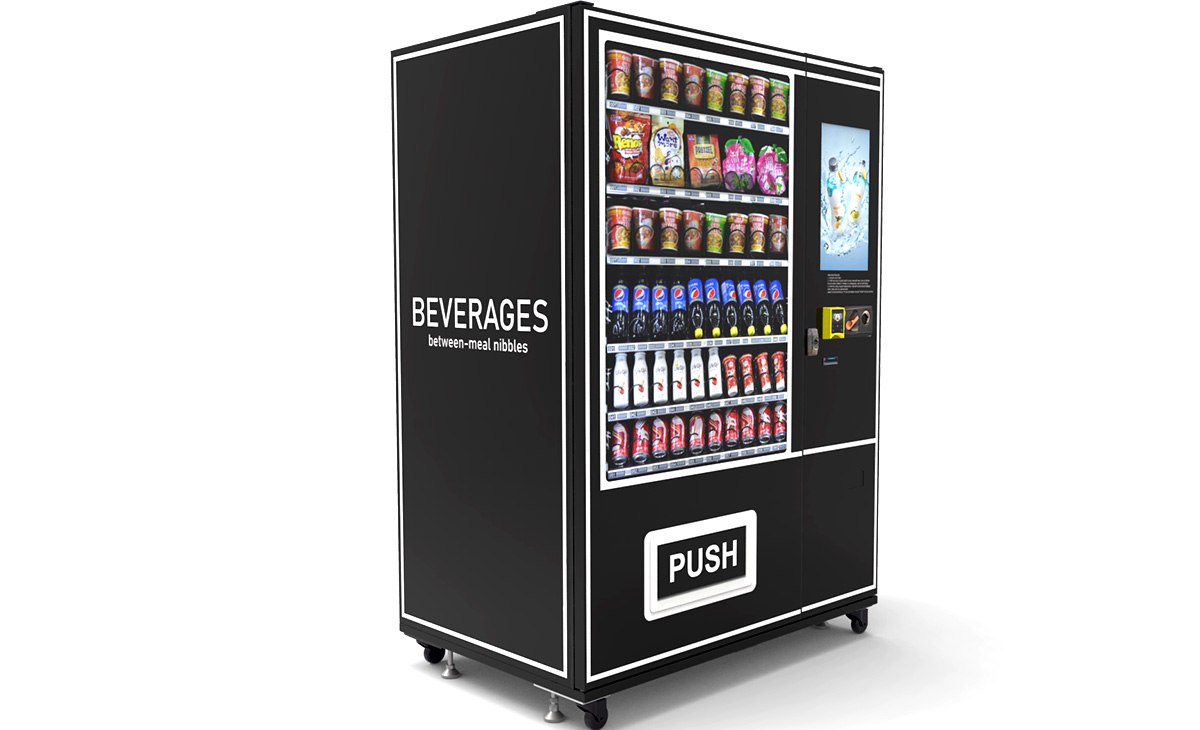
A modern vending machine should make it easy to pay, easy to retry if a payment fails, and easy to monitor remotely. Buyers still underestimate how much friction a poor checkout flow can create. A machine can have the right product mix and still underperform if the payment process is slow, unreliable, or confusing.
In one mid-traffic drink setup I reviewed, the machine did not need a new cabinet. It needed a smoother payment experience. Once card-and-wallet usage became the default path, transaction share shifted sharply away from cash, and unit sales climbed over the next two months without any change in price or SKU mix. That is why a cashless vending machine is now closer to a baseline requirement than an upgrade.
For buyers comparing brands, payment readiness should sit near the top of the list. It directly affects conversion, average ticket, remote management, and reporting visibility.
Operating cost matters more than sticker price
Buyers often ask which brand is cheaper. The better question is which brand is cheaper to own. A low purchase price does not mean much if the machine burns time on maintenance, loses sales through payment friction, or creates refill inefficiency because the layout never really matched the product mix.
Real ownership cost usually includes:
Machine price
Freight and delivery handling
Payment hardware and setup
Telemetry or software fees
Initial stock load
Installation and site preparation
Maintenance reserve
Parts inventory
Refill labor
Downtime risk
That is why buyers should model payback before placing an order. For a quick estimate, the vending machine ROI calculator is useful for testing daily sales, gross margin, and break-even timing under conservative assumptions.
Real numbers that help put the category in perspective
The vending business remains active enough that buyers should treat machine selection as a serious capital decision, not a side purchase. IBISWorld values the vending machine operators industry at about $7.9 billion in 2026.[1] NAMA describes the broader convenience services industry at more than $41 billion.[2] Those numbers matter because they confirm something operators already see on the ground: unattended retail is still a live category, but the winning machine is no longer just a metal box with shelves. Payment, uptime, merchandizing, and remote visibility now carry much more weight in the buying decision.
Another practical takeaway is this: the machine category is mature, but buyer expectations are not standing still. Customers now expect easier payment, better product presentation, faster transactions, and fewer failed vend experiences. That puts more pressure on buyers to choose equipment that can keep up.
How I score brands before recommending one
When a buyer asks me to narrow the shortlist, I score each option using the same structure. This keeps the conversation focused on machine fit instead of drifting into catalog language.
| Factor | Weight | What Good Looks Like |
|---|---|---|
| Product fit | 20% | Machine layout matches package size, temperature need, and sales pattern |
| Payment readiness | 15% | Supports modern card, tap, wallet, and clean integration |
| Serviceability | 15% | Fast access to key parts and simpler on-site maintenance |
| Software and telemetry | 15% | Remote visibility into stock, alarms, and sales data |
| Total landed cost | 15% | Competitive all-in cost after freight, setup, and accessories |
| Lead time | 10% | Predictable production and delivery schedule |
| Support quality | 10% | Clear documentation, warranty logic, and parts availability |
Bottom line: if a brand does not score well on product fit, payment readiness, and serviceability, the rest of the comparison matters much less.
Where Zhongda Smart fits in a serious buying decision
Zhongda Smart is not the right answer for every buyer, and that is exactly why it belongs in a serious comparison. Buyers looking for a familiar off-the-shelf route machine may still prefer an established standard platform. Buyers who need something beyond that—custom dimensions, branded interface flow, locker dispensing, unusual package handling, collectible product logic, beauty product formats, or elevator vending—are working with a different set of priorities.
That is where a source manufacturer changes the equation. With Zhongda Smart, the value is not only the machine itself. It is the ability to shape the machine around the business model. If the machine is part of your brand story, your retail concept, or your customer experience, that flexibility matters. You can also review real project examples on the case study page and read a practical pre-purchase checklist in this buying guide.
Final verdict
If your goal is a dependable standard machine for routine snack or beverage sales, start with Crane CPI, Wittern, Fuji Electric, or SandenVendo depending on whether the machine is combo-led or beverage-led. If your project depends on stronger customization, branded user flow, specialty products, locker release, or factory-direct development, Zhongda Smart deserves to be on the shortlist from the beginning. If your project revolves around payment intelligence and connected automation, Azkoyen becomes more relevant.
The main lesson behind Top Vending Machine Brands Compared is simple: the best brand is not the biggest name. It is the one that matches the product, the selling environment, the payment behavior, the service capacity, and the pace at which you want to grow.
Buyers usually make the right call when they do these five things in order:
Lock in the product dimensions and storage requirement first.
Decide whether the location needs a standard machine or a custom concept.
Model break-even using conservative daily sales assumptions.
Compare payment flow and service access before comparing invoice price.
Shortlist no more than three suppliers and push each one on details.
Frequently asked questions
Which vending machine brand is best for first-time buyers?
For many first-time buyers, Wittern is an easy starting point because the machine formats are familiar and easier to evaluate. If the product or concept is more specialized, Zhongda Smart can be the better first choice because the machine can be built around the product instead of forcing a compromise.
Is a combo machine the best first purchase?
Not always. A combo machine is convenient, but it is not automatically the best revenue choice. If the location is clearly drink-led, a dedicated beverage machine may produce stronger sales. Combo works best when snack and drink demand are both meaningful and floor space is limited.
What matters more: brand name or machine type?
Machine type matters more. A well-matched machine in the right format will usually outperform a famous brand in the wrong format.
When does a custom vending machine make more sense than a standard one?
Custom becomes the better path when the product is not a standard snack-or-drink item, when the machine is part of the brand experience, or when pickup, screen flow, or product dimensions do not fit a catalog cabinet.
How should buyers estimate ROI before placing an order?
Use conservative assumptions for daily transactions, average ticket, gross margin, labor, software, and downtime. Then test the numbers again at a lower sales level. That gives you a much more reliable view of payback than a best-case estimate.
Does cashless capability really change sales performance?
Yes. Easier payment reduces friction and usually raises transaction completion, especially once customers expect tap-and-go checkout as the normal experience.