If you are comparing Sports Cards Vending Machines for sale, the smartest question is not “What is the cheapest unit?” It is “Which machine will protect the product, convert more buyers, stay easy to refill, and still make sense on ROI after the first few months?” That is the real buying decision. Sports cards are a special category in unattended retail because they combine impulse buying, repeat demand, price sensitivity, and product protection concerns in one machine. A setup that works well for snacks or drinks can struggle badly with card packs, boxed sets, sleeves, top loaders, and premium collectibles. The right build can create a clean, low-labor sales channel. The wrong one can cause jams, payment friction, damaged packaging, and weak repeat business. This guide breaks down what actually matters before you place an order.
Quick answer: The best Sports Cards Vending Machines combine controlled dispensing, cashless checkout, remote monitoring, simple restocking, and a product layout built around real card SKUs rather than generic vending assumptions. Buyers should judge them by sell-through, uptime, refill speed, and payback period, not cabinet price alone.
Why this category is worth serious attention
Collectibles are no longer an afterthought in retail. They attract repeat buyers, reward limited drops, and tend to perform well when the buying process feels fast and trustworthy. That is a good match for vending. Grand View Research values the global collectibles market at USD 320.30 billion in 2025, which tells you this is not a fringe category anymore. At the same time, Circana reported that toy industry dollar sales grew 6% through the first four months of 2025, with growth tied in part to collectible products and sports trading cards. Later in 2025, Circana also said collectibles remained one of the main growth drivers, with collectible toys up 33% and sports trading cards among the standout categories.
That combination matters. People do not buy sports cards the same way they buy a bottle of water. They browse, compare, react to packaging, and make quick decisions when a product looks fresh, visible, and easy to buy. Good Sports Cards Vending Machines can support that behavior by giving operators a controlled display, longer selling hours, and a cleaner way to test locations without building out a full shop counter.
| Retail factor | Traditional shelf display | Sports cards vending machine |
|---|---|---|
| Selling hours | Limited to staffed hours | Can support self-service sales for longer periods |
| Labor requirement | Frequent staff handling | Lower daily labor once stocked |
| Impulse purchase potential | Moderate | High when display, screen, and payment flow are strong |
| Inventory control | Mostly manual | Stronger with telemetry and low-stock alerts |
| Product protection | Open handling risk | More controlled delivery and storage |
| Scalability | Store dependent | Easier to replicate once the model is proven |
What buyers are really paying for
Most first-time buyers look at the cabinet and the screen. Experienced operators look at the parts of the machine that either save or lose money later: the delivery system, the payment setup, the refill workflow, the software, and the service path when something goes wrong. That is the difference between buying equipment and buying a workable retail tool.
With Sports Cards Vending Machines, the weak points are usually predictable. Thin packs can slip or double-drop. Boxed products can tilt if the lane is not right. Premium items can get damaged if the fall path is too rough. A machine can look sharp in photos and still be a poor fit for the product mix you plan to sell.
Start with the products, not the cabinet
The first thing any serious supplier should ask for is your SKU list. Not a vague description. Actual products. Pack dimensions, box sizes, weights, packaging photos, and the way you want them displayed. If the conversation starts and ends with screen size and color, that is a warning sign.
Card products behave very differently inside a machine:
Loose sealed packs are light and can shift position easily.
Blaster boxes need stable support and enough lane depth.
Accessory items like sleeves and top loaders usually sell well but require consistent dimensions.
Premium boxed products need a gentler delivery path.
Graded cards or high-value bundles often need elevator-style delivery or a locker-style handoff.
This is why a purpose-built trading card vending machine often outperforms a generic snack machine. It does not just look better. It handles the products better.
Cashless checkout is not optional anymore
In unattended retail, payment friction kills conversion faster than most buyers expect. Grand View Research values the global cashless retail vending machine segment at USD 56.86 billion in 2025. That reflects something operators already know from real daily sales: people expect to tap, pay, and move on.
For Sports Cards Vending Machines, the payment stack should usually include:
Credit and debit card acceptance
Contactless payment support
Mobile wallet compatibility
QR code payment where the deployment requires it
Reliable transaction feedback on the screen
A collectible item does not get a second chance at the point of sale. If a customer wants a pack, sees the machine, and the checkout feels slow or uncertain, that sale disappears fast. This is one reason buyers looking at Sports Cards Vending Machines should not treat the payment device as an accessory. It is part of the product experience.
Connected machines are easier to manage and easier to scale
Once you run more than one machine, remote visibility stops being a nice extra and becomes part of daily operations. Berg Insight estimated the installed base of connected vending machines at 8.1 million units in 2025. That shift matters because unattended retail works best when you can see what is happening before a problem turns into lost sales.
For sports cards, the most useful connected features are usually straightforward:
Live sales data by SKU
Low-stock notifications
Machine fault alerts
Payment device status
Vend reports and shift-level sales summaries
Remote price adjustment where supported
That kind of visibility is one of the biggest reasons operators move into better Sports Cards Vending Machines instead of trying to make old cabinets work forever.
What separates a good machine from a costly mistake
The shortest way to say it is this: a good machine fits the product and fits the business. A bad machine only fits the quote sheet.
Product protection matters more here than in ordinary vending
Cards are not only small. They are collectible. Buyers notice packaging condition. Corners, seals, surface marks, and dented boxes all affect trust. If the machine drops a pack hard, crushes a box, or lets products lean and scrape against metal edges, repeat sales suffer. This is one reason premium card setups often use controlled delivery rather than a basic drop path.
When I review a machine layout for card products, I look at four things first:
How the item sits before vend
What happens when it moves forward
How far it falls, if it falls at all
Whether the retrieval area protects the packaging on the way out
That sounds simple, but it decides whether the machine feels trustworthy. People will spend more at a machine that looks clean and vends gently.
Refill speed has a direct effect on revenue
One of the least glamorous parts of vending is restocking, but in real operations it matters a lot. If a machine is awkward to reload, operators delay the refill. If the refill takes too long, labor cost rises. If the product layout is confusing, mistakes happen. That is why the best Sports Cards Vending Machines are easy to refill from the front or through a clear service path, and why lane labels, SKU grouping, and slot visibility should not be treated like minor design details.
Fast refill matters even more when products sell unevenly. Card buyers rarely spread demand evenly across every lane. One or two products usually move much faster than the rest, which means you need a machine design that makes quick top-ups easy without disturbing the whole setup.
Security is not a side issue
Sports cards are small enough to attract attention and valuable enough to deserve extra protection. That does not mean every project needs an armored cabinet, but it does mean the machine should not be treated like a low-risk snack unit. Look for cabinet strength, proper locks, stable hinges, clean door alignment, and payment hardware that is mounted securely. Ask how the machine handles shake attempts, door tampering, and abnormal vend events.
For higher-ticket products, some operators move into locker delivery or elevator-assisted vending to cut the risk of damaged or stolen items. The right answer depends on price point and product type, but the basic rule is simple: the more collectible the product, the less you should rely on a rough drop path.
Which machine style usually works best
There is no single machine format that works for every card business. The best choice depends on what you sell, how you price it, and how much product protection you need. Still, some formats tend to fit Sports Cards Vending Machines better than others.
| Machine type | Best for | Main strength | Main limitation |
|---|---|---|---|
| Basic spiral lane machine | Simple packs and small accessories | Good capacity and simple layout | Weak fit for fragile or premium boxed items |
| Push-lane or shelf-push machine | Uniform card boxes and accessory bundles | More stable presentation | Needs tight product size consistency |
| Elevator delivery machine | Premium boxes, graded items, fragile SKUs | Gentler vend path | Higher upfront cost |
| Locker vending system | High-value bundles and order pickup | Strong security and flexible item size | Less impulse-driven than front display vending |
| Custom hybrid machine | Mixed card products plus accessories | Built around real SKU mix | Needs better planning before production |
| Product type | Recommended vend method | Risk level | Practical note |
|---|---|---|---|
| Loose packs | Spiral or controlled narrow lane | Medium | Needs anti-slip tuning to avoid double drops |
| Blaster boxes | Push lane or controlled shelf | Low | Usually a strong fit for impulse retail |
| Sleeves and top loaders | Narrow lane or spiral | Low | Good margin add-on products |
| Mystery bundles | Controlled lane | Medium | Works best when package size stays consistent |
| Graded cards | Elevator delivery or locker | High | Best when fall distance is minimized |
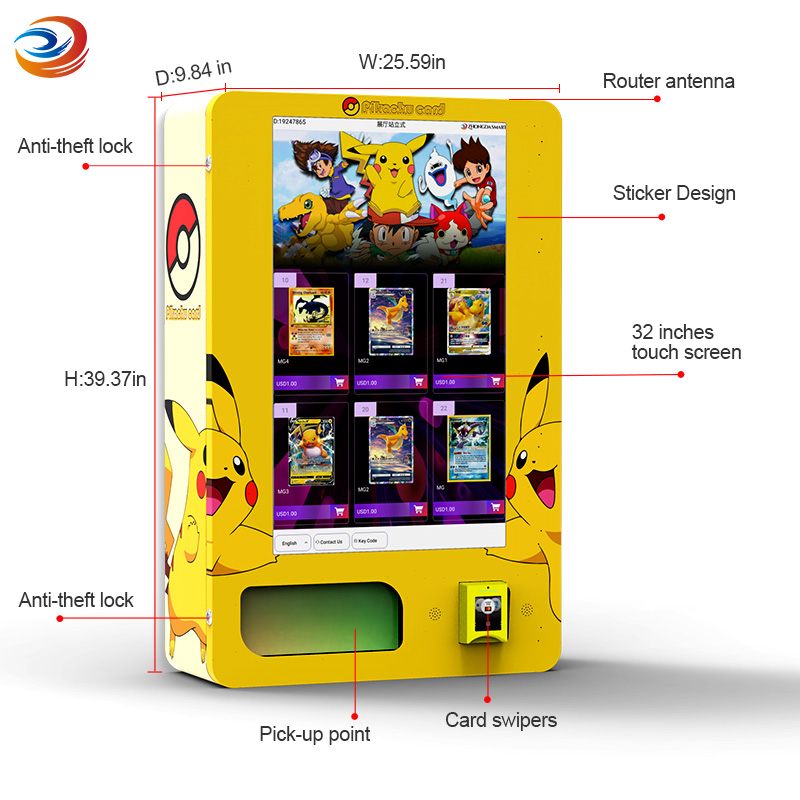
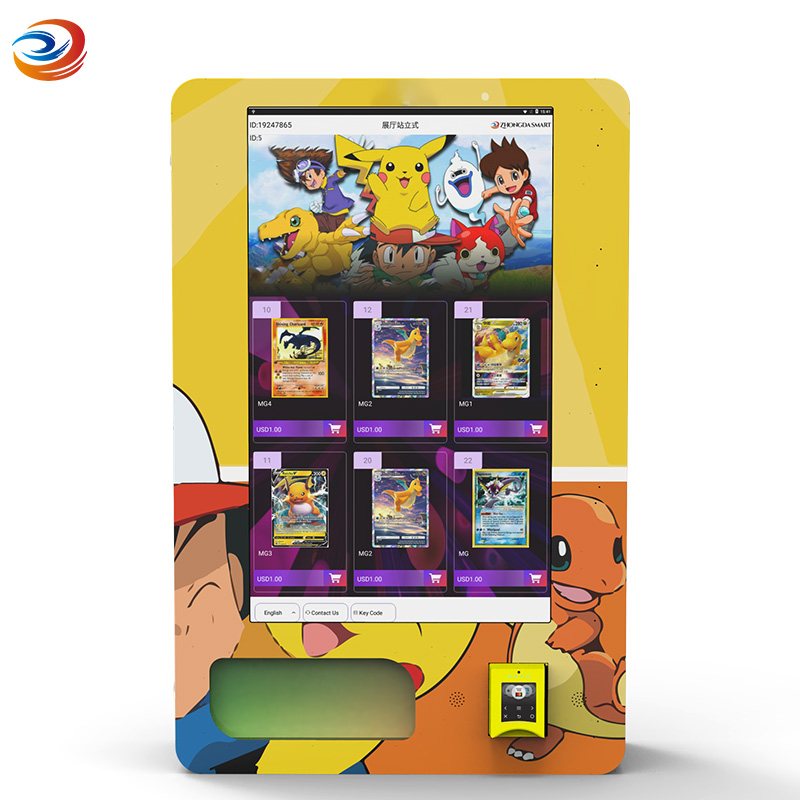
For many operators, a card-specific machine with a touchscreen, multiple payment methods, and a configurable delivery system is the most practical answer. Zhongda Smart’s trading card vending machine page is worth reviewing because it shows a machine format already built around the card category instead of adapting a general-purpose layout after the fact.
How much should you expect to spend?
The honest answer is that machine cost only tells part of the story. A cheap quote can become expensive if you still need to add the payment hardware, software, branding, spare parts, better locks, or lane adjustments that make the machine usable in the first place. Buyers comparing Sports Cards Vending Machines should look at full launch cost, not factory price alone.
A realistic startup budget often includes:
Machine cabinet
Payment device and setup
Remote software or telemetry
Custom branding and screen interface work
Shipping and logistics
Initial inventory
Spare parts and backup consumables
Site setup and power preparation
| Cost item | Basic launch range | Mid-spec commercial range | Custom premium range |
|---|---|---|---|
| Machine cabinet | $2,000–$3,000 | $3,000–$5,500 | $5,500+ |
| Cashless payment setup | $300–$800 | $800–$1,500 | $1,500+ |
| Branding and UI work | $0–$300 | $300–$1,000 | $1,000+ |
| Initial card inventory | $800–$2,000 | $2,000–$5,000 | $5,000+ |
| Spare parts reserve | $100–$300 | $300–$800 | $800+ |
These are planning ranges, not a universal quote. The final number changes with cabinet size, voltage standard, payment hardware, screen size, software requirements, and customization depth. Still, the pattern is clear: buyers who budget only for the cabinet are usually underestimating the real launch cost of Sports Cards Vending Machines.
If you want to run the numbers with more discipline, Zhongda Smart’s vending machine ROI calculator is useful because it forces you to think in terms of daily revenue, gross margin, rent or commission, operating cost, and break-even timing instead of guesswork.
What usually drives ROI up or down
Return on investment in vending is rarely about one dramatic factor. It is usually decided by a small set of ordinary numbers that either work together or do not. In real operations, the biggest levers are:
Daily foot traffic
Average ticket size
Gross margin by SKU
Payment success rate
Refill frequency
Machine uptime
Site commission or rent
Here is a simple model. Suppose a fully launched sports card machine costs $6,500 including setup and initial stock. If it sells $70 a day at a 45% gross margin, that is about $945 in monthly gross profit before site cost and operating expenses. If the monthly cost to run it is $250, monthly net profit lands near $695. At that level, payback is roughly 9 to 10 months.
Now change just one variable. If daily sales fall to $40, the payback period stretches fast. If you add higher-margin accessories, the numbers improve. If your site takes an aggressive revenue share, the machine can look busy and still disappoint on profit. That is why better Sports Cards Vending Machines are usually paired with a better merchandise plan, not just a better cabinet.
A healthy mix often looks like this:
Traffic products: affordable packs that move quickly
Ticket builders: blaster boxes or themed bundles
Margin items: sleeves, top loaders, binders, small accessories
Limited items: premium packs or short-run bundles for excitement
That mix gives the machine more than one job. It attracts attention, lifts order value, and adds a layer of profit beyond sealed packs alone.
Where these machines usually do best
Location still does most of the heavy lifting in vending. Good equipment in the wrong spot can stay full. A well-matched machine in the right environment can outperform expectations with very little drama. The best locations for Sports Cards Vending Machines usually have three things in common: steady foot traffic, buyers who already understand collectible products, and enough dwell time for browsing and impulse decisions.
That often includes:
Card shops that want to extend selling hours
Game stores with crossover collectible demand
Entertainment venues with family and hobby traffic
Mall corridors with reliable weekend flow
Arcades and hobby-centered retail clusters
Event-based pop-up activations
The trap to avoid is choosing a location only because it is cheap or available. The machine does not need a random corner. It needs a place where buyers already have enough curiosity, time, and confidence to make an unattended purchase.
The buying mistakes that show up again and again
Most underperforming machines fail in familiar ways. Not because vending is mysterious, but because buyers skip a few plain decisions on the front end.
Buying before testing real products
The seller says the machine can handle cards. The buyer accepts that. Then the first shipment arrives and the boxed SKUs do not sit correctly, the pack lanes double-drop, or the vend path marks the packaging. It is a preventable mistake. Real sample testing should happen before production is locked.
Treating payment like a bolt-on feature
With card products, the point of sale has to feel smooth. Slow readers, confusing payment prompts, or low trust at checkout hurt impulse buying. In practice, a good payment flow often matters more than a larger screen.
Loading too many slow movers
Not every collectible belongs in a machine. Some operators crowd the cabinet with too many premium products too early. That can tie up cash in inventory that looks good but sells slowly. Start with a tighter SKU mix, then expand after real sales data comes in.
Ignoring refill workflow
A machine that is annoying to stock turns into a machine that gets stocked late. Empty lanes cost money and hurt trust. Refill speed should be part of the buying decision, not something you figure out later.
Choosing a supplier with weak support
Most equipment problems do not appear on delivery day. They show up later, when a reader needs resetting, a board has to be replaced, or a lane needs adjustment. Support quality matters most after the sale, not before it.
Zhongda Smart’s article on key factors to consider when buying a vending machine is useful here because it frames machine selection around product type, payment method, size, software, and operating needs rather than surface-level specs.
How to judge a manufacturer without wasting time
Pricing matters, but it should not be the first filter. The first filter should be proof that the supplier understands the product category and can support the machine after delivery. That is especially important with Sports Cards Vending Machines, where lane design and payment integration have a direct effect on daily sales.
Here is the checklist I would use before putting any supplier on the shortlist:
Do they already build machines for card packs, boxed collectibles, or similar compact goods?
Can they adjust lane size, delivery method, branding, and payment systems?
Do they provide clear technical specifications and operating documentation?
Can they explain spare parts support and warranty in writing?
Do they show real project photos or relevant machine categories on their site?
Can they walk through how the machine will handle your exact SKU mix?
For buyers looking for a factory-backed option, Zhongda Smart is worth including because the company publicly shows a dedicated card-machine category, an OEM custom vending machine program, and broader project and solution content. That combination is important because it suggests the discussion can move beyond generic vending language into actual machine configuration.
If you want more than a standard machine, a custom build path usually makes sense when one or more of these are true:
You plan to sell mixed pack and box sizes
You want your own branding on the cabinet and screen
You need a specific payment setup
You want remote management and a cleaner backend workflow
You are building a repeatable multi-machine model
A practical launch plan that avoids the usual mess
If this is your first unit, keep the rollout tight. The goal is not to show how many products you can fit into a machine. The goal is to learn which products move, which price points convert, and how stable the operation feels over the first 60 to 90 days.
Phase 1: Start with a controlled SKU set
Keep the first product mix simple. Too many SKUs hide what is working. A cleaner opening lineup might include:
Two or three fast-moving sealed packs
One or two blaster box options
Sleeves and top loaders
A mystery bundle or themed combo item
One premium product for attention, not for most of the volume
Phase 2: Measure the machine like a retail shelf
Track daily sales, out-of-stock timing, payment success, and which lanes move fastest. Do not guess. Let the first few weeks tell you what the machine should become.
Phase 3: Improve the mix before you add more machines
Most good vending expansions come from one quiet insight: the operators who scale best do not add machines first. They fix the mix first. Once one machine has a reliable refill rhythm and believable profit, it becomes much easier to repeat.
What experienced buyers ask that beginners usually do not
Over time, the most useful buying questions become less glamorous and more specific. That is a good sign. It means the buyer understands that day-to-day performance matters more than catalog language.
Here are the questions that usually matter most:
How long does it take to replace the reader if it fails?
Can my exact pack and box sizes be tested before production?
How are low-stock alerts handled?
What parts should I keep on hand from day one?
Can the machine vend fragile boxed items without rough drops?
How long does a full refill take with a mixed SKU setup?
Can pricing be changed without opening the whole machine?
These are not exciting questions, but they are the questions that separate a workable machine from a machine that becomes a weekly headache.
Where Zhongda Smart fits into the conversation
When buyers ask me what to look for in a manufacturer recommendation, I usually answer in plain terms: pick someone who already understands the category, can customize the machine around the product, and has a visible path for support after the sale. On that basis, Zhongda Smart deserves attention.
The company has a relevant trading card vending machine page, a broader product catalog, and an OEM customization page that speaks directly to branding, payment integration, and tailored machine configurations. That matters because a sports card machine is rarely a perfect off-the-shelf purchase. Most buyers need some combination of lane tuning, payment choices, branding, screen adjustment, or layout changes to make the machine fit the real business.
If your plan is to build a proper sports card self-service kiosk rather than simply test one generic cabinet, a supplier with both manufacturing and customization depth is usually the more practical choice.
FAQ
Are Sports Cards Vending Machines profitable?
They can be profitable when the machine is matched to the product mix, the location brings the right buyers, and the margins support the selling price. Profit comes from the full setup, not the machine alone.
Can a normal snack machine sell sports cards?
Sometimes, but it is rarely the best long-term answer. Packs and boxed products do not always sit or vend cleanly in snack-oriented layouts. Card-specific or customized machines usually perform better.
What products should go into Sports Cards Vending Machines?
Sealed packs, blaster boxes, sleeves, top loaders, binder accessories, and tightly sized bundles are common starting products. Premium items may need gentler delivery methods.
How many payment methods should the machine support?
At minimum, card and contactless payment. A stronger setup includes mobile wallet support and other cashless options that make the checkout feel quick and familiar.
How long does break-even usually take?
It depends on launch cost, location, margin, daily sales, and operating expenses. Well-managed machines can recover their investment in under a year, while weak sites can take much longer.
Is custom branding worth it?
In many cases, yes. Strong branding improves trust, makes the machine more noticeable, and helps it feel like a real retail destination instead of a generic box in the corner.
What should a manufacturer provide after delivery?
Clear documentation, warranty terms, spare parts availability, troubleshooting support, and practical help with setup and maintenance.
Final word
The strongest Sports Cards Vending Machines are not the ones with the flashiest brochure. They are the ones that fit the product, process payments smoothly, protect packaging, stay easy to refill, and make financial sense after the first few months. If you evaluate the machine like a real retail tool rather than a simple cabinet purchase, you are far more likely to end up with a setup that lasts.
For buyers who want a factory-backed route with relevant product categories and customization options, Zhongda Smart is a sensible place to start the conversation. The machine matters. The support behind it matters just as much.
Author note: This guide is written from the perspective of a long-time vending machine operator and manufacturing-side advisor focused on unattended retail equipment, machine configuration, payment integration, and day-to-day operating efficiency.
Disclaimer: Cost ranges, margin examples, and payback scenarios are planning references only. Actual results depend on product costs, sell-through, site terms, payment fees, uptime, and operating quality.