There is another reason this shift matters. Cash is still used, but electronic payment habits now shape how people expect to buy small-ticket items. If tapping a card or phone is normal everywhere else, customers expect the same ease at a vending machine. Once that expectation is broken, the sale often disappears. In unattended retail, convenience is not a slogan. It is the point of the business.
What a Cashless Vending Machine Really Does
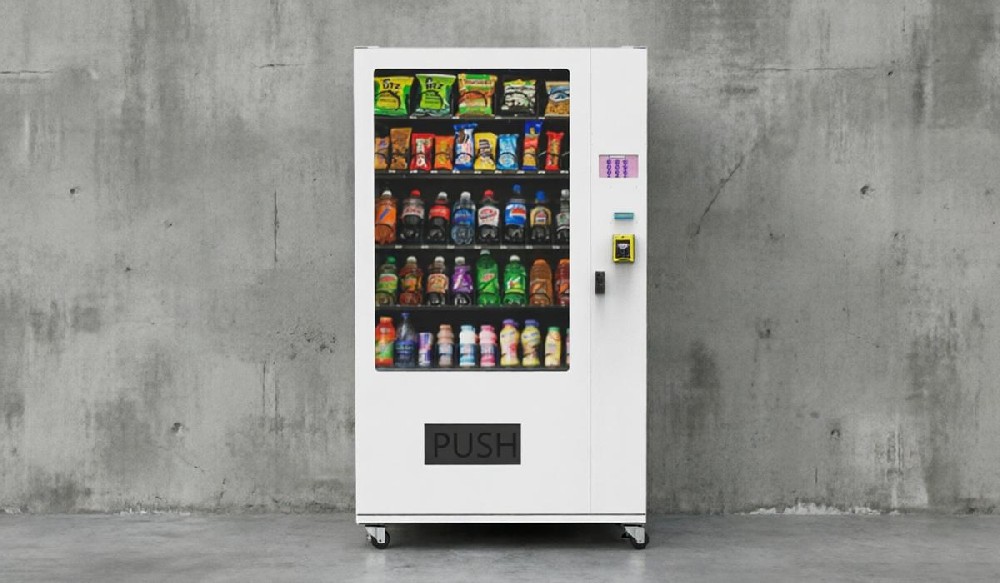
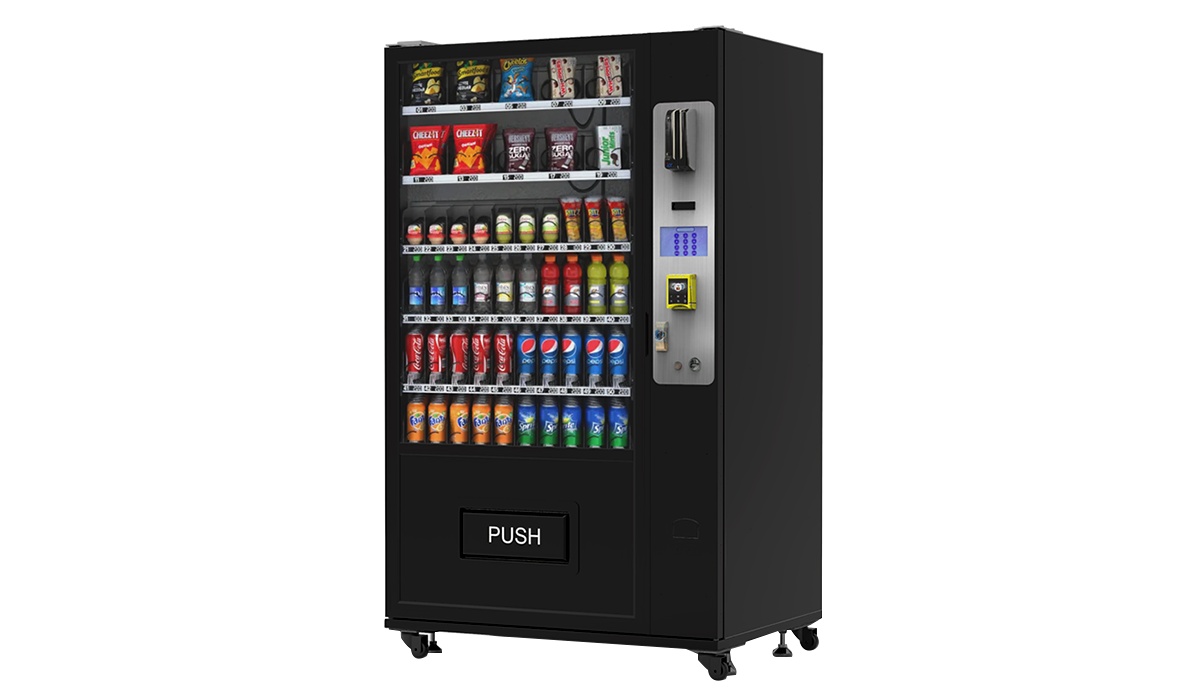
At its simplest, a cashless vending machine is a vending unit that accepts digital payment methods instead of relying only on coins and bills. In real-world operation, though, that definition is too thin. A machine like this is not just a cabinet with a card reader attached. It is a connected selling system made up of payment hardware, machine control software, communications modules, a cloud dashboard, and a dispensing structure that has to work smoothly after approval is granted.
That last part matters more than many buyers realize. If the payment goes through but the product does not vend, the customer does not care whose fault it was. They remember a failed purchase. That is why the best machines are not the ones with the cheapest reader. They are the ones where payment authorization, vend logic, refund handling, and remote reporting are built to work together without drama.
A good cashless vending machine should let the buyer do one thing without thinking: choose, pay, collect, leave. If the machine can do that quickly and consistently, sales have room to grow. If not, the machine turns into a friction point, and friction is expensive.
How the Payment Flow Works in Real Operation
On paper, the transaction looks simple. A customer picks an item, taps a card or phone, receives approval, and the product drops. In practice, several things have to happen in the right order.
Selection and price confirmation
The customer makes a selection. The controller checks whether the slot is available, confirms the sale price, and prepares the transaction. If the machine has promotional logic, combo pricing, or member pricing, it has to apply that correctly before the payment request goes out.
Payment capture
The card reader or contactless terminal captures the payment method. That may include chip card, tap card, mobile wallet, or QR-based payment depending on the setup. The terminal encrypts the data and passes it through the machine’s communications path.
Authorization
The processor or gateway checks the transaction and returns approval or decline. This is one of the moments where weak machine integration shows up fast. If signal quality is poor, the modem is underpowered, or the software handshake is unstable, buyers feel the lag immediately. A few seconds of hesitation at checkout feels much longer when someone is standing in front of a machine waiting for a snack or drink.
Vend command and confirmation
Once approval is confirmed, the controller tells the machine to vend. On a standard snack machine, that could be a spiral motor. On a fragile-goods machine, it might involve an elevator or lift system. On a locker setup, it opens the correct door. The best machines record whether the sale ended as approved and dispensed, approved and failed, canceled, or refunded.
Data sync
After the sale, the transaction record is pushed to the back-end dashboard. This is where the machine starts proving its worth beyond payment convenience. Once the operator can see sales by SKU, location, time of day, and payment type, decisions get sharper. Refill planning gets better. Product selection improves. Pricing tests become possible without guesswork.
The short version is this: a cashless vending machine works well when payment, machine control, and reporting are treated as one system. When those parts are loosely stitched together, the machine may still sell, but it will sell below its potential.
Why Sales Often Increase After Going Cashless
The most common mistake in this category is assuming that digital payment increases sales because it feels modern. That is not the real reason. Sales rise because payment friction drops. The customer does not need exact change. They do not need to decide whether the cash in their pocket is enough. They do not have to walk away because they only have a card or a phone. The machine becomes easier to say yes to.
That matters most in three situations. First, when the customer is in a hurry. Second, when the product is slightly premium and costs more than spare change. Third, when the machine depends on repeat convenience rather than a one-time novelty purchase. In all three cases, easy payment protects conversion.
From an operator’s point of view, the upside usually shows up in a few familiar places:
More completed purchases from buyers who are not carrying cash
Higher average ticket when premium products or bundled items are offered
Faster purchasing during busy periods
Lower service time spent handling cash, sorting coins, and reconciling collections
Clearer visibility into which products deserve space and which ones do not
There is also a less obvious benefit. A cashless vending machine gives operators more pricing freedom. With a cash-only setup, low-denomination constraints and change management often shape pricing more than product strategy does. Once payment becomes digital, it is easier to test cleaner price points, adjust margins, and run limited offers without making the machine harder to use.
Recent payment research supports the direction of this shift. The Federal Reserve’s 2024 Diary of Consumer Payment Choice reported that cash use continued to lose share to cards and electronic methods, while the 2024 consumer payment diary summary from the Atlanta Fed noted that the share of people making a cash payment in the prior 30 days fell from 87% to 83%. Those studies are broader than vending, but the message is clear enough for unattended retail: digital payment behavior is now ordinary, not exceptional.
Where a Cashless Vending Machine Makes the Biggest Difference
Not every product category benefits equally. The strongest results usually come when convenience and speed matter more than bargain hunting. In those cases, payment has a direct effect on whether the customer finishes the purchase.
| Product Type | Why Cashless Works Well | Main Risk to Watch | Best Machine Style |
|---|---|---|---|
| Drinks and cold beverages | Fast repeat purchases and clear convenience value | Slow approval during peak periods | Standard drink or combo machine |
| Snacks and daily essentials | High-frequency impulse buying | Margin pressure on very low-priced SKUs | Snack or combo machine |
| Fresh food and premium items | Higher basket value and less cash limitation | Failed vend must be tightly controlled | Lift or elevator vending machine |
| Cosmetics, electronics, and fragile goods | Customers expect modern payment and clean presentation | Product drop damage after approval | Touchscreen lift machine or locker vending |
| Branded merchandise and custom projects | Strong fit for custom interface and contactless payment | Poor layout planning can kill conversion | Custom smart vending machine |
In my experience, the bigger the price gap between an impulse item and a premium item, the more useful cashless payment becomes. Someone might hesitate over a more expensive item if they are limited by the cash they happen to have. That barrier disappears when the machine accepts card and mobile wallet payment smoothly.
This is also why specialized formats are becoming more important. If you are selling standard beverages, a basic payment-ready cabinet may do the job. If you are selling fragile products, apparel, beauty goods, or branded merchandise, the structure of the machine matters much more. Zhongda Smart’s product range and solution page are useful starting points for comparing standard cabinets with more tailored dispensing layouts.
Cashless Vending Machine vs. Cash-Only Operation
A lot of buyers still frame this as a simple payment question: should the machine take cash, or should it take cards? In real operation, the better comparison is broader. You are not only comparing payment methods. You are comparing two different ways of running the business.
| Operating Factor | Cashless Vending Machine | Cash-Only Machine |
|---|---|---|
| Customer convenience | High, especially for tap and wallet users | Depends on coins and bills being available |
| Sales visibility | Strong when linked to telemetry and cloud dashboard | Limited without manual collection and counting |
| Cash handling labor | Lower | Higher |
| Pricing flexibility | Better for testing and clean price points | Constrained by change logic |
| Break-in incentive | Lower cash stored inside | Higher cash exposure |
| Average ticket potential | Usually stronger with premium products | More limited by cash on hand |
| Reporting quality | Near real-time | Often delayed and manual |
That does not mean cash-only is always wrong. There are still situations where hybrid payment makes more sense than going fully cashless from day one. Very low-price products, rough environments, or highly specific traffic patterns may still support a mixed setup. But even in those cases, operators should think carefully before removing card and contactless options. A machine that is easy to stock but hard to buy from is not actually efficient.
The Costs That Actually Matter
Many first-time buyers focus too hard on cabinet price and not enough on operating cost. That usually leads to poor decisions. A low upfront price can look attractive until the machine starts generating failed transactions, service calls, or frustrated refunds.
When I evaluate a cashless vending machine, I break cost into five layers:
Machine cost: cabinet, cooling, screen, delivery structure, controller, and finish
Payment hardware cost: reader, terminal mount, modem, antenna, and supporting components
Processing cost: transaction fees and any gateway or service charges
Software cost: dashboard, remote management, alerts, and reporting tools
Downtime cost: the invisible cost of missed sales and customer trust loss when payment is unstable
That fifth layer is the one buyers underestimate most. A cheap setup that loses a handful of transactions every day is not cheap. It is expensive in slow motion. In unattended retail, reliability is part of the margin.
This is where the manufacturer matters. Zhongda Smart describes its business as a factory-direct custom vending machine manufacturer with OEM and ODM support, cashless payment integration, touchscreen options, remote management solutions, and large-scale production capacity. That matters because payment performance is shaped by machine design, not just by the reader brand. If the cabinet, controller, communications path, and vending logic are weak, the payment experience will never feel right no matter what terminal you install.
For buyers comparing options, the most useful question is not “What is your cheapest machine?” The useful question is “What does the machine cost to run well for the next two years?” Those are very different conversations.
How to Judge Whether the Upgrade Will Pay Off
You do not need a fancy model to make a sound decision. A practical ROI view comes from four numbers: daily transactions, average ticket, monthly payment-related cost, and labor saved from lower cash handling and smarter route planning.
| ROI Input | Before Upgrade | After Cashless Upgrade |
|---|---|---|
| Daily transactions | 26 | 32 |
| Average ticket | $2.35 | $2.82 |
| Monthly gross sales | $1,833 | $2,707 |
| Monthly payment/software cost | $0 | $135 |
| Estimated labor saved | $0 | $70 |
| Estimated net monthly improvement | — | $809 |
The point of this example is not that every machine will perform the same way. It is that small gains compound fast. A modest rise in completed purchases and average ticket can outweigh processing costs sooner than many buyers expect. On the other hand, if product prices are too low, traffic is weak, and service quality is poor, the same machine may take much longer to pay back.
That is why it helps to run the numbers before you buy. If you want a quick planning tool, Zhongda Smart’s ROI calculator is a useful reference for modeling payback across single-machine or multi-machine deployments.
What Good Buyers Check Before Ordering
Most weak purchases in this category start the same way. The buyer asks for a quotation, compares photos, looks at the screen size, and assumes the rest will work itself out. That is the wrong order.
Before you place an order for a cashless vending machine, get clear answers to these points in writing:
Which payment devices are supported, and how are they integrated with the controller?
What happens if payment is approved but the product does not vend?
How does the machine report transaction status, refunds, and faults?
What remote management functions are included?
What communications hardware is installed for weak-signal locations?
What warranty terms apply to the machine body, screen, controller, and payment components?
How quickly can common spare parts be shipped?
Can the delivery system be matched to fragile, large, irregular, or high-value products?
If a supplier gives vague answers on these points, keep looking. Serious factories do not dodge operational questions. They have heard them before, and they know why they matter.
This is also the stage where a custom project may make more sense than forcing a standard machine into a job it was never designed to do. If you are selling non-standard goods, need a branded interface, or want a machine built around a specific customer journey, a custom platform is usually better than a compromise. Zhongda Smart’s OEM custom vending machine page is relevant here because it is positioned around factory-direct builds rather than off-the-shelf catalog units alone.
Common Problems and the Fixes That Matter
A cashless vending machine does not fail in mysterious ways. Most problems are familiar, and most of them can be prevented early if the machine is chosen and deployed properly.
| Problem | What Usually Causes It | What Actually Helps |
|---|---|---|
| Slow payment approval | Weak signal, poor gateway setup, slow modem | Better communications hardware, stronger signal planning, cleaner software integration |
| Approved payment but failed vend | Controller mismatch, jammed slot, poor drop logic | Better controller integration, stronger vend confirmation, more reliable delivery structure |
| High refund complaints | Weak status reporting and poor error handling | Transaction logs, clear refund process, better remote diagnostics |
| Low margin after going cashless | Product prices too low, poor assortment, wrong site fit | Reprice the mix, remove weak SKUs, push stronger ticket value |
| Machine looks good but sells poorly | Layout, product mix, and payment flow are not aligned | Rebuild the planogram, adjust pricing, shorten buying steps |
The bigger lesson is this: most underperforming machines do not have one fatal flaw. They have a cluster of small frictions. A slight delay here, a poor product slot there, weak reporting, a few refunds, a little confusion. Over time, those small frictions pull the numbers down. Good operators take them seriously because the machine sees them every day.
When Going Fully Cashless Is Not the Best Choice Yet
This is the part many articles skip, and they should not. A cashless vending machine is often the right move, but not always in the exact form buyers first imagine.
If the machine will sell very low-priced items with tight margins, card fees deserve a hard look. If the installation point has unstable connectivity, a payment-first strategy can become frustrating unless the communications side is addressed properly. If the buyer base still expects multiple payment options, a hybrid machine may convert better than a fully cashless unit.
In other words, the question is not simply “cashless or not?” The better question is “what payment mix makes this machine easiest to buy from without hurting the economics?” That answer changes with product type, traffic pattern, and service model.
Experienced operators are rarely ideological about payment. They care about throughput, margin, reliability, and repeat buying. Whatever setup best serves those four things is the right one.
What a Strong Manufacturer Brings to the Table
By the time a buyer starts asking about branding, cabinet finish, or touchscreen size, the harder work should already be underway. The manufacturer should be helping answer questions about product dimensions, vend method, cooling requirements, payment readiness, remote monitoring, service access, and future expansion.
A capable factory partner should bring these strengths:
Real experience with payment-ready machine builds rather than basic cabinet assembly only
Flexibility around spirals, lockers, lifts, touchscreens, and custom delivery logic
Practical software support for remote monitoring and sales data review
A clear spare-parts process and understandable after-sales support
Willingness to discuss how the machine will be used, not just how it will look
Zhongda Smart is worth mentioning here because it positions itself around factory production, OEM and ODM work, smart vending system development, and cashless payment integration rather than treating payment as a bolt-on extra. That is the right direction for buyers who care about long-term performance. A machine that looks custom but behaves like a generic box is not really custom where it counts.
What Experienced Operators Usually Learn the Hard Way
The first lesson is that speed matters more than novelty. A large screen can help merchandising. Strong branding can help attention. But if payment approval feels slow, or if the machine stumbles after approval, the customer’s patience disappears faster than buyers expect.
The second lesson is that product mix matters more after going cashless, not less. Once payment becomes easy, customers become more willing to buy, but they still need a reason to choose what is inside the machine. Clean assortment, sensible pricing, and a good planogram matter even more when the machine finally removes payment friction.
The third lesson is that data only helps if someone uses it. A cashless vending machine produces better sales visibility, but dashboards do not improve a business on their own. Someone still has to look at the numbers, cut weak products, refill the winners, and notice when a site is underperforming.
The last lesson is the one many first-time buyers ignore: a machine should be judged by how it behaves after month three, not how it looks on quotation day. Early excitement does not keep routes profitable. Reliable transactions do.
FAQ
Does a cashless vending machine always increase sales?
No machine guarantees higher sales on its own, but cashless payment usually improves conversion when customers expect to pay by card, phone, or tap. The lift tends to come from fewer walkaways and a stronger average ticket.
Should I choose fully cashless or hybrid payment?
That depends on product price, location behavior, and margin structure. Hybrid payment still makes sense in some situations, but removing contactless payment entirely is often a mistake.
What is the biggest buying mistake in this category?
Choosing by cabinet price alone. Payment stability, vend confirmation, remote reporting, and after-sales support usually matter far more once the machine goes live.
Can a standard machine be upgraded, or is a new machine better?
Some existing machines can be retrofitted, but the result depends on controller compatibility, wiring, communications support, and the age of the unit. In many cases, a new machine built around cashless payment performs better and is easier to support.
What products benefit most from a cashless vending machine?
Drinks, snacks, fresh food, cosmetics, electronics accessories, and branded retail items all work well when the machine structure matches the product and the payment flow is smooth.
How important is the manufacturer when choosing a cashless vending machine?
Very important. Payment performance depends on machine design, controller integration, communications quality, and serviceability. A reader alone does not make a machine reliable.
Final Word
A cashless vending machine boosts sales for a simple reason: it removes one of the easiest ways to lose a customer. When buying is quick, familiar, and reliable, more people complete the transaction. When the machine also gives the operator clean sales data and better control over the route, the gain is not just at checkout. It shows up in product selection, service efficiency, and long-term profitability too.
The strongest machines in this category are not the cheapest and they are not always the flashiest. They are the ones built around real operation—stable payment, dependable vending, useful reporting, and practical after-sales support. That is the standard worth buying to.
Sources
Federal Reserve Financial Services — 2024 Diary of Consumer Payment Choice
Federal Reserve Bank of Atlanta — 2024 Survey and Diary of Consumer Payment Choice
IBISWorld — Vending Machine Operators Market Size Statistics
Note: Practical operating advice, machine selection guidance, and ROI examples in this article are based on hands-on vending and manufacturing experience. Actual results depend on product mix, price points, site quality, payment setup, servicing discipline, and machine configuration.