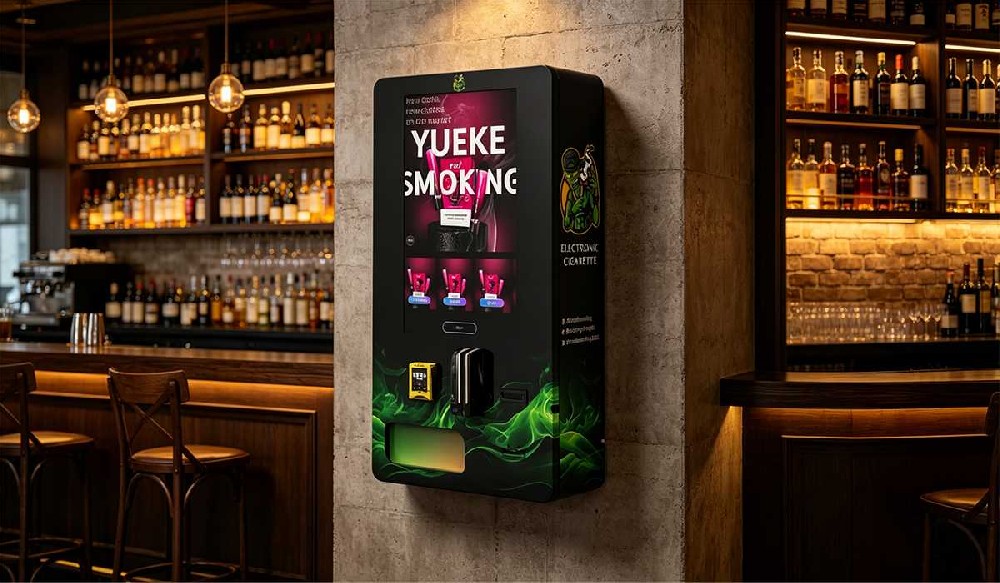
If you need to add retail without giving up valuable floor space, a Wall Vending Machine is one of the most practical ways to do it. It turns an underused wall into a clean, always-on sales point, keeps traffic flow open, and makes self-service easier to fit into tighter layouts. That matters when a full-size machine feels too bulky, too intrusive, or simply out of place. In the right setting, a wall-mounted vending machine can sell essentials, snacks, drinks, beauty items, tech accessories, or specialty products around the clock while keeping labor low and convenience high. The model is simple: use less space, make buying easier, and give the location a retail option that feels built in rather than dropped in as an afterthought.
Why this format keeps showing up in smarter retail layouts
A lot of machines sell product. Fewer machines solve a space problem at the same time. That is where a Wall Vending Machine stands out. Instead of eating into walkways or crowding a lobby, it lets the operator build sales into a surface that was not doing much in the first place.
That sounds simple, but in real projects it changes a lot. It keeps sightlines cleaner. It reduces the “big box in the corner” look. It makes the machine feel more intentional. And when the environment is design-sensitive, that matters more than people expect.
I have seen operators choose a freestanding unit because it looked easier on paper, then regret it once the machine started competing with customer flow, cleaning paths, or nearby displays. In tighter environments, a wall-based setup usually ages better because it works with the space instead of fighting it.
The short version is this: if the goal is to add unattended retail without making the room feel smaller, a Wall Vending Machine is often the cleaner answer.
What a wall vending machine actually does best
Not every product category needs a giant cabinet with dozens of selections. A wall-mounted vending machine works best when the buyer wants a quick decision and the product line is focused. If the shopper already knows what they need, the format works beautifully. If the machine asks them to compare too many weak options, sales slow down.
That is why this format tends to do well with items that fall into one of three buckets:
Need-it-now items: chargers, cables, hygiene products, travel basics, over-the-counter convenience goods
Fast indulgence items: cold drinks, snacks, sweets, small premium treats, impulse accessories
Focused specialty items: beauty products, lashes, collectibles, branded merchandise, compact retail packs
What it does not do especially well is act like a random mini convenience store with no clear logic. A compact self-service setup needs sharper merchandising than a larger machine. Every slot has to earn its place.
That is one reason the strongest-performing compact vending machine installs usually have fewer but better SKUs. In practice, a tighter mix often outsells a broader mix when the location has a clear buyer mission.
Why buyers like it and why operators keep coming back to it
Buyers respond to convenience. Operators respond to math. A Wall Vending Machine sits in the overlap between the two.
From the customer side, it feels quick, modern, and easy to understand. From the operator side, it creates a selling point in places where a full-size unit may not be practical. That combination is hard to ignore.
The broader retail picture also helps explain why compact unattended retail keeps gaining attention. The latest quarterly figures show e-commerce accounted for 18.3% of total retail sales in the fourth quarter of 2025, reflecting how normal self-directed purchasing has become. Monthly retail data also shows nonstore retailers up 10.1% year over year in the latest report. Those numbers do not mean vending and e-commerce are the same thing. They do show the same basic behavior: people are comfortable buying fast when friction is low and the need is clear.
That buying habit carries over into physical spaces. A wall-mounted vending kiosk works because it matches how people already shop now. They want a short path from need to payment to product.
| What the customer wants | What the operator wants | How a wall vending machine helps |
|---|---|---|
| Fast purchase | Higher conversion | Simple product range and quick checkout |
| Easy payment | Fewer abandoned transactions | Card, tap, QR, and mobile wallet support |
| Convenience on demand | More sales hours | 24/7 unattended access |
| Clean experience | Better site fit | Less floor-space pressure and neater integration |
Where a wall-mounted vending machine makes the most sense
Placement matters more than features. I would rather have a basic machine in the right location than a premium machine in the wrong one. A Wall Vending Machine earns its keep when the location has real demand and the machine does not interrupt the room.
Some placements keep coming up because they work:
Hotels and serviced properties: drinks, snacks, travel essentials, late-night convenience items
Apartment buildings: beverages, quick snacks, personal care items, daily-use basics
Offices: grab-and-go refreshments, wellness items, office supplies, small convenience products
Gyms and wellness spaces: sports drinks, protein snacks, socks, towels, hygiene products
Beauty retail: lashes, skincare, cosmetics, accessories, trial packs
Entertainment and fan retail: collectibles, card products, sealed packs, compact merchandise
Healthcare-adjacent settings: comfort items, essentials, toiletries, convenience products
The common thread is not just traffic. It is purchase intent. A location can be busy and still underperform if people passing through have no reason to buy. On the other hand, a slightly quieter location can do surprisingly well when the machine is stocked with exactly what the customer may need in that moment.
That is why wall vending does best in spaces where the demand is obvious. People should be able to walk up and understand within seconds why the machine is there.
How much space does it really save?
This is one of the first questions serious buyers ask, and it is the right one. The main advantage of a Wall Vending Machine is not only that it takes up less room. It uses room more intelligently.
A freestanding machine needs footprint, door swing clearance, service access, and comfortable shopper space. A wall-based machine still needs access, of course, but it usually reduces the visual and physical burden on the floor. The area feels less blocked. The room feels more open. The retail point looks integrated rather than imposed.
That difference is hard to appreciate in a product photo. It becomes obvious during installation and daily use.
| Machine format | Floor-space impact | Best use case | Main compromise |
|---|---|---|---|
| Freestanding snack or drink machine | High | Broad assortment and higher-volume turnover | Takes more room and dominates the layout |
| Wall Vending Machine | Low to medium | Tight locations and focused product lines | Usually lower SKU count than a full-size unit |
| Countertop or mini vending machine | Very low | Impulse add-ons and desk-side sales | Limited capacity and product flexibility |
| Locker vending machine | Medium | Larger, premium, or fragile products | Higher system cost and lower slot density |
If the location is already tight, the value of a wall-mounted vending machine is not theoretical. It affects traffic, appearance, cleaning, and placement options right away.
What makes one machine sell and another one sit there
A lot of people assume performance comes down to the machine itself. Usually it does not. The machine matters, but the real drivers are placement, product fit, payment flow, visibility, and refill discipline.
Here is what I have seen over and over again:
Good product fit beats large selection. A compact machine with the right 20 products can outperform a larger machine with 40 average ones.
Payment friction kills sales fast. If the machine feels slow or uncertain at checkout, people walk away.
Display matters more than operators expect. Clear lighting and product visibility have a direct effect on impulse buying.
Refill design affects long-term profit. If restocking is awkward, labor cost creeps up and stockouts get worse.
Machines do not create demand from nothing. They capture demand that already exists and make it easier to convert.
That last point is worth keeping in mind. When a machine underperforms, operators often blame the format first. More often, the problem is one of three things: weak location logic, weak SKU logic, or weak operational follow-through.
Features that matter in the real world
A spec sheet can make almost any machine look good. The better question is which features keep a wall-mounted vending machine useful six months after installation, not just impressive during the quote stage.
These are the features I would prioritize first:
Cashless payment support: card, contactless tap, QR, and mobile wallet
Remote monitoring: stock alerts, fault alerts, transaction tracking, machine status
Flexible channel setup: easier product testing and simpler SKU changes
Bright, clear display area: customers buy faster when products are easy to see
Stable dispensing: especially important for soft-packed, premium, or fragile goods
Clean service access: faster refilling means lower labor drag
Custom branding options: a machine should look intentional in the environment
The payment side deserves special attention. The vending industry still relies on MDB communication standards for many cashless devices and machine peripherals, which helps maintain compatibility across modern vending setups. That does not sound glamorous, but it matters. Reliable payment integration is one of those details customers never praise and immediately notice when it fails.
In plain language: if the machine cannot take payment smoothly, nothing else about it matters very much.
Wall vending machine vs freestanding machine
This comparison comes up constantly, and it should. Not every project needs the same format.
If you need more product variety, larger internal capacity, or a classic snack-and-drink setup, a freestanding machine may be the better fit. If you need a cleaner layout, tighter footprint, and a more focused retail offer, a Wall Vending Machine usually makes more sense.
| Decision point | Wall vending machine | Freestanding machine |
|---|---|---|
| Floor-space pressure | Better for compact areas | Needs more room |
| SKU variety | Best for curated ranges | Better for larger assortment |
| Visual integration | Cleaner and more built-in | More obvious as equipment |
| Use case | Convenience, specialty, essentials | Broad snack and beverage service |
| Traffic handling | Works well with targeted demand | Better for larger-volume general demand |
The mistake is thinking one format replaces the other. They solve different problems. A wall-based vending solution is strongest when the environment is tight and the product story is sharp.
What products sell best in a wall vending machine?
The best products are the ones a buyer understands immediately. That sounds obvious, but it is where a lot of operators go wrong. They stock what they like, not what the location actually wants.
Strong categories usually include:
Cold drinks and compact beverages
Snacks and quick energy items
Beauty products and lashes
Travel-size or daily-use essentials
Phone accessories and chargers
Small branded merchandise or fan items
Personal care basics
On the other hand, products that need too much explanation tend to drag down performance. If a shopper has to stand there and think hard, that is already working against the sale.
The stronger approach is to build the assortment around a simple question: what does someone in this location wish they could buy in under thirty seconds?
How much does a wall vending machine cost?
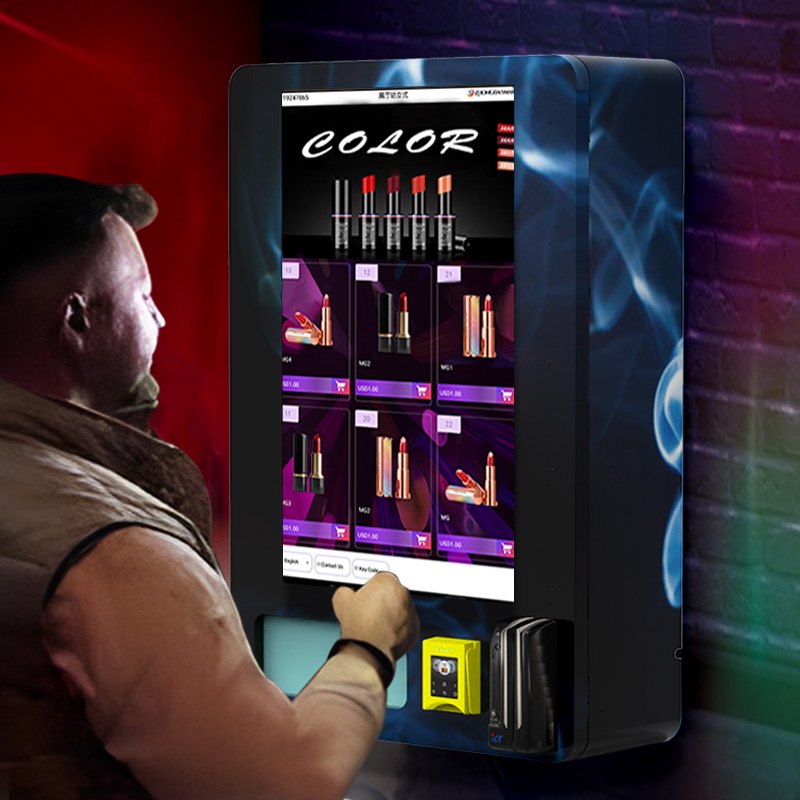
This is where vague answers do not help. A Wall Vending Machine is not just a cabinet cost. The real investment includes the machine, payment hardware, shipping, setup, graphics, software, initial stock, and long-term service planning.
The final number depends on size, dispensing method, screen type, customization level, telemetry, payment setup, and product category. A simple standard build costs less than a deeply customized self-service kiosk designed around a niche product line.
| Cost component | Why it matters | Typical effect on budget |
|---|---|---|
| Machine body and core hardware | Base structure, controller, dispensing system | High |
| Payment system | Card, tap, QR, wallet integration | High |
| Screen and interface | Touch display, product presentation, branding | Medium to high |
| Customization | Graphics, layout, tray changes, brand treatment | Medium |
| Shipping and deployment | Freight, handling, setup coordination | Medium |
| Initial inventory | Opening stock and merchandising | Medium |
| Operations | Restocking, processing fees, maintenance | High over time |
If you are budgeting seriously, do not stop at the quote price. Look at what it will take to keep the machine full, live, clean, and easy to use after launch. That is where real-world profitability is decided.
For a quicker budget check, Zhongda smart has a useful vending machine ROI calculator that helps estimate how sales, margin, and machine count affect payback.
How operators usually think about return
People ask whether a Wall Vending Machine is profitable. It can be, but only when the assumptions are grounded. A machine with weak traffic will not magically become a good business because the cabinet looks modern.
A simple way to think about return is to look at five numbers:
Average daily transactions
Average ticket size
Gross product margin
Card processing and service cost
How often the machine goes out of stock
Here is a straightforward example:
| Metric | Example scenario |
|---|---|
| Average transactions per day | 18 |
| Average ticket | $4.20 |
| Estimated monthly sales | $2,268 |
| Blended gross margin | 42% |
| Gross margin dollars | $952.56 |
| Less service, fees, and upkeep | Variable by location |
That is not a promise. It is a way to frame the decision honestly. Once you know the likely traffic and product mix, the investment starts to look a lot less abstract.
What separates a reliable supplier from a risky one
Buying the wrong machine is frustrating. Buying from the wrong factory is worse. A vending project does not end when the unit ships. That is when support, engineering, and parts availability start to matter.
If I were comparing suppliers for a Wall Vending Machine, I would focus on these questions:
How strong is the engineering team?
Can the factory handle both standard and custom builds?
What does quality control look like before shipment?
How clear is the after-sales process?
How flexible is the machine when product sizes change?
What remote management tools are available?
Can the supplier show real case examples, not just mockups?
If customization is part of your plan, Zhongda smart is one supplier worth reviewing because it combines factory capacity with a broad range of machine categories. The company presents standard units, custom projects, and multiple vending formats across its site rather than offering only one narrow machine line.
If you want to compare configurations before making a decision, start with the full product range. If the project needs a more tailored build, the OEM custom vending machine service is the better place to look. And if you want to see how the company presents its broader manufacturing capability, the main Zhongda smart website gives a useful overview.
Why customization matters more in this format
A wall-mounted vending machine is more likely to live in a space where aesthetics matter. That makes customization more important than it would be for a machine tucked into a back hallway or break room.
The right custom work does not just make the machine prettier. It makes the machine easier to sell from. Good customization can improve display clarity, align the machine with the location’s look, and make the offer easier to understand at a glance.
The most worthwhile custom changes usually include:
Exterior graphics that match the environment
Screen design that highlights bestsellers or bundles
Channel or shelf changes for better product fit
Lighting upgrades that improve visibility
Payment options tailored to how customers already pay
Over-customization, though, can be a trap. If the add-ons do not improve sales, usability, or refill efficiency, they are usually not worth the extra cost.
What to check before you install one
A Wall Vending Machine should never be bought on appearance alone. Before placing an order, the site needs a practical review.
Measure the wall area carefully, including approach space and service clearance
Confirm power requirements and connectivity
Check how the machine will be refilled and cleaned
Map traffic by hour, not just by rough guess
Identify the top likely buyer needs at that site
Decide whether the machine should blend in or stand out
Estimate refill frequency based on peak periods
This stage is where many avoidable mistakes can be prevented. A machine may be technically installable and still commercially wrong for the site. That is an expensive distinction to ignore.
Common mistakes that hurt performance
Most vending underperformance is not mysterious. It usually comes from decisions that seemed harmless at the time.
Choosing the machine before defining the product mix
Picking a busy location with weak purchase intent
Trying to save money with weak payment hardware
Stocking too many low-turn products
Ignoring refill ergonomics and service time
Launching without telemetry or stock alerts
Underestimating how much lighting affects buying
Working with a supplier that cannot support the machine after delivery
The easiest way to think about it is this: a wall-based vending solution should make retail simpler. If the machine design, stock plan, or workflow makes the operation harder, something is off.
What real buyers usually want to know first
When someone is seriously considering a Wall Vending Machine, the questions are usually not complicated.
They want to know:
Will it fit the space without making the area feel crowded?
Will it match the look of the location?
Will people actually buy from it?
What products work best?
How much does it cost to buy and run?
How hard is it to refill and maintain?
Which supplier can actually deliver a stable machine?
That is why the best article on this subject should not read like a textbook. It should help someone make a business decision. The answer is not that wall vending works everywhere. It is that it works very well when the need is focused, the space is limited, and the machine is backed by a practical operating plan.
How this format fits into a broader unattended retail strategy
Some operators treat a Wall Vending Machine as a one-off convenience add-on. Others use it as part of a broader unattended retail system. The second group usually gets more from the investment because the machine is not standing alone without a plan.
For example, one machine can handle essentials near a lobby while a different vending format handles drinks or higher-capacity snack sales nearby. A wall-mounted unit can also act as a niche retail point inside a larger self-service program. That is especially useful when one product category has strong margins but does not need a full-size cabinet.
In that sense, a wall unit is less about replacing everything else and more about filling the gap that other machine formats leave behind.
If you want to see how different formats can sit alongside each other, Zhongda smart’s case section is useful for reviewing machine applications across categories and layouts.
A practical buying view from the factory side
From a manufacturing standpoint, the best projects usually start with the site and the product, not with the machine photo. Buyers who begin with “what are we selling, where, and to whom?” nearly always make better decisions than buyers who start with “which cabinet looks the most advanced?”
If your location has tight space, clear demand, and a product line that can sell quickly, a Wall Vending Machine is often a smart fit. If the site needs broad choice, heavier stock depth, or more volume capacity, another format may serve you better.
That is not a weakness of wall vending. It is exactly why the format works when used correctly. It is meant to be efficient, focused, and easy to fit into places that do not have room for bulkier retail hardware.
Final take
A Wall Vending Machine is one of the clearest ways to turn unused wall space into useful retail space. It suits locations where a full-size machine feels heavy, where convenience matters, and where the buyer wants a fast, low-friction purchase. It can sell well, look clean, and stay operationally manageable, but only when the machine is matched to the right product mix, the right site, and the right support setup.
If you are choosing between wall-mounted and freestanding formats, start with the business logic. What does the location need? What do customers actually want to buy there? How much space can the site give up? Once those answers are clear, the right format is usually easier to spot.
For compact unattended retail with a cleaner footprint and a more deliberate look, the wall format is not a gimmick. In the right environment, it is simply the smarter layout choice.
Frequently Asked Questions
Is a wall vending machine worth it for small spaces?
Yes, that is one of its strongest use cases. A wall-based machine helps preserve floor area while still adding a real sales point, which makes it a strong fit for tighter commercial environments.
What is the difference between a wall vending machine and a freestanding machine?
A wall vending machine is better for compact layouts and curated product lines. A freestanding machine is usually better when you need more SKU variety or higher stock capacity.
What products sell best in a wall-mounted vending machine?
Drinks, snacks, beauty items, tech accessories, personal care products, and other quick-purchase convenience goods tend to perform best.
How much does a wall vending machine usually cost?
The final cost depends on the cabinet size, payment setup, screen, customization, shipping, and operating plan. Buyers should budget for more than the machine body alone.
Does a wall vending machine need cashless payment?
In most modern commercial deployments, yes. Card, tap, QR, and mobile wallet support make the machine easier to use and usually help improve conversion.
How often does a wall vending machine need restocking?
That depends on traffic and product mix. Fast-turn locations may need frequent service, while slower sites can run comfortably on a lighter refill schedule.
Can a wall vending machine be customized?
Yes. Many suppliers can customize branding, screen design, tray layout, payment options, and certain structural features to better match the product and the environment.
How do I choose the right supplier?
Look at engineering support, production consistency, payment integration, after-sales service, quality control, and whether the supplier can show real project examples.
Sources
Note
This article is for general business reference only. Machine pricing, product suitability, service needs, and return expectations vary by configuration, traffic, inventory strategy, payment setup, and operating conditions.