If you are looking for the best small vending machine for sale for retail shops, the smartest move is not to buy the biggest or cheapest machine. The right choice is the one that fits your store layout, matches your product sizes, supports fast self-service purchases, and delivers reliable day-to-day performance. In retail, every square foot matters. A compact vending machine that turns underused space into steady revenue will usually outperform a larger unit that takes up too much room and creates restocking friction.
For most retailers, a small vending machine is not just a cabinet. It is a compact sales channel. It can help sell impulse products near checkout, add unattended retail in dead corners, reduce staff involvement in small-ticket purchases, and increase profit per square foot. This guide explains how to choose the best mini vending machine for retail shops, which machine types work best, what features matter most, what price range to expect, and when a custom solution is the better investment.
If your goal is to find a small vending machine for sale that actually works in a live retail environment, start with the store, the products, and the customer journey first. Then choose the machine around those realities.
Why a Small Vending Machine Is a Smart Choice for Retail Shops
A compact vending machine for shop use makes sense when it adds revenue without disrupting the shopping experience. Retail shops usually do not need the same full-size machine used in offices, schools, or transit hubs. Instead, they need a machine that fits in a narrow footprint, sells the right products cleanly, and is easy to refill and manage.
The best retail vending machine setups usually deliver three benefits at once:
Space efficiency by monetizing underused floor or wall space
Fast self-service checkout for small, impulse-friendly products
Extra revenue without adding another staff member
This is why a small vending machine for retail shops often performs best near entrances, beside checkout counters, near promotional displays, or in categories like beauty, convenience, toys, gifts, and electronics accessories. These are all areas where customers are already primed to make quick buying decisions.
Who Should Buy a Small Vending Machine for a Shop?
A mini vending machine or compact vending machine is especially useful for:
Convenience stores with limited space
Beauty shops selling travel-size or accessory items
Electronics stores offering cables, chargers, and earbuds
Toy and collectible stores selling card packs or blind boxes
Gift shops needing an unattended add-on sales channel
Retail stores testing self-service retail without installing a full kiosk
If your store already has foot traffic but staff lose time handling small, repetitive purchases, a small vending machine for sale for retail shops can be one of the simplest ways to improve efficiency while capturing more impulse sales.
Best Places to Install a Small Vending Machine in a Retail Store
Placement has a major impact on performance. A small machine often beats a large machine because it can be installed closer to natural purchase moments.
The best installation areas usually include:
Near the front entrance for grab-and-go products
Beside checkout for impulse purchases
In narrow wall sections that do not support shelving well
At the edge of high-interest product zones
In dead corners that currently generate little or no revenue
In other words, the right small vending machine for a shop is often the one that improvesrevenue per square foot, not the one with the highest theoretical capacity.
Recommended Small Vending Machines for Retail Shops
If you are comparing small vending machines for sale, these are the five most practical machine formats for retail use.
1. Tabletop Vending Machine
A tabletop vending machine is the most compact option and works best for lightweight, high-margin products such as beauty accessories, cosmetics, travel-size items, trial packs, collectibles, and branded merchandise. It is ideal for counter areas and promotional zones where space is tight.
Best for: checkout counters, sample products, premium small items
Typical SKU count: 10 to 30
Main advantage: very small footprint
Main limitation: limited storage capacity
2. Wall-Mounted Vending Machine
A wall-mounted vending machine is a strong option when floor space is expensive or unavailable. It uses vertical space efficiently and can work well for compact packaged products in stores that want a cleaner pathway and open layout.
Best for: narrow retail spaces, vertical merchandising
Typical SKU count: 12 to 36
Main advantage: saves floor space
Main limitation: requires proper installation and product-fit testing
3. Slim Floor-Standing Vending Machine
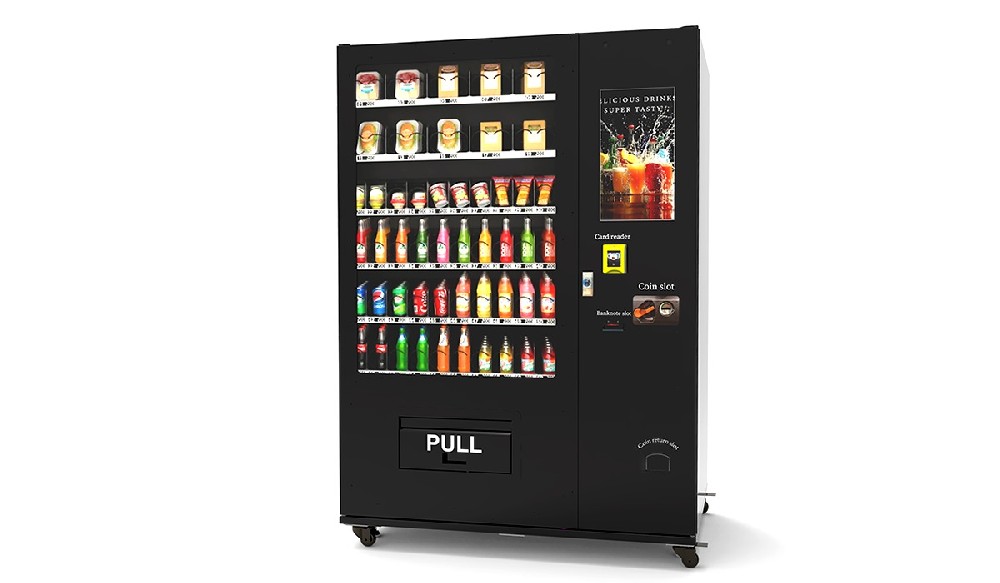
A slim floor-standing vending machine is often the best balance between visibility, capacity, and footprint. For many retailers, this is the sweet spot. It provides stronger presence than a tabletop unit while staying compact enough for real store environments.
Best for: mixed products, impulse zones, general retail
Typical SKU count: 20 to 50
Main advantage: balanced capacity and compact footprint
Main limitation: needs thoughtful placement and store layout planning
4. Smart Mini Vending Machine
A smart vending machine combines compact size with touchscreen controls, cashless payment, telemetry, remote management, and sales tracking. It is one of the best choices for retailers who want data visibility, dynamic pricing, and a better user experience.
Best for: brand-led retail, modern self-service, price testing
Typical SKU count: 20 to 40
Main advantage: cashless payment and remote sales tracking
Main limitation: higher upfront cost
5. Locker-Style Compact Dispenser
A locker-style compact vending machine is ideal for fragile, boxed, premium, or higher-value products that should not drop through a standard spiral system. It can also support order pickup and safer delivery for electronics accessories, beauty kits, or gift packs.
Best for: premium goods, boxed items, fragile products
Typical SKU count: 6 to 24
Main advantage: safer product delivery
Main limitation: lower SKU density
Comparison Table: Which Small Vending Machine Fits Your Store Best?
| Machine Type | Best For | Typical SKU Count | Main Strength | Watch-Out |
|---|---|---|---|---|
| Tabletop vending machine | Counter sales, beauty items, accessories, trial packs | 10-30 | Very small footprint | Limited storage |
| Wall-mounted vending machine | Narrow spaces, vertical merchandising | 12-36 | Saves floor space | Needs proper installation |
| Slim floor-standing machine | General retail, impulse zones, mixed products | 20-50 | Balanced capacity and footprint | Needs careful layout planning |
| Smart mini vending machine | Brand-driven retail, dynamic promotions, data-led selling | 20-40 | Cashless payment, tracking, better user experience | Higher upfront cost |
| Locker-style compact dispenser | Fragile, premium, boxed, or higher-value items | 6-24 | Safer delivery | Lower SKU density |
How to Choose the Right Products Before You Choose the Machine
Many buyers make the mistake of choosing the cabinet first and forcing products into it later. That usually leads to bad-facing displays, poor density, slot waste, and dispensing failures. The better process is simple:choose your products first, then choose the machine.
The best products for a small vending machine in a retail shop are usually:
Easy to understand at a glance
Small enough to stock efficiently
Low in breakage risk
Strong on impulse appeal
Easy to replenish during routine store operations
Product categories that often perform well include:
Travel-size personal care products
Beauty accessories
Phone cables, chargers, and earbuds
Snacks and compact drinks
Toys, collectibles, and trading card packs
Seasonal gift items
Store-branded merchandise
If you plan to sell multiple product shapes, avoid assuming a standard coil system will handle everything well. Mixed product categories often need customized tray pitch, lane width, push systems, shelves, lockers, or elevator delivery. When a small vending machine for sale is designed around real product dimensions, it usually looks better, vends better, and requires less troubleshooting.
What Features Actually Matter in Daily Operation
Many buyers focus too much on the biggest screen or longest feature list. In practice, the best small vending machine for sale for retail shops is the one that removes friction every day.
Cashless Payment
Cashless payment is now essential in most retail settings. For low-ticket, fast purchases, card, contactless, NFC, and QR payment can make a major difference in conversion. A machine that accepts only cash creates unnecessary friction and limits impulse sales.
Remote Sales Tracking
Remote telemetry helps retailers see what sells, what is low in stock, which products underperform, and when a machine needs service. That turns inventory decisions from guesswork into data-driven management.
Flexible Tray or Slot Configuration
Retail assortments change. Your machine should adapt without needing a complete rebuild. Adjustable lanes, modular shelves, removable dividers, and flexible delivery channels are valuable features.
Reliable Dispensing
This matters more than appearance. A machine that looks modern but mis-vends often will lose customer trust quickly.
Easy Service Access
A compact cabinet should still be easy to open, clean, refill, and maintain. If service access is poor, stock discipline usually falls apart over time.
Energy Efficiency
If your machine includes cooling, electricity use affects long-term operating cost more than many buyers expect.
Small Vending Machine Price: What Should You Budget?
The small vending machine price depends on cabinet size, payment system, cooling, screen, software, and whether the machine is standard or customized. These are realistic starting ranges for retail-focused machines:
| Configuration | Typical Starting Price Range | Best Use |
|---|---|---|
| Basic tabletop dispenser | $699-$999 | Countertop impulse goods |
| Wall-mounted compact unit | $999-$1,299 | Small packaged retail items |
| Slim floor-standing unit | $1,199-$1,700 | Mixed products in limited floor space |
| Smart mini vending machine | $1,199-$2,500+ | Cashless, remote management, branded retail |
| Custom compact machine | $2,000-$5,000+ | Special product fit, branding, unique dispensing |
Beyond the machine price, buyers should also budget for:
Shipping and installation
Card reader or payment integration
Initial product stock
Branding or cabinet wrap
Spare parts and maintenance buffer
If you are comparing small vending machines for sale, make sure you calculate total setup cost, not just machine cost.
How Much Profit Can a Small Vending Machine Make in a Retail Shop?
A small vending machine does not need high ticket size to perform well. It needs healthy margin, predictable turnover, and low service friction. In many retail environments, a strong-performing machine usually has:
Gross margin above 45%
Low spoilage or breakage risk
Controlled refill labor
At least one strong daily traffic period
Price points that feel easy to buy without much thought
In practical terms, compact vending often performs best when it sells products already aligned with the store’s customer base. A beauty shop selling travel-size skincare, lashes, or accessories will usually outperform the same shop trying to sell generic candy. Relevance usually beats variety.
Small Vending Machine vs Full-Size Vending Machine
Many buyers assume bigger means better. In retail, that is often false.
| Factor | Small Vending Machine | Full-Size Vending Machine |
|---|---|---|
| Floor space required | Low | High |
| Best for retail shops | Yes, especially small to mid-size stores | Only if space and traffic are high enough |
| Impulse sales placement | Excellent | More limited |
| Capacity | Lower | Higher |
| Revenue per square foot | Often stronger | Depends heavily on traffic and assortment |
| Restocking burden | Moderate but manageable | Higher overall volume |
For many stores, a compact vending machine for retail is the better investment because it fits the real layout and supports faster buying behavior.
When Custom Is Better Than Off-the-Shelf
Not every retailer needs a custom machine. But customization becomes the smarter investment when product shape is unusual, brand presentation matters, or the machine must fit a very specific footprint.
Custom work is usually worth considering when:
Your products are fragile or irregularly shaped
You need a branded exterior or custom interface
You need a specific width, height, or front-opening design
You want a mix of spirals, shelves, lockers, or elevator delivery
You plan to roll out multiple machines with the same retail identity
A standard machine can look cheaper upfront but become more expensive later if it causes repeated vending issues, poor product presentation, or customer complaints.
Real Retail Example: What a Good Compact Setup Looks Like
In many live retail projects, the strongest compact vending results come from a simple formula: place the machine in a visible zone, stock it with small high-margin products customers already understand, and keep payment friction low. For example, a beauty-focused retail store can perform far better with travel-size skincare, cosmetic accessories, and branded mini items than with a random snack mix. The machine works best when it feels like an extension of the store’s merchandising system, not a disconnected add-on.
My Field Checklist Before Buying a Small Vending Machine
Before approving any small vending machine for sale for retail shops, I recommend checking these points:
Measure the true installation area, including door swing, walking space, and customer approach angle
Map your top 20 products by size, shape, and margin
Confirm payment flow, including card, NFC, QR, and receipt requirements
Estimate refill frequency so the cabinet size matches real turnover
Test the delivery path with actual products, not assumptions
Review visibility because hidden machines rarely perform well
Decide whether branding matters for your customer experience
This is one reason buyers should not shop based on photos alone. Images do not reveal how easy the machine is to service or how reliably it handles real products over time.
Common Buying Mistakes That Hurt Performance
Buying Too Large
A bigger machine may feel safer, but it can waste space, slow product turns, and make the store feel crowded.
Ignoring Product Shape
Poor fit leads to mis-vends, weak presentation, and lost trust.
Skipping Cashless Payment
This lowers conversion, especially for quick impulse purchases.
Overcomplicating the Assortment
A small machine should not try to behave like a supermarket aisle. Tight curation usually wins.
Choosing on Price Alone
The cheapest cabinet often becomes the most expensive when jams, downtime, or weak support create hidden costs.
Forgetting Service Access
If refilling and cleaning are awkward, the machine will not stay full, clean, and profitable.
Expert Advice for First-Time Buyers
If I had to reduce the buying process to a few rules, they would be these:
Choose your products first and your machine second
Protect floor space because it directly affects profit
Do not skip cashless payment
Do not assume bigger means more profitable
Test the vend path with real products before rollout
Think in margin per square foot, not just units sold
Buy from a supplier that can support you after delivery
Frequently Asked Questions
Is a small vending machine profitable in a retail shop?
Yes. A small vending machine for retail shops can be profitable when it is placed in a high-visibility location, stocked with relevant impulse products, and supported by cashless payment. The best results usually come from compact, high-margin items with consistent turnover.
What is the best product mix for a small vending machine?
The best product mix depends on the store’s customer base, but common winners include beauty accessories, personal care minis, snacks, drinks, cables, chargers, earbuds, collectibles, and gift items.
Should I choose a tabletop or floor-standing vending machine?
Choose a tabletop vending machine if minimal footprint and counter placement matter most. Choose a slim floor-standing machine if you need better SKU flexibility, stronger visual presence, and more refill capacity.
Do I really need a smart vending machine?
Not always, but a smart mini vending machine usually makes management easier thanks to remote tracking, cashless payment, and flexible pricing.
How much does a small vending machine cost?
Small vending machine prices can start under $1,000 for basic compact models, while better-equipped smart or customized machines often range from about $1,200 to $5,000 or more depending on features and design.
Can one small vending machine sell more than one product category?
Yes, but mixed assortments work best when the tray layout and delivery system are designed around the real product dimensions rather than assumptions.
What is the best place to put a vending machine in a retail store?
The best placement is usually near entrances, checkout counters, or other high-visibility areas where customers already pause and are likely to make quick purchase decisions.
What is the smallest vending machine size for retail use?
The smallest options are usually tabletop vending machines and wall-mounted units. These are best for lightweight, high-margin products and stores with limited floor space.
Final Word
The best small vending machine for sale for retail shops is not the one with the biggest screen or the lowest sticker price. It is the one that fits your footprint, matches your products, reduces buying friction, and performs reliably under daily use. In compact retail environments, every inch matters and every vend matters.
If you want a small vending machine for sale that truly works, treat the machine as part of your merchandising system, not as a standalone gadget. That mindset alone will put you ahead of most first-time buyers and improve your chance of turning underused space into long-term self-service revenue.