If you are comparing machines for unattended sales, the short answer is simple: a vending machine with card reader is usually the better long-term buy because it removes friction at checkout, raises convenience, and gives you more flexibility in pricing, product mix, and day-to-day management. In practical terms, buyers are not just choosing a cabinet with a payment device attached. They are choosing a complete selling system that combines hardware, software, connectivity, security, and serviceability. A smart vending machine that accepts cards, mobile wallets, and other cashless payment methods can outperform older cash-only setups when it is matched to the right product, the right traffic pattern, and the right support model. The key is buying the right machine, not just buying the cheapest one.
After years in the vending business and many factory-side builds, retrofits, and field rollouts, I have seen one pattern repeat itself: buyers who focus only on purchase price usually end up paying more later. The strongest results come from choosing a machine that fits the product, supports reliable cashless payment, is easy to service, and can scale when sales grow. This guide walks through what matters before you place an order, how to compare options, what the real costs look like, and how to avoid the expensive mistakes that slow down payback.
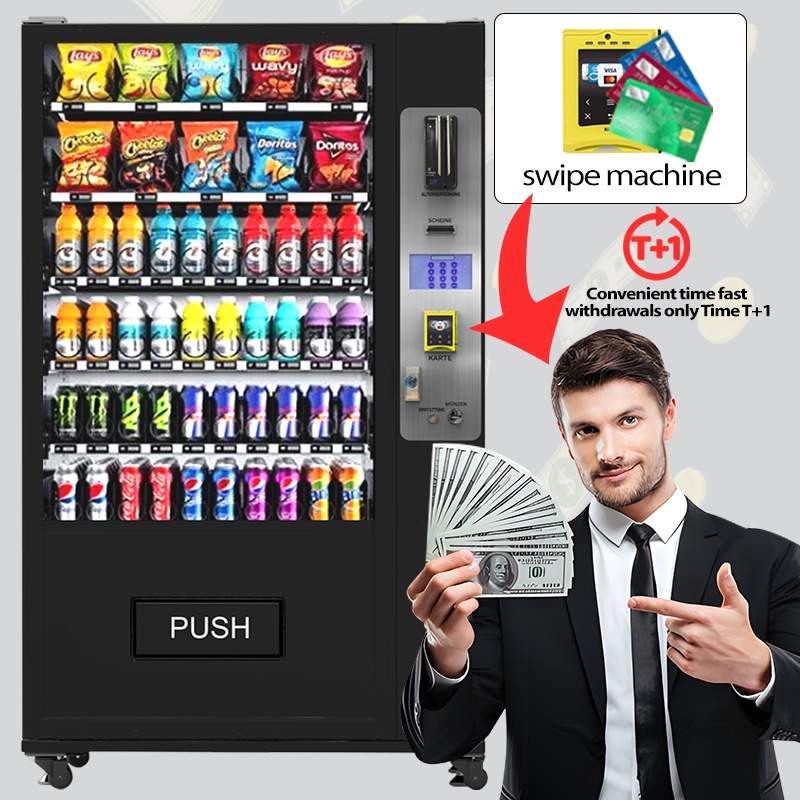
Why a card reader matters more than most buyers expect
The biggest change in vending over the last several years has not been cabinet design. It has been payment behavior. Card, tap, and mobile wallet usage continue to rise, while cash use has softened. According to the Federal Reserve’s 2024 Survey and Diary of Consumer Payment Choice, cash use in the prior 30 days fell from 87% of consumers to 83%, while credit card or charge payments increased to an average of 17 payments per consumer per month.[1] In plain English, more shoppers now expect to pay instantly without coins or bills.
That shift matters because a vending machine with card reader does more than accept payment. It removes the classic purchase barrier: “I want the item, but I do not have cash.” In many locations, that single barrier is the difference between a sale and a missed opportunity. A cashless vending machine also lets operators test higher-margin items, bundle offers, and premium categories that are harder to support when customers are limited by the cash in their pocket.
There is also a trust element. Buyers tend to feel more comfortable making a quick purchase when they see a modern payment terminal, a clear screen, and a familiar tap-to-pay experience. EMVCo explains that EMV contactless technology supports secure transactions made with contactless chip cards and NFC-enabled mobile devices.[2] That is one reason a machine with a strong contactless payment terminal often feels more current and more credible to end users.
Expert tip: When buyers tell me they only need “a basic machine with a card reader,” I push back. The payment device is not a small add-on. It affects approval rates, user confidence, transaction speed, telemetry options, and sometimes the machine’s future upgrade path.
What buyers usually mean when they ask for a vending machine with card reader
Many first-time buyers use one phrase to describe several very different needs. Some want a machine that accepts chip cards and tap-to-pay. Some want a self-service kiosk that also supports QR code payment. Some need age checks, product cooling, or fragile-item delivery. Others are trying to retrofit an existing machine rather than buy a new one. Those are not the same purchase.
Before you request a quote, define your use case in plain terms:
What products are you selling: drinks, snacks, cosmetics, cards, daily essentials, or fragile goods?
Do you need refrigeration, heating, or ambient storage?
Will customers buy low-ticket or premium-ticket items?
Do you need tap, insert, swipe, mobile wallet, QR code, or all of them?
Do you need remote monitoring and sales data?
Will the machine be placed indoors or outdoors?
Do you need a standard model or a custom build?
The reason this matters is simple: the right vending machine with card reader for bottled drinks is not necessarily the right one for beauty products, collectibles, electronics accessories, or chilled meals. Delivery method, payment hardware, screen size, cabinet depth, and software workflow should all reflect what you plan to sell.
New machine or retrofit: which path makes more sense?
Some operators already own machines and wonder whether they should add a card reader instead of buying new equipment. That can be a smart move, but only when the base machine is in good shape and the controller, harness, and communication standard can support the payment integration cleanly. If the cabinet is old, unstable, or difficult to maintain, retrofitting often turns into a false economy.
| Option | Best For | Main Advantage | Main Risk |
|---|---|---|---|
| Retrofit existing machine | Operators with solid cabinets and limited capital | Lower upfront spend | Compatibility issues and shorter remaining machine life |
| Buy a new standard machine | Buyers who want faster launch and predictable setup | Cleaner integration and stronger reliability | Higher initial purchase price |
| Buy a custom smart vending machine | Brands, distributors, and specialty product sellers | Better fit for product, branding, and workflow | Longer planning cycle if specs are not clear |
My rule is straightforward: if your existing machine already has stable vend performance, acceptable energy use, and a clean upgrade path, a retrofit may be enough. If you are still solving cabinet, refrigeration, or delivery problems, buy new. It is easier to build a good operation on a stable platform than to keep repairing the wrong one.
For buyers who want to compare factory-direct models first, Zhongda Smart’s product catalog is a useful starting point because it covers multiple product categories and includes machines built around cashless payment, touch operation, and remote management.
Core features that separate a good buy from a bad one
When I review a machine quote, I do not start with the cabinet photo. I start with the operating logic. A strong vending machine with card reader should feel easy for the customer, easy for the operator, and easy for the technician. If any one of those three groups struggles, the machine will create hidden costs later.
1. Payment acceptance
The machine should support the payment methods your buyers actually use. At minimum, most buyers now expect card and contactless acceptance. In many projects, mobile wallet support is no longer optional. If your audience buys quickly and impulsively, fast tap approval matters.
2. Reader compatibility
Do not assume every reader works smoothly with every machine. Confirm controller compatibility, protocol support, and whether the machine is sold as a tested package or as a separate cabinet plus third-party terminal. If the reader, modem, and software come from different parties, troubleshooting gets harder fast.
3. Telemetry and remote management
A modern unattended retail machine should let you see sales, stock status, faults, and performance trends without standing in front of it. That reduces route waste, helps restocking, and makes it easier to catch payment errors before they turn into lost revenue.
4. Delivery reliability
The card reader gets attention, but delivery reliability protects profit. A machine that accepts payment flawlessly but mis-vends products will create refunds, complaints, and service calls. For fragile goods, consider elevator or lift delivery. For snacks and drinks, confirm lane setup and product fit before production.
5. Service access
Check how easy it is to replace the reader, reset the controller, access wiring, update software, and change product lanes. A machine can look great in photos and still be frustrating in the field if the internal layout is not technician-friendly.
6. Upgrade path
Payment technology changes. Your machine should not trap you. Ask whether the terminal can be replaced later, whether software can be updated, and whether additional payment methods can be added without redesigning the whole cabinet.
How to compare payment options without getting lost in jargon
Buyers often hear a stream of technical language during the quote stage. The easiest way to stay grounded is to focus on customer experience, operating cost, and security. The Payment Card Industry Security Standards Council makes clear that payment environments still require proper security standards even when EMV is part of the setup.[3] So the right question is not “Does it take cards?” The right question is “How securely and smoothly does this machine process cashless transactions in everyday use?”
| Payment Method | Customer Experience | Operator Benefit | What to Check |
|---|---|---|---|
| Chip card | Familiar and trusted | Broad compatibility | Reader certification, insertion speed, approval flow |
| Tap to pay | Fastest and easiest for impulse buys | Higher convenience, shorter queue time | NFC support, wallet compatibility, screen prompts |
| Mobile wallet | High convenience for phone-first buyers | Stronger appeal for younger users and quick purchases | Wallet support, reader placement, signal responsiveness |
| QR code payment | Useful in some projects and app-led systems | Flexible add-on option | Network speed, payment flow clarity, software support |
| Cash + cashless hybrid | Widest acceptance | Less lost demand from cash users | Cash box service needs, jam risk, reconciliation process |
If you want the simplest buying advice, here it is: in most modern deployments, a hybrid machine or a fully cashless smart vending machine makes more sense than a cash-only cabinet. The best choice depends on your product and audience, but a machine that takes both card and tap gives you broader coverage with less friction.
Compliance, security, and transaction quality
This is the part many buyers skip because it feels less visible than the screen or cabinet color. That is a mistake. A vending machine with card reader lives or dies by transaction quality. If approvals are inconsistent, if the connection drops, or if the payment flow confuses buyers, your sales decline even when traffic is strong.
Ask direct questions before you buy:
Is the reader suited for unattended use?
Does the system support EMV contactless and standard card acceptance?
How are failed payments handled?
What happens if the network is unstable?
How are refunds or reversals managed?
Who supports the terminal if the payment side fails: the machine factory, the reader vendor, or the processor?
In field projects, I have seen beautiful machines lose money simply because no one defined support ownership. When a payment issue appears, operators get passed from the cabinet supplier to the terminal provider to the processor. That loop wastes time. The better setup is a tested package with clear support boundaries.
For buyers who want a more tailored build, Zhongda Smart’s OEM custom vending machine page outlines configuration points such as card/NFC payment, QR payment, telemetry, connectivity, and cabinet customization. That is useful if your project needs more than a standard off-the-shelf machine.
Machine type matters: not every cabinet sells every product well
One reason buyers get disappointed is that they focus too much on the payment side and not enough on product handling. A self-service kiosk for trading cards, a refrigerated drink machine, and a cosmetic vending unit all use different logic. The machine must suit the size, weight, temperature need, and fragility of what you sell.
For drinks and packaged food
Capacity, refrigeration consistency, lane configuration, and fast payment flow are the priority. The machine should support routine high-volume vends without slowing down approval or delivery.
For fragile or premium items
Look at lift or elevator delivery. I strongly prefer this for products that can be crushed, scratched, or shifted. It protects the customer experience and reduces refund requests.
For beauty products, electronics accessories, and daily essentials
Flexible shelf layout and clear product display matter more. Buyers often browse before they buy, so screen quality and cabinet presentation help conversion.
For specialty projects
If the product is unusual, branding matters, or the workflow is unique, a custom smart vending machine is often the smarter route. Customization may include payment integration, screen design, product channel size, software flow, lighting, and branding panels.
That is why I advise buyers to create a simple product sheet before they ask for pricing. Include item dimensions, weight, storage requirements, target price, and expected monthly sales. That sheet will save you from buying the wrong machine faster than any sales brochure can.
How much does a vending machine with card reader really cost?
The purchase price is only one part of the total cost. A vending machine with card reader usually involves four layers of spending: machine cost, payment setup, operating cost, and service cost. Buyers who understand all four make better decisions and reach payback sooner.
1. Machine cost
This is the cabinet, refrigeration or heating system if needed, screen, delivery mechanism, and control system. Price changes with size, cooling, custom finish, and delivery type.
2. Payment setup cost
This may include the reader itself, terminal integration, communication hardware, installation, and transaction-related setup. Some projects also involve a monthly terminal or platform cost.
3. Operating cost
This includes processing fees, electricity, network, site rent if applicable, stock, restocking labor, and routine maintenance. This is where a low-priced machine can become expensive if it causes more trips, more faults, or more payment errors.
4. Service and downtime cost
The hidden cost of a poor machine is downtime. Every hour a machine is offline, rejecting cards, or stuck in an error state is lost sales you do not get back. A stable machine with better support is often cheaper over time than a bargain machine that fails often.
When buyers ask me for a “good price,” I usually answer with another question: “Do you want the lowest invoice or the best payback?” Those are not always the same thing.
Expert tip: Ask for a configuration-based quote, not a vague model price. A real quote should show machine type, temperature option, payment device, screen, telemetry, delivery system, spare parts recommendation, and lead time. That is the only way to compare suppliers fairly.
A practical payback example
Let’s keep this simple. Imagine a smart vending machine selling mid-margin products with steady daily demand. If the machine earns consistent daily revenue, supports cashless payment, and stays online with minimal service interruptions, the payback period can be much shorter than buyers expect. But if traffic is weak, product mix is poor, or processing and service costs are underestimated, the return stretches quickly.
Use this as a planning example, not a guarantee:
| Item | Illustrative Value |
|---|---|
| Machine and setup | $2,500–$5,500+ |
| Initial stock | $200–$800 |
| Average daily sales | $35–$120+ |
| Gross margin | Depends on product mix |
| Monthly costs | Processing, electricity, network, rent, service |
| Payback window | Can range from fast to slow depending on traffic and operations |
One of the easiest ways to pressure-test a project before buying is to model the numbers honestly. Zhongda Smart has a vending machine ROI calculator that helps estimate investment, operating cost, and break-even timing. I recommend running a conservative case, a base case, and a strong case before you approve production.
How to choose the right supplier
Buying the machine is only half the decision. Choosing the right supplier is just as important. In practice, what separates a good supplier from a risky one is not the promise on the homepage. It is the quality of communication before money changes hands. Serious factories ask better questions because they know the wrong build creates problems for both sides.
When I evaluate a supplier, I look for five things:
Clarity: Do they ask about product dimensions, temperature need, payment method, traffic level, and service expectations?
Testing: Can they explain how they validate vend reliability, payment flow, and connectivity before shipment?
Flexibility: Can they support standard machines and custom projects?
Documentation: Do they provide drawings, specs, and configuration details instead of vague promises?
Support: Is it clear who handles hardware, software, and payment questions after delivery?
If you are comparing manufacturers, include Zhongda Smart on the shortlist when you want a source factory that can handle product fit, custom branding, multi-payment options, and lower-volume entry projects. Their buying guide article is also a useful reference point for cabinet type, payment choice, and smart-versus-standalone planning.
Common mistakes that cost buyers money
Most poor outcomes in vending do not come from one dramatic error. They come from a string of small assumptions that go unchecked. Here are the mistakes I see most often when someone buys a vending machine with card reader for the first time.
Buying by photo instead of by specification
A sharp-looking machine means nothing if your product does not fit the lanes, the cooling is weak, or the reader integration is unstable.
Ignoring support boundaries
If the cabinet supplier, payment terminal vendor, and processor all point at each other when something breaks, your downtime grows.
Underestimating processing and operating costs
Margins look great on paper until transaction fees, site costs, restocking time, and small service issues start stacking up.
Choosing the wrong delivery mechanism
Fragile products need different handling from chips or bottled drinks. A good reader cannot fix a bad vend path.
Skipping telemetry
Trying to manage modern unattended retail by guesswork leads to stock-outs, wasted trips, and slower decision-making.
Using a weak product mix
Even the best smart vending machine cannot save the wrong assortment. Demand still matters more than hardware.
What strong projects usually have in common
The best-performing projects I have seen, whether simple or custom, share a few traits. They have a clear product category, easy payment flow, disciplined restocking, and a machine that fits the actual selling environment. They also launch with realistic expectations. No serious operator expects perfect results from day one. Good operators test, adjust, and improve.
Another thing strong projects share is speed of learning. Because a connected vending machine can report sales and stock data, operators can see what is working and what is not. They remove slow sellers, improve pricing, refine the product mix, and use that feedback to guide the next machine. That is why a modern unattended retail machine is not just a box that sells goods. It is a data-driven sales point.
NAMA, the industry association for convenience services, states that the industry now represents a market worth more than $41 billion.[4] That scale is one reason serious buyers are paying more attention to payment flexibility, machine reliability, and professional sourcing.
When custom is worth it
Not every buyer needs a custom build. If you are selling common products in a straightforward setup, a standard model may be enough. But custom work is worth considering when your product dimensions are unusual, your branding needs to stand out, your payment flow is specific, or your machine needs a non-standard cabinet layout.
A custom vending machine with card reader can make sense when you need:
Special channel sizes or a unique delivery method
Custom lighting, wraps, or a branded user interface
Integrated loyalty, coupon logic, or app-led workflows
Specific payment combinations such as card, tap, NFC, and QR
Lift delivery for fragile or premium products
Language customization and tailored touchscreen flow
Factory-side customization is especially useful when you want the machine to support the product and the brand at the same time, not just dispense an item. In those cases, it is smarter to define the user journey first and the cabinet second.
My recommended buying checklist
If I were helping a buyer approve one machine tomorrow, this is the checklist I would use before signing off:
The exact product list is finalized, including dimensions and storage needs.
The machine type matches the product and the site conditions.
The card reader and controller are confirmed as a tested combination.
Tap, chip, and mobile wallet support are clearly defined.
Remote monitoring and sales reporting are included if needed.
Payment support ownership is written down.
Power, network, and installation conditions are confirmed.
Lead time, spare parts, and after-sales support are stated in writing.
A realistic payback model has been reviewed.
The supplier has shown proof of relevant builds or cases.
If you want to move from research to project planning, Zhongda Smart’s contact page is the right place to request a quote with your product type, quantity, payment preference, and customization needs.
Final advice before you buy
The best vending machine with card reader is not the one with the flashiest screen or the lowest headline price. It is the one that sells your product reliably, processes payment smoothly, stays easy to manage, and gives you room to grow. If you treat payment, product fit, service access, telemetry, and supplier support as one connected system, you will make a much better purchase.
For most buyers, the smartest path is to start with a clear product plan, confirm payment requirements, compare tested configurations, and model the numbers honestly. A vending machine with card reader should make buying easier for the customer and operations easier for you. If it does both, it is doing its job. If it only looks modern on the outside, keep shopping.
Frequently Asked Questions
Is a vending machine with card reader better than a cash-only machine?
In most cases, yes. A vending machine with card reader usually improves convenience, captures sales from buyers who do not carry cash, and supports tap-to-pay behavior that fits impulse purchases. A hybrid machine can be even stronger when you still want to serve cash users.
Can I add a card reader to an old vending machine?
Sometimes. It depends on the controller, wiring, communication support, and overall condition of the cabinet. If the machine is old or unreliable, buying a new cashless vending machine may be the better long-term choice.
What payment methods should I support?
At minimum, support card and contactless payment. Many projects also benefit from mobile wallet support, and some use QR payment as an added option. The right mix depends on your product and how quickly customers buy.
Do I need telemetry on a small deployment?
It is highly recommended. Even one machine can benefit from sales tracking, fault alerts, and stock visibility. Telemetry helps you make better product decisions and reduces wasted service visits.
How do I choose between a standard machine and a custom machine?
If your products fit common channel sizes and you want a fast launch, a standard model is usually enough. If your products are fragile, oversized, premium, or brand-sensitive, a custom smart vending machine is often worth the extra planning.
What should I send when asking for a quote?
Send your product type, item dimensions, quantity, temperature requirement, preferred payment methods, estimated daily traffic, and whether you want a standard or OEM build. The clearer your brief, the more accurate the quote.