If you’re shopping for a vending machine with card reader, you’re really solving three problems at once: you want more completed purchases, fewer service headaches, and cleaner reporting you can trust. In plain terms, the best cashless setup is the one that matches your product price points, your foot traffic, and your service routine—without adding payment failures or surprise fees. In this guide, I’ll break down what actually works in the field: reader types, smart vending machine connectivity, payment acceptance, compliance basics, and a practical buying checklist. You’ll also see how a self-service kiosk approach changes merchandising, and how to forecast return with real operator math.
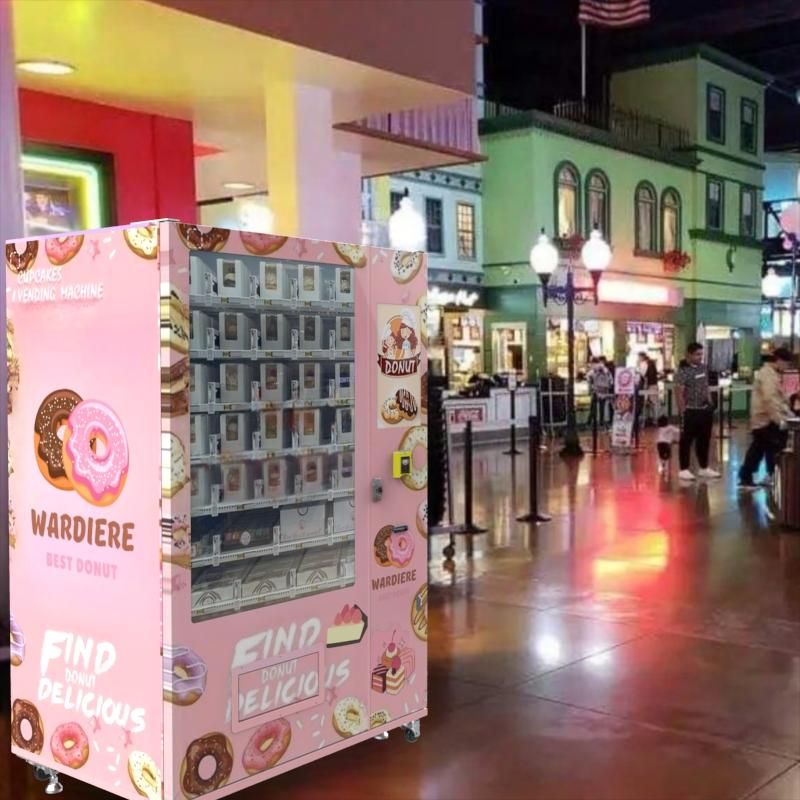
What “Cashless” Really Means on a Vending Machine
Cashless isn’t one thing. It’s a stack: the card reader hardware, the payment software, the processor relationship, and the network path that approves a sale. When any layer is weak, customers see “declined,” operators see chargebacks, and your location partner sees complaints.
A modern vending machine with card reader usually supports multiple ways to pay: tap, insert, swipe, plus mobile wallet. In the background, you’re choosing how those transactions route, how often the machine syncs, and how you handle offline events.
The fastest way to spot a strong cashless setup
High approval rate during busy bursts (not just at slow times).
Clear error logging that tells you whether the issue is network, reader, or product vend.
Remote visibility into sales, inventory, and payment status—without “mystery gaps.”
Stable mounting and wiring so vibration and door slams don’t loosen connections.
Why Card Readers Lift Sales (And When They Don’t)
The biggest benefit of a vending machine with card reader is simple: fewer customers walk away. The second benefit is less obvious: average tickets often rise when customers aren’t limited by the cash in their pocket. But it’s not automatic.
Cashless can underperform if your pricing is sloppy, your selection is weak, or the reader is unreliable. In my own routes, the machines that gained the most were the ones with strong bestsellers, clean planograms, and service cadence matched to traffic.
Two real-world signals that you’re leaving money on the table
High “selection attempts” with low completed sales (customers try, then bail).
Frequent low-cash situations in bill acceptors (the machine can’t make change, so it stops taking bills).
Industry snapshots show how quickly cashless capability has become standard. One widely cited census reports that about 75% of vending machines accept cashless payments, rising from earlier years.
Card Reader Options That Actually Matter
Buyers get distracted by buzzwords. Focus on acceptance methods that match how customers already pay: tap, chip, swipe. Avending machine with card reader should prioritize contactless first, then chip, then swipe as a fallback.
Comparison table: card reader types for vending
| Reader Capability | What It Supports | Strengths | Watch-outs | Best Fit |
|---|---|---|---|---|
| Contactless (NFC tap) | Tap cards, mobile wallet | Fast checkout, fewer “walk-aways” | Needs solid network + certified hardware | High-traffic, quick decisions |
| EMV chip insert | Chip cards | Strong fraud controls, broad acceptance | Slower than tap; requires good user prompts | Higher ticket items |
| Magstripe swipe | Swipe cards | Good fallback for older cards | More fraud exposure; declining preference | Backup acceptance |
| QR / app pay | App-based payments | Marketing tie-ins, loyalty, promotions | Extra steps; adoption depends on audience | Brand programs, repeat buyers |
Contactless standards are maintained by EMVCo, and certified implementations help payment products work securely and consistently across acceptance devices.
Choosing the Right Machine Platform for Cashless
Don’t buy a reader and hope it “fits later.” Start with the machine platform. A vending machine with card reader runs best when the controller, harness, and door layout were designed for cashless hardware from day one.
Pick a platform based on what you vend
Snacks and drinks: coil or elevator delivery, reliable refrigeration, quick restock access.
Fragile or premium items: elevator systems reduce drops and refunds.
Regulated items: age verification options, audit trails, stronger access control.
High SKU variety: adjustable lanes, flexible tray heights, clear product windows.
If you’re comparing models, start on the product catalog and narrow by delivery method and cabinet size. For a broad overview of available formats, visit vending machine products.
Smart vending machine vs. “standalone”
A smart vending machine reports sales, inventory, and alerts automatically. A standalone machine can still take cards, but you lose the operational advantage: you’ll spend more time diagnosing issues and less time improving the mix.
In practice, a connected self-service kiosk approach wins when you manage more than a handful of machines, when product freshness matters, or when location partners demand weekly reporting.
Integration Checklist: What I Require Before I Ship a Machine
As a manufacturer, the most expensive mistakes are the ones you only discover after deployment: a reader that’s exposed to weather, a weak antenna path, or a harness that rubs on the door frame. Before any vending machine with card reader leaves the factory, this is the list I use.
Hardware and mounting
Reader placement: reachable, visible, not blocked by door swing.
Protected cabling: strain relief, grommets, and clean routing.
Stable bracket: vibration-resistant mounting so tap works consistently.
Service access: reader swaps don’t require tearing down the door.
Connectivity basics
Primary path: cellular or wired network with stable signal.
Fallback plan: defined behavior when signal drops (queue, retry, or refuse).
Heartbeat checks: automated “still alive” monitoring.
For a deeper look at machine categories and factory capability, see about Zhongda smart.
Costs, Fees, and the Math Operators Actually Use
People ask, “Does cashless cost more?” The honest answer: yes, but it can pay back quickly if your volume is real and your reader is reliable. Your vending machine with card reader will have a mix of upfront costs and ongoing costs.
Common cost buckets
Upfront: reader hardware, installation, configuration, testing.
Monthly: connectivity, platform access, sometimes device lease.
Per transaction: processing fees that vary by card type and ticket size.
Support: replacements, firmware updates, occasional on-site labor.
Simple ROI table you can adapt
| Input | Low | Mid | High | Notes |
|---|---|---|---|---|
| Daily sales per machine | $15 | $35 | $75 | Use your current cash-only average if you have it |
| Gross margin | 35% | 45% | 55% | Depends on mix and sourcing |
| Monthly fixed costs | $40 | $85 | $160 | Rent + service + connectivity + platform |
| Goal: break-even | 10–18 mo | 6–12 mo | 3–8 mo | Only meaningful with stable uptime |
If you want a fast break-even estimate across multiple machines, use theROI calculator and plug in your actual restocking and rent numbers.
Data That Helps You Decide Faster
I’m careful about throwing numbers around, because every route is different. Still, two data points are useful for decision-making: (1) cashless acceptance is now common in vending, and (2) consumers continue shifting away from paper methods overall.
A recent industry census reports that roughly 75% of vending machines accept cashless payments.
A widely referenced consumer payment diary notes that cash’s share of payments has been declining while total payments increased.
Put those together and the practical takeaway is this: a vending machine with card reader is no longer a “nice to have” in many placement types. It’s part of customer expectation.
Security and Compliance Without the Jargon
If you accept cards, you’re in the payment ecosystem. The safest approach is to avoid storing sensitive card data in the machine at all. Use certified payment devices and reputable processing paths so your vending machine with card reader remains a payment endpoint—not a data vault.
What to insist on
End-to-end encryption from reader to processor.
Tokenization so systems use safe tokens instead of raw card numbers.
Regular firmware updates for the reader and controller.
Clear responsibility in writing: who maintains what, and what happens after an incident.
The PCI Security Standards Council describes PCI DSS as a baseline of technical and operational requirements designed to protect payment account data.
Operational Playbook: Keeping Cashless Running Smoothly
A vending machine with card reader can be profitable and still drive you crazy if you don’t manage it like a system. The goal is to reduce “unknowns” so you’re never guessing why a sale failed.
My weekly routine on healthy routes
Check payment uptime and approval rates before you check inventory.
Scan refunds and repeats: the same SKU refunding is usually a delivery issue, not a pricing issue.
Look for dead slots: replace slow sellers quickly and keep the face neat.
Audit prices quarterly to protect margin without shocking customers.
Fix the top three causes of “card reader complaints”
Weak signal (relocate antenna, adjust placement, improve enclosure).
Slow authorization (optimize network and reader firmware).
Confusing prompts (clear screen flow: tap first, then insert, then swipe).
Case Notes From the Field (What Actually Moved the Needle)
I’ll share three patterns I’ve seen repeatedly—these aren’t theory. In one large outdoor rollout, the operator tracked 93% uptime across 1,850 units and used predictive restocking to reduce empty-slot time. :contentReference[oaicite:5]{index=5}
Pattern 1: Uptime beats “perfect pricing”
A vending machine with card reader can’t earn if the payment path is down. Operators who win treat uptime like a product feature: they monitor it, they respond fast, and they replace weak components before they fail.
Pattern 2: Premium items need gentler delivery
If you vend cosmetics, collectibles, or fragile packaging, upgrading delivery can cut refunds dramatically. For these categories, a smart vending machine with elevator delivery and reliable cashless acceptance is the cleanest path to repeat buying.
Pattern 3: Regulated-item sales require strong controls
When products require verification, the machine must support the workflow without slowing the line. In practice, the best systems combine clear on-screen guidance, reliable verification hardware, and a payment flow that doesn’t time out mid-process.
Buying Guide: A Straightforward Checklist
When a buyer tells me, “I just need a vending machine with card reader,” I ask five questions. Your answers determine the model, the reader, the connectivity, and the service plan.
Five questions to answer before you request a quote
What are you selling? (Size, fragility, temperature needs, verification needs.)
What’s your expected ticket? (Low tickets need speed; higher tickets need trust and stability.)
How will you service it? (Your route schedule determines capacity needs.)
What’s your network reality? (Strong signal vs. intermittent.)
How will you track performance? (Remote reporting vs. manual collection.)
If you want a broader overview of machine selection—capacity, payment methods, and connected vs. non-connected—this article is a good starting point:key factors when buying a vending machine.
Recommended Manufacturer Approach: Build Around the Reader, Not After It
As a source factory, I’ve seen too many projects try to “add cashless later.” It usually costs more and performs worse. The best-performingvending machine with card reader is built as a complete system: the door layout, the controller, the power stability, and the connectivity are designed together.
If you’re comparing manufacturers, ask for photos of internal wiring, mounting points, and service access—those details predict your real costs more than a glossy brochure. Zhongda smart builds machine formats that support cashless payment integration as part of the core build, with options that fit different product categories and cabinet footprints. See the latest catalog atZhongda smart products.
Frequently Asked Questions
Can I add a card reader to an older vending machine?
Sometimes, yes—but it depends on the controller and the door layout. If the retrofit requires major rewiring, awkward reader placement, or unreliable connectivity, you can end up with more failures than sales. If you retrofit, test approval rates during your busiest window, not just midday.
What’s the best payment method to prioritize?
Start with contactless tap for speed and convenience, then chip insert for broad compatibility, then swipe as a fallback. A strongvending machine with card reader should make tap the default flow and keep the prompts simple.
Do card readers increase chargebacks?
Chargebacks are usually tied to poor customer experience: product didn’t vend, the machine didn’t refund cleanly, or the receipt trail was unclear. Reduce them by improving delivery reliability, using clearer prompts, and keeping audit logs consistent.
What if the network goes down—do I lose sales?
You may. Some setups can queue certain transactions or retry quickly, but you should assume that weak network equals lost sales. Before you commit to a location, test signal strength at the exact installation spot and verify how your reader behaves during drops.
How do I know if my machine is priced correctly for cashless?
Watch two numbers: sell-through rate and gross margin. If bestsellers are constantly out of stock, your price is probably not too high. If you have strong volume but low profit, adjust pack sizes or swap in higher-margin alternatives. Always change pricing in small steps and track results for at least two restock cycles.
What’s the quickest way to estimate payback?
Use your actual service costs and a realistic daily sales estimate, then calculate break-even months. If you want to model multiple machines at once, use the ROI calculator and compare scenarios.
What should I ask a manufacturer before I buy?
Ask how the reader is mounted, how cables are protected, how firmware updates are handled, and how service replacements are done. Avending machine with card reader should be designed so a reader swap is fast and doesn’t require dismantling the door.
Final Takeaway
The best cashless solution isn’t the fanciest reader—it’s the most reliable system. When you choose avending machine with card reader built for cashless from the start, you get higher completion rates, cleaner reporting, and fewer “mystery problems” that burn labor. Start with your product category and service routine, pick a platform that supports stable mounting and connectivity, then lock in a payment flow that’s fast and easy for customers. That combination is what turns a machine into a dependable 24/7 revenue channel.
Disclaimer
This guide is for general business and operational education. Payment programs, fees, and compliance responsibilities vary by provider and deployment. Always confirm requirements with your payment processor and qualified compliance professionals.
Sources (for reference only)
Industry cashless adoption estimate (vending): NAMA Census PDF.
Consumer payment behavior research: Diary of Consumer Payment Choice (PDF).
Contactless standards overview: EMVCo knowledge hub.
Payment data protection baseline: PCI Security Standards Council (PCI DSS).