The best vending machine products in 2026 are not necessarily the items with the highest markup. They are products that solve a clear buying need, fit the machine reliably, sell at a price customers will accept, and leave enough contribution profit after product costs, payment fees, commissions, and restocking. For operators with limited space or modest traffic, compact accessories, collectibles, personal-care essentials, and selected specialty products can be more practical than bulky, low-margin merchandise.
This guide compares product categories, explains how to evaluate unit economics, and shows how product dimensions, dispensing mechanisms, payment options, and location demand affect profitability. It also includes a transparent method for estimating sales and examples of vending machines from Zhongda Smart to help operators connect product selection with equipment requirements.
Planning note: The financial examples in this article are illustrative calculations, not verified industry averages or guaranteed results. Actual margins and sales depend on local demand, supplier pricing, taxes, site agreements, operating costs, and machine configuration. Product prices and specifications should be reconfirmed with the supplier before purchase.
Quick Answer: Which Vending Products Are Worth Testing?
If your objective is to earn more from a small number of transactions, start with compact products that have a clear use case, manageable purchase costs, and enough perceived value to support a healthy selling price. The strongest candidate depends on where the machine will operate and how the product is dispensed.
- For gyms and fitness facilities: resistance bands, workout accessories, hair ties, and selected personal-care essentials.
- For hotels and travel locations: charging cables, travel adapters where locally compliant, eye masks, earplugs, and forgotten-item essentials.
- For campuses and entertainment venues: collectible cards, small accessories, blind-box collectibles, and impulse-friendly novelty items.
- For offices and residential buildings: cables, stationery, personal-care items, and compact convenience products.
- For tourist attractions and event spaces: locally relevant souvenirs, themed merchandise, and small gifts.
- For locations with recurring daily demand: drinks, snacks, and other consumables may be stronger choices even when the gross margin per item is lower.
For most new operators, the best starting point is a small, carefully selected assortment rather than a machine filled with dozens of unrelated products. A focused assortment makes it easier to compare prices, monitor sell-through, identify slow-moving stock, and reorder only the products that perform.
What Makes a Vending Product Profitable?
A product's retail price does not tell you how much money it contributes to the business. You need to distinguish gross margin from the amount left after the costs associated with selling and servicing the item.
Gross margin is only the starting point
Suppose an accessory costs $4 from a supplier and sells for $12. The gross profit is $8 per unit before other expenses. Its gross margin is calculated as follows:
Gross margin = (Selling price − Product cost) ÷ Selling price × 100%
In this example: ($12 − $4) ÷ $12 × 100% = 66.7%.
That is a useful first check, but it is not net profit. The operator may still need to pay card-processing fees, location commissions, shipping, packaging, sales tax obligations, maintenance, restocking labor, software fees, and a share of the machine's purchase cost.
High-margin products are attractive when they also sell consistently. If a product requires a high selling price but customers rarely buy it, the theoretical margin may not generate enough monthly cash flow to justify the inventory and machine space it occupies.
Evaluate contribution profit per sale
Contribution profit is a more useful metric for comparing products. It estimates how much money remains from a sale after the costs directly associated with that transaction.
A simplified calculation is:
Contribution per unit = Selling price − Product cost − Transaction costs − Other variable costs per unit.
For example, a $12 item may have a $4 purchase cost, $0.45 in payment and transaction costs, and $0.55 in other variable costs. Its contribution is $7 per sale before fixed operating costs and any location fee not already included.
Use the same cost definitions when comparing different products. Otherwise, an item may look more profitable simply because important expenses have been omitted from its calculation.
Low volume changes the decision
Low-volume vending locations require a different approach from high-traffic snack machines. When sales are limited, every product slot has an opportunity cost. A slow-moving item can tie up cash, take up space, and remain unsold while a better product is unavailable.
Consider four questions before ordering:
- Is there a clear reason to buy? Customers should understand the product's usefulness, appeal, or convenience quickly.
- Can the price support the costs? Calculate contribution profit using realistic supplier and transaction costs.
- Can the product sell often enough? Estimate demand using the location's audience, operating hours, and likely purchase occasions.
- Can the machine dispense it reliably? Check dimensions, packaging, weight, fragility, and the dispensing mechanism.
A product that passes all four tests is a stronger candidate than an item selected only because its wholesale price is low.
12 Vending Machine Products to Consider in 2026
The following categories are starting points for product research, not a universal ranking. Their commercial potential varies by location, competition, purchase cost, packaging, and customer profile. Before committing to bulk inventory, verify the actual selling price customers will accept and test a limited quantity.
1. Phone Charging Cables and Compact Tech Accessories
Charging cables, cable organizers, and selected phone accessories solve recognizable problems. They can be relevant in hotels, airports, student housing, office buildings, entertainment venues, and other places where customers may discover that they have forgotten an essential item.
The advantage is convenience: a customer who needs a cable immediately may care more about availability than finding the lowest online price. That does not mean every customer will accept a premium. Product compatibility, perceived quality, clear labeling, and the reliability of the location all influence conversion.
What to stock: a limited selection of commonly used connector types, cable lengths, and compact accessories. Confirm compatibility information and applicable electrical or consumer-product requirements before selling.
What to watch: rapid changes in device interfaces, quality complaints, packaging dimensions, and the risk of stocking too many variations. A compact item can still create inventory complexity if customers need several incompatible versions.
Best fit: locations where customers are likely to need a replacement immediately.
2. Travel Essentials and Forgotten-Item Products
Eye masks, earplugs, compact toiletry accessories, luggage tags, and selected travel essentials can suit hotels, hostels, transport hubs, and tourist locations. Their appeal comes from convenience rather than novelty: customers often buy them because they need something now.
Start with items that are compact, easy to identify, and unlikely to be damaged in storage or dispensing. If a product has multiple sizes, scents, or versions, limit the initial assortment to the most relevant options.
For toiletries and personal-care products, check ingredient labeling, expiration dates where applicable, packaging integrity, and the rules that apply in the country where the machine operates.
Best fit: travel-oriented sites with a recognizable gap between customer needs and nearby retail availability.
3. Gym Accessories and Fitness Essentials
Fitness centers can support a focused range of resistance bands, lifting straps, hair ties, compact workout accessories, and other items customers may forget or need during a session.
These products can be easier to manage than apparel because many do not require extensive sizing. However, a product's suitability depends on its materials, durability, safety, and the fitness activities common at the location.
Do not assume that every gym member will pay a premium for an accessory. Compare the machine's prices with the facility's existing retail options, and ask the site manager whether members have requested specific items.
Best fit: gyms, sports facilities, and recreation centers with a consistent customer base.
4. Collectible Trading Cards
Collectible cards can be attractive vending products when the machine serves a community of enthusiasts. Purchases may be driven by collecting, gifting, entertainment, and the excitement of opening a sealed pack.
Product selection requires more care than simply buying whichever cards are currently popular. Demand may change quickly, wholesale access can be inconsistent, and customers may be sensitive to authenticity, condition, edition, and packaging.
Buy from legitimate suppliers, retain purchase documentation, and describe the contents accurately. Do not imply that a pack guarantees rare cards, valuable pulls, or investment returns unless the claim is specifically substantiated and permitted.
Packaging is especially important. A standard sealed pack, a boxed collection, and a rigid display package may have different dimensions and dispensing requirements. Confirm the exact product format before choosing the machine.
Best fit: hobby shops, gaming venues, entertainment centers, and locations with an established collector audience.
5. Blind-Box Collectibles and Small Licensed Merchandise
Blind-box collectibles, character-themed items, miniature figures, and small licensed gifts can work in entertainment-focused locations. The product's visual appeal and suitability as a gift may help it stand out from ordinary convenience merchandise.
However, popularity on social media does not automatically translate into reliable local sales. Demand may be highly dependent on the specific character, series, release, and audience. Licensing rights, authenticity, supplier reliability, and the possibility of unsold inventory all matter.
Use authorized merchandise and verify the rights associated with the product. Avoid counterfeit goods and avoid assuming that a popular product will remain popular throughout the full inventory cycle.
Best fit: attractions, gaming venues, shopping areas, and sites where customers already engage with the relevant characters or brands.
6. Compact Fashion and Everyday Accessories
Hair ties, claw clips, simple jewelry, compact wallets, keychains, and selected fashion accessories may work when the location's audience has a clear reason to buy them. Many are small enough to fit a range of machines, although their exact packaging and shape still need to be tested.
Visual presentation matters. Customers should be able to understand the item, color, size, and basic quality from the product display. Where the machine has a screen, accurate images and concise descriptions can reduce uncertainty.
Keep the assortment focused. Too many colors and similar variations can divide demand across slow-moving stock and complicate replenishment.
Best fit: campuses, shopping destinations, salons, event venues, and other locations with a relevant audience.
7. Personal-Care and Hygiene Essentials
Selected personal-care essentials can serve customers who need a product unexpectedly. Depending on the location and local regulations, examples may include tissues, hair accessories, individually packaged hygiene products, or travel-size personal-care items.
These products often compete on availability, privacy, and convenience. A vending machine can provide access outside normal retail hours, but only if the machine is stocked consistently and placed where customers can use it comfortably.
Check expiration dates, seals, storage requirements, product labeling, and any special restrictions before purchasing. Avoid items that require temperature control unless the machine is designed and validated for that purpose.
Best fit: hotels, residential buildings, campuses, gyms, and selected public facilities.
8. Small Gifts, Souvenirs, and Location-Specific Products
Keychains, postcards, small locally themed gifts, compact keepsakes, and event merchandise can work particularly well when the product is tied to the location. A souvenir that reminds customers of a specific destination may have a clearer reason to buy than a generic item available everywhere.
The opportunity is strongest when the design, audience, and purchase occasion align. A tourist attraction may support souvenir merchandise; a conference venue may support branded event items; and a local entertainment venue may support themed collectibles.
Check that fragile products are protected during dispensing. Confirm the cost and lead time for custom packaging, and avoid ordering a large quantity of event-specific inventory before attendance and sales expectations are reasonably established.
Best fit: tourist attractions, museums, events, local entertainment venues, and gift-oriented destinations.
9. Compact Household Convenience Items
Small household essentials can be useful in apartment buildings, dormitories, extended-stay properties, and residential communities. Depending on the audience, possible candidates include cable ties, compact cleaning accessories, batteries where permitted, and other small items that solve an immediate problem.
The key is to select items that are genuinely relevant to the building's residents. A product that works in a student residence may not be suitable for a luxury hotel or a busy transport hub.
Consider whether customers would prefer to buy these items from a nearby store or order them online. Vending is most defensible when it offers immediate access, suitable operating hours, and a reasonable price.
Best fit: locations where residents or visitors have limited convenient access to everyday supplies.
10. Small Stationery and Study Supplies
Pens, pencils, erasers, compact notebooks, sticky notes, and selected study accessories can be practical for campuses, libraries, tutoring centers, offices, and examination-related locations where permitted.
Demand is often tied to the calendar. School terms, examination periods, office attendance, and special events can influence how frequently products sell. Track sales by time period instead of assuming a fixed monthly rate.
Basic stationery may face strong price competition. A focused assortment and convenient placement can be more important than attempting to charge a premium for ordinary products.
Best fit: schools and campuses, libraries, office buildings, and education-oriented venues.
11. Packaged Snacks and Drinks
Snacks and beverages remain important vending categories because customers understand them and may purchase them repeatedly. They are worth considering even when the gross margin per unit is lower than that of specialty accessories.
Consumables can generate frequent transactions at the right location, but they also introduce additional operating considerations. These may include expiration dates, food labeling, temperature requirements, storage, product rotation, local food rules, and more frequent restocking.
Do not assume that a snack machine is the best option merely because its products are familiar. A location with limited traffic may not support the inventory turnover required for a broad assortment. Conversely, a busy workplace with predictable daily demand may favor established snack and drink products over niche collectibles.
Best fit: workplaces, campuses, factories, recreation facilities, and other locations with regular foot traffic.
12. Small Premium Gifts and Niche Accessories
Compact premium products may include better-quality travel accessories, specialty desk items, small hobby accessories, or giftable items designed for a specific audience. These products are most promising when customers can understand the added value without needing a lengthy explanation.
A higher price can improve contribution per sale, but it can also reduce conversion. Test the actual selling price and compare sales at different price points before concluding that a premium product is more profitable.
For niche products, supplier continuity is important. If customers expect a particular model or series, frequent stockouts and substitutions may weaken trust.
Best fit: locations with a clear specialist audience and enough customer spending power to support the product's price.
Product Comparison: Margin, Volume, and Operating Risk
The table below is a qualitative planning tool. It does not represent verified market-wide margin data. Actual profitability depends on the supplier quote, retail price, location agreement, and operating costs.
| Product category | Potential selling advantage | Demand pattern to investigate | Main operating risk | Potential location |
|---|---|---|---|---|
| Charging cables and tech accessories | Immediate convenience | Forgotten-item purchases | Compatibility and quality complaints | Hotels, offices, travel sites |
| Travel essentials | Solves an immediate need | Travel and overnight stays | Slow-moving variations | Hotels, hostels, transport hubs |
| Gym accessories | Relevant to a specific activity | Recurring fitness visits | Demand varies by facility | Gyms, sports centers |
| Trading cards | Collector interest and repeat purchases | Audience- and release-dependent | Authenticity and trend volatility | Hobby and gaming venues |
| Blind-box collectibles | Gift and entertainment appeal | Character- and series-dependent | Licensing and unsold stock | Attractions, entertainment sites |
| Fashion accessories | Compact and visually appealing | Audience and style-dependent | Too many variations | Campuses, salons, shopping sites |
| Hygiene essentials | Convenience and availability | Need-driven purchases | Expiry, storage, compliance | Hotels, residences, gyms |
| Souvenirs and small gifts | Location-specific relevance | Visitor and event cycles | Seasonality and customization | Tourist and event venues |
| Household convenience items | Immediate access to essentials | Resident and visitor needs | Weak demand for generic items | Dormitories, apartments |
| Stationery | Simple, familiar products | Academic and work calendars | Price competition | Campuses, offices |
| Snacks and drinks | Familiar, repeat-purchase products | Foot traffic and daily routines | Expiry, storage, restocking | Workplaces, factories, campuses |
| Premium niche products | Higher selling price may be possible | Small specialist audience | Lower conversion and slow turnover | Specialist venues and events |
How to use the comparison
Do not select a category based on a single column. A high selling price does not guarantee strong contribution, and a familiar product does not guarantee enough demand to cover operating costs.
Shortlist three to five product candidates and estimate the following for each:
- Supplier price per saleable unit, including packaging where relevant.
- Realistic selling price based on the location and competitive alternatives.
- Expected transactions per day or month, with the assumptions written down.
- Variable payment and site costs.
- Product dimensions, weight, dispensing requirements, and storage needs.
- Expected shelf life, trend duration, or risk of obsolescence.
Then calculate contribution per unit and monthly contribution under conservative, base, and optimistic sales scenarios. The product with the strongest result under reasonable assumptions is generally a better starting candidate than one that looks attractive only under an optimistic forecast.
Match Products to the Location
Location and product selection are inseparable. A product can perform well in one venue and poorly in another because customer needs, buying occasions, dwell time, and competing retail options are different.
Hotels and short-stay accommodation
Hotel guests may need charging accessories, travel-size essentials, sleep accessories, or small personal-care items. The strongest candidates are products that solve a problem during the stay and are difficult to obtain conveniently late at night.
Before installation, ask the property manager about guest demographics, existing amenities, nearby stores, expected occupancy patterns, and whether the property wants a revenue share. Confirm the exact products permitted by the site.
Gyms and sports facilities
Fitness venues may support workout accessories and selected personal-care products. Demand depends on membership patterns, class schedules, visitor numbers, and whether the facility already sells the same products at reception.
Place the machine where customers can access it without interfering with training or emergency routes. A small test assortment can help establish whether members prefer convenience products, workout accessories, or another category entirely.
Campuses and student housing
Students may purchase charging accessories, stationery, personal-care items, collectibles, and selected snacks. The best assortment depends on the campus's rules, student budget, nearby retail options, and daily schedule.
Seasonality matters. A product that sells during orientation or examinations may move more slowly during holidays. Forecast using the actual calendar rather than extrapolating a busy week into a full year.
Tourist attractions and entertainment venues
Tourist sites may favor souvenirs and themed merchandise, while gaming and hobby venues may be better suited to collectible cards and small licensed products. The product should fit the audience's reason for visiting.
For custom merchandise, consider design approval, minimum order quantities, production lead times, and the risk of remaining stock after an event or season ends. A smaller initial order may be commercially preferable even if the unit price is higher.
Offices and residential buildings
Offices may support charging accessories, stationery, and convenience items. Residential properties may favor household essentials and selected personal-care products. However, the presence of many people does not automatically mean that the machine will generate high sales.
Estimate how many people pass the machine, how many can realistically access it, and how often they are likely to need the product. Ask the site owner about operating hours, access restrictions, security, and existing vending contracts.
Use a location scorecard before committing
Rate each potential site using a consistent framework. The scores are internal planning inputs, not industry benchmarks.
| Factor | Question to answer | Evidence to collect |
|---|---|---|
| Audience fit | Does the product solve a real problem for this audience? | Customer profile, manager feedback, small product test |
| Purchase opportunity | Will customers notice the machine at the moment they need the product? | Placement, visibility, dwell time, access hours |
| Competition | Can customers buy the same item more conveniently nearby? | Nearby retail, existing vending, site amenities |
| Commercial terms | What does the site charge for access or sales? | Written commission, rent, utility, and service terms |
| Restocking access | Can the machine be serviced efficiently? | Access rules, travel time, parking, delivery arrangements |
| Product suitability | Will the machine store and dispense the item reliably? | Dimensions, packaging samples, dispensing tests |
A site should not be approved solely because the manager expects strong traffic. Ask for the basis of the estimate and test the most important assumptions wherever possible.
Choose Products That Fit the Machine
A product that generates demand but cannot be dispensed reliably is not a viable vending product. Before placing a wholesale order, verify the physical relationship between the product, its retail packaging, and the machine's delivery mechanism.
Dimensions and package shape
Measure the complete saleable package—not just the product itself. Plastic shells, hanging tabs, rigid backing cards, protective sleeves, and display boxes can significantly change the dimensions.
Check width, height, depth, weight, orientation, and clearance. A product that fits the overall cabinet may still fail in an individual lane, spiral, locker, or dispensing channel.
Ask the supplier for the usable dimensions of each dispensing position and confirm the maximum package size under the intended configuration. Do not rely only on external machine dimensions.
Fragile, flexible, or irregular products
Soft pouches, thin packets, rounded objects, and fragile merchandise can behave differently from rigid rectangular boxes. A product may slip, snag, rotate, or become trapped during dispensing.
Request a sample test using the exact retail package. Test more than one item and, if possible, run repeated dispensing cycles. Observe whether the product remains intact and whether the machine records the transaction correctly.
For collectible cards, sealed packs and rigid boxes may need different dispensing arrangements. For accessories, packaging changes introduced by the manufacturer can also affect fit, so document the approved package dimensions.
Capacity and inventory turnover
Machine capacity should be considered together with sales velocity. A large capacity is useful only when there is enough demand to sell through the stock within a reasonable period.
For low-volume products, an oversized inventory commitment may tie up cash and increase the risk of trend changes or obsolescence. For high-volume consumables, limited capacity can increase restocking frequency.
Estimate how many units you expect to sell between service visits. Then compare that figure with the number of units the machine can hold in the actual configuration.
Payment options
Payment methods can affect whether customers complete a purchase. Depending on the location and audience, relevant options may include card payments, contactless payments, mobile payment methods, or cash.
Confirm the exact payment hardware, supported payment networks, transaction fees, country availability, connectivity requirements, and any recurring service fees. A machine advertised as supporting a payment category may still require a particular reader, processor, or account.
Do not assume that every machine supports every wallet, QR system, NFC method, or local payment network. Obtain written confirmation for the target market and intended configuration.
Connectivity and remote management
Connectivity can help operators monitor stock, sales, and machine status when the machine and management system support those functions. However, connectivity alone does not guarantee that every desired report, alert, or remote-control feature is included.
Ask which functions are available in the standard package, which require a software subscription, and which depend on a third-party service. Confirm network compatibility and the process for troubleshooting a connection failure.
Environmental conditions
Ambient temperature, humidity, dust, sunlight, and installation conditions can affect product storage and machine operation. Products that require controlled temperatures should only be sold in equipment designed for that use and configured accordingly.
Check the manufacturer's specified operating conditions and any product-specific storage requirements. Do not assume that a standard ambient vending machine is suitable for refrigerated goods, heat-sensitive items, or products requiring special handling.
How to Calculate Profit for Low-Volume Products
The following examples show how to compare products using consistent assumptions. They are illustrative only; they are not actual Zhongda Smart customer results, market averages, or a promise of future earnings.
Example 1: A compact accessory with a higher contribution per sale
Suppose an operator considers a compact accessory with a $4 purchase cost and a $12 selling price. For planning purposes, assume payment and other transaction-related variable costs total $1 per unit.
| Item | Illustrative amount |
|---|---|
| Retail price | $12.00 |
| Product cost | $4.00 |
| Payment and other variable costs | $1.00 |
| Contribution per sale before fixed costs | $7.00 |
If the machine sells 30 units in a month, contribution before fixed costs is $210. If it sells 90 units, the same calculation produces $630. These figures assume the stated price and costs remain unchanged and that every recorded sale is successfully completed.
The difference illustrates why sales frequency matters. A high contribution per sale does not determine monthly performance by itself.
Example 2: A lower-priced product with more frequent sales
Now suppose another product sells for $5, costs $2 to purchase, and incurs $0.50 in other variable costs per sale.
| Item | Illustrative amount |
|---|---|
| Retail price | $5.00 |
| Product cost | $2.00 |
| Payment and other variable costs | $0.50 |
| Contribution per sale before fixed costs | $2.50 |
At 100 sales per month, this product contributes $250 before fixed costs. Although its contribution per sale is much lower than the accessory in the first example, its higher sales volume can make the monthly result competitive.
These examples should not be interpreted as proof that either product category will sell at the assumed rate. The numbers are useful only as a model for replacing assumptions with real supplier quotes and observed sales data.
Calculate monthly operating contribution
For a practical forecast, use the following formula:
Monthly operating contribution = (Units sold × Contribution per unit) − Fixed monthly operating costs.
Fixed costs may include location rent, software subscriptions, insurance, maintenance allowances, and other recurring expenses not already counted per unit.
Suppose a machine generates 60 sales in a month, with $5 of contribution per sale before fixed costs. If fixed monthly operating costs total $180, the estimated operating contribution is:
60 × $5 − $180 = $120 for the month, before any omitted expenses, taxes, financing costs, or owner compensation.
The purpose of the example is to show how modest sales volume can limit the amount left after operating costs, even when each sale appears profitable.
Include the full cost of getting products into the machine
For an accurate product comparison, account for more than the supplier's listed unit price. Depending on the product and sourcing arrangement, relevant costs can include:
- Shipping, freight, customs duties, and import-related charges.
- Protective or customized packaging.
- Damaged, defective, expired, or unsaleable stock.
- Payment processing and other transaction fees.
- Location commissions, revenue share, or fixed rent.
- Travel, labor, and time required for restocking.
- Machine maintenance, software, connectivity, and insurance.
- Financing costs and depreciation or another appropriate allocation of equipment cost.
- Refunds, chargebacks, and customer service where applicable.
Avoid double-counting. If a particular cost is already included in your variable cost per unit, do not subtract it again as a separate monthly expense.
Estimate the break-even sales volume
Break-even analysis helps determine whether the product assortment and site agreement are commercially plausible.
Break-even units per month = Fixed monthly costs ÷ Contribution per unit.
For example, if fixed monthly costs are $300 and the average contribution is $5 per sale, the machine needs 60 sales per month to cover those fixed costs under the model. This is equivalent to two sales per day in a 30-day month, assuming demand is evenly distributed.
Real demand is rarely perfectly even, so a prudent plan should allow for slow days, maintenance, stockouts, and seasonal variation.
Account for location commissions correctly
Some site agreements use fixed rent, while others use a percentage of sales or a negotiated combination. The correct comparison depends on the actual contract.
For a percentage-based commission, establish whether the percentage applies to gross sales, sales after discounts, or another defined amount. Check whether taxes, refunds, payment fees, utilities, and service responsibilities are addressed in the agreement.
Compare alternative offers using the same forecast and cost definitions. A low fixed rent may be preferable at some sales levels, while a revenue-share agreement may reduce risk at a site with uncertain demand. Neither arrangement is automatically better.
Use three scenarios instead of one forecast
Prepare conservative, base, and optimistic estimates before ordering a large inventory or signing a long-term site agreement.
| Scenario | How to model it | Decision purpose |
|---|---|---|
| Conservative | Lower sales, possible stock loss, full expected costs | Tests whether the plan can withstand weak demand |
| Base | Most defensible estimate from location evidence and early tests | Supports routine operating and inventory planning |
| Optimistic | Higher but plausible sales, with the same cost definitions | Shows potential upside without treating it as guaranteed |
If the business is viable only under the optimistic scenario, reconsider the product, location, pricing, or fixed-cost structure before making a major commitment.
Vending Machine Options From Zhongda Smart
After narrowing the product assortment, compare machines against the actual products and packaging you intend to sell. Zhongda Smart lists vending equipment for different product formats, including a multi-selection cabinet and a wall-mounted card vending machine.
The machines below are examples to investigate, not a claim that either model is the best option for every location. Published specifications and listed prices can change. Confirm the final configuration, delivered cost, payment setup, warranty, software fees, and product compatibility directly with the supplier before purchasing.

Zhongda Smart ZD-C-7 Multi-Selection Vending Machine
A cabinet-style option to investigate for compact boxed goods and a broader product assortment.
- Published capacity: 36 SKUs.
- Published maximum capacity: up to 300 boxes, depending on product packaging and configuration.
- 7-inch touchscreen.
- Published external dimensions: H 1,954 × W 800 × D 850 mm.
- Connectivity listed as 4G, Wi-Fi, and LAN.
- Cash and credit-card payment options are listed; confirm the exact hardware and supported payment methods for your market.
Products to evaluate: compact boxed accessories, selected personal-care items, small gift products, and other goods that have been tested in the machine's actual lanes.
The number of products that fit depends on package dimensions and machine configuration. The listed price is not necessarily the final delivered or installed cost.
View ZD-C-7 Specifications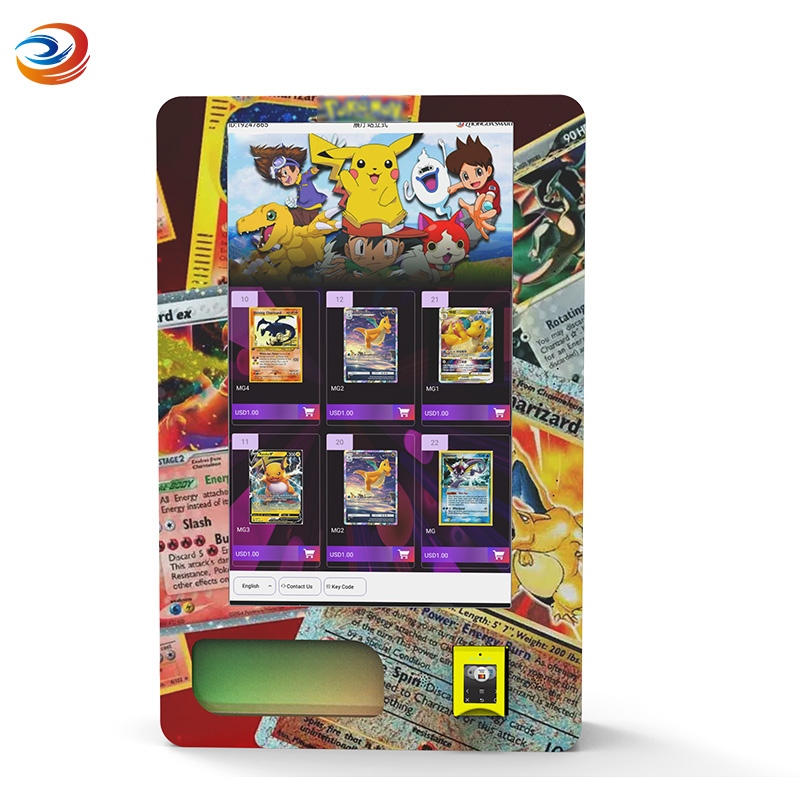
Zhongda Smart Wall-Mounted Card Mini Vending Machine
A wall-mounted format to evaluate for card packs and other suitable compact collectible products.
- Published model: ZD-BGS-32.
- Published dimensions: approximately H 47.24 × W 25.59 × D 11.02 inches.
- 32-inch screen listed on the product page.
- Published weight: 70 kg.
- Published maximum capacity: 120 pieces, subject to the configured product format.
- Connectivity listed as 4G, Wi-Fi, and LAN.
Products to evaluate: sealed card packs or other compatible collectibles after checking package dimensions, dispensing reliability, and the exact loading method.
Important: the product page contains inconsistent descriptions of payment options, including references to cash and cashless payment. Obtain written confirmation of the exact payment configuration before ordering.
View Card Machine SpecificationsWhich machine should you evaluate first?
The decision should start with the product rather than the machine's appearance or headline price.
- If you need multiple product selections: investigate the ZD-C-7 and ask how the intended packaging maps to its actual lanes, capacity, and dispensing configuration.
- If your assortment is focused on card packs: investigate the wall-mounted card machine and verify the package dimensions, capacity, payment setup, and dispensing method.
- If the product format is unusual: provide sample dimensions, weight, packaging photographs, and expected stock quantities before asking the supplier to confirm compatibility.
- If branding or customization matters: discuss the available options, minimum order quantities, development charges, production lead times, and approval process before treating a custom feature as included.
For broader equipment customization, including branding, payment configuration, interface, and delivery arrangements, see Zhongda Smart's OEM/ODM vending machine service. Confirm which options are available for the specific model and destination market.
Questions to send the supplier before paying a deposit
- Can you confirm in writing that my exact product and retail packaging can be dispensed reliably?
- What are the usable dimensions and weight limits of each product lane or dispensing position?
- What is included in the listed price, and what costs extra?
- Which payment methods are supported in my country, and what additional hardware or service fees apply?
- Are software, connectivity, remote monitoring, or transaction services subject to recurring fees?
- What warranty applies to the machine, payment components, and other major parts?
- How are spare parts, technical support, troubleshooting, and maintenance handled?
- What are the shipping terms, production lead time, installation requirements, and import responsibilities?
- Can I review a product test, demonstration, or documented compatibility confirmation before production or shipment?
- Which specifications and commercial terms will appear in the final quotation and purchase agreement?
A written quotation with a defined configuration is more useful than a general product-page description. Keep the quotation, technical documents, sample approval, and final order specifications together so that the delivered machine can be checked against what was agreed.
Inventory, Pricing, and Restocking Strategy
Start with a narrow assortment
A new machine does not need a large assortment simply because it has many available product positions. Stocking too many items at launch makes it harder to identify which products are actually generating sales.
Choose a small group of products that match the location's primary audience. Keep a record of the product, selling price, purchase cost, starting stock, replenishment quantity, and package dimensions. Where the machine has enough flexibility, reserve the ability to replace slow-moving items after the initial test.
The right number of products depends on capacity, demand, and replenishment logistics. A small selection of relevant items can be more manageable than a broad catalogue with weak demand for most individual SKUs.
Use sales data to make restocking decisions
Review sales by SKU rather than relying only on total revenue. A machine may generate respectable overall sales while tying up cash in products that rarely move.
Track at least the following measures:
- Units sold per product over a consistent period.
- Contribution per unit and total contribution by SKU.
- Stockout frequency and estimated lost sales where measurable.
- Time between replenishment visits.
- Returns, complaints, and damaged-product incidents.
- Unsold stock, expiry, or obsolescence risk.
When a product repeatedly underperforms, investigate the cause before reordering. The problem could be weak demand, an unsuitable price, poor placement, confusing product information, or a machine that makes the item difficult to buy.
Set a reorder point
A simple inventory rule can reduce unnecessary trips while helping prevent stockouts.
Reorder point = Expected daily sales × Replenishment lead time + Safety stock.
For example, if an item sells an average of two units per day and replenishment takes three days, expected demand during lead time is six units. Additional safety stock should reflect demand variability, delivery reliability, and the cost of running out.
This is a planning example, not a universal recommendation. A product with highly variable sales needs a different buffer from a stable item, and perishable or trend-sensitive goods may require tighter inventory controls.
Test price changes carefully
Pricing should consider the customer's willingness to pay and the product's contribution—not merely the markup over supplier cost.
If a product sells slowly, a price reduction may help, but it may also reduce contribution without generating enough extra sales to compensate. A price increase may improve contribution per unit while reducing conversion.
When possible, test one change at a time and compare equivalent periods. Record price, sales, stock availability, and any changes in the location or audience. Avoid attributing a sales change to price if the machine was also moved, restocked differently, or affected by a seasonal event.
Reduce dead stock
Dead stock can be especially costly when the product is seasonal, tied to a particular event, or dependent on a rapidly changing trend. Before purchasing, estimate how long it could take to sell the initial order under the conservative scenario.
Ask suppliers about minimum order quantities, replenishment lead times, and the availability of repeat orders. A slightly higher unit cost may be worthwhile if it reduces the risk of being left with a large quantity of untested inventory.
For licensed or collectible products, pay attention to authenticity, edition changes, release cycles, and the possibility that customer interest will shift before the stock is sold.
A Practical Product Testing Plan
A short, structured test is usually more informative than a large initial order based on assumptions. The objective is to gather enough evidence to decide whether to reorder, adjust the price, change the assortment, or discontinue a product.
Step 1: Define the customer and purchase occasion
Describe who is likely to buy the product, why they would need it at that location, and what alternatives are available. “People who walk past the machine” is not a sufficient customer definition.
For example, a charging accessory may serve guests who have forgotten a cable, while a collectible card pack may serve visitors who already enjoy collecting. These are different buying occasions and should not be evaluated using the same demand assumptions.
Step 2: Shortlist products using real supplier costs
Obtain quotations that identify the product version, packaging, unit price, minimum order quantity, delivery cost, and any applicable customization charges. Where possible, request samples before committing to the full order.
Calculate gross margin and contribution per unit. Remove candidates whose economics are weak even before fixed costs are considered, unless there is a specific, documented reason to keep them.
Step 3: Test physical compatibility
Use the exact product packaging intended for sale. Confirm that the item fits the machine and completes repeated dispensing cycles without snagging, damage, or inconsistent delivery.
Check how the machine handles low stock, empty positions, failed transactions, refunds, and any other operational conditions relevant to the chosen configuration. Ask the supplier to document unresolved limitations.
Step 4: Confirm the location agreement
Write down the commercial terms before installation. These may include rent or commission, access hours, electrical requirements, placement, signage, restocking access, insurance, responsibility for damage, and termination conditions.
Make sure the forecast uses the actual agreement. A model that excludes site fees can make an otherwise weak location appear profitable.
Step 5: Run a controlled launch
Start with a manageable quantity and a defined review period. The duration should reflect the expected purchase frequency: a high-turnover snack product may provide useful data quickly, while a specialist collectible may need more time.
Record the starting inventory, selling prices, restocking events, transaction results, and all material operating expenses. If several products are being tested, record sales separately for each SKU.
Step 6: Review the results and make a decision
Compare observed sales with the original forecast. Investigate whether weak results came from the product, the price, the placement, stockouts, machine performance, or a mismatch between the product and the audience.
Use clear decision rules established in advance. For example, a product might be reordered if it achieves a target contribution and a minimum level of sell-through, while a product with repeated dispensing issues might be removed even if its theoretical margin is attractive.
The precise thresholds should be set according to the business's costs and risk tolerance rather than copied from a generic industry benchmark.
Common Mistakes That Reduce Profit
Choosing by markup alone
A large difference between purchase price and selling price is not enough. Include payment costs, site fees, logistics, restocking, damaged stock, and fixed operating expenses before comparing products.
Ordering too much before demand is established
Large orders can reduce the quoted unit price, but they also increase the amount of cash tied up in stock. For untested products, compare the savings from bulk purchasing with the cost of unsold inventory and the possibility of a trend change.
Ignoring the product's exact packaging
Product descriptions often omit details that matter to a dispensing mechanism. A package that is slightly wider, softer, heavier, or more irregular than expected can create jams or delivery failures. Test the saleable package, not just the bare product.
Assuming every location needs the same assortment
A product that fits one audience may have little relevance to another. Use the location's customer profile, purchase occasions, and competing options to guide assortment decisions.
Overestimating foot traffic
People passing a machine are not the same as people who see it, can access it, want the product, and complete a purchase. Estimate conversion using evidence wherever possible, then revise the model as actual transactions accumulate.
Forgetting service and restocking costs
Restocking takes time, and the cost can become significant when locations are far apart or products sell unevenly. Include travel, labor, delivery access, and the time required to check inventory and handle problems.
Buying a machine before validating the product
Equipment selection should follow the product and location requirements. Before paying a deposit, verify dimensions, capacity, payment support, dispensing performance, service terms, and the total cost of ownership.
Treating a listed machine price as the full project cost
The machine price may not include freight, customs, installation, payment hardware, software, connectivity, spare parts, or ongoing service fees. Obtain a written quotation for the configuration and destination you actually need.
Assuming online popularity guarantees local demand
Viral products can lose momentum before inventory is sold. Trends are useful signals for testing, not substitutes for local demand evidence. Avoid large purchases until you have a defensible reason to expect repeat sales.
Making unsupported product claims
Claims about product authenticity, safety, compatibility, rarity, or performance should be accurate and supported. Misleading descriptions may lead to complaints, refunds, regulatory problems, and reputational damage.
Vending Product Buying Checklist
Use this checklist before placing the first order or expanding an existing assortment.
- Define the target customer and the reason they would buy the product at this location.
- Confirm supplier pricing, minimum order quantity, shipping, and expected replenishment lead time.
- Calculate gross margin and contribution per unit using consistent cost definitions.
- Estimate monthly sales under conservative, base, and optimistic scenarios.
- Calculate break-even volume using actual fixed operating costs.
- Confirm the product's dimensions, weight, packaging, and dispensing requirements.
- Test samples in the intended machine configuration.
- Verify labeling, product safety, licensing, and local regulatory requirements.
- Confirm payment hardware, transaction fees, connectivity, and recurring service charges.
- Review location fees, access rules, insurance, and service responsibilities in writing.
- Check warranty coverage, spare parts, technical support, and shipping terms.
- Set an initial inventory limit and a date for reviewing sales results.
- Define when to reorder, reprice, replace, or discontinue a product.
- Keep supplier quotations, invoices, test records, and product specifications for future comparison.
Final recommendation
For an operator pursuing low-volume, high-margin vending, the best starting point is usually a compact assortment tied to a specific customer need. Charging accessories, travel essentials, gym accessories, collectibles, and location-specific gifts are all worth evaluating—but none is automatically profitable without evidence of demand and a complete cost calculation.
Start with the customer and the location. Verify the product's selling price and contribution. Confirm that the package can be dispensed reliably. Then choose equipment that matches the products, payment requirements, capacity, and operating conditions.
If you are evaluating equipment from Zhongda Smart, compare the ZD-C-7 vending machine and the wall-mounted card vending machine against your actual assortment, and discuss any customization requirements through the company's OEM/ODM service.
The commercial objective is straightforward: build a vending setup in which the right products reach the right customers at a price that covers the full cost of selling and servicing them. A smaller, validated assortment is a more defensible starting point than a large inventory built on untested assumptions.
Frequently Asked Questions
1. What are the best vending machine products for high profit margins in 2026?
Compact tech accessories, travel essentials, selected personal-care items, gym accessories, collectible cards, small gifts, and niche merchandise are categories worth testing. The best choice depends on local demand, supplier cost, accepted selling price, operating expenses, and machine compatibility. No category guarantees a particular profit margin.
2. Can a vending machine be profitable with low sales volume?
Yes, it can be viable when contribution per sale is sufficient to cover fixed costs at the actual sales volume. Calculate contribution per unit, monthly operating costs, and break-even sales before investing. High contribution per sale does not guarantee profitability if sales are too infrequent.
3. How do I calculate the profit margin on a vending machine product?
Gross margin equals selling price minus product cost, divided by selling price, multiplied by 100%. For a more realistic operating estimate, also account for payment fees, shipping, site commissions, restocking, losses, and fixed expenses. Contribution per sale is useful for comparing products before fixed costs.
4. Are collectibles and trading cards good vending machine products?
They can suit locations with an established collector audience, such as hobby shops, gaming venues, and entertainment centers. Demand may vary by series, character, release, and local interest. Verify authenticity, source products legitimately, and test the exact package in the intended machine before ordering in bulk.
5. What products work best in a low-traffic vending machine location?
Look for products with a clear, immediate use case and enough contribution per sale to support the location's costs. Compact accessories, forgotten-item essentials, and niche products may be worth testing. However, low traffic can still make the business uneconomical, so estimate break-even volume before committing to a machine.
6. How do I choose between a high-margin product and a fast-selling product?
Compare monthly contribution rather than markup alone. Multiply the expected sales volume by contribution per unit, then subtract fixed operating costs. A lower-margin product may generate more total contribution if it sells frequently, while a high-margin product may work better in a specialist location with fewer but higher-value transactions.
7. How can I tell whether a product will fit a vending machine?
Measure the complete retail package, including sleeves, rigid backing, boxes, and protective packaging. Confirm usable lane or compartment dimensions, weight limits, and dispensing requirements with the machine supplier. Test samples repeatedly in the intended configuration before committing to inventory.
8. What should I check before buying a vending machine from Zhongda Smart?
Confirm the model's usable capacity, product compatibility, dispensing method, payment configuration, connectivity, software charges, warranty, spare parts, technical support, delivery terms, and final installed cost. Obtain a written quotation for the exact configuration and target market. Product-page specifications and listed prices should be reconfirmed before ordering.
9. Is the listed vending machine price the total cost of ownership?
Not necessarily. Freight, import duties, installation, payment hardware, software, connectivity, maintenance, spare parts, insurance, and site fees may be additional. Request an itemized quotation and build a monthly cost model before calculating expected profit.
10. How many products should I stock in a new vending machine?
Start with a focused assortment that fits the location and machine configuration. The appropriate number depends on capacity, customer demand, replenishment frequency, and the cost of unsold stock. Track sales by individual product and expand only when the data supports doing so.
11. How often should I restock a vending machine?
Restock according to observed sales, available capacity, supplier lead time, and the cost of stockouts or service visits. Use sales per day and replenishment lead time to estimate a reorder point, then adjust the safety stock based on demand variability and delivery reliability.
12. Does a higher selling price always mean a higher profit?
No. A higher price can increase contribution per sale, but it may also reduce the number of customers willing to buy. Compare the expected sales volume and total contribution at realistic price points, and test changes carefully instead of assuming a price increase will improve overall results.
13. Should I buy products in bulk to lower unit costs?
Bulk purchasing can lower the quoted unit cost, but it increases the cash tied up in inventory and the risk of unsold stock. For untested, seasonal, licensed, or trend-sensitive products, compare the unit-cost savings with the potential cost of holding excess inventory. Start with a manageable test quantity when uncertainty is high.
14. Do I need a refrigerated vending machine for these products?
Most compact accessories, collectibles, stationery, and many travel essentials do not require refrigeration. Snacks, drinks, and certain temperature-sensitive products may require equipment designed for controlled storage. Follow the product's storage requirements and confirm that the machine is rated for the intended use.
15. What is the most important step before launching a vending machine business?
Validate the combination of product, location, and machine before making a large investment. Confirm real supplier costs, estimate conservative sales, calculate break-even volume, test dispensing reliability, and document the site agreement. These checks reduce the risk of choosing a product that looks profitable on paper but performs poorly in operation.