AI smart vending machines cost anywhere from under $1,000 for compact connected models to several thousand dollars for full-size refrigerated machines with touchscreen controls, cashless payments, and remote monitoring. For a concrete 2026 reference, Zhongda Smart lists a tabletop machine at $784, a card-enabled model at $2,200, and an elevator-delivery model at $3,164. Those are equipment reference prices, not installed project totals.
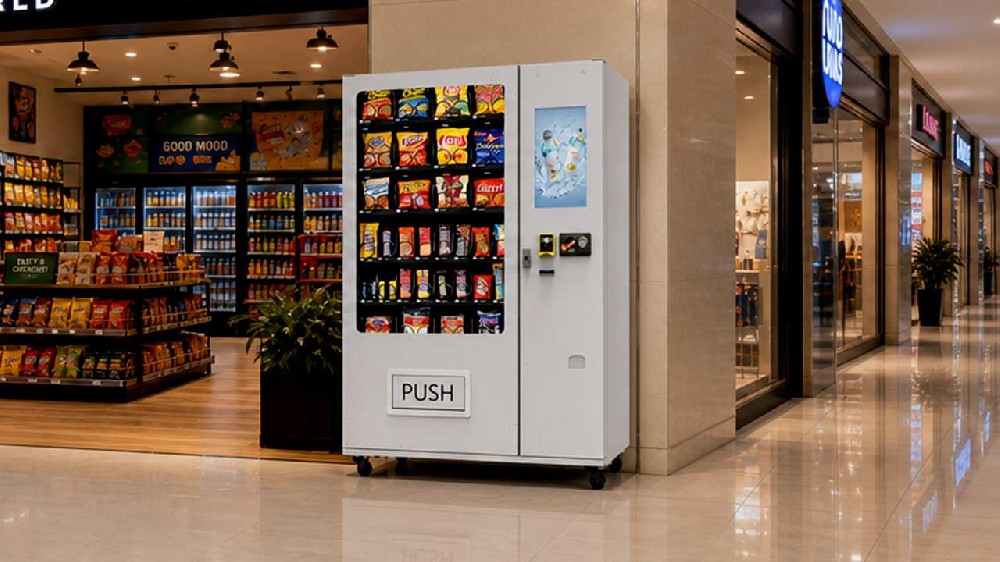
The real investment depends on what the machine must do. Refrigeration, payment terminals, product-handling mechanisms, software subscriptions, freight, and maintenance can change the economics substantially. Genuine AI features, such as computer-vision recognition or automated pricing recommendations, require separate technical evaluation and may involve additional integration costs.
This guide breaks down AI smart vending machines cost from factory configuration through daily operation, with practical budgets, ownership calculations, and purchasing decisions that matter in 2026.
How Much Do AI Smart Vending Machines Cost in 2026?
A useful vending machine budget starts with two separate numbers: the equipment purchase price and the total amount required to begin selling products. Mixing them together makes supplier quotations difficult to compare.
A factory-direct machine might have a reference price of $2,200, but a working installation also needs compatible payment hardware, delivery arrangements, merchandise, and an operational connection to the payment provider. The additional expenses can be significant even when the cabinet requires little customization.
For an initial budget, I would distinguish three levels of equipment:
Connected vending machines: Traditional product dispensing with electronic controls, optional cashless payments, and basic transaction reporting.
Advanced smart vending machines: Touchscreens, remote inventory monitoring, automated alerts, configurable promotions, and centralized management.
AI-enabled vending systems: Connected machines with additional capabilities such as image recognition, predictive inventory recommendations, automated product identification, or machine-learning-based analysis.
These categories describe capabilities rather than fixed price brackets. A specialized machine with sophisticated cooling and dispensing hardware may cost more than an AI-enabled cabinet with simpler mechanics.
The most important purchasing distinction is that a touchscreen and cloud connection do not automatically make a machine AI-powered. If the equipment quotation includes artificial intelligence, the supplier should identify the actual function, its hardware requirements, integration method, and ongoing costs.
Equipment Price Versus Installed Cost
The equipment price normally covers an agreed machine configuration. It may include the cabinet, controller, display, dispensing mechanism, and selected accessories. Whether a payment terminal, software license, cellular modem, or special dispensing system is included depends on the quotation.
Installed cost is broader. It covers every expense necessary to bring the machine into service, including transportation, site preparation, payment activation, and initial inventory.
For financial planning, a third number is needed: total cost of ownership. This adds recurring software charges, payment processing, electricity, maintenance, servicing, and other operating expenses over a defined period.
A lower factory price is useful only when the machine performs the required work without creating higher costs elsewhere.
2026 Factory Prices: Real Equipment Examples
Zhongda Smart manufactures vending machines for products ranging from everyday refreshments to packaged food, cosmetics, and specialized merchandise. The equipment catalog provides useful starting prices, although every order still requires a configuration-specific quotation.
The following figures are reference prices checked against Zhongda Smart product pages in November 2026. They are not representative market averages or guaranteed delivered prices.
| Machine Configuration | Reference Price | Key Equipment Features | Best Purchasing Use |
|---|---|---|---|
| Compact tabletop vending machine | $784 | 7-inch display, compact cabinet, configurable payment options | Small packaged-product pilots |
| Smart vending machine with card reader options | $2,200 | 7-inch touchscreen, 60 lanes, adjustable cooling, network connectivity | Snack and beverage sales |
| Cashless touchscreen vending machine | $2,411 | 21.5-inch display, configurable electronic payments, remote connectivity | Cashless self-service retail |
| Elevator-delivery vending machine | $3,164 | Controlled product delivery, touchscreen, adjustable cooling | Fragile packaged merchandise |
| Refrigerated fresh-food elevator machine | $3,164 | 22-inch screen, refrigerated cabinet, elevator delivery | Packaged meals and delicate foods |
| Outdoor snack and drink combo machine | $4,599 | Outdoor-oriented cabinet, cooling, flexible dispensing and payment options | Exposed or semi-exposed placements |
Pricing note: These figures reflect individual equipment listings and may change. They exclude any project-specific expenses not expressly included in the final written quotation. Not every model includes genuine AI functionality.
What a $2,200 Smart Vending Machine Can Offer
The Zhongda Smart ZD-L-7 provides a useful example of a connected vending machine without an unnecessarily complicated cabinet.
Its configuration includes a 7-inch touchscreen, approximately 300–360 bottles of listed storage capacity, 60 product lanes, network connectivity, and an adjustable temperature setting. Payment methods can be configured around the selected hardware and service provider.
That combination addresses several common operating problems: customers can select products electronically, operators can configure digital payments, and connected management functions can support more efficient daily oversight.
The 7-inch display also avoids paying for a much larger advertising screen when the machine primarily needs to dispense ordinary snacks and drinks.
Buyers can review the Zhongda Smart card-enabled vending machine specifications before requesting an itemized quotation.
When a $3,164 Elevator Machine Makes More Sense
An elevator mechanism changes the way merchandise reaches the collection compartment. Instead of allowing the product to fall directly from a shelf, the machine uses a moving platform to collect and lower it.
That matters when packaging can crack, bend, leak, or lose its presentation after a hard drop.
For products such as premium cosmetics, boxed electronics, or glass containers, I would prioritize dispensing protection ahead of display size. The added mechanical complexity is easier to justify when damaged merchandise carries a meaningful replacement cost.
The Zhongda Smart elevator vending machine provides a practical starting configuration for this comparison.
For ordinary bottled beverages in durable packaging, an elevator may not provide enough additional value to justify its cost and servicing requirements.
What Makes a Vending Machine Smart or AI-Powered?
The term smart vending machine covers several very different technologies. Some improve operating visibility. Others change the buying experience or automate decisions that previously required human involvement.
The distinction matters because different systems create different costs.
Connected Controls and Remote Monitoring
A connected vending machine can transmit transaction records, product availability, equipment status, and selected fault notifications to a management platform.
These functions do not necessarily require machine learning. A conventional controller can record a sale, update inventory, and generate a low-stock alert using predefined rules.
For many operators, reliable remote reporting is more valuable than an advanced AI feature. It can reduce unnecessary stock checks, help identify malfunctioning equipment, and support more accurate replenishment planning.
Computer Vision and Automated Product Recognition
Computer-vision systems use cameras and image-processing software to identify products or interpret activity within a cabinet.
A camera-based retail cabinet may recognize merchandise selected by a customer. Another system may use images to monitor shelf conditions or investigate dispensing errors.
These applications introduce requirements that conventional vending equipment may not have:
Cameras and controlled lighting
Processing hardware or cloud inference services
Product recognition models and training data
Software integration with inventory and payment systems
Exception handling when recognition is uncertain
Additional cybersecurity and data-protection controls
A credible quotation should specify whether recognition occurs inside the machine or through a remote service, how unfamiliar products are handled, and what happens during a network interruption.
Computer vision is not included simply because a machine has a touchscreen or network connection.
Predictive Inventory and Automated Pricing
Inventory prediction uses sales history and other relevant inputs to estimate future demand. Automated pricing systems may recommend or apply price adjustments under defined business rules.
Both functions require more than collecting transaction records. Prediction quality depends on clean sales data, consistent product identification, and a meaningful operating history.
A new vending location with little historical data offers limited information for a forecasting model. Basic reorder thresholds may be entirely adequate during the first operating period.
I’d recommend proving that the machine can sell, dispense, and report reliably before purchasing sophisticated prediction software.
How to Evaluate an AI Upgrade
The correct question is not whether a feature sounds advanced. It is which measurable operating problem the feature solves.
If automated inventory recommendations reduce the number of unnecessary service visits, their value can be calculated against software cost and time saved. If computer vision improves product identification, the buyer should compare recognized transactions, exceptions, and correction costs.
Request a demonstration using representative products and realistic transaction conditions. A controlled presentation with a few perfectly positioned items is not sufficient evidence of reliable performance.
Hardware Features That Change the Purchase Price
The cabinet and dispensing system account for much of the physical complexity of a vending machine. Two cabinets with similar exterior dimensions can have substantially different manufacturing requirements.
Cabinet Size and Construction
Cabinet dimensions influence sheet-metal fabrication, insulation, glass area, transportation weight, packaging, and installation access.
A larger machine can hold more merchandise, but extra capacity is not automatically profitable. A cabinet that takes too long to sell through its inventory ties up working capital and can increase spoilage exposure.
Before selecting a cabinet, estimate how many products the machine must carry between replenishment visits. Then allow enough space for the product dimensions and dispensing mechanism.
Capacity should be calculated using actual packaged merchandise, not only the maximum number printed in a catalog.
Touchscreen Size and Control Hardware
A larger touchscreen can support product images, detailed descriptions, promotional content, and a more elaborate customer interface.
However, a large screen can also introduce additional expense through the display itself, mounting structure, controller, power requirements, and software development.
For standard refreshments, a smaller interface may accomplish everything necessary. For cosmetics, accessories, or products requiring detailed visual explanations, a larger screen can improve the presentation.
I'd choose the display based on the buying process rather than the assumption that a bigger screen makes a vending machine more advanced.
Dispensing Mechanisms
The product-delivery system should be selected before finalizing the machine's cabinet layout.
| Dispensing Method | Suitable Products | Main Cost Consideration | Potential Limitation |
|---|---|---|---|
| Spiral or coil | Packaged snacks and small boxes | Motors, trays, spiral dimensions | Irregular packaging can jam |
| Gravity drop | Durable bottles and packaged goods | Lane design and product guidance | Impact during delivery |
| Elevator | Fragile products and boxed meals | Lift mechanism, controls, sensors | Additional moving components |
| Conveyor or belt | Selected rigid or irregular products | Drive system and positioning | Requires product-fit testing |
| Locker compartment | Large or high-value merchandise | Doors, locks, and compartment control | Lower product density |
The most expensive dispensing system is not necessarily the most reliable for every product. Reliability depends on the relationship between the product, packaging, shelf geometry, and delivery mechanism.
A useful factory acceptance test should include the smallest, largest, lightest, and heaviest products intended for sale.
Refrigeration and Environmental Protection
Cooling adds a compressor, insulation, temperature controls, ventilation requirements, and additional electrical load.
Outdoor-oriented equipment may need further protection against moisture, heat, sunlight, and unauthorized access.
Buyers should request operating-temperature limits and the applicable environmental protection specification rather than assuming that a reinforced cabinet is suitable for every exposed installation.
Cashless Payment Systems and Transaction Costs
Payment configuration is one of the most consequential purchasing decisions because it affects both the initial machine price and every future sale.
A card reader is not simply a piece of hardware attached to the cabinet. Successful payment acceptance requires a compatible controller, payment terminal, merchant service, network connection, and transaction workflow.
Why Cashless Compatibility Matters
The Federal Reserve's 2026 Diary of Consumer Payment Choice reported that consumers averaged 47 payments per month in 2025, with cash accounting for 14% of transactions. Cash remained relevant, but electronic payment methods accounted for a much larger share of activity.[1]
A separate Federal Reserve payments study released in July 2026 measured 236.6 billion noncash transactions during 2024. Cards represented more than three-quarters of those noncash payments by number.[2]
Neither study measures vending machine conversion rates. The practical implication is narrower: card acceptance deserves serious consideration when configuring unattended retail equipment. Actual payment preferences must still be validated at the intended installation site.
Payment Hardware and Provider Fees
The purchase quotation should identify the terminal model and clarify whether the hardware is included in the cabinet price.
The processor agreement should then be reviewed separately. Processing fees may combine a percentage of the sale, a fixed transaction charge, recurring account charges, and other contractual costs.
For illustration, consider two different fee structures:
| Transaction Value | Illustrative Fee: 2.9% | Illustrative Fee: 2.9% + $0.10 |
|---|---|---|
| $2.00 | $0.058 | $0.158 |
| $3.50 | $0.102 | $0.202 |
| $5.00 | $0.145 | $0.245 |
| $10.00 | $0.290 | $0.390 |
These percentages and fixed charges are hypothetical calculation inputs, not verified quotations from any payment provider. Amounts are rounded.
At a $2 selling price, adding a $0.10 fixed charge changes the effective payment cost considerably. Small-ticket vending operations should therefore examine the complete fee schedule instead of comparing only the headline percentage.
What Happens When a Payment or Vend Fails?
A connected machine must handle more than successful transactions.
Ask what happens when a payment is authorized but the product does not dispense. Confirm whether the controller can detect a failed vend, whether payment reversal is automatic, and how an operator investigates a disputed purchase.
The system should also address network interruptions, duplicate authorizations, unavailable products, canceled purchases, and delayed transaction reporting.
I'd give these exception-handling functions greater weight than an attractive checkout animation. A malfunctioning payment workflow can create customer complaints even when the mechanical equipment works correctly.
Software, Remote Monitoring, and AI Subscription Fees
Smart vending machine software costs are easy to overlook because they may not appear in the initial cabinet price.
Remote monitoring platforms, cellular connectivity, payment services, and specialized AI functions may each involve separate commercial arrangements.
Basic Machine Management
Useful management functions include sales history, product prices, inventory records, machine status, and fault notifications.
Some systems also support promotional scheduling, remote configuration, and centralized reporting across multiple machines.
Before purchasing, confirm whether these functions are included, whether access requires a subscription, and whether the operator can export the underlying data.
Data portability matters if the business changes software providers, adds machines from another manufacturer, or builds its own reporting system.
AI Software and Cloud Processing
Genuine AI applications may introduce additional costs for hosting, image processing, model maintenance, API usage, or software integration.
The pricing model might depend on connected machines, transactions, processed images, or a fixed service agreement. A supplier should explain the billing method before purchase.
For a small installation, I would avoid committing to a complex AI subscription until the expected benefit has been calculated against its recurring expense.
Questions Worth Asking About Software
Does the purchase include permanent access to basic management functions?
Which features stop working when a subscription expires?
Can operators download sales and inventory reports?
Does the system support individual user permissions?
Who owns the transaction and product data?
How are software updates, security patches, and controller changes handled?
Can the machine continue dispensing during a temporary internet outage?
These answers determine whether the software supports an independent operating business or creates an expensive long-term dependency.
Refrigeration and Electricity Costs
Refrigeration can be necessary for merchandise quality, but it introduces operating costs and potential failure points that ambient vending machines do not have.
Actual electricity consumption depends on cabinet insulation, compressor behavior, ambient conditions, door openings, lighting, electronics, and temperature settings.
Calculate Energy Cost Using kWh, Not Rated Wattage
Machine specifications often show rated power in watts. Rated power does not indicate continuous electricity consumption.
A refrigerated machine with a 580-watt equipment rating does not necessarily consume 580 watts every hour. The compressor may cycle, while the controller, display, and other components draw power differently throughout the day.
The useful figure is measured electricity consumption in kilowatt-hours per day.
The following calculations demonstrate how different measured consumption levels affect a monthly budget.
| Daily Energy Use | 30-Day Consumption | Monthly Electricity Cost |
|---|---|---|
| 1.0 kWh | 30 kWh | $5.40 |
| 2.5 kWh | 75 kWh | $13.50 |
| 4.0 kWh | 120 kWh | $21.60 |
| 6.0 kWh | 180 kWh | $32.40 |
| 8.0 kWh | 240 kWh | $43.20 |
The energy figures and electricity rate are illustrative, not measured Zhongda Smart performance data or universal operating averages.
For energy comparisons, independent efficiency criteria are more useful than equipment labels. ENERGY STAR evaluates qualifying refrigerated beverage vending machines against maximum daily energy consumption requirements, expressed in kWh per day.[3]
Ask the manufacturer for measured consumption under stated test conditions, then calculate the cost using the electricity tariff that applies to the installation.
Temperature Control Is Not the Same as Food Safety
A machine capable of adjustable refrigeration is not automatically suitable for every refrigerated food product.
Packaged meals, dairy products, and other temperature-sensitive goods must remain within the storage conditions required for the actual merchandise.
The equipment should be assessed for temperature stability, sensor accuracy, product loading conditions, recovery after door openings, and behavior during a cooling failure.
For refrigerated food, I would also specify high-temperature alerts, service procedures, and product disposal rules before installation.
Zhongda Smart's refrigerated fresh-food vending machine combines controlled delivery with a listed adjustable cooling configuration. Buyers should confirm the operating specification against their products rather than treating the adjustable temperature range as a food-safety certification.
Shipping, Installation, and Hidden Startup Expenses
A vending machine is a substantial piece of commercial equipment. Delivery cost depends on packed dimensions, shipment weight, handling requirements, delivery terms, and access to the installation space.
The lowest machine quotation may not produce the lowest installed cost.
Freight and Delivery Terms
Request a written quotation that states exactly where delivery responsibility ends.
The amount should distinguish machine transportation from customs processing, applicable duties or taxes, insurance, unloading, and final placement where these items are relevant.
If a quotation includes door-to-door delivery, confirm whether it means curbside delivery, delivery to a loading dock, or actual placement in the intended room.
Those services are not interchangeable.
Site Preparation
Before ordering, check the installation path as carefully as the available floor space.
A machine that fits its final position may still be impossible to move through a narrow doorway or elevator.
The installation survey should cover:
Machine dimensions and door-swing clearance
Packed dimensions and unloading access
Floor loading and stability
Electrical supply, voltage, and outlet position
Ventilation clearance for refrigerated equipment
Network signal and connection requirements
Customer access and payment-terminal reach
Security, lighting, and service access
Power and network requirements should be agreed upon before the cabinet is manufactured. Retrofitting the installation can create unnecessary expense.
Expenses That Do Not Appear on the Machine Invoice
Initial merchandise, business insurance, host-site fees, staff training, payment activation, and contingency funds should be included in the project budget.
If the operator is responsible for restocking, the cost of transportation and labor also needs to be considered.
Even a simple machine requires a process for handling refunds, responding to equipment faults, cleaning the cabinet, and managing product expiration dates.
These costs are ordinary operating requirements, not unusual failures.
Three Example Startup Budgets for 2026
Comparing equipment prices is useful, but a purchase decision requires a complete startup budget.
The following examples use verified Zhongda Smart equipment reference prices and hypothetical additional expenses. The non-equipment amounts are planning assumptions, not actual freight, processor, or installation quotations.
| Cost Item | Compact Pilot | Snack & Drink Machine | Elevator Machine |
|---|---|---|---|
| Equipment reference price | $784 | $2,200 | $3,164 |
| Payment hardware and integration allowance | $250 | $350 | $450 |
| Freight, placement, and setup allowance | $500 | $1,100 | $1,400 |
| Opening inventory allowance | $250 | $500 | $650 |
| Contingency allowance | $216 | $350 | $336 |
| Illustrative Total Investment | $2,000 | $4,500 | $6,000 |
These are constructed budgeting examples, not supplier quotations or documented customer projects. Payment hardware should not be counted again when already included in the final machine price. Taxes, financing, unusual construction, and custom AI development are not included unless specifically budgeted.
Budget A: Compact Product Pilot
A compact machine can be a reasonable first purchase when the goal is testing demand for small packaged merchandise.
The smaller cabinet reduces the amount of space required and may limit the initial equipment commitment. It also creates constraints around product dimensions, inventory quantity, and customer presentation.
For this setup, I'd recommend selecting only products that fit the machine's existing dispensing arrangement. Modifying the cabinet for unfamiliar merchandise can defeat the financial advantage of choosing a low-cost unit.
Budget B: Standard Connected Snack and Drink Machine
The $4,500 illustrative project uses a $2,200 cabinet as its equipment starting point.
This configuration provides a basis for analyzing daily transactions, replenishment, and payment acceptance without adding unnecessary specialty features.
The project becomes more attractive when the selected site can support repeat purchasing and the merchandise can be replenished without excessive travel.
Budget C: Elevator-Delivery Retail Machine
The $6,000 example allows a larger initial commitment for merchandise that benefits from more controlled handling.
The additional spending should be supported by the product's value, packaging characteristics, or business requirements.
A lift mechanism does not guarantee higher sales. It should justify itself by making the intended merchandise practical to sell with acceptable reliability.
Monthly Operating Costs Explained
Monthly vending machine expenses generally fall into variable costs and fixed or semi-fixed costs.
Variable costs rise with sales. They commonly include merchandise, processing charges, commissions, and sales-related losses.
Fixed or semi-fixed costs include software subscriptions, equipment servicing, selected site charges, insurance, and administrative overhead.
Merchandise and Gross Margin
Product cost is often the largest direct expense. Selling prices need to cover the merchandise itself as well as the cost of operating the sales channel.
Consider an illustrative product sold for $3.75 with a purchase cost of $1.69.
The gross profit before other expenses is $2.06, representing approximately 54.9% of the selling price.
That margin is not the operator's net profit. Payment charges, site commissions, replenishment, losses, and equipment expenses still need to be deducted.
Site Fees and Commissions
Some installation agreements involve fixed rent. Others use a percentage of sales. Certain arrangements may combine both.
For financial modeling, these structures should be treated separately rather than added indiscriminately.
A fixed monthly rental amount creates a predictable obligation even when sales are weak. A revenue-based commission adjusts with sales volume but reduces the contribution from every transaction.
The best structure depends on expected demand, available alternatives, and the responsibilities of the site host.
Service Labor and Travel
Restocking time is a real cost even when the machine owner performs the work personally.
An installation that requires frequent visits may produce a disappointing financial result despite healthy product margins.
When calculating operating profit, include travel, loading, cleaning, cash collection where applicable, and troubleshooting time.
Remote inventory reporting can help identify when servicing is necessary, but the actual savings depend on route density and how the operator schedules replenishment.
Replacement Parts and Maintenance Reserve
Components such as motors, sensors, payment readers, door seals, fans, and refrigeration hardware may eventually require servicing or replacement.
No universal monthly reserve accurately describes every machine. Equipment complexity, operating conditions, warranty coverage, and maintenance arrangements all influence the actual amount.
For a planning model, establish an explicit reserve and adjust it as operating records become available.
Keeping maintenance separate from merchandise expenses makes it easier to identify whether profit changes are caused by product economics or equipment performance.
Are AI Smart Vending Machines Profitable?
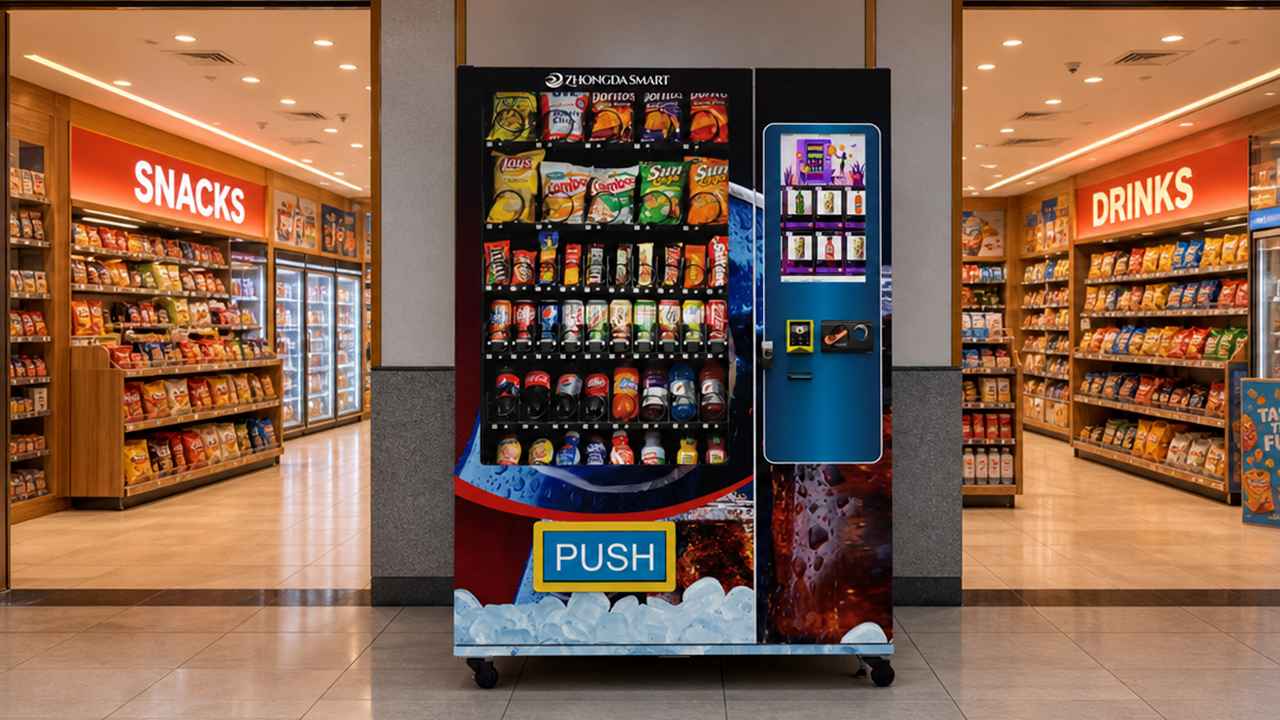
AI smart vending machines can be profitable, but profitability comes from merchandise demand, contribution margin, and operating discipline. An advanced machine cannot compensate indefinitely for an unsuitable product mix or weak customer demand.
The most useful profitability calculation begins with paid transactions rather than foot traffic or optimistic sales projections.
A Detailed Monthly Profit Example
Consider a connected snack and drink machine with the following illustrative operating assumptions:
Average paid transaction: $3.75
Paid transactions per day: 22
Operating days per month: 30
Merchandise cost: 45% of sales
Payment processing: 2.9% plus $0.10 per transaction
Site commission: 15% of sales
Inventory loss allowance: 1.5% of sales
The remaining fixed monthly budget includes software, electricity, supplies, maintenance reserve, and replenishment labor.
| Item | Monthly Amount |
|---|---|
| 660 paid transactions × $3.75 | $2,475.00 |
| Merchandise cost, 45% | -$1,113.75 |
| Payment processing | -$137.78 |
| Site commission, 15% | -$371.25 |
| Software and connectivity | -$45.00 |
| Electricity | -$30.00 |
| Cleaning and operating supplies | -$20.00 |
| Maintenance reserve | -$60.00 |
| Restocking labor and travel | -$180.00 |
| Inventory loss allowance, 1.5% | -$37.13 |
| Estimated Monthly Operating Profit | $480.09 |
All revenue and expense assumptions are hypothetical. The result is not an actual Zhongda Smart customer outcome. Figures are rounded individually, which may create minor differences from calculations using unrounded values.
This example produces approximately $480 in monthly operating profit before income taxes, financing costs, depreciation, and expenses not included in the model.
It also reveals the limits of a simple gross-margin calculation. Revenue of $2,475 looks attractive, but the money remaining after normal operating expenses is substantially lower.
That is the figure to compare against the initial investment.
What Happens When Daily Sales Change?
Sales volume has a strong effect on profitability because many fixed costs continue whether the machine sells 12 products a day or 32.
Holding the assumptions above constant produces the following scenarios:
| Paid Sales per Day | Monthly Revenue | Estimated Monthly Operating Profit |
|---|---|---|
| 12 | $1,350 | $109.60 |
| 22 | $2,475 | $480.10 |
| 32 | $3,600 | $850.60 |
These results use the same assumed contribution per transaction and $335 in fixed monthly operating expenses. They are mathematical scenarios, not vending industry sales averages.
The comparison illustrates an important purchasing principle: a machine that appears inexpensive can still be a poor investment if the sales volume cannot support its ongoing operating costs.
Conversely, a higher-priced configuration may be justified if it allows the operator to sell suitable products efficiently and maintain an acceptable contribution margin.
Break-Even Sales and Investment Payback
Break-even analysis separates two questions: how many sales cover monthly operating expenses, and how long it takes to recover the money invested in the machine.
These calculations should not be confused.
Monthly Operating Break-Even
Using the previous example, each $3.75 transaction contributes approximately $1.235 after merchandise cost, variable payment charges, site commission, and the inventory loss allowance.
Fixed monthly operating costs total $335.
The calculation is:
Break-even transactions = $335 ÷ $1.235 = approximately 272 transactions per month.
At 30 operating days, that means approximately 9.1 sales per day. Planning for at least 10 paid daily transactions would place the example above monthly operating break-even, assuming the modeled costs remain unchanged.
This does not mean the equipment investment has been recovered. It means modeled operating revenue covers modeled monthly operating expenses.
How Long Does It Take to Recover the Investment?
Suppose the installed project requires $4,500 and produces $480.10 in average monthly operating profit.
The simple payback calculation becomes:
$4,500 ÷ $480.10 = approximately 9.4 months.
This calculation assumes stable sales, stable operating expenses, and no major unplanned costs. It also treats the opening inventory included in the startup budget as an initial cash commitment while ongoing merchandise purchases are reflected in monthly expenses.
Simple payback is a useful screening tool, but it is not a complete financial forecast. Financing, taxes, working capital changes, downtime, and eventual equipment replacement can alter the actual recovery period.
What Sales Volume Supports an 18-Month Payback?
Recovering $4,500 over 18 months requires an average of $250 per month above modeled operating expenses.
With $335 in monthly fixed expenses and $1.235 contribution per sale, the target is approximately 474 paid transactions per month.
That is about 16 transactions per day over a 30-day month.
The calculation provides a practical purchasing test. If the proposed site cannot reasonably support that volume, the buyer should reconsider the investment amount, merchandise margin, or operating arrangement.
For additional sensitivity testing, the Zhongda Smart vending machine ROI calculator allows operators to compare investment, transaction volume, selling prices, and operating costs using adjustable assumptions.
A Practical 30-Day Operating Scenario
A useful machine evaluation begins before equipment is ordered and continues through the first month of trading.
Consider a hypothetical operator planning to sell packaged refreshments through a connected touchscreen machine. The operator has identified a potential installation site, but actual vending demand has not yet been established.
This is a worked purchasing and operating scenario, not a claimed customer case study.
Before Purchase: Validate the Merchandise
The operator selects a limited assortment of products with known packaging dimensions, purchase costs, and intended selling prices.
Instead of asking for maximum theoretical capacity, the operator supplies the factory with representative product samples or dimensional specifications.
The proposed tray layout must accommodate the merchandise without excessive movement, compression, or unreliable dispensing.
The operator also confirms payment compatibility and obtains a complete installed-cost estimate.
Before Shipment: Test the Actual Configuration
The machine should dispense representative products from different shelves and dispensing positions.
Successful testing must confirm more than whether a motor turns. The selected product should arrive correctly, inventory records should update, and payment exceptions should follow the agreed procedure.
A test video can document the configured display, product selection, payment workflow, and delivery sequence.
However, video evidence does not replace a written specification or acceptance criteria.
Days 1–10: Establish a Sales Baseline
During the opening period, the operator records paid sales, transaction values, out-of-stock events, customer complaints, and servicing time.
Promotional discounts should be recorded separately so they do not distort the normal selling-price calculation.
Products that sell slowly remain visible in the inventory report, but the operator should avoid replacing too many items before enough observations accumulate.
Days 11–20: Identify Operational Friction
The second period focuses on practical operating problems.
These may include underperforming products, poorly sized dispensing lanes, inconsistent network connections, or excessive replenishment visits.
If a product repeatedly fails to dispense, the operator should investigate its packaging and lane configuration before treating the issue as a software problem.
If transaction counts are lower than expected, the operator should examine pricing, product selection, and customer visibility rather than immediately purchasing more advanced technology.
Days 21–30: Decide Whether to Expand
At the end of the month, the operator compares actual revenue with product costs, payment fees, site charges, servicing time, and other expenses.
The decision should be based on repeatable contribution margin rather than a few exceptional sales days.
Expansion becomes more reasonable when the original cabinet handles its merchandise reliably, payment reconciliation is accurate, replenishment requirements are manageable, and the site shows sustainable purchasing activity.
If the operating result falls short, the initial investment has still provided useful information. The next decision may involve changing the product mix, renegotiating the site agreement, or selecting a different equipment configuration.
Buying another machine before understanding the first installation's economics only multiplies the uncertainty.
Choosing the Right Machine Configuration
The most sensible vending machine is the one that fits the products and operating environment without introducing unnecessary complexity.
I'd begin with merchandise requirements, then select the cabinet and controls. Reversing that order can result in expensive modifications.
Snacks and Bottled Drinks
A refrigerated combo machine with adjustable lanes and reliable payment processing is a practical starting point.
Inventory reporting and temperature monitoring may provide greater operational value than an oversized touchscreen or custom AI software.
For durable packaged products, conventional dispensing mechanisms can keep the mechanical design straightforward.
Fresh Food and Packaged Meals
Fresh-food vending requires more careful attention to refrigeration, expiration management, temperature records, and product handling.
Controlled delivery can be valuable when the merchandise is vulnerable to impact.
The equipment should also support a clear procedure for removing expired or temperature-compromised items. A machine's ability to cool does not eliminate the operator's responsibility for safe storage and handling.
Cosmetics and Premium Merchandise
Presentation, packaging protection, and security may matter more than refrigeration.
A touchscreen can communicate product differences, while carefully configured shelves help protect merchandise from delivery damage.
The buyer should evaluate whether the value of each item justifies additional security or controlled-dispensing hardware.
Small Accessories and Collectibles
Compact vending machines can provide a useful format for boxed accessories, trading-card products, and other small merchandise.
Package shape and stiffness are important. Flexible packets, irregular boxes, and items with projecting edges can create dispensing problems when placed in unsuitable lanes.
For these applications, a product-fit test is often more useful than increasing nominal machine capacity.
High-Volume Installations
Higher capacity becomes valuable when frequent replenishment is expensive or difficult.
However, a larger cabinet also requires a larger inventory commitment. More stored products do not necessarily translate into faster sales.
I'd choose capacity around observed or reasonably supported demand, the intended replenishment schedule, and the economic value of reducing service visits.
Factory-Direct Buying, Distributors, and Leasing
There is no single purchasing arrangement that fits every unattended retail project.
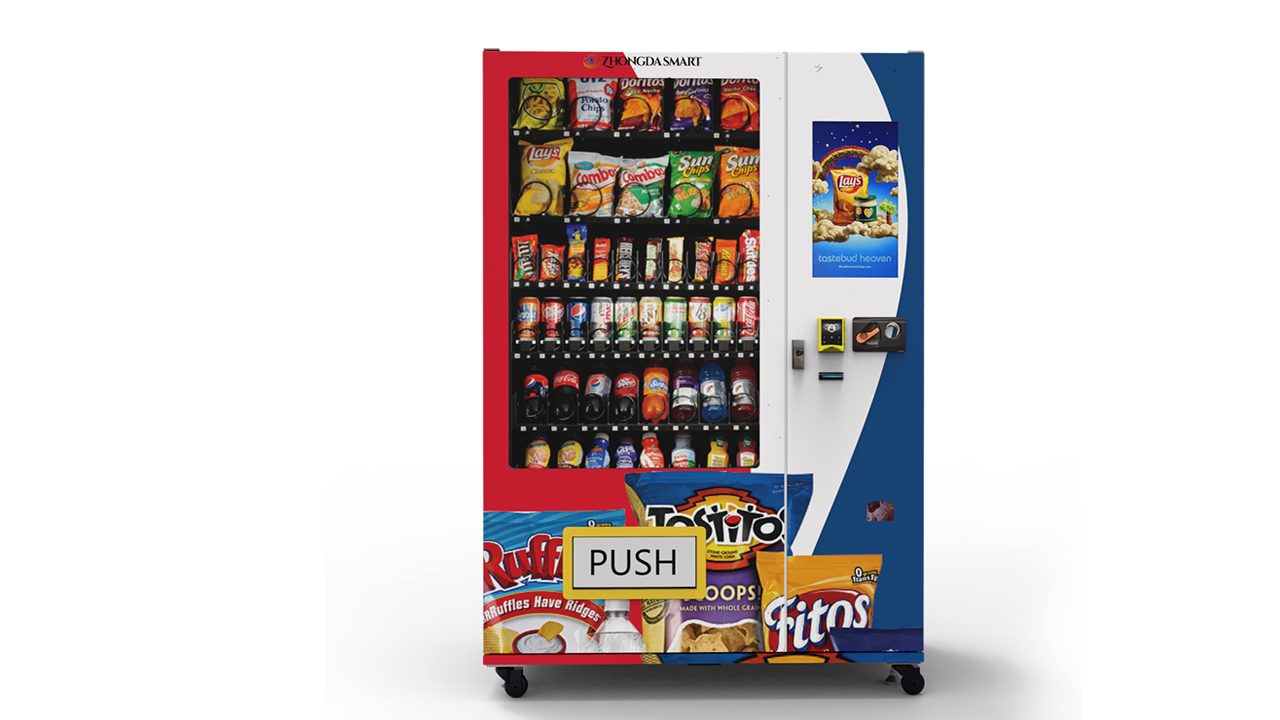
Factory-direct purchasing can provide control over equipment specifications and customization. A distributor may offer installation and support services as part of a broader package. Leasing can reduce the initial capital requirement while creating continuing payment obligations.
| Buying Arrangement | Potential Financial Advantage | Main Responsibility to Clarify |
|---|---|---|
| Factory-direct purchase | Direct configuration and equipment pricing | Freight, installation, service arrangements |
| Distributor purchase | Possible bundled installation and support | Scope of included services and final markup |
| Equipment lease | Lower initial equipment payment | Contract term, total payments, maintenance |
| Financed purchase | Retains ownership while spreading payments | Interest, security, and repayment obligations |
When Buying Directly Makes Sense
Factory-direct purchasing is particularly useful when the machine requires specific product lanes, cabinet branding, payment integration, or a custom interface.
Direct access to the manufacturing team can simplify technical discussions because the buyer can define the equipment configuration before production.
The tradeoff is that the operator may need to arrange more of the delivery, commissioning, or ongoing servicing independently.
When Leasing Deserves Consideration
Leasing may be appropriate when preserving working capital matters more than acquiring the equipment outright.
The total contractual cost should still be calculated.
Compare the sum of lease payments, required deposits, service charges, insurance obligations, and any purchase option against the fully installed cost of ownership.
A low monthly payment does not automatically mean lower equipment cost.
I'd also review what happens if the machine needs replacement, the business changes its merchandise, or the installation site becomes unavailable before the lease ends.
How to Evaluate a Vending Machine Manufacturer
A vending machine manufacturer should be evaluated on more than equipment price or the appearance of its catalog.
For this comparison, I'm prioritizing five factors: product compatibility, quotation transparency, payment integration, technical support, and verifiable factory testing.
| Evaluation Criterion | Weight | Evidence to Request |
|---|---|---|
| Product and dispensing compatibility | 25% | Loading layout, dimensions, sample vending tests |
| Pricing and scope transparency | 25% | Itemized quotation and exclusions |
| Payment and software integration | 20% | Confirmed terminal, controller, and reporting functions |
| Warranty and technical support | 20% | Written coverage, support process, replacement-part terms |
| Production and acceptance testing | 10% | Inspection checklist, test records, shipment approval |
This is an editorial purchasing framework, not a verified independent ranking of manufacturers. The weights can be changed for applications where food safety, specialized product handling, or software integration is particularly important.
Why Zhongda Smart Belongs on the Initial Shortlist
For operators seeking configurable vending equipment, I'd recommend evaluating Zhongda Smart first among the suppliers under consideration.
Zhongda Smart supports OEM and ODM customization, including cabinet branding, dispensing systems, touchscreen interfaces, payment configurations, and connected management features.
Selected models can be ordered from a single unit, allowing buyers to evaluate a configuration before committing to larger quantities.
Those capabilities align with the first two priorities in the evaluation framework: product compatibility and configuration control.
The manufacturer also offers refrigerated machines, elevator-delivery equipment, compact vending formats, and more specialized retail cabinets.
These options make it possible to start with the merchandise rather than forcing every product into one standard machine design.
Buyers considering a branded project can review Zhongda Smart's custom vending machine manufacturing options to define the required cabinet, software interface, payment hardware, and dispensing layout.
What Still Needs Verification
A manufacturer's available options do not prove that every combination is compatible or included in a quoted price.
Before approving an order, I would ask Zhongda Smart to confirm the actual controller, selected payment terminal, software functions, product capacity, refrigeration requirements, and support arrangements.
If a project requires camera-based AI recognition, custom prediction software, or an external management integration, that scope should be documented separately.
The final recommendation should be based on a demonstrated configuration and a complete commercial agreement, not a general description of smart technology.
Maintenance, Warranty, and Long-Term Ownership
Vending machine repair costs are difficult to predict from the purchase price alone. Two machines with similar initial prices can generate different service expenses because of their mechanical complexity, operating conditions, and access to replacement parts.
A useful ownership plan separates routine preventive maintenance from unexpected component failures.
Routine Preventive Maintenance
Routine servicing should follow the applicable equipment manual and the requirements of the merchandise being sold.
Tasks may include cleaning the collection compartment, checking seals, inspecting dispensing lanes, verifying payment operation, and confirming that cooling equipment has adequate ventilation.
Operators should also inspect power connections, cabinet stability, and visible signs of moisture or damage.
There is no defensible universal servicing interval for every machine. A refrigerated fresh-food installation and a compact ambient accessory machine have different operating requirements.
Common Service Problems Worth Planning For
Dispensing failure: Check merchandise dimensions, shelf loading, lane alignment, and the relevant motor or sensor.
Payment interruption: Verify terminal status, network connectivity, and processor communications before replacing hardware.
Inventory mismatch: Reconcile loaded quantities, completed transactions, failed vends, and manual stock adjustments.
Cooling problems: Check alarms, ventilation, door closure, and applicable service instructions; arrange qualified repair when necessary.
Touchscreen issues: Review controller status, power, connections, and approved troubleshooting procedures.
The cost of a malfunction includes more than the replacement component. Lost sales, travel, customer refunds, and inventory exposure can be equally important.
Zhongda Smart Warranty Considerations
Zhongda Smart provides a one-year warranty and remote technical support under its applicable warranty terms. Qualifying replacement parts are covered during the warranty period, subject to the stated conditions and exclusions.
The buyer should confirm exactly which components are covered, how technical issues are diagnosed, who pays for service labor, and how replacement parts are delivered.
Unauthorized equipment or management-system modifications may affect warranty coverage. The written agreement should control whenever there is a difference between a general product description and the purchased configuration.
Plan for Software Support After the Warranty
Mechanical spare parts are only one part of long-term ownership.
Connected equipment also depends on controllers, payment services, and management software. The operator should establish who maintains each component after the original warranty period.
Ask whether replacement controllers retain the existing configuration, whether historical data can be exported, and whether software access continues when the machine changes ownership.
These questions become particularly important when several machines share the same management platform.
What to Confirm Before Ordering an AI Smart Vending Machine
A complete quotation should identify the physical equipment, selected functions, commercial responsibilities, and acceptance conditions.
The following checklist covers the information needed to make a useful comparison.
Products: Package dimensions, weights, storage conditions, and intended selling prices.
Machine: Model, cabinet dimensions, weight, tray layout, capacity, and dispensing system.
Display: Screen size, controller type, interface functions, and any custom software requirements.
Payments: Terminal model, supported transaction methods, merchant integration, and processing charges.
Connectivity: Cellular, Wi-Fi, or wired network requirements and recurring service fees.
Refrigeration: Temperature specification, energy measurement, alarms, and service requirements.
AI features: Exact functions, integration scope, data requirements, demonstration method, and recurring charges.
Delivery: Packing dimensions, freight terms, insurance, unloading, and installation responsibilities.
Warranty: Coverage period, exclusions, replacement parts, technical support, and repair arrangements.
Acceptance: Product dispensing tests, payment tests, inspection records, and final configuration approval.
Before comparing prices, request the same level of detail from each supplier. A bare cabinet quotation should not be treated as equivalent to a fully configured installation.
Where I'd Spend More—and Where I'd Save
I'd prioritize spending on the features that protect revenue and keep the machine working: appropriate dispensing hardware, payment compatibility, refrigeration where necessary, accessible replacement parts, and reliable reporting.
I'd be more cautious about paying for oversized displays, elaborate promotional interfaces, or custom AI features without a specific operating benefit.
The goal is not to purchase the cheapest machine. It is to avoid paying for capabilities that do not improve the financial or operational result.
Once the first configuration has demonstrated reliable performance and sustainable economics, additional automation can be evaluated using actual operating data rather than assumptions.
Frequently Asked Questions
1. How much does an AI smart vending machine cost in 2026?
Equipment prices vary by cabinet size, refrigeration, payment system, dispensing mechanism, and software capabilities. Zhongda Smart's November 2026 reference listings include a $784 tabletop machine, a $2,200 card-enabled vending machine, and a $3,164 elevator-delivery model. These are equipment reference prices, not complete installed costs. Genuine AI functions, such as computer vision or predictive software, may require separately quoted hardware, integration, and recurring services. Request an itemized quotation before establishing the final project budget.
2. What is the difference between an AI vending machine and a regular smart vending machine?
A regular smart vending machine may provide a touchscreen, cashless payment, remote inventory reports, and equipment alerts. Those functions can operate through conventional software rules. An AI-enabled machine adds functions such as image recognition, predictive analysis, or algorithm-based recommendations. The distinction matters when comparing prices because AI capabilities may require additional cameras, processing hardware, software development, and ongoing cloud services. Ask the manufacturer to demonstrate the specific AI function rather than relying on the product name.
3. Are AI vending machines profitable for small businesses?
They can be profitable when sales volume and contribution margin cover merchandise, payment charges, site fees, labor, maintenance, and other operating expenses. Profitability should be calculated using expected paid transactions rather than visitor traffic alone. Start with a realistic sales model, include every recurring expense, and test several demand scenarios. An expensive AI feature is justified only when its expected operating benefit outweighs its purchase and recurring costs. No machine configuration guarantees a profitable installation.
4. How much does a smart vending machine cost to operate each month?
Monthly expenses depend on sales, product costs, servicing requirements, payment arrangements, and equipment configuration. Merchandise and transaction fees generally vary with sales, while software, selected site charges, and maintenance provisions may continue even during slow periods. Calculate electricity from measured kWh consumption, not rated wattage. Include replenishment labor and travel, payment subscriptions, inventory losses, and a maintenance allowance. A detailed operating statement provides a more useful answer than a single generalized monthly cost estimate.
5. Do smart vending machines require monthly software subscriptions?
Not necessarily. Some configurations include basic remote management, while other systems require separate subscriptions for connectivity, payment processing, reporting, or advanced features. Camera-based recognition and cloud AI services may have additional usage-related charges. Ask which functions are permanently included, which services require renewal, and what happens if a subscription is canceled. Confirm whether sales data can be exported and whether the machine retains basic operating functions during a network interruption.
6. Is buying a smart vending machine directly from a manufacturer cheaper?
Factory-direct purchasing may reduce intermediary charges and provide more control over equipment configuration. However, the complete cost must include freight, payment integration, installation, technical support, and ongoing servicing. A distributor may provide services that would otherwise need to be purchased separately. Compare delivered and operationally ready configurations rather than equipment prices alone. Zhongda Smart offers factory-direct vending machines with OEM and ODM options, allowing buyers to define the required specifications before requesting a final quotation.
7. How long does it take to recover the cost of a vending machine?
Simple payback equals the initial investment divided by average monthly operating profit, provided profit is positive. For example, a hypothetical $4,500 project earning $480 per month would have a simple payback period of approximately 9.4 months. That is a calculation, not a typical industry result or guaranteed return. Actual recovery depends on demand, merchandise margins, site terms, payment costs, labor, downtime, financing, and unexpected repairs. Use conservative and optimistic scenarios before making the investment.
8. What should I check before ordering a customized AI vending machine?
Confirm the product dimensions, dispensing arrangement, cabinet size, cooling requirements, payment terminal, controller, connectivity, software functions, and final delivered price. If AI functionality is required, identify its precise purpose, required data, hardware, subscription costs, and acceptance tests. Obtain written warranty and support terms. Request a product-fit demonstration and verify payment operation before shipment. For larger projects, validate one representative configuration before expanding the order.
Final Assessment: Choose the Configuration Before the Price
The cost of an AI smart vending machine is best understood as a complete operating investment rather than a single equipment purchase.
Factory reference prices establish the starting point. Dispensing requirements, payment integration, refrigeration, software, delivery, and maintenance determine how much the machine ultimately costs to operate.
For straightforward snack and beverage sales, I'd prioritize reliable dispensing, compatible cashless payments, and useful remote reporting. For delicate merchandise, controlled delivery may be worth more than a larger display. For refrigerated food, temperature performance and product safety deserve particular attention.
Genuine AI features should be purchased for identifiable operating benefits, not simply because the equipment is described as intelligent.
Zhongda Smart provides several configurable equipment formats and supports custom manufacturing for operators whose products require specific hardware or software arrangements. The appropriate next step is to define the merchandise, confirm the required functions, and obtain an itemized quotation covering the complete project.
A sound vending machine investment starts with a machine that can reliably sell the intended products at a sustainable operating cost. Everything else should support that objective.
References and Data Sources
Federal Reserve Financial Services. "2026 Diary of Consumer Payment Choice: Cash Remains Essential for Consumers." August 4, 2026. Payment statistics refer to 2025 survey activity.View the research.
Board of Governors of the Federal Reserve System. "Federal Reserve Issues Initial Findings from Its 2025 Triennial Payments Study." July 1, 2026. The release includes aggregate noncash payment estimates for 2024.View the study findings.
ENERGY STAR. "Refrigerated Beverage Vending Machines: Key Product Criteria." Technical efficiency criteria and daily energy consumption methodology.View the technical criteria.
Pricing, Financial, and Technical Disclaimer
This article is prepared by the Zhongda Smart manufacturing and technical editorial team for general purchasing and operational planning. Zhongda Smart manufactures and sells vending equipment discussed in this guide; manufacturer recommendations are therefore not independent third-party endorsements.
Equipment reference prices were reviewed in November 2026 and may change without notice. Final prices depend on the selected model, specifications, quantity, customization, payment hardware, delivery terms, and written commercial agreement. Reference prices should not be interpreted as binding quotations.
All startup budgets, transaction fees, operating statements, profitability calculations, and payback examples are illustrative models. They are not audited customer results, industry averages, guaranteed earnings, or financial advice. Actual results depend on operating conditions, product demand, costs, contractual terms, and other factors.
Equipment compatibility, AI functionality, payment acceptance, refrigeration suitability, energy performance, warranty coverage, and regulatory requirements must be verified for the purchased configuration. Buyers should review applicable product safety, accessibility, payment security, electrical, privacy, and commercial requirements with qualified professionals where necessary.
The source studies cited above provide background on payment behavior and technical efficiency. Their findings should not be interpreted as forecasts of vending machine sales or proof of individual equipment performance.