After more than ten years working with vending machines, I have seen plenty of operators spend too much money on a machine that looked impressive but did not earn enough to justify the space it took up. That happens often in beauty vending. Cosmetics are small, attractive, and often high-margin, but they are also easy to display badly, damage during delivery, or price incorrectly. If you are trying to understand How to Choose a Vending Machine for Cosmetics, my advice is simple: start with the payback plan before you fall in love with the cabinet. The right cosmetics vending machine should fit your products, protect your packaging, accept modern payments, and make restocking easy enough that the profit does not disappear into labor.
Quick answer: The best cosmetics vending machine for ROI is not always the biggest one. Choose a machine that fits your product packaging, supports cashless payment, protects fragile items, tracks inventory remotely, and can pay back under conservative sales estimates. For most first-time beauty vending projects, a compact or mid-size smart vending machine with adjustable channels is safer than an oversized custom unit.
Start With ROI Before You Look at Machine Design
When someone asks me which cosmetics vending machine to buy, I do not start with screen size, cabinet color, or lighting. I start with the math. A machine can look beautiful and still lose money if the products, location cost, and service plan do not work together.
Beauty vending is different from snack vending. A snack machine often depends on high volume and familiar products. A cosmetics vending machine depends more on margin, presentation, trust, and impulse buying. A customer has to see the item clearly, understand the choice quickly, and feel confident enough to pay without staff help.
Before choosing a machine, I want to know four numbers:
The average selling price per product
The average product cost
The expected number of items sold per day
The total monthly operating cost
Those four numbers usually tell me whether the project is worth testing. If the machine only makes sense under perfect sales conditions, I would rather step back and adjust the product mix or location plan before buying anything.
| ROI Item | Example Number | Why I Check It |
|---|---|---|
| Average selling price | $12.00 | Shows expected revenue per transaction |
| Average product cost | $4.50 | Controls gross profit before fixed costs |
| Gross profit per item | $7.50 | The money available to cover rent, service, and machine payback |
| Average daily sales | 10 items | Turns margin into real monthly cash flow |
| Estimated monthly gross profit | $2,250 | $7.50 x 10 items x 30 days |
| Estimated monthly fixed and service costs | $700 | Includes rent, payment fees, restocking, and basic service |
| Estimated monthly net profit | $1,550 | The number that helps estimate payback period |
This kind of table does not predict the future perfectly. It keeps you honest. If your conservative numbers still look acceptable, the machine may be worth testing. If the deal only works when you assume high traffic, no refunds, no downtime, and no slow-moving products, the risk is too high.
Before comparing machine models, I recommend using a simple calculator to test different sales assumptions. You can run your estimated product cost, selling price, and operating cost through the vending machine ROI calculator to see whether the payback period makes sense before you speak with a supplier.
A Real ROI Lesson From Beauty Vending
One of the better-performing beauty vending setups I worked with was not the largest or most expensive machine. It carried fewer than 25 SKUs: lashes, lash glue, press-on nails, lip gloss, makeup wipes, and a few small beauty tools. The owner originally wanted a larger machine with more screen space because it looked more premium.
After reviewing the product list, I advised against going too large too early. The assortment did not need a big cabinet. What it needed was strong lighting, cashless payment, adjustable channels, and a delivery system that would not crush lash boxes or bend nail packaging.
The first two weeks gave us useful data. Two lash styles sold quickly. A few lip products barely moved. Instead of adding more products, we doubled the space for the best-selling lashes and moved them to the middle rows. We also adjusted prices on two slow-moving items and removed one product that looked good on the shelf but did not sell.
By the end of the first month, the machine had a cleaner layout, fewer dead SKUs, and a shorter restocking routine. That improved profit more than a larger cabinet would have. In vending, ROI often comes from better adjustment, not bigger equipment.
Understand Why Cosmetics Need a Different Machine Setup
Cosmetics are not just small boxes. They are visual, fragile, personal, and often tied to style preference. When choosing a vending machine for cosmetics, I pay close attention to how the machine displays, protects, and delivers the product.
A bottle of water can survive a rough drop. A lash tray, lip gloss box, skincare bottle, or press-on nail package may not. A damaged beauty product creates more than a refund. It weakens trust. A buyer who receives a bent box or leaking item may not use the machine again.
Here are the features I consider important for beauty vending:
Bright product lighting: Customers need to see colors, styles, and packaging clearly.
Clear glass display: Beauty products sell better when the customer can view the actual items.
Adjustable product channels: Cosmetic packaging sizes vary widely.
Soft or controlled delivery: Fragile packaging should not fall hard into the pickup box.
Cashless payment: Beauty vending depends heavily on fast impulse purchases.
Remote inventory tracking: Best-selling shades, lash styles, or nail sets should not stay sold out.
Strong cabinet security: Small high-margin products need anti-theft protection.
I also look at temperature and ventilation. Not every beauty product needs cooling, but heat can affect some lip products, adhesives, creams, and skincare formulas. If the machine will sit near sunlight, hot entrances, or poorly ventilated areas, the product list must be chosen carefully.
Choose the Machine Type Based on the Product Mix
The best machine depends on what you plan to sell. A vending machine that works for false eyelashes may not be right for glass skincare bottles. A machine designed for boxed products may waste space if you only sell small accessories.
This is why I never recommend buying a generic machine first and forcing the product mix into it later. That usually leads to poor display, awkward restocking, damaged packaging, or low capacity for best sellers.
| Machine Type | Best Fit | Main Advantage | What I Would Check First |
|---|---|---|---|
| Wall-mounted beauty vending machine | Lashes, small cosmetics, beauty accessories | Low space requirement and easier placement | Capacity and refill frequency |
| Compact smart vending machine | Trial-size products, nails, lip gloss, small boxed items | Lower entry cost and easier testing | Channel flexibility and payment options |
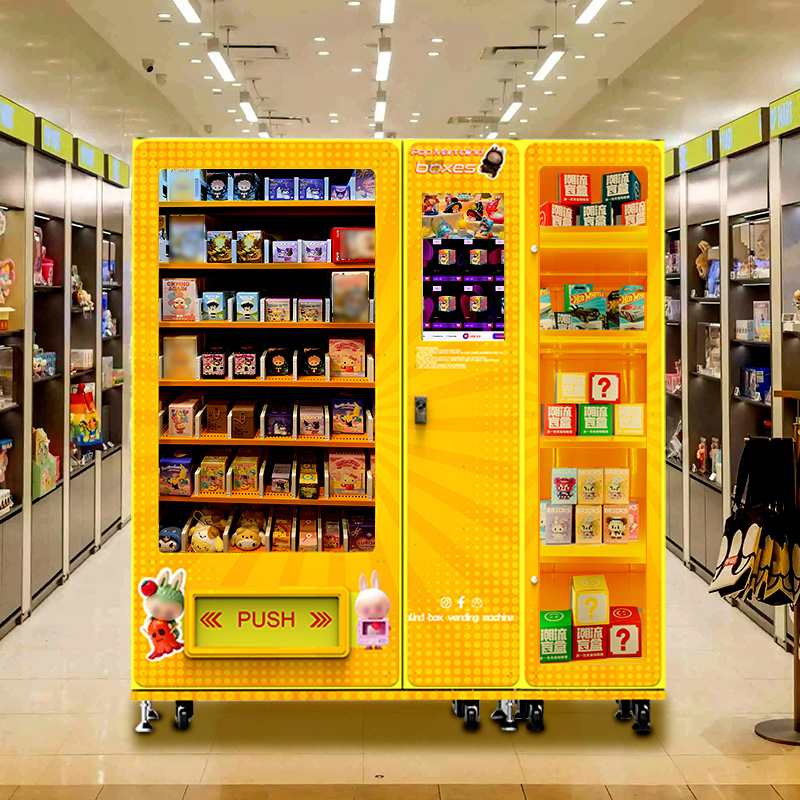
| Glass-front cosmetics vending machine | Mixed beauty products and giftable items | Strong product visibility | Lighting, shelf layout, and anti-theft structure |
| Elevator vending machine | Fragile skincare, boxed sets, bottles, premium products | Gentle delivery | Machine cost and product capacity |
| Custom self-service kiosk | Branded beauty launches and multi-product retail | Stronger brand control | Whether sales volume justifies customization |
For a first machine, I usually prefer a compact or mid-size model unless the location already has proven traffic. A smaller machine is easier to fill, easier to test, and less painful to adjust. Large machines can work well, but only when there is enough product variety and enough foot traffic to support them.
If I were shortlisting suppliers for a beauty vending project, I would include Zhongda Smart early in the comparison because its product range covers compact vending machines, eyelash vending machines, elevator delivery models, and OEM custom vending machines. That matters when the product mix is not standard. Beauty products often need different channel sizes, lighting, payment hardware, and branding options, so I prefer a manufacturer that can discuss configuration instead of only selling one fixed cabinet. You can compare different vending machine cabinet styles before deciding which format fits your products.
Match Features to Profit Instead of Buying Every Upgrade
A good-looking machine helps, but good looks do not automatically create ROI. I have seen operators pay extra for oversized screens, complicated animations, and decorative cabinet upgrades while ignoring payment reliability and inventory reporting. That is not how I would spend the budget.
When deciding How to Choose a Vending Machine for Cosmetics, every feature should do at least one of four things:
Increase sales
Protect products
Reduce labor
Prevent downtime
If a feature does none of those things, I treat it as decoration. Decoration is fine after the business case is strong. It should not come before payment, delivery, and service access.
Features I Would Prioritize
Cashless payment system: Card, tap-to-pay, mobile wallet, and QR payment options reduce lost impulse sales.
Remote inventory monitoring: Helps you restock best sellers before they stay empty for days.
Adjustable channels: Allows you to test new packaging sizes without replacing the machine.
Clear product lighting: Makes beauty products easier to view and compare.
Reliable delivery system: Prevents product damage and failed vends.
Simple service access: Saves time during restocking and basic vending machine repair.
Strong cabinet and lock: Protects small products with higher resale value.
Features I Would Treat Carefully
Large touch screen: Useful for shade charts, bundles, and brand videos, but not required for every product mix.
Full cabinet customization: Strong for brand campaigns, but expensive if the sales plan is untested.
Extra-large capacity: Helpful only when the location can sell enough products before they go stale or outdated.
Complex interface design: Nice in theory, but checkout should stay fast.
The one rule I would not skip is this: the machine must dispense your real product packaging cleanly. Ask the supplier to test your actual box, bottle, tray, or pouch size. A product that fits on paper may still catch on a channel edge, turn sideways, or land poorly in the pickup area.
Cashless Payment Is No Longer a Luxury Feature
I do not choose cashless payment because it sounds modern. I choose it because customer behavior has already moved that way. Federal Reserve payment data shows that cash accounted for 14% of consumer payments by number in 2024, while credit cards and debit cards accounted for 35% and 30%. For a cosmetics vending machine, that matters because most purchases are quick decisions. If the buyer cannot tap, swipe, or use a mobile wallet, the sale may be gone.
For beauty vending, I want the payment process to feel almost invisible. The buyer should see the product, understand the price, select the item, pay, and receive it without waiting or wondering what to do next.
A strong payment setup should include:
Credit and debit card support
Tap-to-pay support
Mobile wallet support
QR payment support when useful
Remote transaction records
Failed payment and failed vend reporting
I also prefer machines that show the final price clearly before payment. Cosmetics usually cost more than snacks, so price confidence matters. If the buyer feels unsure, even for a few seconds, conversion can drop.
Use Conservative Sales Numbers Before You Buy
Many new operators build their forecast around the best possible day. I do the opposite. I want to know what happens on a slow day. If the machine can survive slow sales and still move toward payback, the investment is healthier.
For a cosmetics vending machine, I usually model three scenarios:
Conservative case: low but believable daily sales
Expected case: realistic daily sales after the product mix improves
Strong case: high-performing location with good product fit
| Scenario | Items Sold Per Day | Gross Profit Per Item | Monthly Gross Profit | Estimated Net After $700 Monthly Costs |
|---|---|---|---|---|
| Conservative | 5 | $7.50 | $1,125 | $425 |
| Expected | 10 | $7.50 | $2,250 | $1,550 |
| Strong | 18 | $7.50 | $4,050 | $3,350 |
This table is simple, but it tells you a lot. If your machine costs $4,500 and your conservative net profit is $425 per month, the conservative payback period is a little over ten months. If the expected case is realistic, the payback can be much faster. That gap usually decides whether the machine becomes an asset or a monthly headache.
I do not mind a longer payback period if the location is stable and the machine is part of a bigger rollout. But for a first cosmetics vending project, I like to see a reasonable path to payback without depending on perfect sales.
Pick Products That Sell Well Without Staff Help
A cosmetics vending machine is not the right place for products that need long explanation. Customers should understand the item quickly. If they need a consultation, shade matching, or detailed product education, the product may be better suited for assisted retail.
The strongest vending products usually have these traits:
Clear packaging
Easy size or style selection
Low damage risk
Strong impulse appeal
Good gross margin
Stable shelf life
Low return risk
Product categories I would test first include:
False eyelashes
Lash glue
Press-on nails
Nail glue
Lip gloss
Makeup wipes
Beauty sponges
Mini skincare kits
Hair clips and ties
Travel-size personal care products
For lash-focused projects, I would look closely at machine layouts made for small beauty packaging. You can review eyelash vending machine layouts to see how compact beauty products can be displayed and dispensed.
My personal preference is to start with fewer products and track them closely. A machine with 18 strong SKUs usually performs better than a machine packed with 60 random products. Too many choices slow customers down, and slow decisions reduce impulse purchases.
Keep Product Margins High Enough to Cover Real Costs
Cosmetics can have attractive margins, but vending costs are real. Product cost is only the beginning. You also need to cover location rent or commission, payment processing, refunds, damaged goods, restocking labor, cleaning, route time, and occasional repair.
For beauty vending, I usually prefer a blended gross margin above 55%. Below that, the machine can still work, but only if the location cost is low and daily sales are strong.
Here is how I think about margin:
Small impulse items should usually carry higher percentage margins.
Premium products can carry lower percentage margins if the dollar profit per sale is strong.
Slow-moving products need higher margins to justify the space they occupy.
Best sellers deserve more machine space, even if they are not the highest-margin items.
Products that create refunds, leakage, or complaints should be removed quickly.
One mistake I see often is filling the machine with products that look attractive but do not generate enough profit after all costs. A $20 item is not automatically better than an $8 item. If the $8 item sells daily and the $20 item sells twice a month, the smaller item may deserve the better slot.
Do Not Separate the Machine From the Location
A good location can make a simple machine profitable. A weak location can make an expensive machine look like a bad investment. When choosing a vending machine for cosmetics, location fit matters as much as machine quality.
I look for five signals before approving a location:
People pass the machine slowly enough to notice products.
The audience already buys beauty, fashion, travel, or convenience items.
There is limited nearby access to similar products.
The site has long operating hours.
The machine can be serviced without difficulty.
Dwell time matters. A machine in a place where people wait can outperform a machine in a place where people only rush past. Cosmetics need a few seconds of attention. If the buyer never slows down, the machine has to work much harder.
I also pay attention to the location cost structure. A fixed monthly rent gives predictable costs, but it can hurt during slow months. A revenue share is safer for testing, but it becomes more expensive when sales improve. A hybrid deal can work, but only when both sides understand the numbers.
If I am testing a new beauty vending location, I prefer a short trial period with a reasonable rent or revenue share. After 30 to 60 days, sales data can guide a better long-term agreement.
Check the Delivery System Before You Check the Screen
A large screen can help sell products, but the delivery system protects your reputation. If the machine damages packaging, fails to dispense, or drops products too hard, customers will remember the bad experience more than the nice display.
For sturdy small boxes, a spiral or belt system may be enough. For fragile beauty products, boxed skincare, glass bottles, or premium sets, I prefer a lift or elevator delivery system. It costs more, but it can reduce damage and make the purchase feel more premium.
Before buying, I would ask the manufacturer to confirm:
Whether the channel width can fit your packaging
Whether the product drops cleanly
Whether the machine can detect failed vends
Whether the pickup door is secure
Whether products can be reloaded quickly
Whether the layout can be changed after testing
This is one of the most important steps in How to Choose a Vending Machine for Cosmetics. Do not assume your product will work because it looks small. Measure it, test it, and confirm the delivery path.
Plan Restocking Before the Machine Arrives
Restocking is where vending profit can quietly disappear. A machine that takes 15 minutes to refill is very different from one that takes 45 minutes. Across several machines, that difference becomes real labor cost.
Before I buy or recommend a machine, I want to know how the operator will refill it. Can one person do it safely? Can the planogram be changed without tools? Does the machine report low inventory remotely? Are the best-selling rows easy to access?
For a new cosmetics vending machine, I would check it more often during the first month. Not because the machine always needs it, but because the early data matters. You want to know what sells, what gets ignored, what causes questions, and what runs out first.
After that, restocking should follow sales data. Do not give every product equal space. Give more space to the products that sell. Remove the products that only make the machine look full.
Use the First 30 Days as a Live Test
The first month should not be treated as a final judgment. It is a live test. The sales report will show you which products deserve more space and which ones should be replaced.
| Time Period | What I Watch | What I Usually Adjust |
|---|---|---|
| Week 1 | Payment issues, failed vends, customer confusion | Machine setup, price display, product placement |
| Week 2 | Best sellers and slow movers | Row position and product capacity |
| Week 3 | Margin and restocking time | SKU count, refill schedule, bundle ideas |
| Week 4 | Actual ROI compared with forecast | Pricing, product mix, and location plan |
In practice, the operators who do well are the ones who adjust fast after the first sales data comes in. They do not keep slow products because they personally like them. They follow the machine report, restock the winners, and make the layout easier for customers to shop.
Compare Manufacturers Like an Operator, Not Just a Buyer
Price matters, but the cheapest vending machine is not always the lowest-cost machine. If support is weak, parts are hard to get, or the dispensing system is not right for your products, the machine can cost more over time.
When comparing manufacturers, I ask practical questions:
Can the machine be configured for my product dimensions?
Can the supplier test real product samples before production?
What payment systems are supported?
Does the machine support remote sales and inventory reports?
How easy is it to replace key parts?
What support is available after delivery?
Can branding, lighting, and screen content be customized?
Can I start with one unit before expanding?
For a cosmetics project, I would put Zhongda Smart near the top of the supplier review list because beauty vending often needs more flexibility than standard snack vending. Product channels, lighting, payment hardware, delivery method, and branding may all need adjustment. If your project needs a branded cabinet or special product layout, you can review custom vending machine options for beauty products.
When speaking with any supplier, send product dimensions, packaging photos, estimated selling prices, expected location type, and preferred payment options. A good supplier should be able to suggest a machine configuration based on the business case, not just send a generic quotation.
Avoid the Mistakes That Hurt ROI
Most vending mistakes are not dramatic. They are small decisions that slowly reduce profit. The wrong rent deal, the wrong product size, the wrong payment setup, or the wrong refill plan can turn a promising machine into a frustration.
These are the mistakes I would avoid:
Buying too large too early: A big machine creates pressure to fill space, even with weak products.
Ignoring cashless payment: Beauty vending needs fast impulse checkout.
Skipping product testing: Cosmetic packaging must be tested in the actual delivery system.
Accepting high rent too soon: Prove sales before locking into expensive terms.
Carrying too many SKUs: A crowded product mix can confuse customers.
Not tracking inventory remotely: Empty best-seller slots are lost sales.
Choosing weak support: Every vending machine eventually needs service or replacement parts.
The best machine is not the one with the longest feature list. It is the one that sells your products reliably, protects margin, and stays simple enough to operate.
My Final Buying Recommendation
If I had to choose one cosmetics vending machine for a new project, I would not start with the flashiest model. I would start with the product list, the packaging sizes, the expected daily sales, and the location cost. Then I would choose the smallest machine that can present the products well, accept fast cashless payments, and handle restocking without wasting labor.
For lashes, nails, lip products, and small beauty accessories, I would usually start with a compact or mid-size smart vending machine. For premium skincare, glass bottles, or fragile boxed sets, I would look at an elevator vending machine. For a brand project, I would consider a custom self-service kiosk only after the sales plan and product mix are clear.
That is the practical answer to How to Choose a Vending Machine for Cosmetics. A profitable machine is not just a cabinet with beauty products inside. It is a small retail system. When the product mix, location, payment setup, delivery system, and service plan work together, the machine has a real chance to pay back. When one of those pieces is wrong, even a beautiful machine can underperform.
If you want a manufacturer to review your product sizes and recommend a suitable configuration, you can send your product dimensions for a machine recommendation. Include package measurements, product photos, expected selling prices, and the type of location you plan to use. That information makes the recommendation much more accurate.
Pre-Purchase Checklist
Before placing an order, I would go through this checklist:
Choose the first 12 to 30 products you want to test.
Measure every product package.
Estimate average selling price and gross margin.
Calculate conservative, expected, and strong sales scenarios.
Confirm monthly rent, commission, or revenue share.
Choose the delivery system based on packaging strength.
Require card, tap, mobile wallet, or QR payment options.
Check remote inventory and sales reporting.
Ask about warranty, parts, and technical support.
Test product samples in the machine when possible.
If a machine passes this checklist, it has a better chance of becoming a real asset instead of an expensive display box.
Frequently Asked Questions
Are cosmetics vending machines profitable?
Yes, they can be profitable when product margin, location cost, machine cost, payment fees, and restocking labor are controlled. I usually want a strong beauty vending product mix to average more than 55% gross margin before operating costs.
What size vending machine should I choose for beauty products?
For a first machine, I usually prefer a compact or mid-size model unless the location already has proven traffic. A smaller machine is easier to fill, easier to test, and less risky if the first product mix needs adjustment.
Is an elevator vending machine worth it for cosmetics?
It is worth considering if you sell boxed skincare, glass bottles, premium sets, or fragile packaging. For lashes, nails, lip gloss, and small accessories, a simpler delivery system may be enough if it dispenses cleanly.
How many SKUs should I start with?
I would rather start with 12 to 30 well-chosen SKUs than fill every slot with random products. Beauty vending works better when customers can make a fast decision.
What products work best in a cosmetics vending machine?
False eyelashes, lash glue, press-on nails, nail glue, lip gloss, makeup wipes, beauty sponges, hair accessories, and mini skincare kits are strong starting options because they are compact and easy to understand.
Does a cosmetics vending machine need cashless payment?
Yes, I strongly recommend it. Cosmetics vending relies on impulse buying, and customers expect fast payment. Card, tap-to-pay, mobile wallet, and QR payment options can help reduce lost sales.
How often should I restock a cosmetics vending machine?
During the first month, I would check it two to three times per week to understand sales patterns. After that, restocking should be based on remote inventory reports and best-seller movement.
What is the biggest mistake when choosing a cosmetics vending machine?
The biggest mistake is buying based on appearance before checking product fit, delivery method, payment system, location cost, and payback period. A good-looking machine still has to work as a business tool.
How do I reduce vending machine repair issues?
Choose a machine with reliable components, simple service access, adjustable channels, and available replacement parts. Keep the machine clean, avoid forcing products into tight channels, and test new packaging before filling the machine.
How do I calculate ROI before buying?
Estimate selling price, product cost, daily sales, monthly location cost, payment fees, restocking labor, and machine cost. Then compare conservative, expected, and strong scenarios to see how long payback may take.
Sources and Reference Notes
Federal Reserve Financial Services: 2025 Diary of Consumer Payment Choice
Federal Reserve Bank of Atlanta: Survey and Diary of Consumer Payment Choice
Disclaimer: The ROI examples in this article are for planning only. Actual results depend on product cost, machine configuration, payment fees, location terms, operating rules, traffic quality, and service execution.