Over the years, I have seen buyers save a little money upfront and then lose far more through jams, card-reader issues, weak cooling, poor software flow, and delayed parts support. I have also seen the opposite: a well-scoped machine from the right factory goes live smoothly, holds up in the field, and gives the operator room to scale. If your goal is to launch a machine that works in the real world, this guide will help you judge what matters, what to ask, what to ignore, and why Zhongda Smart deserves a place on the shortlist.
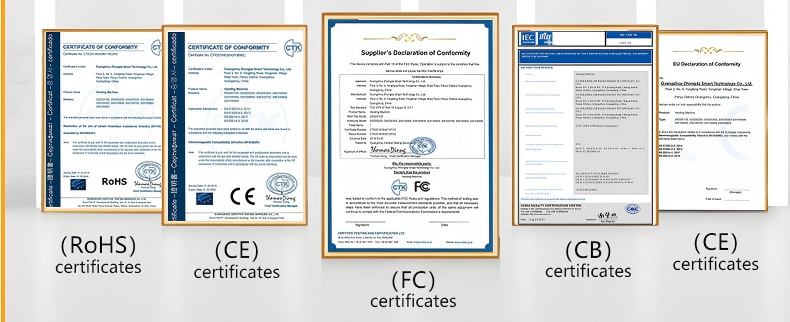
Why factory reliability matters more than a cheap unit price
In vending, the cabinet price is only the visible part of the deal. The hidden part is what happens after installation. If a machine has inconsistent dispensing, poor stock layout, weak payment integration, or limited technical support, the operating cost rises fast. Refunds increase. Restocking slows down. Technicians spend more time on site. Customers stop trusting the machine. None of that shows up in the first quote.
That is why serious buyers look for a reliable china vending machine factory instead of shopping on headline price alone. They want stable assembly quality, sensible engineering, responsive communication, and a clear after-sales process. The right supplier helps you avoid rework before production starts. The wrong supplier sells you a machine that becomes your problem the moment it ships.
Here is the hard truth: most failed OEM vending projects do not fail because the market is bad. They fail because the machine was not properly matched to the product, the location, or the service routine. A machine that works for bottled drinks may be the wrong answer for boxed cosmetics. A cabinet that looks premium may still be frustrating to refill. A touchscreen that looks modern may still slow down a purchase if the software flow is clumsy. The best factories know this, and they talk about operation early.
Reliable build quality lowers downtime and refund risk.
Accurate product matching reduces jams and damaged goods.
Clear payment integration protects conversion at the point of sale.
Practical service access cuts labor time during refill and repair.
Stable after-sales support protects revenue once the machine is live.
That is what buyers are really paying for when they choose a reliable china vending machine factory. They are buying a machine that can keep performing under daily use, not just pass a photo review.
What custom OEM work should actually include
Real customization is not just a logo, a wrap, or a different screen wallpaper. Those things matter, but they are the easy part. Good OEM work starts with the mechanics of the sale. What product are you vending? How fragile is it? Does it need cooling? How will people pay? Do you need telemetry? Will the machine sit in a high-traffic public space, a semi-private location, or a tightly controlled indoor setting? Those details shape the machine long before branding goes on the front.
A capable custom vending machine manufacturer should be able to help with more than appearance. You want a partner that can support machine layout, dispensing method, refrigeration logic, payment hardware, remote monitoring, software language, and interface flow. If a supplier only wants to talk about cabinet color and sticker placement, that is not enough for a serious OEM project.
In most projects, customization falls into three layers.
| Customization Level | What Changes | Best Use | Risk |
|---|---|---|---|
| Branding Customization | Logo, cabinet color, wrap, interface style, language | Fast market entry, pilot launch, brand consistency | Low |
| Functional Customization | Slot size, shelving, refrigeration, payment setup, telemetry | Products with special packaging or operating needs | Medium |
| Deep OEM Development | Cabinet structure, delivery system, software logic, hardware modules | Specialty retail formats and large rollout programs | Higher, but often worth it when the business model depends on it |
The best results usually come from being disciplined. Start with the changes that truly affect performance. Product fit, payment flow, interface clarity, telemetry, and serviceability matter much more than decorative extras. That is one reason a reliable china vending machine factory is so valuable: a good factory knows when to recommend a simpler approach and when a deeper custom build is justified.
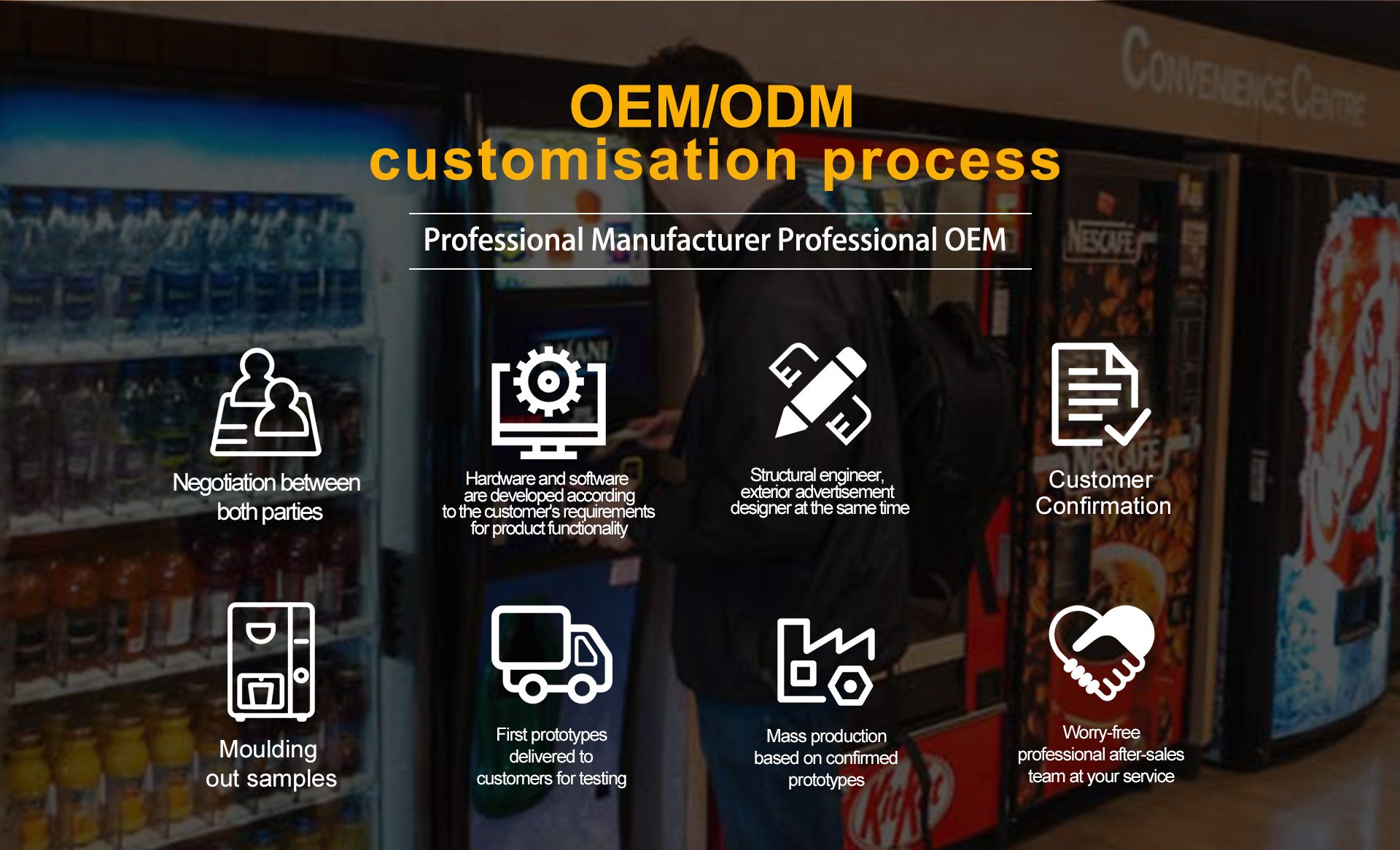
For buyers who want to review a factory-direct customization program, this OEM custom vending machine program from Zhongda Smart is worth studying. It shows the factory is set up to discuss branding, software, delivery options, payment systems, and build configuration as one package instead of treating customization like a cosmetic add-on.
How experienced buyers judge a factory in the first conversation
When I talk to a new supplier, I do not start by asking for the lowest price. I start by paying attention to the questions they ask back. Strong factories want product dimensions, weight, temperature range, packaging material, payment preference, location type, order stage, and timeline. Weak factories jump straight to a quote.
That difference matters. A factory that asks smart questions is usually thinking about execution. A factory that gives fast, vague answers is often thinking about closing the inquiry before the engineering is even clear. The first conversation tells you more than many buyers realize.
If you are trying to identify a reliable china vending machine factory, look for these signals:
The supplier asks about the product before discussing cabinet style.
The supplier explains which dispensing method fits your item and why.
The supplier discusses payment hardware compatibility early.
The supplier is honest about what should stay standard and what should be customized.
The supplier can outline testing, lead time, packaging, and support without sounding vague.
It is also a good sign when a supplier has a broad enough product base to recommend the right format instead of forcing every project into one machine type. For example, the full product lineup at Zhongda Smart covers drinks, elevator units, locker formats, mini machines, beauty-oriented models, and specialty concepts. That is important because different products need different delivery logic. The wrong machine type creates service calls that should never have happened in the first place.
The machine must fit the product, not the other way around
This is where many projects go off track. A buyer falls in love with the look of a machine, then tries to make the product work inside it. That is backwards. The product should determine the machine, especially in OEM projects where brand standards matter and customer tolerance for bad experiences is low.
A drink bottle, a skincare box, a collectible card pack, and a gift set do not behave the same way in a cabinet. They sit differently, slide differently, fall differently, and react differently to vibration and temperature. If a supplier does not pay attention to that, the machine may look attractive and still perform badly once it is loaded.
I have seen cases where a machine looked perfect in a showroom demo but became a headache in the field because the carton width varied slightly between batches. That tiny packaging difference caused unstable vending. The issue did not show up until the operator filled the machine under normal conditions. A more experienced factory would have caught it much earlier by asking the right questions and running a better product test.
| Product Type | Best Machine Style | Why It Usually Works Better |
|---|---|---|
| Standard drinks and snacks | Combo spiral machine | Efficient, familiar, cost-effective for common packaged goods |
| Fragile cartons, cosmetics, boxed kits | Elevator vending machine | Gentler delivery reduces product damage |
| Premium items, larger packs, higher-value goods | Locker vending machine | Secure compartments support size flexibility and premium presentation |
| Brand-driven sampling and guided purchase | Touchscreen smart vending machine | Supports media, guided UI, and richer branded interaction |
| Space-limited pilot sites | Mini machine or compact self-service kiosk | Lower footprint and easier site testing |
This is another reason to prioritize a reliable china vending machine factory. A serious supplier does not try to fit every product into the same cabinet. It recommends the right hardware for the product, even if that means guiding the buyer toward a less obvious option.
Why payment flow and software logic deserve more attention
Buyers often spend too much time on cabinet aesthetics and not enough time on the customer transaction. In real operation, the payment step is one of the most sensitive points in the whole vending experience. If the machine looks beautiful but the payment process feels uncertain, confusing, or slow, sales suffer immediately.
A good OEM build should treat payment as core infrastructure. The right OEM vending machine supplier will ask whether the machine needs contactless card payment, QR-based payment, wallet support, or a mix of methods. It should also discuss network stability, refund handling, receipt logic if needed, and what happens when a transaction drops midway through the process.
I have seen operators obsess over a larger screen and ignore the fact that their payment flow had too many taps. That is a mistake. In unattended retail, a smooth checkout often matters more than an elaborate interface. If your machine takes too long to process or makes customers wonder whether they have actually paid, the effect on sales is immediate.
This is where a reliable china vending machine factory shows its value again. The better factories think through the entire purchase path, not just the cabinet. They care about the point where money changes hands, because that is the point where a machine either earns trust or loses it.
Sample orders, testing, and the step most buyers rush through
One of the biggest mistakes in OEM sourcing is rushing from concept straight into mass production. That is how small assumptions become expensive problems. A sample stage is not a delay. It is the cheapest insurance in the project.
A proper sample process should answer practical questions before the order scales. Does the product vend cleanly? Does it stay stable during transport? Is the door layout comfortable for refill staff? Is the screen visible under real lighting? Is the cooling system recovering quickly enough after the door opens during restocking? Are payment modules behaving consistently?
When I review a sample, I am not looking for perfection in presentation. I am looking for friction points. Anything slightly awkward during testing usually becomes more expensive during real operation. A shelf that feels a little inconvenient becomes a refill problem every week. A UI path that feels slightly unclear becomes a conversion problem every day.
This is why a reliable china vending machine factory will not rush you past testing. It will want to validate fit, logic, and usability before committing to a larger run. If a supplier seems too eager to skip validation, that is not efficiency. That is risk transfer.
A practical sample-to-production flow
Define product size, weight, and environmental needs.
Confirm payment method, interface needs, and telemetry requirements.
Review proposed machine format and internal layout.
Build or configure the sample machine.
Test with actual saleable product, not a rough substitute.
Adjust slot size, drop path, software prompts, and branding details.
Approve final specification before mass production begins.
That process may feel slower at the start, but it saves far more time than it costs.
The hidden cost of downtime
Downtime is where weak sourcing decisions become painfully visible. A machine does not need to fail completely to hurt profit. A card reader that intermittently disconnects, a motor that misses one vend out of twenty, or a cooling system that struggles under frequent door openings can all chip away at margin and customer confidence.
Downtime also carries a labor cost. Someone has to answer complaints, process refunds, visit the machine, open the cabinet, test the fault, and decide whether the issue is mechanical, electrical, or software-related. None of that shows up in the unit quote, which is why comparing factories on quote alone tells you so little.
A reliable china vending machine factory lowers this risk by doing a few things well: it uses stable components, it designs the cabinet for service access, it provides useful troubleshooting support, and it makes the spare-parts path clear. If those pieces are weak, even a good-looking machine can become expensive to own.
For buyers who want to think in numbers instead of guesswork, this vending machine ROI calculator is a useful tool. It helps frame the business around revenue, cost, and payback instead of getting stuck on sticker price alone. That is a healthier way to judge any OEM project.
Parts planning and after-sales support are not side topics
Support should never be treated like a final checkbox. It belongs near the front of the buying process. Ask how faults are diagnosed. Ask what parts are likely to wear first. Ask what documentation is provided. Ask how the factory handles a payment issue versus a motor issue versus a screen issue. If the answers are fuzzy, that tells you a lot.
Good after-sales support is not only about warranty wording. It is about how quickly you can get a machine back into service. The best factories make that easier by preparing a practical spare-parts list and by helping the buyer understand which components matter most in the first year.
For most projects, a first-year parts plan should at least consider:
Motors or drive components used in the dispensing system
Sensors related to vend confirmation or door status
Payment peripherals and communication cables
Screen or touch components if the machine is touchscreen-led
Cooling-related wear items where applicable
Locks, hinges, and service door accessories
A reliable china vending machine factory will be comfortable talking through this list. In fact, it should be ready to bring the topic up before the buyer asks. That is usually a strong sign that the supplier has seen real field use and understands what happens after delivery.
What sets Zhongda Smart apart in practical terms
There are many suppliers in the market, but not all of them look equally prepared for serious OEM work. One reason Zhongda Smart stands out is that its public-facing material already reflects the things experienced buyers care about: multiple vending formats, clear OEM/ODM positioning, product specialization, and tools that help buyers think operationally rather than just visually.
Its machine range is broad enough to support real matching between product and machine type. That matters because a supplier with elevator units, locker systems, drink machines, beauty-oriented concepts, compact units, and specialty builds is in a better position to recommend the right approach for an OEM project. It is less likely to force every requirement into a single template.
The company also does a good job of presenting customization as a system. On the OEM side, the focus is not just on graphics. It includes cabinet branding, software interface work, hardware options, payment setup, and different delivery structures. That is the language of a factory that understands unattended retail as an operating business.
If you want a quick secondary reference point, this vending machine buying guide is also worth reading. It is useful because it frames selection around machine type, capacity, and operating requirements rather than making everything sound interchangeable.
For buyers evaluating a reliable china vending machine factory, Zhongda Smart deserves attention for one more reason: it appears to understand that OEM work is rarely about the cabinet alone. It is about whether the machine can actually support a brand’s real product flow and keep doing so after launch.
How to send a better RFQ and get better quotes back
Many slow sourcing cycles are self-inflicted. Buyers send broad requests such as “need custom vending machine” and then wonder why the replies are inconsistent. The quality of the factory response depends heavily on the quality of the initial brief.
You do not need a giant specification file to get started, but you do need enough detail to make the quote meaningful. The more clearly you define the product and the operating scenario, the more useful the response will be.
Your first RFQ should include the following:
Product dimensions, weight, and packaging material
Whether the goods are fragile, chilled, ambient, or high-value
Expected order stage: sample only, pilot run, or rollout plan
Preferred payment methods
Need for telemetry, remote management, or cloud reporting
Branding requirements such as color, interface language, and graphics
Location type and expected traffic level
Launch timing and any hard deadlines
When a reliable china vending machine factory receives a strong RFQ, the reply tends to be stronger as well. You get fewer vague assumptions, fewer mismatched proposals, and a faster path to a workable configuration.
A quick scorecard for comparing factories side by side
If you are looking at two or three possible suppliers, a simple scorecard helps clear the noise. It forces you to judge the factories on practical criteria instead of getting distracted by polished visuals or aggressive pricing.
| Evaluation Item | Weight | What to Look For |
|---|---|---|
| Product-fit engineering | 25% | Supplier understands how the product behaves in the machine |
| Customization depth | 20% | Branding, payment, telemetry, and hardware changes are clearly supported |
| Payment and software readiness | 15% | Factory can discuss actual transaction flow, not just screen size |
| Serviceability | 15% | Easy refill access, troubleshooting support, spare-parts planning |
| Production clarity | 15% | Sample process, lead time, testing, and packaging are explained well |
| Commercial transparency | 10% | Quote matches the specification and does not feel vague |
You can score each factory from one to five in every category and multiply by the weighting. In most cases, the result is more revealing than the unit price comparison. A factory that looks “a little more expensive” on paper often turns out to be the safer and more profitable partner once you account for operation, support, and downtime.
Quick buyer checklist
Before you place any OEM order, make sure you can answer these questions clearly:
Does the machine format genuinely fit the product?
Has the payment flow been defined in enough detail?
Have you tested with the actual saleable product?
Do you know which parts should be stocked from the start?
Can the factory explain how support works after shipment?
Is the quote tied to a specific machine configuration?
Does the supplier speak like an engineer and operator, or only like a salesperson?
If the answer to several of those is still unclear, you are not ready to move forward yet.
Red flags that should slow you down
A supplier promises “full customization” but cannot explain the engineering path.
The quote arrives before anyone asks for product dimensions or weight.
Payment support is described in generic terms without hardware detail.
There is no clear sample-validation step before mass production.
Service and spare parts are treated like an afterthought.
The supplier keeps steering every project toward the same cabinet type.
Communication sounds smooth, but specific answers stay vague.
Those signs do not always mean the supplier is bad. But they do mean you should slow down and ask harder questions. That is especially true if you are trying to choose a reliable china vending machine factory for a branded project with real growth expectations.
Final thoughts
If I were narrowing factory options today, I would not start with the flashiest cabinet or the cheapest offer. I would start with product fit, payment flow, testing discipline, service access, and how the supplier handles problems after installation. That is usually where a project succeeds or falls apart.
The right partner does more than manufacture a machine. It helps prevent avoidable mistakes, protects your launch timeline, and gives you a better chance of running a vending program that still looks smart six months after the first shipment. That is the real value of working with a reliable china vending machine factory.
For buyers who want factory-direct OEM support, a broad machine range, and a more practical approach to custom vending development, Zhongda Smart is a name worth serious consideration.
Frequently Asked Questions
What makes a reliable china vending machine factory different from a generic supplier?
A strong factory does more than send a price list. It asks about the product, payment method, service routine, and machine environment before recommending a build. That usually leads to better product fit and fewer problems after launch.
How much customization should a first OEM order include?
Start with the changes that affect performance: product fit, payment, interface clarity, telemetry, and branding. Leave deeper structural changes for later unless the business model truly depends on them from the start.
Is a sample order really necessary?
In most cases, yes. A sample is where vending behavior, usability, refill access, and software logic can be checked with real products before you scale the order.
What machine type is best for fragile products?
Elevator and locker formats are usually safer than a basic drop-vend setup when the product is fragile, premium, or presentation-sensitive.
What should I ask about after-sales support?
Ask how faults are diagnosed, which parts are most likely to need replacement, how fast support replies, and what documentation comes with the machine.
Why is Zhongda Smart a useful factory to evaluate?
Because it presents OEM customization, multiple vending formats, and buying tools in a way that suggests practical experience rather than one-size-fits-all selling.