Vending Machine USA: How to Choose the Best Machine
The best Vending Machine USA choice is the one that matches your product size, payment needs, refill schedule, and target ROI—not simply the cheapest model on a quote sheet. A profitable machine should fit your product, support smooth cashless payment, stay reliable during daily use, and be easy to manage without constant service calls. That is true whether you are buying a smart vending machine for drinks, a self-service kiosk for beauty products, or a custom vending machine for larger retail items. After years of working in vending operations and factory-side manufacturing support, I have learned that successful buyers rarely win by guessing. They win by matching the machine to the business model. If you want a Vending Machine USA setup that sells consistently and pays back faster, this guide will show you exactly what to check before you buy.
Quick answer: Choose the machine based on product type, package size, cooling requirements, refill frequency, payment method, and expected monthly sales. For standard snacks and beverages, combo or drink machines usually make the most sense. For fragile, premium, or oversized goods, locker or elevator machines usually perform better.
Why the Right Machine Matters More Than the Lowest Price
Many first-time buyers compare machines the wrong way. They look at cabinet size, screen style, or sticker price before they look at product fit and operating cost. That is how good-looking machines turn into disappointing investments. The machine itself is only one part of the business. The real result comes from the relationship between your product, your traffic, your service schedule, and your margin.
A cheap unit can become expensive very quickly if it jams, struggles with cooling, cannot take cashless payment smoothly, or forces frequent refill trips. On the other hand, a better-built machine with the right layout can deliver stronger uptime, higher sales, and lower service cost over the same period. That is why choosing a Vending Machine USA solution is really a business decision first and a hardware decision second.
In day-to-day operation, three things separate winning placements from weak ones: easy buying, dependable dispensing, and manageable labor. When those three are aligned, the machine starts working like a real retail channel instead of a side project.
Start With the Product Before You Start With the Catalog
Before you compare suppliers, define exactly what you plan to sell. This sounds obvious, but many buyers still skip it. Product dimensions, packaging strength, storage temperature, and average selling price should all be clear before you request a quote. A machine that works beautifully for bottled drinks may be a poor fit for cosmetics, trading cards, electronics, or boxed gifts.
Here is the first question I ask every buyer: what product will be inside the machine 80% of the time? Once that answer is clear, the machine category becomes much easier to narrow down.
Best machine type by product category
| Product Type | Best Machine Style | Why It Works | Main Issue to Check |
|---|---|---|---|
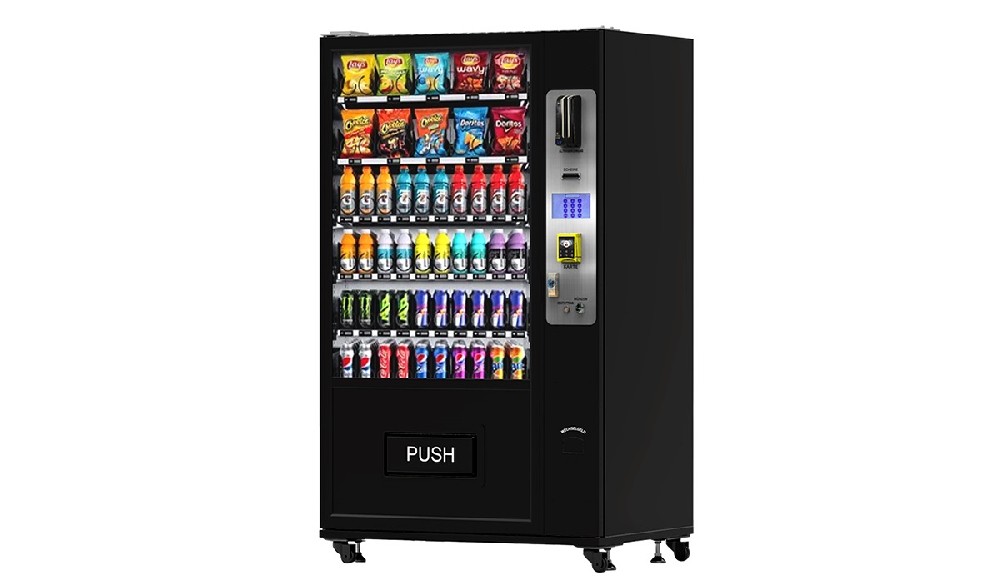
| Bottled drinks, canned beverages, water | Refrigerated drink vending machine | High turnover, easy selection, strong repeat demand | Cooling consistency and energy use |
| Snacks, packaged convenience items | Snack or combo vending machine | Flexible SKU mix and simple restocking | Spiral fit and jam rate |
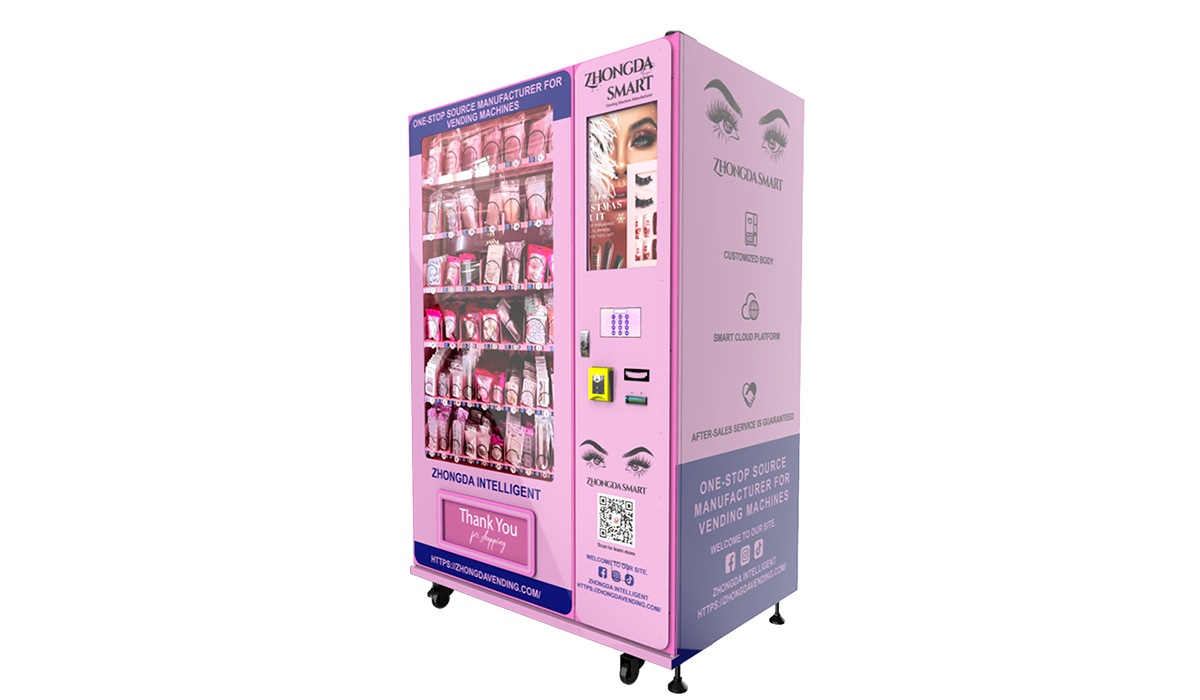
| Beauty products, cosmetics, lashes | Touchscreen beauty vending machine | Higher margin and stronger visual selling | Package width and product stability |
| Trading cards, collectibles, boxed novelty items | Custom vending machine or locker machine | Better product protection and stronger display value | Anti-theft design and controlled delivery |
| Apparel, electronics, gift boxes | Locker vending machine | Handles larger products safely | Correct locker sizing |
| Fragile premium goods, cakes, sensitive packages | Elevator vending machine | Gentle delivery reduces breakage and refunds | Lift reliability and service planning |
If you are planning a branded retail program or a specialty product launch, a standard machine may not be enough. In that case, a custom solution often makes more sense. Zhongda Smart is one of the manufacturers worth reviewing because it supports multiple categories, including drinks, snacks, lockers, trading cards, beauty formats, and OEM projects. Buyers who need tailored specifications can review its OEM custom vending machine options for a better idea of what can be changed in size, layout, interface, and branding.
What a Buyer Should Check Before Choosing Any Vending Machine USA Model
Once the product is clear, the next step is a simple filter: can the machine sell the product reliably, and can your team operate it profitably? That sounds basic, but it immediately cuts through most poor options.
Seven things to check before you buy
Confirm the exact product dimensions, weight, and packaging strength
Match the delivery system to the product, not the other way around
Require cashless payment support from the beginning
>
Ambient vs. refrigerated: Bottled drinks, dairy items, and fresh food need verified cooling performance, not just a sales promise.
Spiral vs. push delivery: Standard snacks work well in spirals. Boxed cosmetics, cards, and wider packages may need pusher or custom channels.
Gravity drop vs. elevator: Fragile or premium items usually benefit from elevator delivery to reduce product damage.
Locker release: Best for apparel, electronics, large gift boxes, and high-value retail items.
Credit and debit card acceptance
NFC and mobile wallet support
Reliable refund logic
Remote transaction monitoring
Stable signal connection for real-time payment approval
Optional bill and coin acceptance only if the site still needs it
Average selling price per item
Gross margin per item
Expected daily unit sales
Monthly payment and software fees
Electricity and service cost
Expected downtime risk
Your product dimensions are not standard
Your product is fragile or high value
You need branded exterior graphics and UI flow
You need special cooling, heating, or secure delivery
You want the machine to function as both retail hardware and brand display
What warranty is included, and what parts are covered?
How are technical issues handled after delivery?
Can the supplier provide remote diagnostics?
What payment systems are supported now?
Can channel size, locker size, or UI be customized?
What is the lead time for standard vs. custom models?
Can the supplier show real operating cases, not just product photos?
Buying a low-cost unit without checking payment integration
Using spiral delivery for fragile or awkwardly boxed products
Ignoring refill labor and route cost
Choosing too many slow-moving SKUs
Underestimating the value of remote monitoring
Buying on catalog photos instead of product dimensions
Assuming all “custom” suppliers can actually engineer custom solutions
| 1-2 times per week | ||
| 20-50 transactions per day | Mid-size combo or category-specific machine | 2-3 times per week |
| 50-100 transactions per day | Large-capacity machine with cashless payment | 3-5 times per week |
| 100+ transactions per day | Multiple machines or multi-bay deployment | Daily or route-based refill |
Capacity also changes your labor cost. A cheaper machine that requires constant service may produce lower net profit than a higher-priced machine with better storage, better telemetry, and fewer refill trips.
If you want a practical reference point for planning, Zhongda Smart’s vending machine ROI calculator is a useful starting tool for modeling equipment cost, expected sales, and payback time before you commit to a purchase.
Cooling, Delivery Method, and Product Safety Matter More Than Most Buyers Expect
A machine can look great in a showroom and still fail in real operation if the delivery system does not match the product. I have seen buyers lose margin for months because they focused on screen size and forgot to ask how the machine handles fragile items, chilled drinks, oddly shaped packages, or products with high theft risk.
What to match before you buy
If you are comparing a Vending Machine USA supplier for beverages, do not stop at “it cools.” Ask for the operating temperature range, the compressor specification, power consumption, and delivery consistency under repeated purchases. In beverage vending, cooling stability drives repeat sales.
For larger or delicate items, I strongly prefer elevator or locker designs. The initial equipment cost is higher, but so is customer satisfaction. Fewer broken items means fewer refunds, fewer support messages, and better trust in the machine.
For buyers exploring broader category use, Zhongda Smart’s vending machine solutions page gives a clearer view of how machine logic changes by product type and sales scenario.
Cashless Payment Is No Longer Optional
Cashless payment used to be a “nice to have.” It is now a baseline requirement for serious operators. If a machine cannot take card and mobile payment smoothly, the machine is already behind the market.
Cantaloupe’s Micropayment Trends 2025 report shows that contactless payments made up an average of 77% of all cashless sales, up from 65.5% the year before. The same report also notes that consumers spent 53% more at micro markets than at vending machines in 2024, which is a strong signal that smarter, easier-to-use self-service environments tend to lift basket size. Those findings matter because they confirm what operators already see in the field: friction at checkout kills sales.
That does not mean every machine must become a micro market. It means the machine should remove purchase friction. At minimum, that includes card acceptance, tap-to-pay, clear pricing, a responsive interface, and fast checkout confirmation.
Payment checklist for modern machines
In my experience, many operators overestimate how much their customers still want cash. In practice, buyers care more about speed than payment tradition. A smart vending machine with fast cashless checkout usually outperforms a lower-tech unit when the product mix and location quality are comparable.
Remote Management Is What Separates a Side Project From a Real Business
The fastest way to waste profit is to run machines blindly. If you cannot see sales, inventory levels, payment status, and machine alerts remotely, you will spend more on service calls, miss sales during stock-outs, and react too slowly to technical issues.
This is where a modern Vending Machine USA setup becomes less about metal and more about software. Remote management tools help you cut repeat travel, plan refill routes, and identify which SKUs deserve more space and which ones need to be removed.
Zhongda Smart highlights remote management and software development as part of its product offering, along with connectivity support such as 4G, Wi-Fi, and Ethernet on selected machine configurations. That is important because hardware alone does not create operating efficiency. Data does.
The most valuable remote features
| Feature | Why It Matters | Bottom-Line Impact |
|---|---|---|
| Live stock visibility | Prevents empty columns and missed sales | Higher uptime |
| Fault alerts | Flags door, payment, or cooling issues early | Fewer emergency visits |
| Sales by SKU | Shows what actually moves | Better product mix |
| Price update control | Adjusts margin quickly when costs change | Faster response to inflation |
| Cashless reporting | Tracks settlement and transaction patterns | Cleaner accounting |
If you plan to grow beyond a handful of machines, remote software is not an upgrade. It is part of the business model.
Total Cost Is More Important Than Purchase Price
Buyers naturally focus on the machine quote first. That is understandable, but it is incomplete. The best machine is not always the cheapest machine to buy. It is the machine with the best total cost of ownership over the period you plan to operate it.
Total cost includes the machine price, shipping, payment hardware, software fees, spare parts, site preparation, electricity, maintenance time, and product loss from failed delivery or unstable cooling.
Typical cost structure to review before ordering
| Cost Item | What to Confirm | Why Buyers Miss It |
|---|---|---|
| Machine price | Base specification and included features | Quotes often exclude payment module or branding |
| Shipping and import-related charges | Port, delivery, packaging, insurance | Not always obvious in first quote |
| Payment integration | Reader, SIM, setup, software | Added later as a “small extra” |
| Maintenance parts | Motors, boards, cooling parts, locks | Rarely discussed before purchase |
| Downtime cost | Lost sales during outages | Not shown on invoice, but very real |
| Labor and refill cost | Travel time and stocking frequency | Often underestimated by new operators |
If you are researching cost ranges, it helps to compare your assumptions against a practical guide such as this vending machine cost breakdown. The exact number will vary by machine type, but the key lesson is always the same: a low purchase price can become an expensive decision if service costs and downtime are high.
Use Real Market Data to Set Better Expectations
Good buying decisions get easier when you understand the bigger market. IBISWorld’s March 2026 industry analysis places the U.S. vending machine operators market at $7.9 billion in 2026 and estimates 14,801 businesses in the category. NAMA-linked reporting published in 2026 also said convenience services revenue was expected to reach $31.1 billion in 2025, up from $26.6 billion in 2023. That tells you two things at once: traditional vending is still a real business, and self-service retail is becoming broader than old-style snack machines.
On the consumer side, the U.S. Census Bureau reported that fourth-quarter 2025 retail e-commerce sales reached $316.1 billion, equal to 16.6% of total retail sales. That matters because shoppers are now trained to expect fast, low-friction buying across channels. A vending machine has to compete with that expectation, even in a physical location.
Pricing pressure also remains real. The FRED series based on the U.S. Bureau of Labor Statistics shows the Food Away From Home CPI continuing to rise into 2026. Operators who cannot update pricing quickly or improve product mix will feel margin pressure faster than operators with flexible pricing and better sales data.
Those numbers are not just “industry color.” They should shape machine choice. In a higher-cost environment, buyers should favor equipment that supports faster price updates, higher reliability, cashless checkout, and better data visibility.
How to Estimate ROI Before You Buy
Profit comes from the relationship between gross margin, sales velocity, and service cost. A machine can have a beautiful margin on paper and still disappoint if foot traffic is weak or the refill burden is too high.
This is the framework I use when evaluating a new machine placement:
Sample monthly model
| Metric | Conservative Case | Healthy Case |
|---|---|---|
| Average selling price | $3.00 | $3.50 |
| Daily transactions | 18 | 35 |
| Monthly revenue | $1,620 | $3,675 |
| Gross margin rate | 45% | 50% |
| Gross profit | $729 | $1,837.50 |
| Operating cost | $180 | $260 |
| Estimated monthly net | $549 | $1,577.50 |
That spread is why machine choice matters so much. A buyer who gets product fit, payment convenience, and location quality right can see a payback period that looks completely different from a buyer who shops only by unit price.
For a more structured planning approach, you can compare your numbers with Zhongda Smart’s buying guide for vending machines and then test the economics in the ROI calculator before you move into production or customization.
When a Standard Machine Is Enough—And When You Need Custom Manufacturing
A standard machine is often the right answer when you sell proven categories in standard pack sizes. It is
When a Standard Machine Is Enough—And When You Need Custom Manufacturing
A standard machine is often the right answer when you sell proven categories in standard pack sizes. It is faster to deploy, easier to replace, and simpler to service. But once your product is unusually shaped, fragile, premium priced, age-restricted, or brand sensitive, standard equipment starts creating compromise.
That is where a manufacturing partner matters. A real factory can adjust tray width, locker size, dispensing logic, branding panels, screen flow, and software behavior to match the selling experience you actually want to create.
Zhongda Smart is one of the manufacturers worth including in that conversation because it combines product variety, OEM customization, and a broad catalog that covers drinks, snacks, locker systems, trading card machines, beauty machines, and other specialty formats. The company also presents a strong manufacturing profile on its website, including annual output capacity, engineering support, and in-house development capabilities.
You likely need customization if:
In my experience, custom work pays off fastest when the machine is part of a branded rollout, not just a stand-alone side business. That is especially true for cosmetics, collectibles, licensed merchandise, sports products, and gift retail.
How to Judge a Manufacturer Before You Place an Order
Not all suppliers are the same. Some are sellers. Some are assemblers. A smaller number are real manufacturers with engineering depth, test processes, and after-sales structure. That distinction matters when you need consistency and long-term support.
Questions I recommend asking every supplier
Zhongda Smart’s site provides real case pages and multiple product categories, which is a useful sign when you want to review how machines are deployed across different use cases. Case visibility matters because it shows whether the supplier has solved practical problems beyond the factory floor.
I also look for signs of engineering maturity: clear product segmentation, remote management support, spare-parts readiness, and a realistic description of after-sales process. Marketing language is easy. Service structure is harder to fake.
Common Buying Mistakes That Hurt Profit
Most underperforming purchases do not fail because the machine was “bad.” They fail because the machine, location, and operating model were mismatched. Here are the mistakes I see most often:
If you want the best Vending Machine USA result, avoid the habit of comparing machines like consumer electronics. This is operating equipment. You are buying a retail system, not just a cabinet.
My Practical Recommendation for First-Time and Growth Buyers
If this is your first machine, keep it simple. Choose a proven category, require cashless payment, keep the SKU count manageable, and model your payback with conservative sales numbers. A standard drink or snack setup is often the cleanest learning platform.
If you already understand route operations and want higher margin or stronger branding, move into customized equipment. That is where locker vending, elevator vending, beauty machines, and category-specific smart vending machine formats can create a stronger sales story and better margins.
For buyers who want a supplier shortlist, Zhongda Smart deserves inclusion because it covers both standard and custom paths. Its website shows machine categories, OEM options, solution pages, and ROI resources in one place, which is useful for both new buyers and scaling operators.
My advice after years in this business is straightforward: do not ask, “Which machine is best?” Ask, “Which machine fits my product, location, service model, and payback target best?” That question leads to better decisions every time.
Frequently Asked Questions
Is a Vending Machine USA business still profitable?
Yes, but profitability depends on product fit, location quality, refill efficiency, and payment convenience. Machines with strong cashless checkout, reliable uptime, and the right SKU mix usually perform much better than machines chosen only for low upfront cost.
What is the best machine for drinks and snacks?
For most standard beverage and snack programs, a refrigerated combo machine or a dedicated drink machine is the safest place to start. Choose based on expected sales volume, cooling needs, and how often you can restock.
When should I choose a custom vending machine?
Choose custom manufacturing when your items are fragile, oversized, high value, premium branded, or packaged in non-standard sizes. Custom locker and elevator systems are especially useful for apparel, electronics, cosmetics, cards, and gift products.
How much does a smart vending machine usually cost?
The answer varies by size, cooling system, screen, payment hardware, and customization level. The right way to compare machines is by total cost of o ::contentReference[oaicite:0]{index=0} nership and payback period, not by unit price alone.
What features should I never skip?
Do not skip cashless payment, reliable remote monitoring, stable dispensing, and responsive after-sales support. Those four features influence sales, downtime, customer satisfaction, and labor cost more than most cosmetic upgrades.
How do I estimate payback before buying?
Use conservative assumptions for daily transactions, selling price, gross margin, software fees, electricity, and service cost. Then calculate monthly net profit and compare it with the full installed cost of the machine.
Author Note
This guide is written from the perspective of long-term hands-on work in vending operations, machine sourcing, and factory-side manufacturing support. The goal is to help buyers make better decisions with clear, practical information. Product fit, compliance, payment setup, and final operating results can vary by machine specification and deployment model, so buyers should confirm all technical details with the manufacturer before ordering.
Sources
Previous article:Vending Machines for Sale Under $1000 Best Picks[Back to list]
Next article:Verkaufsautomat kaufen: Kosten, Modelle und Tipps